- Medical Author: Divya Jacob, Pharm. D.
- Medical Reviewer: Pallavi Suyog Uttekar, MD
Are heated blankets bad for you?
Heated blankets can provide warmth and comfort during cold and wintery months. However, heated blankets pose a high risk of burn injuries and fires when the recommended precautions are not followed. Electric blankets pose a risk of miscarriage in pregnant women. A small study in 2007 also linked heated blankets to an increased risk of heatstroke.
You can minimize the risks of using the blankets by understanding the product usage and correct maintenance. These can help you use your blankets safely.
Heated blankets may get too hot or might cause burns if kept on one area of the body for too long.
Heated blankets can be dangerous in case of
- Infants
- Elderly
- Diabetics
- Pregnancy women
- Those with nerve disorders
What are heated blankets?
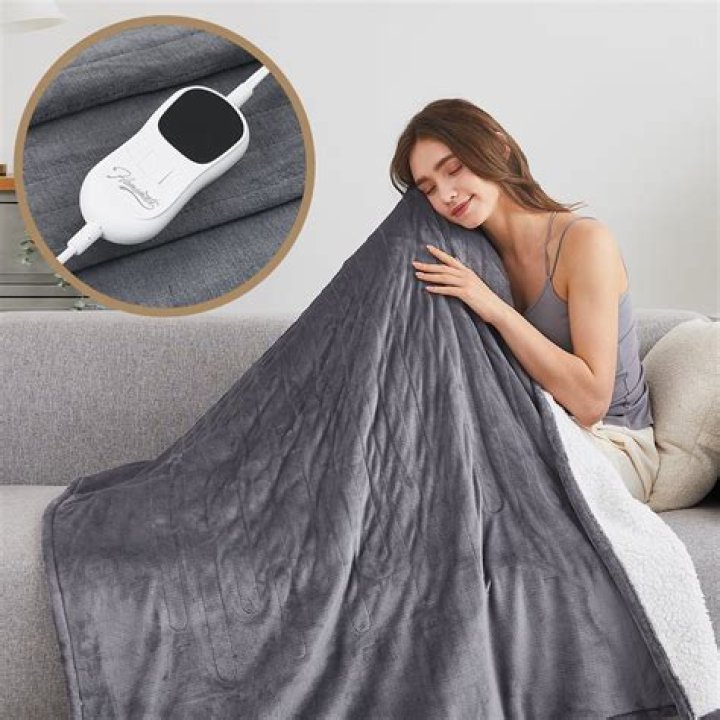
Heated blankets are like regular blankets but with wires to heat them. This blanket also has a cord that needs to be plugged into a power source and a control dial. The average blanket uses about 200 to 400 watts of power. The wires, which are the heating elements, are evenly distributed between the layers of fabric. They heat up when the blanket is turned on. The fabric material may vary with different blankets. The most common fabrics used are
- Soft fleece
- Acrylic
- Wool
The advantages of heated blankets include that they are
- Portable
- Inexpensive
- Energy efficient
- Provides uniform warmth
- Customizable according to color, fabrics and sizes
- Controllable with some having timers, automatic shut-off switches and temperature controls
- Personal and create a heated cocoon without affecting anyone
The disadvantages of heated blanket include that they
- Can heat up to high temperatures and cause damage to internal body organs, vessels and body cells
- Are a fire and burn risk if they are outdated models
- Are easily damaged by pets or improper care
- May burn if not handled properly, especially the newer models
How to prevent burns from heated blankets
The following are some useful tips to prevent burns including
- Always buy a heated blanket with the Underwriters Laboratories (UL) mark to indicate the product’s safety.
- Replace any cracked or worn heating blankets.
- Replace older blankets even if they are in working condition. Blankets older than 10 years old are responsible for 99 percent of fires.
- Make sure there aren’t any loose wires. The wires and attachments should fit properly.
- Do not wash electric heating blankets that aren’t approved for machine wash or hand wash.
- Replace blankets that contain displaced or damaged installed heating wires. You can do so by holding the blanket up to the light.
- Avoid folding the blanket when it is turned on. Doing so can concentrate heat irregularly, increasing the chances of burns.
- While storing the blanket, make sure to roll it up or gently fold the blanket with minimal creases. The best option would be to hang it up to avoid wire damage.
- Never attempt to lie on top of the blanket. Doing so can cause damage to the electrical wires and cause injury or a fire hazard.
- Refrain from dry cleaning a heating blanket. The chemicals used in the dry cleaning process can damage heating insulation and increase fire risk.
- Avoid fire hazards by turning off the blanket when you are out of the room or not actively using it.
Thu., May 23, 2019
- SMS
Dear Doctor: My wife and I sleep with an electric blanket for heat. Is there a health hazard in using it too long at night?
Dear Reader: Considering the extreme weather that froze wide swaths of the nation this past winter – including many usually temperate areas – it’s not surprising to learn that electric blankets have been pressed into service. Your question about safety of the devices echoes the concerns of many readers.
One of the potential risks of using electric blankets is inadvertently overheating the body. Electric bedding should never be used for an infant or someone who is immobile.
Certain medical conditions, including diabetes, can result in neuropathy, which arises from damage to the peripheral nerves. Neuropathy causes pain, tingling and prickling sensations, most commonly in the feet and hands. It can also result in numbness. Any of these symptoms can have the net effect of interfering with an individual’s sensitivity to heat, particularly while sleeping. This makes it possible to become overheated while sleeping with an electric blanket, or even suffer burns in areas of direct contact with the appliance. While there have been several reports over the years of heat stroke deaths caused by elevated core body temperatures due sleeping with an electric blanket, these are exceedingly rare.
Less dramatic but still important is the potential for heated blankets to affect sleep. Numerous studies over the decades have shown that our core body temperature drops a few degrees as we sleep. Lower body temperature has also been linked to a faster onset and better quality of sleep. By creating a continuously heated environment, electric blankets may interfere with the body’s nocturnal temperature cycles, thus interfering with sleep.
The topic that seems to generate the most controversy about electric blankets is the question of electromagnetic fields, or EMFs. These are areas of energy that are present in the natural world as well as in the man-made one. In the built world, EMFs are generated by power lines, the electric wiring within a home, wireless communication devices and equipment, and electrical appliances, including the electric blanket. The concern is that, because our bodies generate billions of tiny electrical impulses that are capable of being influenced by external EMFs, exposure may present a health hazard. Although the issue continues to generate numerous studies and an ocean of ink with impassioned arguments on both sides, a definitive conclusion has not yet been reached.
One potential compromise is to use the electric blanket to preheat the bed. Turn it on an hour or so before you retire for the night, and turn it off before getting into bed. With a snug and cozy start to the night, we think you’ll find a few layers of quilts and blankets will keep you warm until morning. In the meantime, if you do use an electric blanket, be sure it’s in good working order. Address any potential tripping hazards presented by the controls and wires, and follow the manufacturer’s directions regarding placement, maintenance and cleaning.
Send your questions to [email protected]
Local journalism is essential.
Give directly to The Spokesman-Review’s Northwest Passages community forums series — which helps to offset the costs of several reporter and editor positions at the newspaper — by using the easy options below. Gifts processed in this system are not tax deductible, but are predominately used to help meet the local financial requirements needed to receive national matching-grant funds.
Nov. 10, 2000 — Women have nothing to fear from electric blankets, at least when it comes to developing breast cancer. That’s the word from researchers at Yale University. In a recent study published in the American Journal of Epidemiology , researchers concluded that using an electric blanket — even all night and for many years — did not increase the risk for developing breast cancer.
About 1,200 women participated in the study, half of them breast cancer patients. About 40% in each group reported regular blanket usage. But no matter what important variable was considered — age, duration of use, whether those with cancer had estrogen-dependent tumors or not — the answer was the same: Electric blankets did not appear to increase the risk for developing breast cancer.
“The breast cancer hypothesis [with electric blankets] — and it may be a credible hypothesis — is that electrical fields reduce melatonin production . and that melatonin production actually suppresses growth of tumors,” says Eugenia Calle, PhD, director of analytical epidemiology for the American Cancer Society. “That may be credible, but it hasn’t been substantiated.” Melatonin is a hormone produced in the brain that plays a role in sleep regulation, mood, and ovarian cycles.
Calle says that even the basics behind the hypothesis haven’t been established: whether electric blankets do, indeed, decrease melatonin production and in turn, whether lowered melatonin levels result in tumor growth.
“There’s no reason at this point in time to worry there’s a problem here,” Calle says.
Still, she finds one potential weakness to the Yale study. “When people develop a disease, they’re acutely aware of everything that might be responsible for development of the disease. That’s recall bias.” The bias, she says, may not be the recall of the diseased group as much as the lack of recall in the healthy one. “Because of this important life event of getting breast cancer and searching their minds for what could have caused this, the [diseased group] may be able to recall better than those who are healthy.” That would make the groups, in effect, unequal.
The lack of a connection between breast cancer risk and electric blankets might seem a bit of a surprise, in light of recent reports about the potential danger of cell-phone use. Some researchers have suggested exposure to the phones might lead to breast cancer.
But David Savitz, PhD, professor of epidemiology at the University of North Carolina in Chapel Hill and an expert in the electromagnetic field research, says they are different situations: “The only thing they have in common is they both produce nonionizing radiation. They have very different frequencies and very different patterns of use. So they’re very different kinds of exposures.”
Savitz says that while it’s too early to say what the medical effects of cell phones might be, the electric blanket question is a little clearer: “In absolute terms, I can’t say they’re harmless. But with the available evidence, one could argue the level of concern is negligible.”
That would go, he says, even for the use of older electric blankets, which emit a higher-strength electrical field. “As far as absolute health benefits? It’s not a risk or a foolhardy thing to use the old model blanket,” he says.
Related Articles
When they work properly, electric blankets keep you comfy-cozy on a cold day. But a malfunctioning or incorrectly used electric blanket does represent a safety hazard. Learn more about the potential side effects of using an electric blanket and discover whether death by electric blanket is a myth or fact.
Electric blankets pose a risk of miscarriage and birth defects, as well as fires, burns, dehydration and heat stroke. People with nerve damage and poor circulation are at particular risk.
Side Effects of Using an Electric Blanket
The major risk of using an electric blanket is that it may catch fire. According to Electrical Safety Foundation International (ESFI), electric blankets or heating pads are implicated in about 500 fires each year. This is especially concerning considering that the blankets probably catch fire while in use – meaning while someone is wrapped up underneath it. Unfortunately, this can result in death, especially if the person is asleep.
But your electric blanket doesn’t have to catch fire to cause injury. According to the University of Utah, electric blankets and heating pads can cause second-degree burns. They can reach up to 120 degrees, which can scald skin with prolonged exposure. Again, the risk of burns increases if you fall asleep with an electric blanket or heating pad turned on. Do not assume you will wake up due to the burning sensation.
A 2007 case study published in the American Journal of Forensic Medicine and Pathology reveals another rare danger of falling asleep with electric blankets: death by heat stroke. When using an electric blanket, dehydration can occur as body temperature rises. If the blanket never shuts off and you never wake up, your body cannot keep itself cool without sufficient water. Heat stroke is the tragic result.
Don’t Use Electric Blankets If .
Certain populations may experience dangerous side effects from using electric blankets. For example, anyone with nerve damage or poor blood circulation should not use electric blankets. Both affect your ability to detect whether the blanket has become too hot. Therefore, the risk of being burned increases.
Diabetes is one of the more common conditions that requires caution when using an electric blanket because of its tendency to cause both nerve damage and poor circulation.
Pregnant women should also avoid using electric blankets. Just like hot tubs and saunas, there’s a possibility an electric blanket could raise a pregnant woman’s body temperature. According to Mayo Clinic, even a relatively minor fever during pregnancy increases the risk of miscarriage and birth defects related to the brain or spinal cord. Therefore, doctors recommend that pregnant women avoid any high-heat situations that could mimic a fever – electric blankets included.
How to Stay Safe and Warm
You can reduce the risks associated with electrical blankets by using them properly, inspecting them frequently, and replacing them when they get worn or old. According to ESFI, most electric blanket fires are caused by blankets more than 10 years old, so you can start by going through your closet and tossing any electrical blankets that have been part of your collection for longer than you can remember. Write the date of purchase on the tag of your new electric blanket so you know when to replace it in the future.
Look for models that automatically turn off after a certain period of time. Do not fold or sit on the blanket, which can damage the coils inside and increase the risk of fire. Do not use electric blankets in conjunction with heating pads, which can increase the risk of increased body temperature.
Use the blanket on the lowest comfortable settings, and try to avoid falling asleep with the blanket turned on. Inspect the blanket for frayed wires or damaged coils on a regular basis.