Franchise Your Business
Do you want to be successful in your career? Most people will answer “yes” to this question, but few people actually take the time to consider what they need to do to become successful. They don’t even think about what they could be doing differently to actively improve their career.
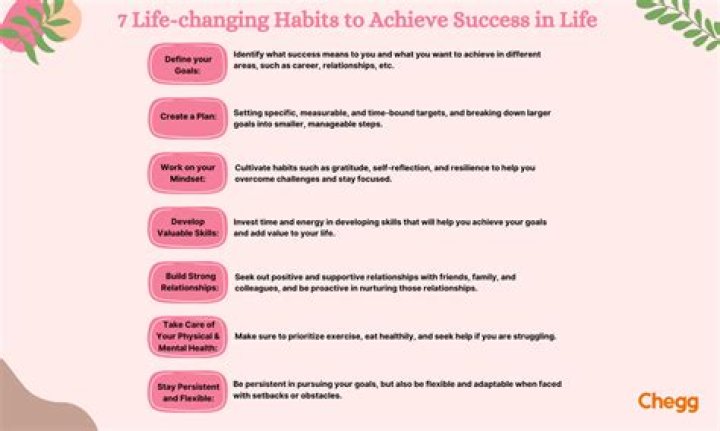
Happily, success doesn’t have to be an intangible thing or a roll of the dice. There are specific things that you can do on a daily basis to cultivate a more successful career. Here are my top seven tips for career success:
1. Be willing to work hard.
You may have heard the saying “action follows intention.” This means that before you can even hope to find success in your given field, you need to be ready and willing to do what it takes to get there.
This might sound like a small thing, but just the willingness to work hard can have a powerful impact on your career.
In essence, you’re putting yourself in the right mindset to succeed. When you’re willing to work hard, you’re more likely to proactively do the work necessary to set yourself apart from the pack. As leadership expert Robin Sharma said, “If you want to have the results only 5 percent have, you must be willing to do and think like only 5 percent do and think.”
If you’re not willing to do what it takes, then you really need to ask yourself if you’re on the right path.
2. Set goals.
Goals are incredibly important in helping you attain success. How so?
First off, goals help you define what success means to you. This will be different for everyone. For example, success to one person might mean a CEO position at a Fortune 500 company; for someone else, it might simply mean being able to pay off college loans and support a growing family without debt.
Second, by setting goals based on your definition of success, you instill yourself with a powerful source of motivation. By establishing bigger life goals, you can begin to break them down into more manageable and actionable goals. Simply put, goals help you create your own path.
3. Get a mentor.
Do not underestimate the power of mentorship. Some of the highest achievers in history, from businesspeople to artists to entrepreneurs, have sought out the guidance of a mentor. A mentor is further along in their career than you, and can offer insight, guidance, and advice that is worth its weight in gold.
They have gone through their own process of building a career similar to what you aspire to and can offer sage advice from a place of knowledge that can be particularly relevant to helping you grow. A mentor’s guidance can deter you from taking dead ends in your career and help keep you on track to succeed. While simply having a mentor won’t make or break you, it can absolutely help you attain success faster.
4. Surround yourself with successful people.
We are the sum of the people we spend time with. So if you’re spending time with a crew of your college bros who sit around all day playing video games and eating pizza, do you really think you’re setting yourself up for career success?
If you want to be successful, surround yourself with people who you aspire to be like. Go to networking events, request meetings, and get to know the movers and shakers in your industry and related fields. Not only will they inspire you to improve, but since business is so relationship based, these networking efforts can really open doors.
5. Set a routine.
Plenty of people complain about not having enough time to do all they need to do. Unfortunately, this is generally due to poor time management. While it may not match your ideal of the jet-setting entrepreneur lifestyle, the truth is that success rewards routine. Having a set routine for your day can be extremely helpful in allowing you to complete tasks and pursue high level achievements.
For instance, one common routine of successful people is to wake up early so that they can meditate, answer emails, or work out–basically, so that they can have some quiet time in the beginning of the day so that they can focus on work when it’s time to get going.
What works for you as a routine may depend on various factors such as the industry you work in and other time constraints. But setting a schedule and sticking to it as well as you can generally helps make you more efficient at completing tasks, which can help you succeed in the long term.
6. Have regular check-ins with yourself.
In the workplace, you have yearly reviews. Yet individuals rarely perform such check-in with themselves.
Every now and again — it might be monthly, weekly, or even daily–have a little status report with yourself. Think about things like how you’re doing on working toward your goals, and considering whether you need to adjust your goals so that they continue to inspire and motivate you.
Consider what you could be doing differently or the areas where you could use some improvement. By taking the time to be present with yourself like this, you’ll develop a better sense of self awareness and direction in your career.
7. Always keep improving.
Never, ever settle for just good enough. If you want to be successful in your career, you have to commit to self improvement.
No, this doesn’t mean you have to be constantly self critical. While it’s important to be kind to yourself, you also have to be able to admit where you could use a little work, and to be willing to take the action needed to strengthen your weaknesses.
By continuing to learn and grow, not only will you be a more well rounded employee or entrepreneur, but you’ll also remain more mentally flexible and be better able to deal with changes and advances as they come. Since the only real constant is change, this is a valuable practice!
Related
Building a successful career is a tremendous personal challenge but is rewarding in so many ways. Achieving career success over a lifetime not only comes with financial benefits, but it can also leave you with a wonderful sense of accomplishment and fulfillment. Consider these five career success tips to help you move forward in the working world.
Know Your Strengths and Weaknesses
Career success articles use many different angles when providing advice, but they almost always include a variation of the philosopher’s ancient maxim: Know thyself.
Start with a list of the things you do best. It can be a mental list or, even better, write them down to help cement the memory. Perhaps you’re a spreadsheet expert who really knows how to crunch the numbers and make them look pretty. Or your strength might be more in the types of personal connections you make with your fellow workers, helping to build teamwork. Make the list as long and as complete as you can. This is no time to be modest.
Conversely, be honest about weaknesses. Afraid of public speaking? Add it to the list. If new technologies get you flustered, write that down as well.
Advance Your Skills
With your strengths and weaknesses noted, set some personal priorities for advancing your skills. This can mean making your strong suits even stronger. It can also mean building up strengths and skills in areas you consider a weakness.
A stint with Toastmasters might help you overcome that fear of public speaking. Your workplace might offer training in advanced spreadsheet skills and if not, courses are certainly available elsewhere.
You can’t tackle everything at once, of course, which means setting some priorities, and that leads to the next bit of advice.
Understand the Company
Your personal career priorities for self-improvement should jibe with the goals and culture of the firm you work for. If your company is seriously into a six-sigma system of lean optimization, then consider becoming a Kaizen expert. If the CEO just announced a major commitment to improved customer service, then start polishing your CRM skills. And if you have no idea what Lean or Kaizen or CRM means, then it’s time to learn. If they’re important to your company, they should be important to you
Understand Your Boss
Your company’s goals represent the big picture, but on a day-to-day basis, your immediate supervisor is the person you answer to the most. Learn your boss’ objectives and frustrations and find the ways you can best assist him or her in reaching goals and overcoming obstacles.
Some facets of this can seem trivial. If the copy machine is always breaking and you’re the one who knows how to get it going again, your boss will likely take note. However, it’s the major workplace successes that carry the most weight. If the boss is under the gun to finish a major company project by the end of the fiscal year, everything you can do to help bring the project to completion will add to your esteem and help advance your career.
Demonstrate Your Worth
Make sure your contributions are well-known in your immediate work area and, more broadly, throughout your organization. If your group hands out gold medals or some other sort of annual award, lobby to get yourself in the running. Speak up at meetings, even when you’re in the back of the room rather than at the main table.
If your worth is known only to your boss, that can actually hinder your career, as they may value you so much as to not want you to advance into another position. Make yourself known to your boss’ boss, to other senior managers, and even to those outside your organization who may be able to open career doors for you in the future.
- Toastmasters: About Us
- 6Sigma: Six Sigma, Kaizen, or Lean? What Is the Difference?
- Salesforce: CRM 101 – What Is CRM?
David Sarokin is a well-known Internet specialist with publications in a wide variety of business topics, from the best uses of information technology to the steps for incorporating your business. He is the author of The Corporation, Its History and Future (Cambridge Scholars, 2020) on the role of big business in the modern world, and Missed Information (MIT Press, 2016), detailing how our social systems like health care, finance and government can be improved with better quality information.
Career success is a subjective term and means different things to different people. However, there are some commonalities that the majority of people agree is important when it comes to discussing “career success.” A successful career is usually one where the person feels happy to go to work every day, doing something of interest to the individual. Many people also measure career success by income, employer, prestige, etc. However, when it comes to these criteria, they are not the same for everyone. So, why should someone define what career success means for them? Without defining career success, it is difficult to define career goals and without goals, it is difficult to plan and achieve.
If you don’t define career success, you will never know when you achieve it.
Here are points to consider when defining career success for you:
- Build your career around what you value and what your skills are best suited for
- Stay positive
- You must manage your career like you would manage a business
- Be willing to look at your skills and potential critically
When looking at career success, it is often important to look at life goals as well, these often go hand in hand. Career success begins with clarity of purpose and direction. Successful people know what they want in life and no one else can define that for you. However, there are many that help you on this path, mentors, managers, career counselors, friends and family are all people who know you in different ways and can help you understand where your career values lie.
Here are some other questions to consider when defining career success for yourself:
- Do you get to showcase your talents in your career choice? Most people who are successful in their career know what they are good at and are able to practice and demonstrate this regularly in their work.
- Do you get to live your passion? Are you motivated to do what do you every day?
- Does your work align with your values? This question speaks more to lifestyle values and is your career aligned with your lifestyle?
- Does your career provide you with a level of compensation you are content with? We all need to make a living to provide for ourselves and families.
These are all questions and tools to consider when defining career success for ourselves. If this is something you have never consciously considered, it is never too late to plan for career success!