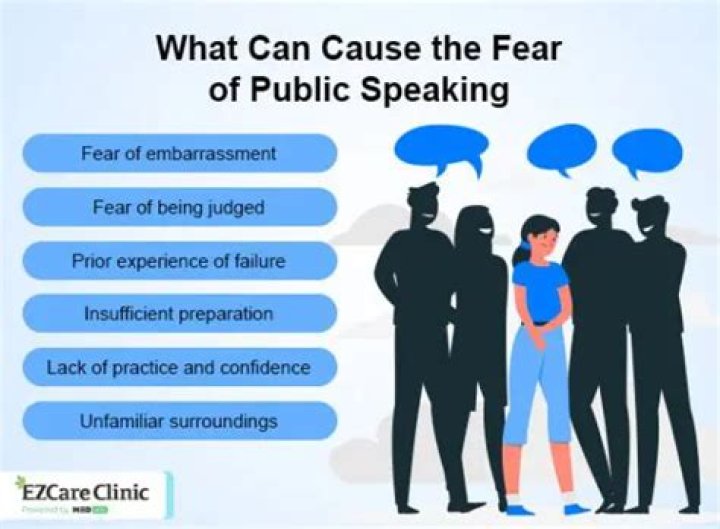
The words “public speaking” cause fear and anxiety in the minds of otherwise competent and confident people. Does the thought of speaking in front of a group evoke fear, make you sweat, and get your heart pounding? It’s likely you have glossophobia – the fear of public speaking.
Glossophobia is one of the most common of fears. There are many ways to increase business exposure so why bother to overcome your speaking jitters? Stepping up to the podium not only positions you as an expert in your area of business but it also provides effortless referrals and improved sales opportunities.
Presenting a non-sales informative speech warms up your target market and builds trust. Unlike endless cold calls, the people you present to and follow up with are more receptive to listening to your offering of products and services.
Overcome your fear of public speaking and boost your business with these seven tips.
1. Start Small
If you’re new to the world of public speaking, start small. Find a few friends and family to practice on. Begin by speaking to smaller groups and build up from there. The size of the audience makes no difference. If you know your topic, your pre-speaking fear will quickly evaporate.
2. Prepare Thoroughly
Nothing helps ease the fear of public speaking more than knowing your material. The ability to connect with your audience comes from having the confidence you won’t get lost during your delivery. Rehearse several times before the big talk. Time your presentation and always have back up material in case time is left over.
3. Don’t Just Memorize the Words
Mastering the art of public speaking comes not from memorizing word for word your entire speech. The real pros know their material by remembering key points and prompts on subtopics and examples to cover.
4. Avoid Common Bullets
The majority of business presentations and speeches are boring monologues filled with endless PowerPoint slides and bullet points. Trash the PowerPoint presentation and make your material the focal point of the talk. If you do use PowerPoint, take the approach of using visuals that quickly convey your message.
5. Reduce Stress
The most fearful moment of any presentation is the one minute before your stage entrance. Use the tactic of elite athletes by visualizing a positive outcome and using deep belly breathing to reduce stress and build confidence.
6. Find a Friend to Focus On
Prior to your public speaking on stage introduce yourself to a few members of the audience in the front row. During your talk look these people in the eye to ease your nerves and connect with your audience.
7. Engage the Audience
Creating a monologue presentation puts the entire task of informing and entertaining the audience on you. Make your talk a two-way interaction with questions and participation to reduce boredom and speak with ease. Having the group involved also gives you time to reorganize your thoughts if things are going off track.
Make public speaking part of your marketing plan and boost your business success. Your fear will evaporate over time and you will wonder why you didn’t start sooner.
Last Updated: July 2, 2020 References Approved
This article was co-authored by Gale McCreary. Gale McCreary is the Founder and Chief Coordinator of SpeechStory, a nonprofit organization focused on improving communication skills in youth. She was previously a Silicon Valley CEO and President of a Toastmasters International chapter. She has been recognized as Santa Barbara Entrepreneurial Woman of the Year and received Congressional recognition for providing a Family-Friendly work environment. She has a BS in Biology from Stanford University.
There are 21 references cited in this article, which can be found at the bottom of the page.
wikiHow marks an article as reader-approved once it receives enough positive feedback. In this case, 96% of readers who voted found the article helpful, earning it our reader-approved status.
This article has been viewed 814,135 times.
If you’re afraid of public speaking, you’re not alone. It’s totally normal to have performance anxiety when giving a speech. Fortunately, it’s possible to overcome your fear so you can give effective public speeches. First, build your confidence by knowing your topic well and preparing for your speech. Then, try relaxation techniques to help you deal with your performance anxiety. Additionally, confront your worries so you can let them go. If you continue to struggle with public speaking, take a class or reach out to someone who can help.
Tips for before and during your presentation.
Even the most confident speakers find ways to distance themselves from their audience. It’s how our brains are programmed, so how can we overcome it? Human generosity. The key to calming the amygdala and disarming our panic button is to turn the focus away from ourselves — away from whether we will mess up or whether the audience will like us — and toward helping the audience. Showing kindness and generosity to others has been shown to activate the vagus nerve, which has the power to calm the fight-or-flight response. When we are kind to others, we tend to feel calmer and less stressed. The same principle applies in speaking. When we approach speaking with a spirit of generosity, we counteract the sensation of being under attack and we feel less nervous.
Tips for before and during your presentation.
Most of us — even those at the top — struggle with public-speaking anxiety. When I ask my clients what makes them nervous, invariably they respond with the same answers:
“I don’t like being watched.”
“I don’t like the eyes on me.”
“I don’t like being in the spotlight.”
And it follows that when they get up to speak, nearly all of them initially avoid making eye contact with members of the audience. Therein lies the problem: While avoiding direct eye contact may seem like an effective strategy for coping with speaking anxiety, it actually makes you even more nervous.
To understand why, we need to go way back to prehistoric times, when humans perceived eyes watching us as an existential threat. Those eyes were likely predators. People were literally terrified of being eaten alive. In response to that prehistoric reality, the amygdala, the part of our brain that helps us respond to danger, kicked into full gear. And when our fight-or-flight response gets triggered, we understandably feel intense stress and anxiety. What does this have to do with public speaking? Turns out, everything.
Here’s the bad news: Our brains have transferred that ancient fear of being watched onto public speaking. In other words, public-speaking anxiety is in our DNA. We experience public speaking as an attack. We physiologically register an audience as a threatening predator and mount a comparable response. Many people’s physical responses while speaking resemble how their body would react to physical signs of danger (shortness of breath, redness of face, shaking).
So today when we speak in front of a group and feel the eyes watching us, we feel painfully visible, like a caveman exposed in daylight. And because our brain is telling us that we are under attack, we do whatever is necessary to protect ourselves. We construct walls between ourselves and the source of danger — in this case, the audience — to repel the attack and blunt any danger.
What do these walls look like? We focus on our slides. We look down. We retreat into our notes. In the process, we disregard the people in front of us, wishing them into invisibility. Even the most confident speakers find ways to distance themselves from their audience. It’s just how we’re programmed.
Fortunately, there is a solution: human generosity. The key to calming the amygdala and disarming our organic panic button is to turn the focus away from ourselves — away from whether we will mess up or whether the audience will like us — and toward helping the audience.
Studies have shown that an increase in generosity leads to a decrease in amygdala activity. Showing kindness and generosity to others has been shown to activate the vagus nerve, which has the power to calm the fight-or-flight response. When we are kind to others, we feel calmer and less stressed. The same principle applies in public speaking. When we approach speaking with a spirit of generosity, we counteract the sensation of being under attack and start to feel less nervous.
Admittedly, this is hard to do. As a speech coach, I often find that my clients who are the most generous in work and life have the hardest time speaking in public, because their brain is telling them, “Now is not the time to give. It’s time to run!” But it’s absolutely possible to become a generous speaker. Start with these three steps:
1. When you’re preparing, think about your audience.
When we start preparing for a presentation, the mistake we all make is starting with the topic. This immediately gets us inside the details — and makes it harder to break down the wall between us and others. Instead, start with the audience. Before diving into the information, ask yourself: Who will be in the room? Why are they there? What do they need? Be specific in your answers. Identify the audience’s needs, both spoken and unspoken, and craft a message that speaks directly to those needs.
2. Right before you speak, refocus your brain.
You are the most nervous right before you speak. This is the moment where your brain is telling you, “Everyone is judging me. What if I fail?” And it is exactly at this moment that you can refocus your brain. Remind yourself that you are here to help your audience. Be firm with your brain. Tell yourself, “Brain, this presentation is not about me. It is about helping my audience.” Over time (usually between four and six presentations), your brain will begin to get it, and you will become less nervous.
3. While you’re speaking, make eye contact.
One of the biggest mistakes we make is speaking to people as a group. We scan the room — trying to look everyone at once — and end up connecting with nobody.
In reality, each person in the room is listening to you as an individual. And so the best way to connect to your audience is by speaking to them as individuals. How? By making sustained eye contact with one person per thought. (Each thought is about one full clause.) By focusing at one person at a time, you make each person in the room feel like you are talking just to them.
This is hard. We are accustomed to scanning the room. Making direct eye contact can feel uncomfortable at first. Yet, as you practice it more, it will actually make you less nervous. It is far easier (and more effective) to have a series of one-on-one conversations than it is to speak to everyone at once. When my clients use this technique more than three consecutive times, they almost always report a decrease in speaking anxiety. (Note that the most important people to look at are those who are at the far edges of the room. These are the people who are already at a disadvantage. By being extra generous to those at the edges of the room, you bring everyone in.)
We know the power of generosity to give us a sense of fulfillment, purpose, and meaning. Generosity is just as powerful in speaking. It turns a nerve-wracking and even painful experience into one of giving and helping others. A generous speaker is calmer, more relaxed, and — most important — more effective at reaching the audience and making the desired impact.
by Dave Carbonell, PhD
You can solve the problem of public speaking anxiety.
Fear of public speaking is the most common of all phobias. It’s a form of performance anxiety in which a person becomes very concerned that he or she will look visibly anxious, maybe even have a panic attack while speaking. Over time, people try to protect themselves by either avoiding public speaking or by struggling against speech anxiety. In this way, people get Tricked into making the fear of public speaking more chronic and disruptive.
Some people do this with avoidance. They choose college coursework in such a way as to avoid public speaking, rather than taking the classes they want. At work, they pass up promotions and assignments which would require speaking. The fear of public speaking may even lead people to choose a career that doesn’t call for public speaking, rather than one they want. This is often the case with people who have feared public speaking from a very young age.
Others don’t go that far, but will go to great lengths to avoid making presentations, or even just having to speak at a meeting. They may deliberately arrive late, hoping to miss the customary introductions (“let’s go around and introduce ourselves. “).
Many others will gamely accept an assignment and show up to give a speech when it’s important to their career. But they try to get through those situations without feeling afraid. They focus on what they feel, rather than on the message they’ve come to deliver. This is often the case with people whose fear of public speaking developed later in life. The more successful they become in their career, the more they are called upon to share their expertise with groups, and the more anxious they become.
The Trick
The fear of public speaking draws upon the same Panic Trick as other fears and phobias. People naturally want to rid themselves of public speaking anxiety before they do any more speaking. But they get Tricked into using methods which actually make the fear of public speaking stronger, and more persistent, over time.
New patients who come to me for help with fear of public speaking usually expect that I will first help them lose their speech anxiety, and then they will go out and do some public speaking.
I’m usually able to help people overcome this problem. But that’s not how you do it. That’s how you get Tricked!
Try this Exercise
Think of the things you do during a speech, or a brief introduction, in an effort to feel less afraid. What do you do in an effort to control your fear of public speaking?
Take two minutes. Write down all the responses you can think of. Then come back here.
What’s On Your List?
Fearful speakers I’ve worked with have included items such as:
* Don’t look at audience
* Rush through it
* Skip portions of my talk
* Tell myself it’ll be over soon
* Imagine audience in their underwear
* Cough, pretend to have a sore throat
* Use a lot of slides
* Clench fists beneath lectern
* Keep swallowing, to make sure I can drink fluids
* Let a colleague do most of the talking
* Wear my lucky shirt
One of the first things I ask my clients is, specifically, how do you think these will help control public speaking anxiety? So let me ask you to review this for yourself.
Take two more minutes to look at your list and identify exactly how you think these measures will help you overcome the fear of public speaking. Write down your answers, then come back here.
What Do You Think?
Here’s what I notice when I review this question with fearful speakers. Their strategies during a speech are designed to:
* End the speech as soon as possible
* Avoid any pauses or interruptions during the speech
* Avoid contact with the audience
* Hide the fact that they are afraid
These all involve efforts to resist and fight public speaking anxiety. They also involve efforts to resist the role of speaker, and to avoid using all the powers that come with being a speaker.
Don’t Be the Unspeaker!
Fearful speakers create trouble for themselves when they don’t embrace the role of Speaker. Instead, they try to be the Unspeaker. They try to “get through” the experience without committing themselves to the role of Speaker. They read, they drone, they overlook the audience, and they focus mainly on resisting their fear. The result of this resistance is, typically, that it gives you more public speaking anxiety, not less – just the opposite of what you want.
Hurrying
Rushing through a talk requires that you talk fast. Talking fast interferes with your breathing. Instead of breathing comfortably, you breathe in a short, shallow manner, or you might even hold your breath. This gives you the sensation of running out of air and being unable to breathe, a common fear in this situation, and one that greatly increases fear of public speaking.
All this hurrying reduces the chance that your audience can enjoy your speech. It creates a barrier between you and them, which might have been your intention, but this will actually increase your fear. The less of a connection you have with them, the more unfriendly they will seem to you, and the more speech anxiety you will experience.
Ignoring the Audience
Fearful speakers often try to ignore the audience, hoping this will decrease their speech anxiety. For instance, lots of fearful speakers avoid eye contact with the audience. This prevents you from noticing any audience reaction. You won’t notice when people seem more interested, or have questions.
When you have no audience contact, you focus on your own thoughts. And if you’re a fearful speaker, your thoughts are virtually guaranteed to be far more negative, and unrealistic, than anything your audience might think or say. The result? More, rather than less, fear of public speaking.
Fighting to Hide Your Fear
Finally, efforts to hide your fear create the additional fear of being “found out” as a nervous person. This only adds to the public speaking anxiety you already experience.
It has another negative side effect. After you’ve given a speech, even if it has gone well, you may take no pride in your success because of this thought: “If they knew how afraid I was, they’d think less of me.”
I’ve worked with many successful businesspeople who, despite their speech anxiety, actually presented frequently and did a good job. Unfortunately, because of their desire for secrecy, they thought they were “fooling people” and never felt satisfaction from their work. In order to progress and feel confident, they had to see that they were the ones being fooled – not the audience!
Breaking the Vicious Cycle
of Fear of Public Speaking
You can overcome the fear of public speaking, with a game plan based on three basic elements: an accepting attitude toward your fear, use of the AWARE steps, and a willingness to be the Speaker, rather than the Unspeaker.
Ready for more tips? Here’s a good article about fear of public speaking.
By Adam Grant
Several years ago, I was invited to give my first public speech, and I made the mistake of saying yes. I was terrified: as a student, my heart used to race at the mere thought of raising my hand in class. For weeks beforehand, I had nightmares about forgetting my lines, waking up in a cold sweat. No matter how much I practiced, for the three days leading up to the speech, I could hardly breathe.
During the speech, nothing went terribly wrong. I was relieved… until I read the feedback from the audience. Here were some highlights:
- “Try not to be so nervous. You looked like a Muppet and it seemed like you memorized every single sentence for the presentation.”
- “It seems like you’re reading off a teleprompter. Breathe! Too mechanical.”
- “You were so tense that you were causing me to physically shake in my seat.”
In the past year and a half, I’ve given over 100 keynote speeches and hundreds of presentations, and things have changed dramatically. I still get nervous occasionally, but public speaking is now one of my favorite activities. Here are the five steps that have been most helpful in reducing my anxiety:
- Don’t try to calm down. In clever research, Harvard professor Alison Wood Brooks asked people to give a public speech on what would make them good colleagues. Anxiety alert: they would be videotaped and evaluated by a committee. More than 90% of people said the best strategy was to calm down. But it didn’t work. When independent raters evaluated the speeches, people who tried to relax ended up giving speeches that lacked persuasiveness and confidence.
Instead of saying “I am calm,” people gave more compelling speeches when they said “I am excited.” The same was true when people were anxious before singing Journey’s Don’t Stop Believin, saying “I’m excited” led to more accurate karaoke performance on than saying “I’m calm.”
Why? Physiologically, we have two different systems: the go system and the stop system. As Susan Cain, the introverted author of Quiet who overcome her own phobia of public speaking to give a record-breaking TED talk, explains, “Your go system revs you up and makes you excited. Your stop system slows you down and makes you cautious and vigilant.” Cain suggests that it’s a mistake to work at turning off the stop system; you want to turn on your go system. Anxiety is an intense emotion, and it’s hard to make it vanish quickly in the face of uncertainty. It’s easier to convert anxiety into another strong emotion like excitement.
You won’t catch me belting out Journey any time soon. But when I feel pangs of panic about speaking, I no longer try to fight the reasons to stop. I focus on the reasons to go: I’m delivering a message that matters deeply to me. I enjoy challenging assumptions, offering actionable insights, and providing some entertainment. As my enthusiasm climbs, anxiety fades. It doesn’t vanish completely, though. As Richard Branson notes (paraphrasing a quip attributed to Mark Twain): “There are only two types of speakers in the world: 1. The nervous and 2. Liars.”
- Practice in front of an audience. When I rehearsed my early speeches, I delivered them solo. Classic studies by the late Stanford psychologist Robert Zajonc demonstrated that the mere presence of other people raises our arousal. If you practice alone, you won’t have a chance to adjust to that arousal.
The key is to practice under conditions that resemble the performance as much as possible. With that in mind, I was surprised to discover that before a talk in front of a crowd of thousands, the best preparation was to practice in front of a small group. In a small group, you can see everyone’s facial expressions and feel their gaze burning a hole in your retina. (Want a surefire strategy for freaking out an anxious introvert? Stare at him. Being the focus of other people’s attention can be seriously overstimulating.) In a large crowd, faces blur and eye contact fades, which can actually reduce arousal. So if you want to prepare under maximal anxiety, practice in front of a small group. It’s not a coincidence that before her TED talk, Susan Cain rehearsed in a room with 20 strangers.
- Turn off the lights. To reduce anxiety during the speech itself, I like to darken the room. As faces become less visible, my arousal drops. I recently discovered that there’s a side benefit of dim lighting: audiences laugh more. Comedians prefer “dimly lit space,” Peter McGraw and Joel Warner write in The Humor Code, which seems to “help people feel more concealed and therefore less inhibited in what they’re willing to laugh at.”
Of course, darkness also helps people feel less inhibited in falling asleep. So I only switch off the lights when I feel confident in the entertainment value of the speech.
- Know your audience. I find that the more I learn about my audience in advance, the less nervous I become. Along with helping me tailor the material, it humanizes them and highlights common ground. Each August, I teach a weeklong course for hundreds of Wharton MBA students. It’s the first class they take in business school, and I don’t have much time to get comfortable with them. After spending a few days reading through their bios, I’m more excited than anxious. I see that one had a fascinating former life as an Olympic rower and another grew up in my hometown.
- Lead with a puzzle, question, or story.Dylan Chalfy, a gifted speaking coach and professional actor, taught me that opening with a puzzle places the audience’s attention on the ideas, as opposed to the speaker. A question has a similar effect: it gets the audience thinking instead of judging. Malcolm Gladwell has made a similar observation about starting with a story: the audience gets absorbed in the narrative, and ends up focusing on the plot and the characters rather than the storyteller.
Earlier this week, I spoke at Google Zeitgeist. It was the most nervous I’ve been in a long time: the audience was full of extraordinary people and it was being videotaped for online posting. Although it was far from a flawless performance, I didn’t lose any sleep beforehand. My pitch was too loud at the beginning—a clear sign of anxiety—but it got better over time as I found my rhythm:
My next step is to work on improving my breathing with my uncle, Darth Vader.
This story was reprinted by permission of the author.
Forgive me for repeating an old Jerry Seinfeld joke, but I tell it to make a point.
“According to most studies, people’s number one fear is public speaking,” said Seinfeld. “Number two is death. Death is number two. Does that sound right? This means to the average person, if you go to a funeral, you’re better off in the casket than doing the eulogy.”
To attract high-paying clients, the number one strategy is public speaking. Therefore, it pays to find ways to overcome the natural fear of public speaking.
The problem with public speaking is it triggers the amygdala in your brain. This is the almond shaped fear switch that triggers our fight, flight or freeze response. Not everyone fights through the fear of public speaking, but you need to if you want to attract clients by sharing your ideas. Fleeing from speaking opportunities or freezing before an audience are not good strategies.
Presence and Presentation Expert Eleni Kelakos
At the January Jumpstart 2019 conference sponsored by the Dental Speakers Institute in Phoenix, I caught up with one of the keynote speakers, presentation expert Eleni Kelakos.
She uses performance techniques learned over 20 years as a professional actress in New York and Los Angeles to help executives be relaxed, real and relatable when they give presentations.
Her book, Touch the Sky: Find Your Voice, Speak Your Truth, Make Your Mark, was a gold medal winner of the 2014 Global e-Book Awards. I asked Kelakos to share her best presentation tips to overcome the public speaking jitters.
Here is how she advises speakers to get prepared:
Commit to the Process: “People want an immediate solution to manage their public speaking anxiety,” says Kelakos. “The fact is, there isn’t one. Managing fear of public speaking is a process that takes time and work. To overcome your fear of public speaking, you must be willing to commit to the process.”
Determine the Lies That Bind: “The first step in overcoming fear of public speaking is to face your fear head-on,” advises Kelakos. “Make a list of The Lies that Bind you—the limiting beliefs that kick you into anxiety, such as ‘You’re a lousy public speaker!’ or ‘Everyone can tell you’re nervous!’ Since beliefs cause behaviors, limiting beliefs need to be changed in order to create new behaviors.”
Reshape the Lies That Bind you into Useful Supportive Power Phrases: “For example, ‘No one takes you seriously’ might turn into ‘Because I value my expertise, I take myself seriously and others do, too,’” says Kelakos.
Convince Yourself of the Power Phrases by Supporting them with Evidence. “Once you’ve created a list of lies that bind, convince yourself of their truth by jotting down three pieces of evidence,” says Kelakos. “For example, ‘I have over 15 years of expertise. Yesterday my boss asked me to weigh in on an important issue. My team members tend to respond favorably to my ideas.’”
Use the Power Phrases to Shift your Mindset. “To help grow weeds on the Lies That Bind and allow the new Power Phrases to embed themselves into your subconscious mind, repeat them,” says Kelakos. “Repetition makes habit. Speak them out loud, print them out and read them daily, or record and listen to them before you fall asleep and upon awakening.”
Of course there are many other ways to improve. My advice is to find a good presentation coach and work to improve your speaking expertise. The more you prepare the more relaxed you appear.
According to Kelakos, “Power Phrases are only part of the overall preparation toolkit you need to build to help you manage the fight of flight that can broadside your public speaking performance.”
- Login
Startup
- Best industries
- Funding
- Incubators
- Business Plans
- Naming
- Home-Based Business
- The Ups Store View
- Strategy
- Operations
- Sales
- Marketing
- Customer Service
- Franchises
- Build
- Safeguards
- Peak Performance
- Company Culture
- Public Speaking
- Hiring
- HR/Benefits
- Women Entrepreneurs
- Productivity
- Rising Stars
Innovate
- Creativity
- Invent
- Design
- Pivot
Technology
- Cloud Computing
- Social Media
- Security
- Data Detectives
Money
- Exit Interview
- Personal Capital
- Bootstrapping
- Crowdfunding
- Venture Capital
- Borrowing
- Business Models
- Personal Finance
Inc. 5000
- Inc. 5000 Series: California
- The 2019 US List
- The 2019 Europe List
- Apply Inc. 5000 US
- Apply Inc. 5000 Europe
Inc. BrandView
- Cox Business
- Deloitte
- Intel
- PPG
- The UPS Store View
- Whoop View
- Principal
- Branded Content
Subscribe
Subscribe
- Watch
- Guides
Subscribe
Best Workplaces
Awarding excellence in company culture.
Regular Rate through January 15
- Login
Subscribe
Subscribe
Subscribe
9 Helpful Tips to Calm Your Nerves Before Speaking
A communication expert and best-selling author offers nine helpful strategies to eliminate presentation or “speech” anxiety.
Before you jump onstage or in front of the room to deliver an important presentation, do you experience physical or emotional symptoms like nausea, sweaty palms, anxiety, or feelings of panic? It may not be so extreme for you, but it happens to millions of people everywhere.
Ten years ago, I checked into the ER before one of my very first speaking engagements thinking I was having a heart attack. The electrocardiogram showed that my heart was as strong as ever. What had happened?
I had had a panic attack — a sudden, overwhelming surge of anxiety and fear that mimics a heart attack. Numerous speaking engagements later, I managed to learn how to control feelings that commonly led to speaking anxiety.
Nine Ways to Help Reduce Presentation Anxiety
Some people rank the fear of public speaking higher than the fear of death! It is very real and can be debilitating. Even billionaire Warren Buffett admits that he was “terrified” of public speaking early in his career. He decided that to reach his full potential, he had to overcome his fear of it. If you are faced with a similar challenge, there are several techniques to help you overcome your fears.
David Greenberg, president and CEO of Simply Speaking and author of the bestseller Simply Speaking! The No-Sweat Way to Prepare and Deliver Presentations, is a foremost expert on this topic. He has been coaching and training leaders from top companies to transform their presentations since 1988.
Greenberg offers nine helpful strategies to eliminate presentation or “speech” anxiety.
1. Accept that being nervous is not a bad thing.
Greenberg says, “Being nervous means you care about giving a good presentation. Your nervousness produces adrenaline, which helps you think faster, speak more fluently,
and add the needed enthusiasm to convey your message.”
2. Don’t try to be perfect.
Greenberg explains that the fear of public speaking often stems from a fear of imperfection. He urges us to “accept the fact that no one ever gets it perfect and neither will you.” Rather than striving to become a “super-speaker,” Greenberg’s simple advice is to just be yourself. “Your audience will appreciate it,” he says.
3. Know your subject matter.
One must “earn the right,” says Greenberg, to speak on a particular topic. “Become an authority on your topic and know more than most or all of the people in your audience. The more you know, the more confident you will be,” he says.
4. Engage your audience.
Audience involvement is key. Ask your audience questions or have them participate in an activity to hold their attention. Greenberg says that turning your presentation from monologue to dialogue helps reduce your nervousness and engages the audience.
5. Breathe.
Breathing from your stomach muscles, not your chest, calms the nervous system. Here’s what to do: Take a few deep breaths before and even during your presentation. “As you inhale,” says Greenberg, “say to yourself ‘I am,’ and as you exhale, say ‘relaxed.'”
6. Visualize your success.
Close your eyes and picture yourself delivering your talk with confidence and
enthusiasm. What does the room look like? What do the people look like? How do you
look? “Picture your successful presentation in detail and allow your mind to help turn your
picture into a reality,” says Greenberg.
7. Practice out loud.
The best way to reduce your anxiety is to rehearse until you feel comfortable, advises Greenberg. “Practicing by yourself is important,” he says, “but I urge you to also practice in front of a friend, colleague, or coach who will give you honest and constructive feedback.”
8. Avoid caffeine and alcohol.
Caffeinated drinks can increase your heart rate, make you jittery, and cause your hands to shake, which gives your audience the impression you’re a nervous wreck. And, it goes without saying, drinking alcohol to cope with your fears will increase your chances of forgetting things and slurring your words.
9. Make eye contact.
Greenberg suggests arriving early when the room is full of empty chairs and practicing by “pretending that you are looking into people’s eyes.” When you begin your talk, pick a few friendly faces in different areas of the room. Says Greenberg, “Not only will the audience appreciate it, but also you will see that they are interested in your message. Add a smile and you are bound to see some in return.”
I’ve recently been reminded that one of the universal constants in the public speaking world is fear. Most speakers have it, a few manage to avoid it, and some are crushed by it. A recent article about a survey of UK CEOs found that they, too, experience fear. Recent work with a client involved helping him with his fear of opening a speech. He’s fine once he gets going, but those first few minutes are debilitating. And I recently gave a speech after taking about a month off to work on a book proposal, and I found myself rusty and nervous just like everyone else.
What can you do about it? Here are 5 ideas to help you with that universal annoyance.
1. Redefine the fear as adrenaline, and therefore a good thing. This is my personal favorite, and it works pretty well if you stick to it over a long period of time. When we’re faced with having to speak in front of a crowd – or the prospect of one – the adrenaline starts flowing. It’s the well-known flight-or-fight syndrome that helps you get ready to do battle with ancient enemies. In addition to the annoying symptoms like dry mouth, or shaky knees, or clammy palms, your brain works faster, you have more energy, and you look a little larger than life. And that’s all good. So focus on the good things that those symptoms are bringing you, and you’ll start to think differently about those clammy palms.
2. Rehearse, rehearse, rehearse. Rehearse a lot. Rehearsal is the best way to deal with nerves, objectively speaking, because what you do a lot you get comfortable with and thus are less likely to get frightened about. Rehearsal has the added benefit of most likely making you better at the presentation – certainly better than if you wing it. And you’ll look more polished because your body will signal to the audience, “I’ve done this before; I’m cool.”
3. Breathe deeply, from the belly. Breathe slowly, and often. Breathing is good for you, your voice, and your composure. A slow, deep belly breath supported from the diaphragmatic muscles will start an autonomic relaxation response that nicely counteracts those feelings of terror, so start at the first sign of symptoms. Because those belly breaths will ground you, make sure you do them just before you get up to speak – while you’re being introduced, for example.
4. Focus on the audience, not on yourself. The real insight at the core of successful public speaking is that it isn’t about you, it’s about the audience getting it (or you were never there, in some sense). So focus on the audience, let go of yourself, and have a great time. I think of this as the Zen insight into public speaking, and it is truly liberating if you can convince yourself of it.
5. Focus on an emotion that you want to convey to the audience. If you’re the sort of speaker who starts riffing on all the things that might go wrong when you get nervous about speaking, then you’re like most of us. The idea is to replace that doom loop with something more productive. For a host of reasons, replacing nervous mental chatter with a strong emotion is a great substitute. Here’s how you do it. First, figure out what emotion is appropriate to the beginning of your speech. It might be anger, joy, excitement, whatever. Then, recall a time when you felt that emotion naturally and strongly. But don’t just remember it – relive it. Recall what it smelled, tasted, looked, sounded and felt like. Shut your eyes and put yourself there. With practice, this can become a powerful and quick way to focus before speaking. And if you do this sense memory thoroughly enough, you’ll chase the nervous thoughts out of your head.
We all get nervous, but there are ways to minimize nerves, and to use the mental state to your advantage, to make you a better speaker. Try them all, and pick the one or ones that works best for you.
Free Book Preview: Coach ’Em Way Up
Public speaking continues to be a top fear of humanity. Whether you’re speaking to a group of 10 or 10,000, public speaking is nerve-wracking. Yet most professionals agree that public speaking is a powerful skill capable of transforming one’s business or career.
As a professional speaker for over eight years, I’ve had experience training small groups of executives, pitching business plans to key stakeholders and delivering keynote presentations to thousands of people around the world. The below is my best advice for removing anxiety before any presentation.
But before I share my pro tip, let’s better understand why humans fear public speaking so much. One of the core needs of humans is to feel like they belong. Humans have a deep desire to be accepted, cared for and involved in meaningful community. Humans are tribal species who live, work and survive together.
As a survival technique, humans are biologically wired to scan the social group to identify where they stand. Let’s take the social group of work as an example. Our brains scan and evaluate if we are in the center of the team as a leader, in the neutral middle, or being pushed out or excluded from the team.
If the early humans who roamed the plains were excluded from their tribe, their chance of survival was minimal. After all these years, humans still avoid exclusion and seek belonging.
When you speak up in a group, pitch a new idea or deliver a keynote presentation, you risk exclusion. Our palms get sweaty before public speaking because we fear being embarrassed or judged for our thoughts, ideas or suggestions, which would ultimately lead to the group rejecting us and pushing us out where survival is limited.
How do you overcome this human hardwiring and reduce the fear of public speaking? Uncover the unknowns. Humans fear what they don’t know. And leading up to a presentation, there are many unknowns.
Here are a few examples of the unknowns that exist for public speakers.
- Content, structure and length of the presentation
- Size and demographics of the audience
- Size and layout of the presentation room
- Audio and visual setup
- Flow of the agenda
Whether you’re conscious of it or not, these unknowns are what contribute to the anxiety felt by public speakers. Turn unknowns into knowns and your public speaking anxiety will decrease and confidence will increase.
Here’s how to turn these unknowns into knowns.
Content, structure and length of the presentation
Get to know your audience’s wants and needs and allow those to drive the content of the presentation. The more you focus on the audience’s needs, the less you’re thinking about your own anxiety.
Get to know your presentation by practicing it out loud. Speaking out loud will help you spot weak ideas, irrelevant data or stories and disjointed transitions.
Size and demographics of the audience
You should obviously arrive early, but use some of your prep time to interact with and observe the audience. If time permits, conduct interviews with audience members in advance of the presentation.
Size and layout of the presentation room
Arrive early and scope out the environment. The more you can mimic the live presentation (e.g. being on stage, using a microphone, clicking through the slides, etc.), the more confident you’ll become. Knowing acoustics, size of the presentation screen, restroom location, etc. are helpful for putting public speakers at ease.
Know the tech you need to display your presentation
Test the audio of your mic or presentation videos. Establishing a relationship with the AV techs (if there are any) is important because they play a crucial part in the success of your presentation. Have your presentation backed up in multiple formats (.pptx, PDF, etc.) in the cloud (Dropbox, Box, etc.) and on a USB drive.
If you present a lot, consider having adapters that allow you to present from your iPad or iPhone in case your laptop crashes. Test the audio of your microphone and presentation videos and ensure your slides are displaying appropriately on the presentation screen.
Flow of the agenda
Figure out what’s happening right before and right after your presentation. Have a clear understanding of where you need to be and when, and ensure you end on time. No audience member ever got angry at a presenter who ended on time or a few minutes early.
The unknowns that are possible during a live presentation are countless. However, being proactive about uncovering the bigger unknowns is crucial for reducing the anxiety of public speaking while increasing the likelihood of a successful presentation.
By Rohit Singla
Approx 73-75 percent of people have this fear of speaking English in public. And they want to know “HOW” they can overcome the fear of speaking English in public. Also, the fear of speaking in public comes on the 2nd number in all fears in the entire world. The first one is, of course, the fear of death.
There are so many types of fears when it come to public speaking.
First, we really need to understand that public speaking doesn’t mean to speak on stage in front on thousands of people.
Public speaking simply means that you should be able to communicate well with the other person. Now, it doesn’t matter whether you are speaking with 3 people or 30 people. That is also a public speaking.
And due to this fear of speaking English in public, there are so many candidates who are not able to crack the job interviews as well.
If you are any of them then today you are going to learn about the 5 easy and simple steps to overcome the fear of speaking English in public.
How To Overcome Fear Of Speaking English In Public
So, the 5 steps are as follow.
1. Speak From Your Heart
Now, speaking from your hear doesn’t mean that you are trying to speak from your heart and not from mouth. That’s not possible.
What I want to convey from this point is that you should speak anything and everything that you know about any topic.
Suppose, If someone gave you a task to speak about your hobbies, your country then you should just speak up.
Doesn’t matter If you are right or wrong, just be honest and share your thoughts & opinions honestly.
This way you’ll be able to build the trust of people.
Because If you just keep on lying and lying, then people won’t trust you and they won’t listen to you as well.
Public speaking is a matter of trust so build that on a solid and true foundation.
This way you’ll be able to overcome your fear of speaking English in public.
2. Think in English.
You might have heard people saying this phrase so many times that ‘Think In English” but if you ask them “HOW”, they don’t have an answer.
Saying this phrase is way easier than actually doing it and a very few people share the methods that can help you in thinking in english.
So, I’ll share my personal example over here.
So, here it goes –
As you are reading this, check out what the things that you are able to see around you. And make a note of all those things.
Next step is to check how much do you know about all those things as what do we call them.
There might be things which you know and which you don’t know.
So, separate all those words/things which you don’t know and try to figure out their pronunciation and their meanings in English.
The motive of performing this exercise is that first you should be able to talk about the things that you see and use every single day in your life.
And once you practice it for a period of time than you’ll see a huge difference in your communication & English speaking.
Below is the video explanation of the same in HINDI language.
3. Speak Up – To Overcome Fear Of Speaking English In Public
There are people who say that I know how to speak in English and I’ll only talk in English when there’ll be a need for it.
And I know how to speak, when to speak, what to speak.
But, If you want to be better in you English communication than you need to keep it in practice. You need to speak up every single day.
Whenever you are feeling that you know about some certain topic or thing than don’t just keep thinking about it. Just stand and speak up.
Don’t worry about the other people as what they’ll say, how they’ll respond. Don’t worry about them.
Not everyone will like you, Not everyone will hate you.
See, until and unless you will speak up. No one knows how much knowledge you have, how much skills you have, and how much you know and care about others.
So, just speak up.
4. Record – Write – Share
Now, this is one of the little complicated but easy task that you can perform for yourself.
There are communities which can help you to improve your English Communication skills, just get in to those communities and make use of it.
You might be having some people in your friends, family, relatives, school, colleges, office who knows how to speak in English.
Their may be some people whom you don’t resonate with you, who you might not want to be in touch with and that’s perfectly alright.
You only need 3-4 people who can support you and who can guide you on your mistakes.
So, make a group of those people on you WhatsApp, Facebook or any other social platform that you use.
Start recording your thought in form of video (If you are comfortable making video) or in form of writing texts.
First, start sharing these in the WhatsApp group that you created and once you are comfortable and getting good reviews and feedback from the group members then start sharing your content on the social platform for public review.
Initially, it might be challenging for you but with practice you’ll become great at it and you’ll become a fluent and effective English speaker.
5. Don’t Listen To People’s Opinions
In everything that you do, there will always be people in your life who will criticize you and who will try to put you down.
The only reason is that they don’t want you to grow in your life.
They don’t want to see you succeed in your life.
So, don’t listen to those people.
Yes, always be open for feedbacks from people to grow in your personal and professional life.
But, never let your self-esteem go down just because of those people’s opinions.
Conclusion – How To Overcome Fear Of Speaking English In Public
To overcome the fear of speaking English in public, you need to start from the basics and you need to start small.
As it is being said that –
You don’t need to be great to start but you need to start to be great.
So, start small and follow the tasks that I mentioned above to share your opinions and thoughts in form of Videos or Posts/Notes.
If you still have some questions or doubts then do share that in the comment section below. Also, do share your biggest takeaway from this article.
Do share this with someone who might need to read this because “Sharing is Caring”.