Make sure you don’t forget the pale ale.
A corned beef and cabbage meal typically takes a long time to cook. Why? Because corned beef comes from brisket, a tough cut of meat. You need its connective tissue to break down so you can have tender results. Some like to braise their corned beef in an all-water liquid, with various spices and salt; others add beer to the mix to further tenderize the meat.
Food & Wine Culinary Director-at-Large Justin Chapple’s version takes the beer route and, using pale ale, he cooks the corned beef over low heat for a few hours until it’s super-tender. He also pickles the cabbage and pairs it with potato salad—the cabbage is particularly low-lift, since it only has to sit in the fridge with the potatoes and pickles on its own. Here are the key tips for making the dish, compiled from our test kitchen.
Seriously, don’t forget the beer
Beer contains acids and tannins, which break down meat and tenderize it. It’s the same idea as using citrus, wine, or vinegar in a marinade. In this case, Chapple uses two bottles of pale ale to braise the beef, combining it with onion, garlic, bay leaves, and 12 cups of water.
Be patient
This style of cooking is all about infusing flavor and tenderizing the meat—in about two and a half hours, you’ll have results.
Meanwhile, make the potatoes
Chapple’s recipe prepares the cabbage and potatoes separately from the beef. Instead of boiling the potatoes and then flavoring them, you do it all at once, adding white vinegar—and a lot of it—to the pot, along with mustard seeds, sugar, salt, and water. Once they’re done cooking, you transfer them to a heatproof bowl and let them cool completely in the liquid, which further infuses the flavor.
A note: the reason red potatoes work so well for this recipe is because they have a high starch content, which allows them to hold together after cooking and still have a creamy bite.
Add the cabbage
After the potatoes are cooled, stir in the cabbage and refrigerate the mixture for one hour, stirring occasionally. It will pickle as it sits.
Always slice against the grain
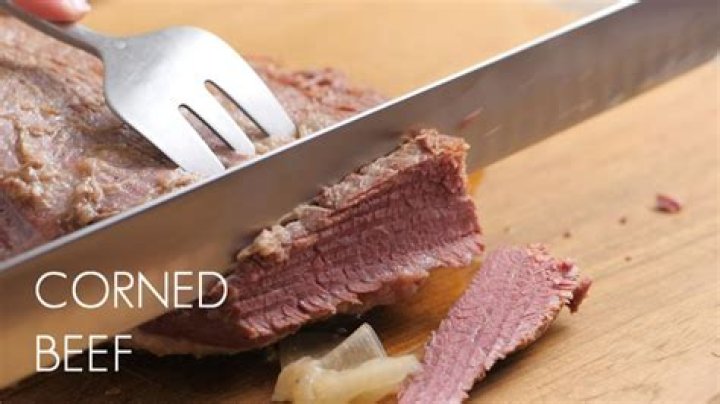
When you’re done cooking the corned beef, make sure you slice against the grain of the meat. This will produce a more tender result; if you slice with the grain, you’ll find a more tough and stringy texture when you chew. Since you’ve spent so much time cooking and tenderizing the beef, it would be a shame to undo all that hard work.
Mix the mustards
Dijon adds tang while whole-grain mustard provides texture—together, they make a great dipping sauce.
Leftovers
You’re likely to have leftover corned beef, and you have a few options for how you can use it. You can always eat it as is; however, we have some fun ways of repurposing the meat, from making a tasty corned beef hash with fried eggs to “brat reubens” on a hoagie roll. (Reuben benedicts are also a pro move.)
- How to Cook Beef Top Round Pot Roast
- How to Convection Roast a Brisket
- How to Store Cooked Ground Beef
- How to Defrost a Bone-In Ham
- How to Freeze Pot Roasts
Whether you’re putting on a bit of the Irish in March or if corned beef for dinner sounds tasty at any time of the year, a beef brisket brined with salty liquid and spices can make a delicious dinner. After slowly roasting the corned beef in the oven, it will be tender and flavorful because of the brining process. When it’s time to slice the meat, cutting corned beef should not be complicated or difficult.
Remove the corned beef from the oven when the internal temperature of the meat reaches 160 degrees Fahrenheit, according to the USDA Food Safety and Inspection Service fact sheet.
Allow the corned beef to stand at room temperature for at least 20 minutes. Some cooks prefer to refrigerate corned beef after baking it to chill before slicing because corned beef slices more easily when it is cold.
Place the corned beef onto a cutting board for slicing.
Insert the tines of the carving fork into the top of the brisket to hold it firmly.
Slice the corned beef with the carving knife, slicing the meat diagonally across the grain. Make the slices approximately 1/4- to 3/8-inch thick.
Place the sliced corned beef onto the serving platter. If the corned beef is cold, cover it with plastic wrap and reheat it for a minute or two in the microwave.
My mother-in-law was visiting this weekend and I decided to make our St. Patrick’s day feast a bit early. She is Irish and I thought it would be fun to have the traditional Corned Beef, potatoes, carrots and cabbage while she was here. While shopping for the corned beef it became apparent that I had not done my research. There are two cuts of corned beef; point and flat cut. The point cut is cheaper. Not knowing what to get, I purchased both! We needed two anyways with the crowd we had.
I made the point cut in the crockpot. I just added the seasoning packet and let it cook all day. About half way through cooking, I added the cabbage. The flat cut was placed in a roaster pan with potato chunks, carrots, the seasoning packet and water. I roasted it at 300 degrees for 6 hours.
The taste test
Out of five adults the winner was the point cut! It turns out that the point cut has more fat which makes it more flavorful and juicy. Both cuts of meat were tasty, but the point cut was the clear winner.
When preparing for your St. Patrick’s Day feast do you choose point cut or flat cut corned beef?
Point Cut VS Flat Cut
Point cut corned beef are rounder and they generally have more marbling or fat. This is the reason why a lot of people find them to be more flavorful, tender and more juicy. Flat cut corned beef or also called round cut on the other hand are leaner and easier to slice, so it looks better for presentation. When well-cooked, flat cuts also offers good flavor.
How to choose the right corned beef?
For the record, corned beef is made from the brisket. It is placed in a brine of grains and salt to cure the meat. When selecting your corned beef at the store, feel the meat. The meat should be firm. If it is soft or mushy, it contains too much fat. I thought you would all like to know that the cheaper cut of corned beef nets the best results!
ABOUT THE REVIEWER
Claudia Thompson, PhD, RD
ABOUT THE AUTHOR
Sara Ipatenco
It might not seem to matter too much how you slice your meat, but it can actually make the difference between an enjoyable meal and one that is just plain hard to chew. Cut corned beef against the grain to address this problem.
Corned beef is made from the muscle of a cow, and that muscle is formed with a variety of fibers that are attached together. When you slice against the grain in your corned beef recipe, you’re shortening these fibers, which makes the meat more tender after cooking and easier to chew.
Step 1: Examine the Corned Beef
Place your cooked piece of corned beef on a large cutting board. Make a small incision along one end of the corned beef. Then pull the meat apart, using a fork if necessary, to see which way the grain fibers of the meat run.
Step 2: Position Your Corned Beef
Arrange the piece of corned beef on the cutting board so the fibers of the meat are situated diagonally to your body.
Step 3: Trim Away the Fat
Use a sharp knife to trim away the fat around the edges of the corned beef. You don’t want to eat the fat because it can be unhealthy, and too much saturated fat may contribute to an increased risk of cardiovascular disease, according to the Mayo Clinic.
Removing the fat before slicing the meat is easier than trying to cut it off of each individual slice of corned beef.
Step 4: Slice the Corned Beef
To help prevent stringy corned beef, cut the meat at right angles to the direction of the grain. Cutting the meat into thin slices is another way to shorten the muscle fibers and help make the meat more tender than it would be with thicker slices.
If you notice that you are cutting with the grain, reposition the corned beef and try again. This way you can avoid ruining the entire piece of meat.
Consider These Tips
Using a sharp knife makes it easier to slice your corned beef, which in turn makes the meat more tender. Don’t use a serrated knife because it may tear the meat, causing stringy corned beef — both unattractive and less tender.
For an easy meal, try slow cooker corned beef. This cooking method also helps to tenderize the meat, according to PennState Extension. You should still slice the slow-cooked corned beef against the grain, however, to retain that tender texture.
Add vegetables to your dish for a one-pot meal. Place vegetables, such as potatoes and carrots, on the bottom of the slow cooker. These take longer to cook and need to be closer to the heat source, according to the University of Minnesota Extension.
Use thin slices of corned beef to make sandwiches or smother the meat with low-fat gravy. Refrigerate any leftovers within two hours for another tasty meal. Consume cooked corned beef within three to four days, as advised by the USDA Food Safety and Inspection Service, or freeze it for two to three months.
- How to Cook Sauerkraut and Kielbasa With Beer
- How to Cook Liver and Onions
- How to Cook Cabbage in a Microwave Oven
- How to Make Goulash
- How to Steam Cabbage on the Stove
Alexandra Grablewski/Lifesize/Getty Images
Corned beef is strongly associated with a certain Irish holiday, giving rise to the conclusion that it must be difficult to prepare if people turn to it only once a year. In fact, a flat-cut corned beef brisket is incredibly simple to prepare, especially if you put it in a slow cooker. Brisket comes from the chest, or underside, of a cow, so it’s a tough piece of meat that needs slow, steady cooking to become tender. Make this dish once and you might be tempted to revel in your inner Irish on a regular basis.
Set the slow cooker on “low” while you prepare the meat and vegetables. Rinse the three-pound corned beef brisket and the vegetables and set them on paper towels. Turn to the traditional favorite of onion, carrots and potatoes, but with a twist: a combination of Russets, Yukon golds and red potatoes. Slice the vegetables into bite-size pieces.
Place the vegetables at the bottom of the slow cooker. Set the corned beef on top, then sprinkle it with salt and pepper. For seasoning, add several bay leaves, a dash of peppercorns and some minced garlic.
Learn how Irish you really are by adding enough liquid to cover the corned beef brisket, with a little room to spare. Irish beer is a natural choice, but try a nonalcoholic beer, if you like. Or use chicken broth or water. Cover the slow cooker and cook the corned beef for about eight hours. Check on it occasionally through the glass. If the liquid recedes, add more.
Cut up another natural addition – cabbage – and add it to the slow cooker about 30 minutes before the dish should be done. Submerge the cabbage in the liquid and turn the setting to “high.”
Remove the corned beef from the slow cooker and check its internal temperature, if you wish. It should read at least 145 degrees Fahrenheit. Slice the corned beef against the grain – an important step that will ensure easy slicing. Remove the vegetables and potatoes with a slotted spoon and serve.
Curing your own corned beef at home is easier than you might think. It basically involves soaking a brisket of beef in a brine for several days. You’re essentially pickling the meat. If you have a marinade injector you can pump some brine directly into the meat for even more flavor.
What You Need
- A five-pound brisket of beef, with fat trimmed to about ¼ inch.
- 1 cup Kosher salt
- 1 teaspoon Prague Powder
- ½ cup sugar
- 3 tablespoons pickling spices
- 4-5 small dried red chili peppers (optional)
- 3 cloves garlic, smashed
- 4 bay leaves
- Marinade injector (optional)
Time Required: 5 Days
Steps to Make Corned Beef
- In a gallon of cold water, combine the Kosher salt, Prague powder, and sugar. Stir until dissolved.
- Using a marinade injector, pump about 10 ounces of the brine into the beef brisket. Inject the brine at various locations evenly spaced around the brisket.
- Add the pickling spices, garlic, bay leaves and optional chili peppers to the remaining brine liquid.
- Transfer the brine into a shallow nonreactive (i.e. stainless steel or glass) container and then add the brisket. You can weigh it down with a dish to keep it submerged. Cover with plastic and refrigerate for 5 days.
- Now, it’s time to cook your corned beef.
Curing Meat Warning
Curing meat requires specific expertise and failure to cure meat properly may result in sickness or death. If you have no experience in this area, we advise you to consult an expert to teach you proper techniques and applications.
Great Resources on Curing Meat
Since curing meat requires such a specific skill set, otherwise, it can lead to illness or worse, we highly recommend consulting with an expert to teach you proper techniques. We found that the following four publications are super helpful guides and go in-depth about just such processes, procedures, and techniques:
A lot of us have enjoyed corned beef without really knowing what exactly it is. The word “corned” refers to the meat being cured with salt, which was the way meat (and other foods) were preserved before refrigeration was prevalent. The story goes that the salt granules used to preserve the meat were sizable, roughly the size of corn kernels, and so the term “corned” was born. Sometimes other spices and sugar are used in the preparation of corned beef.
Beef was considered a luxury in Ireland in the 19th century, with pork being the more commonly available meat for most people. However, when the Irish started immigrating to America, beef was more readily available and affordable, so corned beef became the cornerstone of special occasion meals, St. Patrick’s Day in particular. Cabbage was very familiar to the Irish, and was also cheap and plentiful, and so that became the traditional vegetable side to corned beef. Boiled potatoes are also very traditional.
The cut of meat most commonly used to make corned beef is brisket. Whole briskets are quite large, and are comprised of two sections: the first cut, also called the flat cut, and the second cut, sometimes called the point cut. The first cut is leaner and the second cut fattier, and some people prefer one over the other. Both types are brisket are usually cut into smaller pieces, usually 3 to 6 pounds, before being sold (this is true of regular brisket, and corned beef brisket).
Most corned beef sold comes already brined with a pouch of spices for cooking. The packet has a blend of spices, such pepper seeds, dill seeds, mustard seeds, bay leaves, and other whole spices which give the meat a warm, earthy, tangy flavor. You can also buy uncooked brisket and brine it yourself, then braise or slow cook it, but it will take about a week to brine. You can also find corned beef in cans, but it won’t be as good as corned beef you cook yourself.
Plan on about ¾ pound per person — or buy a bigger piece if you’re looking for leftovers, which make excellent sandwiches.
The meat is fully cooked when it is tender, but it won’t be totally fall-apart tender like many brisket and pot roast recipes. When a skewer or a sharp knife slides in easily, it’s done. Let it sit for at least 10 minutes before cutting it to get the cleanest, neatest slices.
In traditional preparations, corned beef is usually braised on the stove, though the oven is also an option. It usually takes between 2 ½ to 3 ½ hours. But the slow cooker is also a great option, and makes super tender corned beef with a very satisfying texture. Sometimes the vegetables are cooked all the way though with the meat, which results (as you would imagine) in very well-cooked vegetables, but sometimes they are added later or cooked separately so they retain more flavor and texture.
Related
Good Eats Move over, kale. The lowly cabbage has become a culinary star.
In this slow cooker corned beef and cabbage recipe the cabbage is added at the end for only the last hour of cooking. What is different and delicious about that is that while the cabbage definitely softens and becomes tender, it still retains some texture and its pretty pale green color. Potatoes, carrots and onion and celery are the other vegetables in the mix, but I prefer to let those get nice and soft with the meat.
I like to slice my corned beef pretty thin — very thin if I’m using it in sandwiches. Make sure to cut the corned beef against the grain, for the meat to be at its most tender. Spoon over a bit of the cooking liquid if desired. This recipe also includes a lush little horseradish sauce which is downright delicious with the meat.
Some corned beef can be mushy or salty or not all that interesting. But properly made, it’s not any of these things, but rather a comforting, soul-satisfying one pot meal.
Get the recipe: Slow Cooker Corned Beef and Cabbage
Or try these two stew recipes for St. Patrick’s Day:
- Instant Pot Beef Stew
- Steak and Guinness Stew
Want more tips like these? NBC News BETTER is obsessed with finding easier, healthier and smarter ways to live. Sign up for our newsletter and follow us on Facebook, Twitter and Instagram.
This Crock Pot Corned Beef is cooked in Guinness beer, making it crispy, juicy, and simply mouthwatering. Throw in potatoes and carrots for an easy, hearty, and complete meal.
MY FAVORITE CROCK POT CORNED BEEF
Now, I may not be Irish, but I sure love to eat like I am!
When I think big family dinner – especially around St. Paddy’s Day, I automatically think Corned Beef and Cabbage! Corned Beef is a family favorite in my house and I try to make it pretty often. I especially like to prepare it in the Crock Pot because, it’s so simple and hands off.
This also makes it great for serving at large family celebrations because I can pop it in the Crock Pot earlier in the day and make sure my house is tidy and the table is set by the time family arrives. 🙌
It also frees me up to host and enjoy the time with everyone.
And to drink some Guinness! 🍻
What is Corned Beef?
Corned beef is a way to describe a cooking technique typically used on the brisket cut of beef. With this technique, the beef is preserved through salt-curing. In this process, the beef cut is cured in a brine solution along with other spices and simmered on low until the meat is both flavorful and super tender.
Corned beef is common in both Jewish and Irish traditions.
When you purchase your beef, it will likely come with a spice pack that includes bay leaves, peppercorns, and allspice. Some spices packs might include warming spices like ginger or cinnamon. All of these spices are, of course, accompanied by lots of salt, FYI.
Why Make Corned Beef in a Crock Pot?
I am a huge fan of the ease of Crock Pot meals. While cooking corned beef in a traditional fashion in the stove top is delicious, too. The Crock Pot is just so much easier! Since corned beef is meant to be simmered on low for a long period of time, it is basically perfect for cooking in the Crock Pot!
Once it is set in there, you can literally walk away for hours – or, until it’s time to add in the potatoes and carrots. And, when it’s done, you have a complete meal with super simple cleanup.
Recipe Ingredients
This is a complete meal all in one – meat, potatoes, and veggies!
Here’s what you’ll need:
- raw corned beef brisket with spice packet
- light brown sugar
- garlic
- Guinness beer
- carrots
- baby potatoes
- parsley
How to Make Crock Pot Corned Beef
- Prep: Place the corned beef, fat side up, into the slow cooker and season it with the spice packet. Sprinkle with sugar, and add the garlic and beer.
- Cook: Cover with the Crock Pot lid and cook on LOW for 4 to 5 hours.
- Add: Remove the lid and add the carrots and potatoes. Cover and continue to cook for 2 to 3 more hours, or until the corned beef is tender.
- Rest: Take the corned beef out of the slow cooker and transfer it to a cutting board. Let it stand for 15 minutes before cutting. Thinly slice the corned beef against the grain.
- Serve: Serve with carrots and potatoes and garnish with parsley.
Tips for the Best Crock Pot Corned Beef
These tips will make your Crock Pot corned beef next-level crispy on the outside and tender on the inside!
- If your corned beef is not browned on top, or if you like a bit more browning, put the corned beef under a broiler for 2 to 3 minutes, or until browned to your liking.
- Be sure to slice the beef against the grain for the most tender result.
Making your own corned beef or salt beef is so easy, it’s fascinating how something so simple as soaking a piece of beef in brine can completely transform it. Curing your own corned beef is something you really should try, it is a firm favourite in my house year round.
Table of Contents
Corned Beef or Salt Beef
Depending on where you live you might not know what corned beef actually is. In the UK people know corned beef as a highly processed tinned beef in gelatin which is in America is known as “Bully Beef”.
Corned beef is more simply a salted beef. It can be made with many cuts of beef but usually lean joints with not much fat, if you have ever tried corned beef before it is usually brisket. If you make it yourself, of course, you can choose whatever cut you like, upper or lower round, brisket or silverside. The key thing with any cut you use though is that you want it to be fairly lean.
The “corned” in corned beef comes from the type of salt that would have traditionally been used. Historically the word “corned” referred to granules, so in the case of corned beef it refers to granules of salt that is used to preserve the beef.
The process of making corned beef is simple, first of all, we have:
The Cure
The beef is soaked in a salt and sugar solution along with some nitrates with spices and flavourings. The meat is left in the brine to cure for a period of 5 – 7 days in the refrigerator. The brine penetrates right through to the centre of the meat, this process is the curing.
The Cooking
The corned beef is then removed from the brine and rinsed under cold running water. The beef is then transferred to a pot and heated to a boil. The corned beef is simmered until tender, depending on the size of the brisket or joint this usually takes around 3 hours.
Curing Your Own Corned Beef / Salt Beef
The cure is really the transformative process of turning a regular cut of beef into something quite different, in terms of flavour and also the texture, and colour.
To cure our beef, whether it is brisket or another cut we use a basic salt brine along with sodium nitrite in the form of Prague Powder #1. The sodium nitrite in this corned beef has a couple of roles. It is not strictly necessary to make corned beef but I prefer mine with this small addition.
It is a preservative. Along with the salt in the brine, Prague powder #1 is a powerful preservative. We will be curing the brisket in the fridge so the preservative effects aren’t imperative in our case.
It retains the colour of the beef. If you have ever seen corned beef you may have noticed the vivid red colour. Without the Prague powder #1 the meat will lose the red colour and go a less appealing grey. As we are boiling the corned beef we won’t have any browning either.
Add a distinct flavour. The sodium nitrite that is in Prague powder lends a distinct flavour that you find in almost all cured meats. An ordinary brine will alter the flavour somewhat but sodium nitrite does lend a little more of that savoury character synonymous with cured meats.
To find out more about the use of nitrites please read this guide.
The Corned Beef Brine
Brines are perfect for turning tough cuts into tender, succulent pieces of meat. Traditionally brines would have been used to help preserve the meat. A saline solution has anti-bacterial qualities, our early ancestors would have known that raw meat stored in brine would take longer to spoil than meat without any storage consideration.
It should be noted that, nowadays, we know there are some bacteria that can still survive in highly salty solutions, it is just a much harder environment for them. This is why we will brine the meat in the fridge to prevent any microbial growth.
Sugar is also added to this corned beef recipes brine which provides additional flavour as the cure works.
Brining achieves a few things:
Makes the meat moister. The brine is absorbed into the meat and after cooking it loses less moisture meaning the corned beef will be much juicier.
Proteins are denatured. Meat proteins are tightly ravelled and as the meat is brined they are unfolded and unravelled. This process makes the brisket more tender once cooked and moister as water can move into the muscle fibres.
Seasons the beef all the way through. As the brine is absorbed the salt is drawn through right through to the centre of the meat. This is a good opportunity to add flavour to the brine which will also be drawn into the meat.
Brine for Curing Corned Beef
Brine for curing meat like corned beef requires a salt concentration of between 5 – 8% by weight. This is easy enough to work out if you weigh both the water and the salt.
When we cook the corned beef some of this salt will be drawn out of the meat into the cooking water so the end result won’t end up tasting to salty.
To Make The Corned Beef
- 1 x 1.8kg / 4lb Brisket or other cut of lean Beef (needs to be unrolled and around 2 inches thick)
- 3 litres water
- 165 grams / 6 oz of non-iodized salt
- 2 tsp of Prague Powder #1
- 3 tbsp of pickling spice
- 2 bay leaves
- 4 cloves garlic
- 200g / 7oz dark brown sugar
Begin by preparing the brine, it is best to do this the day before you make the corned beef so you can chill it to fridge temperatures.
Take 2 litres of the water and in a pan combine it with the salt, prague powder #1, sugar, pickling spice, bay leaves and garlic. Heat and stir to dissolve the salt and bring to a simmer. Once all the salt and sugar has dissolved remove from the heat and add 1 litres of cool water to bring the temperature down. Let the brine cool and put in the fridge to chill, I usually leave it, covered, in the fridge overnight.
Trim the brisket or whatever cut of beef you have chosen. Remove most of the fat from the outside and any sinew. Place the beef in a non- reactive container such as plastic or glass that will hold the meat as well as all 3 litres of brine. Cover the beef with the cold brine and make sure it is fully submerged. Cover and place in the fridge.
Leave the beef in the fridge for 7 days. Make sure the meat is submerged and give the brine a stir once a day to ensure the brine has an even concentration of both salt and flavourings. During these 7 days the salt will slowly work it way to the center of the meat.
After 7 days remove the corned beef from the refrigerator and give it a rinse under cool running water, discard the brine. Place in a pot and submerge in water, bring to the boil and simmer. You may wish to add a few vegetables and herbs to flavour the cooking stock such as carrots, celery and onions. Boil for around 3 hours until the meat is nice and tender.
Take the corned beef out of the pot and when serving slice across the grain of the meat for the most tender slices. Corned beef is perfect either hot or cold and great in sandwiches with sauerkraut and mustard.
This delicious easy corned beef is fantastic if you’re looking to make a hearty meal that will please a crowd.
We make our corned beef using a piece of silverside or also known as bottom round. Other cuts such as brisket can be used but a good piece of silverside will work the best.
With this piece of meat, we add some vinegar, sugar, and some spices. This combination of ingredients produces a flavor-packed tender piece of beef. It’s absolutely delicious.
Once the beef is cooked, it will be infused with a ton of flavor and be deliciously tender. If you let the meat rest and cut against the grain, you can cut thin slices without it falling apart. Cutting too soon may leave you with a bunch of shredded corned beef.
Many foods go great with this meat, so I am only going to mention a couple of side dish ideas below.
While you can cook some vegetables in with the poaching liquid, I highly recommend not to. Mainly due to the vegetables taking on the flavor of the vinegar, which might make them not very enjoyable.
Roasting some vegetables while the beef is cooking in the pot is a great idea. Some sweet potato fries are also an excellent option to go alongside this delicious meal.
As you can see in the photos, I typically cook some par-boiled potatoes and greens in a frypan with some butter and garlic. They are delicious and match perfectly with the tender flavor-packed meat.
If you love corned beef and cabbage, then you should make some creamy cabbage. It’s super simple and can be made in the slow cooker or over the stove. It’s the perfect combination that I highly recommend.
Gravy is also an excellent addition to this dish but will need to be made separately. Typically a white gravy is to be served with corned beef, but a traditional brown gravy also matches amazingly well.
Some cauliflower cheese goes great with the sliced beef. You can quickly cook it just before you go to serve. The cheese sauce goes great on both the cauliflower and the meat.
Assuming you end up with leftovers, make sure you don’t throw them out as there is a ton you’re able to do with corned beef. For example, you can make some corned beef hash in the morning or even slice it up for use on sandwiches.
Any leftover cooked corned beef should last for three to four days in the refrigerator. To make it last even longer, you can freeze the meat instead. In the freezer, it will take two to three months before it starts to lose a bit of quality.
If you want to see how to make corned beef, then be sure to check out the video below. It will take you through all the steps to making this delicious meat.
Can’t see the video? Support us by whitelisting us in your adblocker.
Presentation is important, so impress your guests by slicing your corned beef like a pro.
You’ve seen them— recipes that tell you to “slice meat against (or across) the grain.” So what does it mean? And what are the conse quences if you don’t do it?
To get the gist of what the grain of meat is, we need to keep talking about meat structure.
See also How to Cook Good Corned Beef
Muscle Fibers
Okay, you know meat is made of muscle fibers. And exercised muscles have thick fibers.
Before braising your beef, take a good look at it. You shouldn’t have a problem seeing the muscle fibers (they’re easiest to see on the flat cut). On beef tenderloin, the fibers are thinner—and more tender.
Grain
See how the fibers all run in one direction? That’s the “grain.” And how you cut meat in relation to its grain makes a big difference in how tender it is in your mouth.
With or Against?
When you cut meat with the grain, you’re cutting in the same direction the fibers run. The slices are made of long fibers stacked on top of each other.
But when you slice against the grain, you’re going in the opposite direction of the grain. Now the pieces of meat are made of very short fibers stacked on top of each other.
The bottom line is short fibers are easier to chew than long ones. Thinly slicing this beef against the grain is another way to tenderize.
Slicing on a Bias
If you’ve run into the grain question, you’ve probably been told to slice meat “on a bias,” too. That just means to cut it at an angle.
Brisket is relatively flat—hence, “flat” cut. Slice it straight down, and the pieces aren’t very wide. Slicing on a bias makes the piece wider.
You don’t have to slice on a bias to make meat more tender—mostly it’s just done for looks.
Before slicing, find which way the grain of meat runs—you’ll be cutting against the grain. Here, the grain is running from left to right.
Hold beef steady with a carving fork. Then, using a sharp slicing knife, thinly slice beef against grain. Thinner slices will be more tender.
Slicing at an angle (“on the bias”) makes the pieces wider than if you sliced straight down. Bias-cut meat makes for a nicer presentation.
Before slicing, find which way the grain of meat runs—you’ll be cutting against the grain. Here, the grain is running from left to right.
Curing your own corned beef is very easy and will give you better flavors than store bought. Just make sure to allow the beef to brine for at least 7 days for best results!
Saint Patrick’s Day is coming up and I can’t think of a better way to celebrate than with a homemade corned beef dinner!
Truth be told, I did not try corned beef until I moved to the States, as it is not popular in my home country. But fate got me married to an Irish American, so I eventually came across it.
The first time it was presented to me, I confess it wasn’t a great experience. Boiled meat and veggies can be quite bland and I’m definitely more of a roasted or braised girl.
Well, after testing a few different ways to cook corned beef at home, it turns out that low and slow is the way to go. When you make it right, corned beef has a lot of flavor and has an amazing melt in your mouth texture that you can’t recreate with other methods.
I also like to go the extra mile and make a mustard glaze. It adds more flavor and a bit of color and crust to the meat. It is totally optional, but if boiled meat turns you off, this can definitely make a difference!
As for veggies, you can’t beat the classic cabbage, carrots and potatoes. To prevent mushy vegetables, I cook them after the corned beef is done. Start with the potatoes and carrots – cooking for 30 minutes – and add the cabbage at the end, as it will only take about 15 minutes to be ready!
Is Corned Beef really Irish?
While corned beef is strongly associated with Saint Patrick’s Day in the US, is it really Irish? Well, kind of.
According to the Smithsonian, if you go to Ireland today, you won’t see Irish people eating corned beef, especially on St. Patty’s Day. And although there was a time when corned beef was produced in great quantity in Ireland, that corned beef was very different than the one we know today.
What we recognize as Irish corned beef is actually Jewish. Irish immigrants in America almost solely bought their beef from kosher butchers, who made corned beef from brisket, a kosher cut of meat from the front of the cow. Since that is a tough cut, the salting and cooking methods transformed the meat into the super tender and flavorful corned beef that the Irish Americans used to eat back then and what we now know today.
How to brine Corned Beef
First things first, you need to choose a cut of beef.
As you know, corned beef is traditionally made of brisket, which is a great cut to slow cook. And that is, and always will be, my favorite cut for corned beef! You will sometimes find store bought corned beef made with round or rump roast, but – in my opinion – that doesn’t compare to brisket in both flavor and texture.
Another thing to consider is choosing between a brisket flat cut and a point cut. The point cut has more marbling and is thicker, therefore it will be more tender (to the point that it will fall apart when you try to cut it) and more flavorful. The flat cut is much leaner and will be easier to slice.
Once you’ve chosen your beef, all you have to do is make your brine with water, regular salt, pink salt, pickling spices and sugar. The beef will bathe in this brine for 7 to 10 days and will then be ready to cook!
I highly recommend that you flip the meat every day as well as give a quick stir on the brine, to prevent the salt from sinking to the bottom.
Homemade Pickling Spice
If you’re anything like me, you probably have a whole lot of spices at home. So why add buy pickling spice when you can make your own blend with what’s already in your spice cabinet?
I developed a recipe that will make just enough to use for this corned beef recipe. But if you go through a lot of pickling spice, just double (or triple) the recipe! A batch of pickling spice will last around a year and can be used in several dishes.
Here’s what you’ll need:
- All spice berries
- Black pepper corns
- Mustard seeds
- Whole Cloves
- Coriander seeds
- Red pepper flakes
- Ginger powder
- Nutmeg
- Juniper berries
- Bay leaves
- Cinnamon stick
Most of these are whole spices! Don’t substitute for ground.
No need to fret if you don’t have all the ingredients. You can customize and make a blend with what you already have, or buy just the essentials (black peppercorns, mustard seeds and cinnamon).
Still too much work? Then you can buy pickling spice at your local grocery store or online. It will work just fine!
What is Pink Salt?
Pink salt, or saltpeter, is the reason why corned beef is pink. It is a mixture of sodium chloride and sodium nitrite that is dyed pink to prevent people from confusing it with regular salt.
The nitrites not only give us the beautiful pink color but also help preserve the meat (by inhibiting the growth of bacteria) and provide that tangy flavor that is characteristic to corned beef.
So while you can certainly make corned beef without it, it won’t taste and look the same.
IMPORTANT: Make sure you’re buying pink CURING salt and not pink Himalayan salt, which is entirely different. Also, you will often find pink curing salt labeled as Curing Salt #1 and Curing Salt #2. Do not buy the #2, as that is used for air cured meats, like salami and pepperoni, that won’t be cooked.
How to Slice Corned Beef?
Since corned beef is made from tough cuts of meat, it should be sliced against the grain.
But what does that mean, exactly?
The “grain” of the meat refers to the direction that the muscle fibers are aligned. In tougher cuts, like brisket, they are clearly defined and therefore easy to identify.
Once you’ve located the direction of the grain, use a sharp knife to slice across it, rather than parallel to it. When you slice against the grain, you are shortening the muscle fibers and making the meat more tender and easier to chew.
What to serve with corned beef?
A traditional Saint Patrick’s Day feast consists of a “boiled dinner” of corned beef, cabbage, potatoes and carrots. But that doesn’t mean you can’t change things up, if you so desire. Corned beef goes great mashed potatoes or colcannon!
For me, good mustard is always a must! Also, some crusty bread – or, if you want to stick to the Irish theme, soda bread.
Just make sure you pace yourself so you can have some leftovers to make classic Reuben sandwiches. Oh, my mouth waters just thinking of those sandwiches!
If you are looking for the best, easiest way to make baked corned beef, you have come to the right place. For years I couldn’t figure out how to make corned beef just the way I liked it to taste, but as it turns out, it’s really simple: I now know how to cook corned beef in the oven!
Before we get into all the specifics of how to cook corned beef in the oven, let’s start with the basics:
What is corned beef?
At the most basic, corned beef is a piece of beef brisket that has been cured in rock ( “corn” ) salt and usually something else that you don’t really want to know about, like delicious, delicious nitrates and nitrites.
Look, in seriousness, I don’t love nitrates and nitrites either, but once a year . well I make an exception.
Because corned beef is delicious.
Corned Beef with Mustard and Seasoning
Now that you know what corned beef is, let’s move on to the how of it all. If you’d rather watch how it’s done, check out this video:
How to cook corned beef in the oven:
- Rinse the corned beef off with water and pat dry
- Rub the corned beef in your favorite mustard ( dijon for me )
- Sprinkle whatever magic seasoning was provided to you in the package of corned beef on the top ( fat side up )
- Wrap tightly in foil and place on an ovenproof pan with high sides so the moisture released during cooking doesn’t overflow
- BAKE!
How long to cook corned beef in the oven?
The time to bake corned beef in the oven until it is tender, juicy, but still sliceable, is really simple to remember! Bake it for one hour per pound, and if your corned beef isn’t a “perfect”, even weight, round up to the quarter pound for times. For instance, a 2.65 lb corned beef should cook for the same time as a 2.75 lb corned beef: 2 hours and 45 minutes.
Here’s some common times to spare you any math:
- 1 lb corned beef : bake 1 hour
- 2 lb corned beef: bake 2 hours
- 2.25 lb corned beef: bake 2 hours 15 minutes
- 2.5 lb corned beef: bake 2 hours 30 minutes
- 2.75 lb corned beef: bake 2 hours 45 minutes
- 3 lb corned beef: bake 3 hours
- 3.5 lb corned beef: bake 3 hours 30 minutes
- . you get the idea!
Don’t forget, once you take the corned beef out of the oven, it needs to REST before you slice into it, otherwise it will end up dry.
Love this recipe?
Sign up to receive a FREE eBook of deliciously easy boneless, skinless chicken breast recipes.
Enter your email address below and we’ll send you the eBook, plus one email a week with the latest recipes from Basil & Bubbly.
No spam. Pinky promise!
Thank You For Subscribing
This means the world to us!
Spamming is not included! Pinky promise.
I love to have oven baked corned beef and cabbage!
So make sure to make some sautéed cabbage to go with your corned beef. It’s a great vegetable side dish for St Patrick’s Day!
A long, slow simmer is the key to this Irish favorite.
Corned beef is a salt-cured cut of beef brisket, which is a tougher cut of beef requiring long, slow cooking in liquid to tenderize. A staple for St. Patrick’s Day, this easy-to-follow guide will make corned beef so tender you’ll want to make it year-round.
get the Food.com app.
Watch on your iPhone, iPad, Apple TV, Android, Roku, or Fire TV.
1 Soak the Corned Beef
Place the beef in your pot, cover with cold water and let soak at room temperature for 15 to 30 minutes. Soaking helps draw out some of the salt from the curing process.
2 Add Cooking Liquid
Pour out the water used to soak the beef. Sprinkle spices from the spice packet that comes with the corned beef into the pot. If you don’t have a packet or you simply want to amp up the spice, toss in a bit of pickling spice.
Add just enough water to fully cover the meat.
3 Skim Foam
Bring the pot to a boil. Use a slotted spoon to skim off any foam that forms on the top.
4 Simmer the Beef
Cover, reduce the heat and gently simmer for 3 hours until the corned beef is fork-tender.
5 Prepare the Vegetables
Corned beef’s classic veggie partner is cabbage. When the 3-hour slow-simmer time is almost up, cut one small to medium-sized head of cabbage into large wedges.
6 Add Vegetables
Place prepared vegetables in the pot with the corned beef. Increase heat to return the pot to a boil. Once boiling, reduce heat, cover and continue to simmer gently for about 30 minutes or until vegetables are tender.
7 Slice and Serve
Remove corned beef to a cutting board and trim off the fat. Cut the meat into slices, placing slices on a serving platter. To make the meat more tender, slice corned beef across the grain (with the knife running perpendicular to the lines of the meat).Use a slotted spoon to remove vegetables from the pot, letting excess water drain. Place vegetables on the serving platter alongside the meat.
About Kitchen Is My Playground
Tracey is the creator of the popular blog The Kitchen Is My Playground, which she founded in 2011. Her goal is to share recipes with other home cooks looking to create flavorful (and somewhat adventurous) food for their families and friends. Connect with her on Pinterest, Facebook, Twitter or Google+.
- How to Cook a Deer Neck Roast in a Slow Cooker
- How to Convection Roast a Brisket
- Different Cuts of Steak
- How to Cook a Large Amount of Corned Beef
- How to Cook a 15-Pound Rib Roast
Corned beef is a style of meat that is often made from tougher cuts of beef, such as the rump, round or brisket. Turning these meats into corned beef requires “curing” or “pickling” — a process that many home cooks find too time-consuming. As a result, many people choose to purchase a brisket that has already gone through the curing process.
Brisket
The brisket is a specific cut of meat from an area near the cow’s shoulder and leg. It is a muscle that is used when walking, which is why it is tougher than many other cuts. Briskets come in either a point cut or flat cut, with the point slightly rounder with more fat.
Corning
For a piece of brisket to become corned beef it must first be cured. The curing process once consisted of using pellets, or “corns,” of coarse salt rubbed into the meat to prevent spoiling. Since the advent of refrigeration, the beef is soaked in salt water along with common spices like black peppercorn and bay leaf. You can get cured corned beef brisket from your supermarket sealed in a plastic bag.
Cooking Times
Since the brisket is a tougher cut of meat, longer and slower cooking times produce the most tender results. Preheat your oven to 350 degrees F and place the corned beef brisket in a baking dish with the fat facing up. Barely cover the entire brisket with water, place the cover on the dish and cook for one hour per pound; for a three-pound brisket, that’s three hours. You can also place the brisket fat side up in a pot on the stove, covered with water. Bring the water to a boil and then simmer for one hour per pound. Add any vegetables during the last 20 minutes of cooking. For a slow cooker, cover the brisket with water and cook on high for the first hour, and then for 10 to 12 hours on low, or continue on high for five to six more hours.
Serving
When your corned beef brisket is ready, allow it to rest for 10 to 15 minutes, and then slice it diagonally against the grain. Slicing with the grain makes the meat chewy and tough. Serve it with your choice of vegetables, rice or potatoes and save any leftovers for sandwiches later on.
Curing your own corned beef is very easy and will give you better flavors than store bought. Just make sure to allow the beef to brine for at least 7 days for best results!
Saint Patrick’s Day is coming up and I can’t think of a better way to celebrate than with a homemade corned beef dinner!
Truth be told, I did not try corned beef until I moved to the States, as it is not popular in my home country. But fate got me married to an Irish American, so I eventually came across it.
The first time it was presented to me, I confess it wasn’t a great experience. Boiled meat and veggies can be quite bland and I’m definitely more of a roasted or braised girl.
Well, after testing a few different ways to cook corned beef at home, it turns out that low and slow is the way to go. When you make it right, corned beef has a lot of flavor and has an amazing melt in your mouth texture that you can’t recreate with other methods.
I also like to go the extra mile and make a mustard glaze. It adds more flavor and a bit of color and crust to the meat. It is totally optional, but if boiled meat turns you off, this can definitely make a difference!
As for veggies, you can’t beat the classic cabbage, carrots and potatoes. To prevent mushy vegetables, I cook them after the corned beef is done. Start with the potatoes and carrots – cooking for 30 minutes – and add the cabbage at the end, as it will only take about 15 minutes to be ready!
Is Corned Beef really Irish?
While corned beef is strongly associated with Saint Patrick’s Day in the US, is it really Irish? Well, kind of.
According to the Smithsonian, if you go to Ireland today, you won’t see Irish people eating corned beef, especially on St. Patty’s Day. And although there was a time when corned beef was produced in great quantity in Ireland, that corned beef was very different than the one we know today.
What we recognize as Irish corned beef is actually Jewish. Irish immigrants in America almost solely bought their beef from kosher butchers, who made corned beef from brisket, a kosher cut of meat from the front of the cow. Since that is a tough cut, the salting and cooking methods transformed the meat into the super tender and flavorful corned beef that the Irish Americans used to eat back then and what we now know today.
How to brine Corned Beef
First things first, you need to choose a cut of beef.
As you know, corned beef is traditionally made of brisket, which is a great cut to slow cook. And that is, and always will be, my favorite cut for corned beef! You will sometimes find store bought corned beef made with round or rump roast, but – in my opinion – that doesn’t compare to brisket in both flavor and texture.
Another thing to consider is choosing between a brisket flat cut and a point cut. The point cut has more marbling and is thicker, therefore it will be more tender (to the point that it will fall apart when you try to cut it) and more flavorful. The flat cut is much leaner and will be easier to slice.
Once you’ve chosen your beef, all you have to do is make your brine with water, regular salt, pink salt, pickling spices and sugar. The beef will bathe in this brine for 7 to 10 days and will then be ready to cook!
I highly recommend that you flip the meat every day as well as give a quick stir on the brine, to prevent the salt from sinking to the bottom.
Homemade Pickling Spice
If you’re anything like me, you probably have a whole lot of spices at home. So why add buy pickling spice when you can make your own blend with what’s already in your spice cabinet?
I developed a recipe that will make just enough to use for this corned beef recipe. But if you go through a lot of pickling spice, just double (or triple) the recipe! A batch of pickling spice will last around a year and can be used in several dishes.
Here’s what you’ll need:
- All spice berries
- Black pepper corns
- Mustard seeds
- Whole Cloves
- Coriander seeds
- Red pepper flakes
- Ginger powder
- Nutmeg
- Juniper berries
- Bay leaves
- Cinnamon stick
Most of these are whole spices! Don’t substitute for ground.
No need to fret if you don’t have all the ingredients. You can customize and make a blend with what you already have, or buy just the essentials (black peppercorns, mustard seeds and cinnamon).
Still too much work? Then you can buy pickling spice at your local grocery store or online. It will work just fine!
What is Pink Salt?
Pink salt, or saltpeter, is the reason why corned beef is pink. It is a mixture of sodium chloride and sodium nitrite that is dyed pink to prevent people from confusing it with regular salt.
The nitrites not only give us the beautiful pink color but also help preserve the meat (by inhibiting the growth of bacteria) and provide that tangy flavor that is characteristic to corned beef.
So while you can certainly make corned beef without it, it won’t taste and look the same.
IMPORTANT: Make sure you’re buying pink CURING salt and not pink Himalayan salt, which is entirely different. Also, you will often find pink curing salt labeled as Curing Salt #1 and Curing Salt #2. Do not buy the #2, as that is used for air cured meats, like salami and pepperoni, that won’t be cooked.
How to Slice Corned Beef?
Since corned beef is made from tough cuts of meat, it should be sliced against the grain.
But what does that mean, exactly?
The “grain” of the meat refers to the direction that the muscle fibers are aligned. In tougher cuts, like brisket, they are clearly defined and therefore easy to identify.
Once you’ve located the direction of the grain, use a sharp knife to slice across it, rather than parallel to it. When you slice against the grain, you are shortening the muscle fibers and making the meat more tender and easier to chew.
What to serve with corned beef?
A traditional Saint Patrick’s Day feast consists of a “boiled dinner” of corned beef, cabbage, potatoes and carrots. But that doesn’t mean you can’t change things up, if you so desire. Corned beef goes great mashed potatoes or colcannon!
For me, good mustard is always a must! Also, some crusty bread – or, if you want to stick to the Irish theme, soda bread.
Just make sure you pace yourself so you can have some leftovers to make classic Reuben sandwiches. Oh, my mouth waters just thinking of those sandwiches!
This St. Patrick’s day step up your game with this smoked Corned Beef Brisket recipe. Follow these steps for perfect corned beef every time. Using a Pellet grill to smoke Corned Beef is the best way to guarantee perfectly cooked corned beef every time.
Why Smoke Corned Beef?
If you’re like me then you would agree everything tastes better with a kiss of smoke. Corned beef is no different. Smoked corned beef has all the familiar flavors of traditional corned beef but with a little extra flavor that only comes from using a pellet grill or smoker.
Using a pellet grill to make smoked corned beef is so easy because you can put in your temperature probe and go about your day. No worrying about adding logs to the fire or constantly opening the smoker to check temps. The old saying is definitely true “If you’re lookin’ it ain’t Cookin”. I personally own the Rec Tec 700. In my opinion there is not a better pellet grill on the market. Any pellet grill will work but this is the one I recommend if you’re in the market.
My Top 5 Favorite Pellet Blends
- RecTec Ultimate Blend
- Lumberjack Competition Blend
- Camp Chef Competition Blend
- Traeger Texas Blend
- Pit Boss Competition Blend
What to look for when buying Corned Beef.
Most people prefer a corned beef brisket that is fairly lean and slices into uniform cuts. At most grocery stores you will find 3-6 pound brisket portions that have been trimmed down from a much larger piece. This makes it a lot easier to cook because it requires almost zero trimming ahead of time. The only trimming I recommend is if you see any oddly shaped pieces hanging off or a hunk of fat that wasn’t removed.
When looking for a brisket at the store look at the bottom of the brisket in the packaging. It should look lean with a thin fat cap. It should be flat and squared off. If the corned beef looks like a rounded misshaped hunk of meat it will cook and slice unevenly. Depending on how many portions you will need will determine how large a section to buy.
If buying and smoking multiple pieces try to buy similar sized pieces so they cook in roughly the same amount of time. Also remember that you will lose about 40% I total weight after the corned beef is fully cooked. My 3 lb hunk of brisket ended up weighing in at 1 pound 10 ounces when I pulled it off the smoker. I recommend a least 6-8oz of cooked brisket per person so factor that in when figuring out how much to buy. Keep in mind leftover smoked corned beef is never a bad thing because there are so many things you can make with the leftovers.
What to serve with Smoked Corned Beef??
Obviously cabbage is the first thing people think of to serve along with corned beef. I have a great recipe for butter roasted Everything but the bagel cabbage wedges that are one of my favorite cabbage recipes. Potatoes are not your friend if you’re keto but you can always substitute my Cauliflower Colcannon. I would also recommend my Jameson Mustard Glaze that I serve over pork chops normally but are a fantastic sweet contrast to the smoky salty corned beef.
How to slice Corned Beef
When using small sections of a whole brisket it can be a little tricky on what direction to slice the corned beef. You want to slice across the grains of the beef others you will have stringy slices of meat. The best way is to turn the corned beef upside down on the lean side to see which direction the grains are heading on the brisket. Then flip it back over and make ⅛ inch thick slices. Feel free to cut then thicker if you feel the brisket crumbling or thinner if you feel like the smoked corned beef isn’t as tender as you would like. Make sure to have a sharp knife and always let the brisket rest for at least 30 minutes before slicing.
A few last tips for smoked corned beef
Once the smoked corned beef has reached about 170 degrees F you may hit a stall. The beef temperature seems to get stuck and stays the same temperature for a while. This is the temperature where the connective fibers in the meat start breaking down. To help push through this phase I place the corned beef into aluminum pans and pour about ½ a beer. The rest you’ll have to dispose of on your own. wink wink! Cover the aluminum pan with foil but it doesn’t need to be sealed tightly. This will help the meat push through the stall and finish cooking. Plus the beer along with the natural juices from the brisket will collect to make a great au jus. This will keep the sliced corned beef moist after it’s fully cooked.
There is no magic time or temperature when smoking corned beef. It’s all about the feel. You should always have an instant read thermometer that will not only let you know the internal temperature of the brisket but it will also act as a probe to check the tenderness of the meat. Once the brisket has reached about 200-205 degrees F. It’s time to start checking for tenderness. Poke the brisket with the probe in different places to see how tender the meat is. If the brisket feels tough then you need to keep cooking but if the probe slides in with very little effort you know it’s done. Make sure to let the corned beef rest in the aluminum pan covered with foil for at least 30 minutes. Open one corner of the pan just a little to let the steam out so the brisket doesn’t overcook.
ok im having a dumb blonde moment how do i cut my corned beef? at an angel i know people say against the grain but what exactly does that mean? plez put it in dummy terms im a lttle slow today thanx!! no jokes either!
8 Answers
When you talk about the grain in meat, you are talking about the strands of muscle that make up the meat. With corned beef (especially a brisket) those strands are quite visible. If you cut with the grain, you’ll like long strings of cooked muscle. If you cut across the grain, you are cutting those strands and the meat will be tender because the strands are cut into short bits.
How To Cut Corned Beef
How To Slice Corned Beef
This Site Might Help You.
how to properly cut corned beef?
ok im having a dumb blonde moment how do i cut my corned beef? at an angel i know people say against the grain but what exactly does that mean? plez put it in dummy terms im a lttle slow today thanx!! no jokes either!
For the best answers, search on this site
Allow to warm on a plate for five – ten minutes. Grill on a preheated HOT grill using gas or charcoal for 5-8 minutes per side depending on thickness. If you have a tough piece of meat, and you don’t have a meat tenderizer, you can poke many, many times with a corn holder. A fork makes too big of a hole. Also, soften some butter, add some of your favorite seasoning, Italian, Creole, Tex Mex. whatever, mix with parsley, chill and serve some on top of the grilled steak. You can make a cheaper cut of beef seem much more expensive by using a marinade, tenderizing and topping with seasoned butter. Hope this helps – Kent “The Deck Chef” Whitaker
It is correct. Across the grain. Slice a piece and you can tell if your correct or not. I like mine thinly sliced and it must sit 20 minutes before cutting.
Try cutting a slice. If it crumbles, cut it the other way. Good luck with life, it’s sure to be a series of adventures ;-).
Many people planning to celebrate St. Patrick’s Day on Tuesday will likely be sitting down to a traditional and savory meal of corned beef and cabbage. However, if making this holiday staple seems a little daunting, don’t worry–we have a fool-proof recipe for you that will make this as easy as finding something green. Here’s how to make corned beef and cabbage for St. Patrick’s Day (via Taste of Home.)
What You Need:
- 1 Corned Beef Brisket with Spice Packet
- 2 tbs. Brown Sugar
- 2 Bay Leaves
- 3 ½ Pounds Small Potatoes, Peeled
- 8 Medium Carrots, Halved Crosswise
- 1 Medium Head Cabbage, Cut into Wedges
For Horseradish Sauce:
- 3 tbs. Kerrygold Butter
- 2 tbs. All-Purpose flour
- 1- 1 ½ cups Reserved Cooking Juices from Corned Beef
- 1 tbs. Sugar
- 1 tbs. Cider Vinegar
- ¼ cup Horseradish
For Optional Mustard Sauce:
- 1 cup Sour Cream
- 2 tbs. Dijon Mustard
- ¼ tsp. Sugar
How To Make It:
1. Place the corned beef, contents of the seasoning packet, brown sugar and bay leaves in a large Dutch oven or stockpot and cover with water. Bring to a boil, then reduce heat and simmer, covered, for two hours.
2. Add the potatoes and carrots and return to a boil. Reduce the heat and simmer, covered, until the beef and vegetables are tender, appx. 30-40 minutes.
3. Add the cabbage to the pot and return to a boil. Reduce the heat and simmer, covered, until the cabbage is tender, appx. 15 minutes. Remove the vegetables and corned beef and keep warm.
4. Strain and reserve 1 ½ cups of cooking juices and skim fat from them for the sauces.
5. Cut beef across the grain into slices and serve with vegetables and sauces.
6. To make Horseradish Sauce: In a small saucepan, melt butter over medium heat and stir in flour until smooth. Gradually whisk in 1 cup of the reserved juices and stir in sugar, vinegar and horseradish. Bring to a boil, stirring constantly. Cook and stir until thickened. If desired, you can thin with additional juices. Season to taste with additional sugar, vinegar or horseradish.
7. To make the Mustard Sauce, Mix all ingredients together and serve.
Soon it’ll be Saint Patrick’s day. It’s one of my favorite holidays of the year!
Everyone is in good spirits and most of all, everyone loves to eat corned beef.
What is a corned beef?
Corned beef is cut of beef ” usually a brisket ” that has been soaked in a brine to cure the beef and make it last longer. Rock salt is used to create the brine. The bits of rock salt were nicknamed ” corns “due to thier shape. That’s how the name ” corned beef ” came about.
Brining helps the meat also to break down and to make it tender.
What is the best corned beef for you?
There’s 3 cuts to choose from!
1. Think cut.
2. Thin cut.
3. A whole corned beef.
Thick cut of corned beef
A thick cut ( also known as the point cut ) corn beef is from the top have of a whole brisket. This piece of meat also has the decal attached to it. It’s a very fatty piece, but taste amazing after it’s finished being cooked.
A little smaller than a thin cut of corned beef, the thick cut is perfect for 2-3 people. It’s also on sale this time of year and is the most inexpensive out all the different types of cut of corned beef in this article.
Its inexpensive, priced around 2$ -4$ a pound from now until St Patrick’s day. A thick cut wieghs 2-5 pounds. The thick cut has a little bit more fat than the thin cut, but it also makes it taste better!
Thin cut of corned beef
A thin cut of corned beef will have less fat on them than the thick cuts do. Thin cuts ( or a flat cut ) has more meat on them also. Thier is no decal attached to this piece. I feel this cut is best for serving more than 3 people. They come in all shapes and sizes, so pick one out accordingly.
Most people prefer this piece. A thin cut will wiegh anywhere from 2-5 pounds. It’s also on sale in most places from now, until St Patrick’s day. prices will vary from 3$-5$ a pound.
I enjoy this cut also, either way you can’t go wrong.
A whole piece of corned beef
A whole cut of corned beef is a intire brisket that has been soaking in brine. It wieghs around 6-7 pounds for the intire package. This cut is great for a family or a St Patrick’s day party. A 6 pound piece will feed 10 easily.
Tips to know before you pick out your next corned beef
* When you cook your corned beef it will shrink. You will lose about a half of a pound in wieght. Take this into account before figuring how big of a piece you need.
How to cook one
*There’s only one way to cook a corned beef and that’s in a Crock-Pot. A Crock-Pot is simple and they’re cheap. You can leave it to cook all day with little work. Add some carrots, potatoes, and cabbage to your corned beef and you’ll have great St Patrick’s day dinner.
You could add the fennel seeds if you enjoy the flavor. I usually don’t use them though.
The best size for you.
* Size all depends on how many people you are feeding. I go with 3/4 of a pound per person as a guide. I added a little extra weight due to your corned beef will shrink after you cooked it.
If you enjoyed this article, than check out my vlog on this subject.
Thanks for reading!
Happy St Patrick’s day
The Hamptons butcher
Author: kfm
Hello, and welcome. I am the Hamptons butcher and have been a butcher fr 20 years. I traveled a lot and studied different cuts of meat from around the world. I enjoy what i do, but i enjoy even the art behind what i do. View all posts by kfm
2 thoughts on “Learn how to pick out a package of corned beef to celebrate St Patrick’s day with.”
Thank you so much for the great article, it was fluent and to the point. Cheers.
Thank you so much for the great article, it was fluent and to the point. Cheers.
People participate on the sidelines of the annual St. Patrick’s Day parade along 5th Ave. on March 17, 2018, in New York City. Stephanie Keith/Getty Images
Many families mark St. Patrick’s Day with a corned beef and cabbage dinner but when it comes to cooking up the annual meal, there are a few ways to go.
Celebrated annually on March 17, St. Patrick’s Day is the anniversary of the death of Saint Patrick, the patron saint and national apostle of Ireland. While the holiday has transformed into a massive drinking event, until the 1970s, Irish law mandated the pubs close on March 17, according to History.com.
Modern revelers may also be shocked to learn that a truly traditional St. Patrick’s Day wouldn’t include corned beef and cabbage. It wasn’t until people from Ireland immigrated to America that corned beef and cabbage became an Irish meal, according to History.com. Corned beef was a tasty, cost-efficient alternative for pork and cabbage was economically efficient.
How to Make Corned Beef and Cabbage
One of the benefits of corned beef and cabbage is that it can all be cooked in one pot, so cleaning up is easy.
Buying corned beef can be a little bit confusing, as there are two ways to go about it. You can either buy ready-to-cook corned beef, which is brisket that’s already been cured, or you can buy beef brisket and cure the meat yourself. Just a head’s up, it takes about seven days to properly brine your own corned beef.
Once you have your corned beef ready to go, you’ll want to fill up a large pot with water and place the meat inside. The pot should be filled enough that the water covers the meat. Then, put the lid on and simmer for about an hour per pound. When the meat is tender, boil for about 10 minutes and add the cabbage, which should be cut into wedges. To make the cabbage tender, it will need to be boiled for about 15 minutes.
Once the cabbage is ready, remove the meat and slice it on a cutting board. Then, remove the cabbage and serve together. Some people serve their corned beef and cabbage with potatoes and put mustard on their table for those who want to add the condiment.
People participate on the sidelines of the annual St. Patrick’s Day parade along 5th Ave. on March 17, 2018, in New York City. Stephanie Keith/Getty Images
How Long to Boil Cabbage
There are multiple different kinds of cabbage, but the most common to serve on St. Patrick’s Day is green cabbage, which has wide fan-like leaves. Before boiling, peel off the outer leaves, which may be wilted or discolored, and thoroughly wash the cabbage head.
Fill a pot of water and bring it to a boil. Then, add the cabbage. Shredded cabbage should cook in about five minutes, but wedges, since they’re thicker, will likely take about 15 minutes. Once the cabbage is tender, either pour it into a colander or use a slotted spoon to remove.
Cooking Corned Beef in a Crock-Pot
Maybe you went out on Saturday night and aren’t feeling up to preparing a corned beef and cabbage meal or maybe you just have better things to do. Fortunately, there’s a way even those without a private chef can let someone – or something – else do the cooking for them.
Skinnytaste’s crock-pot corned beef and cabbage recipe calls for:
- Two pounds lean corned beef
- One cup of frozen pearl onions
- Two medium carrots, peeled and cut into pieces
- Two medium parsnips, peeled and cut into pieces
- One small cabbage head, cut into six wedges
- 1/4 cup chopped free parsley
- Two bay leaves
- 1/8 teaspoon whole peppercorns
Put the corned beef, onions, carrots, parsnips, parsley, bay leaves and peppercorns in a five or six-quart crock-pot, along with three cups of water. Cover and cook on high for four hours, then add the cabbage and cook on high for an additional hour and twenty minutes.
St. Patrick’s Day fare traditionally includes corned beef, but this savory specialty can be prepared any time of the year. You can add corned beef to sandwiches, casseroles and eggs for a delicious meal. Here are five tips to making the heartiest, yummiest corned beef:
Invest in quality beef
Corned beef is traditionally made using brisket, which is taken from the cow’s front breast section. Since the cow usually exercises these parts, the precooked cuts are relatively lean. When possible, try to buy fresh meat directly from a butcher, instead of pre-packaged cuts. If you do have to use packaged meat, keep an eye out for a high grade. To select a good cut, first make sure the meat has a deep red color. Avoid graying meat, as that likely means the cut has been refrigerated for too long. You should also look out for a nice layer of fat over the meat. Note that the meat will shrink as you cook, so pick up generous portions.
Choose your cut carefully
Brisket usually comes in point cuts or flat cuts. Point cuts are rounder and have more marbling, which means you can get more flavor and juiciness from the fat. The leaner flat cuts are easier to slice uniformly. Choose the cut that best fits your needs. While point cuts may be tastier, well-cooked flat cuts offer a great deal of flavor. Leftover flat cuts are usually better for making sandwiches, since the lean meat slices and dices so cleanly.
Be patient
The less tender cuts of meat require slow, moist cooking to achieve their full potential. Excessively high heat will only make your meat tough, so make sure to simmer slowly. Your cooking time will depend on the amount of meat you are preparing. A good time gauge is approximately 50 minutes for every pound of beef, but you should keep an eye on it and simply stop when the meat is nice and tender. Cooking too long can cause the meat to fall apart, which is worse for sandwiches. To be on the safe side, U.S. Food and Safety Inspection recommends cooking raw corned beef to a minimum of 145 degrees Fahrenheit. In short, give yourself a lot of time, since the simmering process can take as long as 5 hours. Munch on a lot of snacks, as the anticipation of cooking corned beef will definitely whet your appetite.
Don’t be shy about spice
Corned beef often comes with a packet of spices, but you may want to start from scratch. You can pick up a pickling spice blend from the grocery store or make one up from your own spice rack. Common corned beef spices include peppercorn, bay leaves, allspice, cinnamon, ginger, coriander, cloves, nutmeg and mustard seed. You can also throw in some fresh garlic for added flavor. If you have purchased packaged corned beef brisket, the beef may already be seasoned. Cook a small piece to find out whether you still need to add spices.
Bring on the beer
If you are looking for that extra kick, a glass of beer might do the trick. The beer will soak in and infuse your meat with flavor while adding moisture. Opt for an Irish stout beer, but be aware that stronger varieties can be bitter. As a complement to the beer flavor, season your corned beef with brown sugar. Once your meal is ready, you can easily pair the corned beef dish with your beer for a sublime St. Patrick’s Day (or any day) dinner.
Introduction: BBQ Corned Beef!
We all have had barbecue brisket. We have all had corned beef brisket. This instructable we combine the two..
Corned beef briskets are available in many areas year round, but the best deal is to buy them around St Patrick’s day when they are in plentiful supply at discount prices. They keep very well in the deep freeze.
Step 1: The Recipe.
1 Corned beef, this is a “point cut”, they tend to be less expensive then a “flat cut” but it makes little difference.
The Glaze:
2 TBS light brown sugar, you can use dark, but white sugar is out
4 TBS Prepared yellow mustard
2 tsp Worcestershire sauce
1 tsp dried onion
1/2 tsp chili powder
1/2 tsp garlic powder or 1 clove fresh, finely chopped.
1/2 tsp prepared horseradish (optional)
hickory (or any other hardwood chips you prefer)
cheap red wine
Don’t forget the charcoal! Hardwood lump.
Step 2: The Night Before.
The night before:
This step is optional, I do it because the corned beef has a strong salt flavor of it’s own, this ensures some smoke flavor.
Place a big handful of wood chips in a container with a cover
Pour some of the red wine over the chips
Save the rest of the wine for sangria!
Step 3: Early in the Morining..
Get up early on the morning of the cooking and start prepping the corned beef. Because we are not boiling it we need to get rid of some of the “saltiness” in the meat. To do this we need to soak the brisket at room temp for a couple of hours.
Un-pack the brisket rinse it off and place it in a large pot. Cover the brisket with water and wait.
Spoilage isn’t a concern due to the salt and sodium nitrate already in the meat.
Step 4: 2 Hours Later
Pull the brisket out of the pot and pat it dry. Lay it in a prep pan.
Mix up the glaze:
In a bowl mix up:
2 TBS brown sugar
2 TBS prepared yellow mustard
1 TBS Worcestershire sauce
1 tsp dry onion
1/2 tsp chili powder
1/2 tsp garlic powder or about 1 clove fresh, chopped finely
1/2 tsp prepared horseradish (optional)
Mix the above and brush it on the brisket top and bottom.
As an aside note, this glaze is also very good on ham for those times you want a “different” flavor.
Step 5: Out to the Barbecue.
While the brisket sits and adsorbs some of the flavor from the glaze it’s time to fire up the barbecue. I used a “kettle” type barbecue for this.
I start the fire with a chimney type charcoal starter, no extra “fuel” to add obnoxious flavors. I also use “lump” charcoal which is charcoal made from wood lumps. I don’t like briquettes for slow cooking foods, I am fearful that the binders used don’t get burned completely and end up in the food. Save the briquettes for the hamburgers and hot dogs!
Once the coals are burning I place a water pan on the lower grate next to where the fire goes and then place the coals in. Fill the pan with water. It’s function is to catch the drips and provide a little “moisture” to the heat. It also helps keep the coals off center as this it an “indirect” heat method. What ever you do, do not place this directly over the coals, as the sugar in the glaze can ignite if it drips onto the fire.
Once the lit coals are in I top up with additional charcoal and the wood chips soaked in red wine.
Step 6: The Meat..
After the barbecue is lit and heating up go grab the brisket and place it on the grate, fat side up.
Cover and adjust the vents you want the temp in the barbecue to be around 250F plus or minus about 20F. This is the hardest part, you’ll have to fiddle with the vents every 15-20 min or so until the temp stabilizes. Once it does just check it every 30-40 min to make sure the temp is in the desired range. If for some reason it starts dropping you may have to add more charcoal (for example on a cold day).
After 6 hours or so you can start checking it for “tenderness”. I like my corned beef a little tougher than some (I gotta enjoy my teeth while I have them. right?) so when a fork goes in just shy of what some would call “fork tender” is when I pull it off. Leave yours until you get the desired “tenderness” level. Depending on the brisket this can take up to 10 hours.
Step 7: Carve and Enjoy!
Rest the brisket for around 10 minutes.
Slice the brisket thinly across the “grain”. Serve it with your favorite sides and enjoy!
Since I came up with this recipe we almost never have “plain” corned beef. I’m not claiming to be the originator of this style of corned beef. I took my ideas from what I have read on the internet and elsewhere and experimented extensively. Your welcome to modify this to suit your tastes.
This is for the “Low and Slow” barbecue contest. This is something my family really enjoys and I hope you will too!