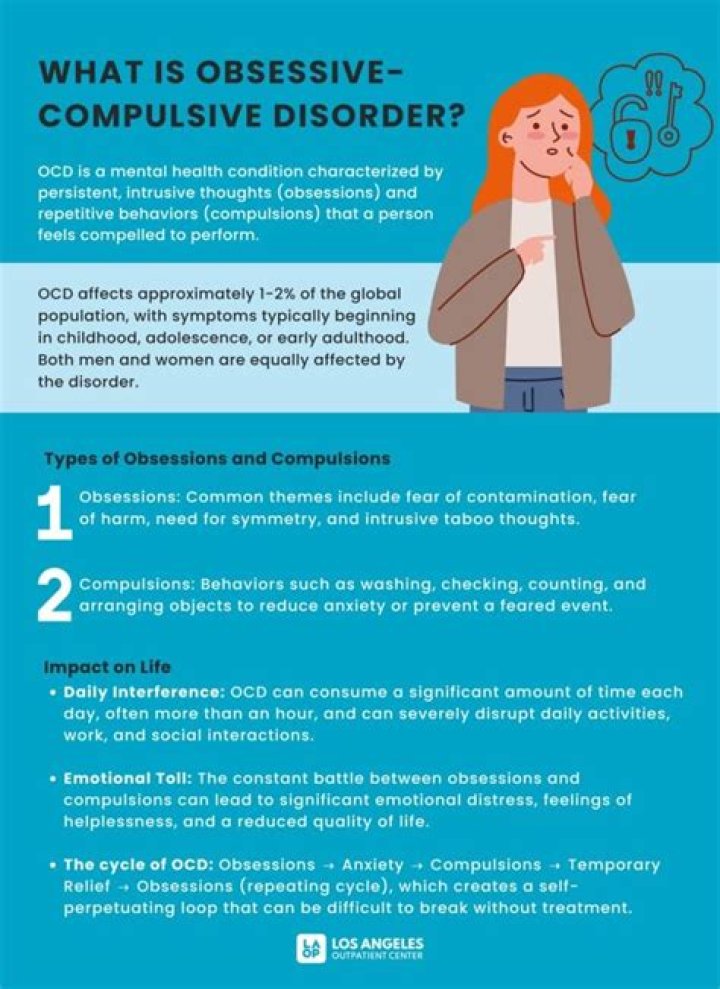
Obsessive Compulsive Disorder (OCD) affects millions of people in the U.S. and around the world. If one of those people is someone you love, you know that the impact of OCD reaches far beyond the person who has been diagnosed with this disorder.
Much has been written about OCD and its treatment. Much less has been written about the spouses, families, and friends who must watch a loved one suffer, and who must also live with the effects of the disorder every day. In an article on families of OCD sufferers, Heidi and Alec Pollard, two experts in the field of OCD, state: “OCD is a family affair. The toxic tentacles of this disorder extend far beyond its identified victim.” This section of our website is a guide for you. It was written to help you help your loved one gain control over OCD, restore relationships that have been strained by the demands and heartbreak of this disorder and help you get the help you most likely need.
Steps To A Better Life
Life with a person who has OCD is filled with conflicting emotions. If you feel frustrated, angry, overwhelmed or hopeless, you are not alone. Today, there are new and more effective coping strategies for dealing with OCD-related difficulties. Families and friends can now take advantage of various “tools” that are effective in improving interactions between you and the OCD sufferer, and, at the same time, can help him or her succeed in the treatment process. Very importantly, when you interact with and/or provide care to an individual with OCD, you must take care of your own physical and emotional well-being.
First Things First
Some very important steps to help your loved one begin with you:
Learn about OCD
You will need to understand what your loved one goes through with this frequently debilitating disorder. We recommend you visit the OCD Facts, Individuals, or Parents section of this website for more information about:
You can access the OCD Facts, Individuals and Parents sections through the Home page of this website, or through these links:
Become a Catalyst for Change
We urge you to follow these guidelines:
- Help your loved one find appropriate treatment for OCD and encourage him or her to actively participate in the therapy process. Effective treatment is the most important step in gaining relief.
- Stop enabling OCD in your household or in your relationship. Participating in rituals with your loved one or accommodating avoidance behavior actually does not help. In fact, the effect can be just the opposite.
- Try to establish a positive emotional climate in the home. How you communicate with your loved one as well as the level of support you provide cannot be overemphasized.
If this sounds easier said than done, we understand your skepticism. Beyond OCD’s mission is to help people with OCD get relief, help their families and friends develop the key skills to become agents of change and help initiate dramatic improvements for everyone in the life of an OCD sufferer. The following sections will help you get started:
Take Care of Yourself
Before an airplane ever leaves the ground, flight attendants provide important instructions about what to do in an emergency. One of those instructions is particularly noteworthy: Put on your own oxygen mask before trying to help anyone else. The basic message is that unless you first take care of yourself, you won’t be able to help others. Yet this fundamental idea is frequently ignored by family members of individuals with OCD. And even though research has indicated that family members report some – if not severe – distress adjusting to OCD, they seldom seek the professional help they need. Instead, they usually focus on the individual with OCD.
In their article on family members of OCD sufferers, Heidi and Alec Pollard list six family help-seeking myths and the fallacies behind them.
1. Myth: The only way for my life to improve is if the person with OCD gets better.
Fallacy: Although life will almost certainly be better for family members if the person with OCD gets better, there are no guarantees that he or she will. You need to do whatever you can to improve the quality of your own life, even if the OCD sufferer does not recover.
2. Myth: It’s selfish to try to help myself.
Fallacy: This myth implies that it’s inconsiderate to be concerned about your own well-being and that helping yourself is somehow harmful to other people. In reality, when you take care of yourself, you are in a much better position to help others.
3. Myth: Getting help for me will jeopardize my efforts to help the person with OCD.
Fallacy: When you’re less overwhelmed by frustration, guilt, and other negative emotions, you are in a better state of mind and will actually be more effective in helping your loved one.
4. Myth: The person with OCD will get upset if I get help.
Fallacy: There actually is a very good chance that the person with OCD will become angry if you seek help. But the fallacies lie with the underlying assumptions of this myth:
(a) You can control whether or not the person with OCD gets upset (you can’t).
(b) The person with OCD won’t get upset if you don’t get help (but he or she may get upset even if you don’t get help; you can’t control this).
5. Myth: I shouldn’t have to be the one to change.
Fallacy: This myth is based on the laws of a world in which things are always fair. In the real world, you must make real decisions – even if they don’t seem fair.
6. Myth: I should be able to cope without help.
Fallacy: Once again, this myth is based on a make-believe world in which you are all-knowing and never need help. In the real world, reasonable people seek help from others who have expertise or resources they don’t have. In fact, knowing when to seek help is a strength, not a weakness.
The bottom line: Interacting with, and in some cases, caring for, a family member with OCD can be very stressful. To effectively help that person, you need to do whatever is necessary to take care of your own physical and emotional well-being. That may mean talking with your loved one’s cognitive behavior therapist for guidance or seeking help on your own. You may also want to consider attending a local OCD support group that is open to family members. Talking with others who have had similar experiences and learning about how they have approached family difficulties can be extremely helpful, if not therapeutic.
More Ways You Can Help Fight OCD
You can help bring information and education to people who have OCD and to the people who can make a difference in the quality of their lives — including family and friends, educators, clergy and the media.
The obsessive-compulsive disorder is a type of anxiety disorder that is characterized by repetition, uncontrollable, unwanted thoughts (obsession) and the urge to do something repeatedly (compulsion).
These obsessions and compulsion interfere and disrupt the patient’s social and professional life. Adults who suffer from Obsessive-Compulsive Disorder are able to identify that their obsession is unreasonable, but they are unable to control it.
Trial to stop it causes its sufferers, anxiety and distress; hence they are compelled to engage in the obsessive-compulsive behaviour to ease their distress which in turn, reinforces the behaviour.
This is generally known as the vicious cycle of OCD.
Obsession
Common obsessions include;
- Reoccurring intrusive thoughts without the ability to control it
- Preoccupation with a particular thought or image
Common compulsions include:
- Constant washing or cleaning
- Constant praying or repeating of phrases to prevent harm
- Repetition of routine activities like rereading
- Constantly checking body parts to check nothing has gone wrong
Symptoms
Most cases of OCD fall into at least one of the below-mentioned categories.
- Contamination: This is characterized by the fear of dirt, poor hygiene or being contaminated with germs or chemical. People who fall under this category have the compulsion to clean and wash. Most sufferers, due to their fear of germs, wash their hands until their skin begins to peel off. Some feel dirty after being mistreated and feel the need to bathe themselves in order to wash away the “dirty” feeling.
- Checking: This includes having the constant need to check appliances in the house, locks, ovens, stoves or always thinking one has a medical condition like pregnancy or tumour. People who fall under this category, leave an appliance like a curling iron plugged in on purpose so they can justify their repetitive behaviour.
- Symmetry and order: This is the obsessive need to have things aligned in a certain orderly way or the need to follow a specific strict routine—anything outside their routine causes distress and anxiety.
- Rumination and intrusive thoughts: This includes having an obsessive pattern of thought. Thoughts often include danger and worries of oneself and others. They often engage in repetitive prayers and thoughts.
A sufferer can continue to muster and whisper prayers, thinking that an impending danger will occur if they stop. Some thoughts also include suspicion of people around them or constant awareness of body sensations like breathing.
Causes
There is no exact known cause of Obsessive-Compulsory Disorder (OCD). Although genetic and environmental factors are said to contribute. It is reported severally among sufferers that their condition started after a traumatic event.
Other causes include anxiety, depression and physical difference (an abnormality or imbalance in the neurotransmitters) in certain parts of one’s brain.
Diagnosis
It is difficult to make a diagnosis of Obsessive-Compulsory Disorder. This is because it shares similar symptoms with schizophrenia, Obsessive-compulsive personality disorder, anxiety disorder, depression and some other mental health disorder.
Therefore it is essential to work very closely with your doctor or therapist.
According to the American psychological association, before one is said to have OCD, the symptoms they are experiencing has to meet the following criteria: Obsession or compulsion or both are present.
There is clinically significant distress, anxiety and damage in the social, professional or other important areas of life. The symptoms being experienced are not accounted to the effects of medication or drug abuse.
Another mental disorder does not better explain the symptoms.
Treatment
There is no cure for OCD, but the symptoms can be managed so as not to disrupt or affect the sufferer’s typical day to day activities. Some patient may need long-term or intensive treatment, depending on how severe the case may be.
Treatments may include the following:
- Relaxation: Relaxation, meditation, massage are reportedly helpful in relieving OCD symptoms.
- Psychotherapy: This is based on changing thought patterns. This helps identify unhelpful thought and help devise ways to control or manage them. Therapy may come in the form of exposure therapy which involves exposing sufferer to the situation that causes distress, anxiety and sets off compulsion. The sufferer will learn to manage and control the OCD thoughts. Response prevention helps the patients learn to resist the compulsion to engage in the behaviour.
- Medication: This is purely for informational purposes. It is not advisable to take medication without a doctor’s supervision. Selective serotonin reuptake inhibitors help OCD patients manage and control their obsessions and compulsion. However, it takes 2-4 months for the medications to start working. Other drugs include Fluoxetine, Fluvoxamine, escitalopram.
- Neuromodulation: When medications and therapy aren’t improving the symptoms, this is introduced to help improve the condition. Neuromodulation aims at stimulating nerve cells using a magnetic field which in turn makes a visible positive difference in the patience.
Symptoms generally start out mildly and tend to vary in severity (mild, moderate and severe) throughout life. It is advised to get medical attention as soon as possible to prevent it from worsening.
Disclaimer: This article is purely informative & educational in nature and should not be construed as medical advice. Please use the content only in consultation with an appropriate certified medical or healthcare professional.
Steven Gans, MD is board-certified in psychiatry and is an active supervisor, teacher, and mentor at Massachusetts General Hospital.
- Living With OCD
- Causes
- Symptoms and Diagnosis
- Treatment
- Types
- Related Conditions
Although any intimate relationship has its ups and downs, dating someone who is affected by a chronic mental illness such as OCD can present some additional challenges as well as opportunities for growth. Above all, it is important to remember that an illness is what a person has, not who they are. Try these strategies for creating and maintaining a healthy relationship.
Work at Building Trust
It is not uncommon for people with OCD to hide the nature or severity of their symptoms from others—especially those they may be engaged with romantically—for fear of embarrassment and rejection. If you are committed to working at the relationship, make it clear to your partner that OCD is something you are willing to talk about and want to understand more about.
When your partner chooses to disclose particular obsessions or compulsions they are troubled with, make sure you acknowledge how hard it must have been to tell you about them. A little empathy and acceptance can go a long way toward building trust and intimacy.
Educate Yourself
Being in an intimate or even just a dating relationship with someone with any chronic illness, including OCD, means that you need to be up to speed with respect to the symptoms and treatment of the illness. On the surface, many of the obsessions and compulsions that go along with OCD can seem strange, illogical or even scary.
Understanding what the symptoms of OCD are and where they come from can go a long way in helping you cope with them and to bring down the overall stress level in your relationship. As well, it is important to realize that many people with OCD experience other forms of anxiety disorders or depression that can complicate the symptoms they experience.
Respect Your Partner’s Privacy
While your partner might be comfortable disclosing the nature and severity of their symptoms to you, they may not be as comfortable discussing these issues with family, friends or co-workers. Never assume that other people in your partner’s life know that they have OCD.
A seemingly harmless comment to a friend or family member of your partner could end up being very hurtful or embarrassing. It could undermine trust in the relationship or have other unintended consequences.
Consider Getting Involved in Treatment
Partners can often be very helpful in helping to pinpoint the true nature and severity of symptoms. They can also help reinforce compliance with medical and psychological treatment regimens.
If you and your partner are up for it, there are numerous opportunities to help out with exposure exercises or to stay on top of medication regimens. Becoming partners in treatment can help build a stronger bond.
Be Honest
While symptoms of chronic illness can often be managed quite effectively, they may never be cured. If you have concerns or are feeling overwhelmed by your partner’s symptoms, discuss this with your partner openly and honestly. This is especially important if you suspect or know that your partner’s obsessions and/or compulsions relate to you and/or matters of sexual intimacy.
A little communication can go a long way in avoiding a series of misunderstandings that could ultimately lead to conflict or even break-up of the relationship. If you do not feel that you are able to discuss such issues with your partner, bounce your thoughts off a trusted friend to try to get a different perspective. Remember, any relationship—not just one with someone with OCD—is about balancing your personal needs with the needs of the relationship.
The phone rings early in the morning and you hear the voice of your friend on the other end. “Oh my gosh,” you think, “Dinner!” Your friend asks where you were last night. She waited at the restaurant for almost two hours, but you never showed up; you were not home either because she called your house. “Where were you?” your friend demands. “In the emergency room with chest pain,” you reply. Suddenly, her tone changes to one of concern. She wants to know what is going on.
How do you tell your friend that last night you were sure you were having a heart attack? Twelve hours ago, you were convinced that you were living your last night on earth. However, after hours of tests and monitors, the doctors found nothing. “You have panic disorder. There is nothing physically wrong with you,” the doctor said. He then gave you the phone number for a mental-health referral center.
You read the pamphlet you were given at the hospital and it sounded all too familiar. You have panic disorder, a psychiatric illness that comes out of nowhere and occasionally makes you afraid of your own shadow. How can you explain this to your friends?
You and your friends need to know that panic disorder is fairly common, affecting anywhere between 1.5 percent to 3.5 percent of the population at sometime during their life. It is a treatable illness. With medication or psychotherapy-or a combination of both-people who suffer from panic attacks can lead normal and fulfilling lives.
Understand how to read the symptoms
Living with panic disorder is like having a home with an automatic-security system. The first time the burglar alarm goes off, you react as if there is a real threat. You imagine that someone is breaking into your home. You get nervous and dial the police-a completely appropriate reaction. Then, you learn it was a false alarm-a problem with the system or its overly sensitive detectors. The next time the alarm goes off, you react again, imagining this time that it is not a false alarm but a real intruder. You never completely get used to it going off, although you begin to appreciate that it probably is a false alarm. At least you are not so quick to summon the police.
The symptoms of a panic attack are real and measurable-like the bells, sirens and whistles of the burglar alarm-but in both cases they are misleading. You must learn to adjust to the meaning of the symptoms. A racing heartbeat and hyperventilation do not mean that you are having a heart attack. Racing thoughts and feeling as if you are disconnected from your body do not mean that you are going crazy. They are signs that something is amiss, and knowing that can be the first step in getting control of the situation.
From the outside looking in, things look perfect. That is precisely the impression a person with Obsessive Compulsive Personality Disorder (OCPD) intends to give. They seem to be the model spouse, parent, friend, and most especially employee. And they have many rewards, honors, recognitions, and promotions to prove it. But like many people suffering from a personality disorder, things are not what they seem from the inside looking out.
OCPD is not the same thing as Obsessive Compulsive Disorder (OCD). This article explains the difference between the two disorders.
For those living with a person who has OCPD, life can be frustrating. There is a sense that nothing the spouse or children can do is ever good enough for the OCPD. The constant nitpicking, exactness, narrow-mindedness, and rigidity over insignificant matters can cause family members to feel as though they were going crazy.
12 Ways Life Can be Difficult Living with Someone with OCPD
Here are twelve ways that can make living with a person who has Obsessive Compulsive Personality Disorder (OCPD) challenging. Please note that not everyone with OCPD will have all of these twelve characteristics, but rather, these are different things you may expect from some people, sometimes with OCPD.
- Well-groomed and dressed. The first evidence of an OCPD is their appearance. They are meticulous about how they are groomed and dressed. They don’t need to be in the latest style (that is frivolous spending) but they do strictly adhere to dress codes, even ones that are unspoken.
- Black and white thinking. There is no area of grey for OCPD. Things are either one way or another. This often manifests in comparing meals, children, vacations, discussions, projects, and many other areas. It is as if they need things to only be black and white and therefore move anything that appears grey to one side or the other.
- Need to be “right”. OCPDs believe there is a right way to do things and a wrong way, and they do the right way. The difficulty is they tend to be analytical and therefore do evaluate until they find the better method. Their primary love language is to be told, “You were right.”
- Inflexible values. The black and white thinking frequently results in an inflexible value system which is designed by OCPDs. This is forced tightly on family members without any regard for their opinions because they are “right”. They might listen for a minute but then will lecture for hours explaining why their values are preferred.
- Interrogates for meaningless details. OCPDs are obsessed with details. They tend to put little bits of random details together to draw conclusions that are frequently inaccurate. But trying to tell them their perception is in error will only result in more interrogation to prove their point.
- Obsessed with rules and order. If a rule exists, there must be a good reason for it and OCPDs expect everyone to live by it. This includes non-spoken social rules, religious guidelines, dress codes, and body language. There is little to no grace for the individuality of another person because their rule is best.
- Workaholic. Work is a place for OCPDs to excel especially if their job demands attention to detail and strict adherence to standards. The more positive feedback they get, the more time they invest. If they are unsatisfied at work, this same process can be transferred to a hobby or special interest. Nearly all of their conversations center on this area.
- Miserly spending habits. OCPDs will spend money on things they want, but are miserly when it comes to other members of the family. They frequently do budgets to the penny and like to account for every dollar spent. Any unnecessary spending will be met with an intense discussion.
- Combs trashcans for things discarded. This is the most interesting aspect of OCPDs because it seems so counter-intuitive. They hate to throw things out for fear of needing them again and border on hoarder mentality. In their obsessive thinking and miserly spending, nothing can go to waste. A family member throwing out a worn out item will frequently find it has returned “just in case they change their mind.”
- Perfectionist. They insist on doing things so precisely that frequently they are unable to complete tasks for which they cannot do exactly right. The result is unfinished projects all over the house. There is always some excuse for not completing it but they will never admit that it is their own impossible standards that prohibit them from moving forward.
- Micromanages. If an OCPD delegates a task, they insist that it be done their way or not at all. Every aspect of a project is micromanaged by OCPDs to the point that others give up. This then justifies the hidden desire to do everything themselves because no one can do it as good as them.
- Stubborn. Trying to get an OCPD to see that the above areas are problematic is nearly impossible. They literally have to be on the verge of losing a job, marriage, or child before they are willing to see things through another lens. Their stubbornness is so ingrained that all they can see is their rightness.
All hope is not lost. Just because someone displays these symptoms does not mean things can’t be different. It can be but it literally is a process of one small area at a time. A person with OCPD cannot change everything at once (their ego cannot handle that blow), rather it must be done incrementally and gradually over time.
People with obsessive-compulsive personality disorder do not necessarily have the more commonly discussed obsessive-compulsive disorder (OCD), although many individuals think the two conditions are the same. Those with obsessive-compulsive personality disorder (OCPD) generally have an inflexible pattern of thinking, feeling, and behaving, whereas those with obsessive-compulsive disorder have obsessions (recurrent, persistent thoughts) and compulsions (repetitive behaviors).
Sound confusing? Michael’s story is fairly typical of OCPD. By 25, Michael had established his career as a dancer in a modern troupe. He diligently practiced dancing every evening without missing a night. By day he worked as a waiter in a café. His co-workers knew he was finicky and they often teased him about not being able to touch leftovers on customers’ plates. Sometimes Michael would even pick up used dishes with napkins, fearing that he would be contaminated otherwise.
He had many feather pillows around his apartment. Standard ones lined his bed, designer ones were in the living room on his couch, and a big red one was on a mat that he used to work out. After a hard day at the restaurant and stressful night of practice he’d come home, stretch out somewhere, and happily grab a pillow to put under his head. His hands would keep moving over the pillow until he found feathers to crack.
Michael had the opportunity to become a lead dancer in a show that his troupe was putting on in the fall. He doubled his practice time, reduced his hours at the restaurant and tried to lose even more weight. He was already quite fit, but he knew that the artistic director of the troupe liked his male dancers to look almost anorexic. Everyone told him to take it easy, complaining that he looked too gaunt and seemed to be straining himself. Michael ignored them. He slept only four hours a night to squeeze in more practice time and ate even less. He began to realize that something was, in fact, wrong when he found himself compelled to align the pillows perfectly on his bed and couch before he could fall asleep. Then he found it necessary to balance all his pillows.
He explained his problems to his weekly psychotherapy group, which he had considered eliminating to save time. The other group members asked him if snapping the feathers and balancing his pillows gave him a sexual sensation. Michael said no. He told them that he’d been cracking feathers since childhood, but the balancing compulsion was new. They were sympathetic and tried to offer suggestions to help. Afterward, the social worker who led the group took Michael aside and recommended a psychiatrist. When Michael consulted the doctor, he was given a diagnosis of obsessive-compulsive personality disorder.
The doctor was able to identify Michael’s problem primarily because he recognized the following eight traits, which are often evident to friends and family who live with someone with OCPD.
1. A preoccupation with details, rules, and schedules to the point in which any joy in the activity is lost. If two pillows were on one side of Michael’s couch, then two would have to be on the other side. He couldn’t rest if he didn’t do this. In addition, he would sit for more than an hour and crack the feathers in his pillows, whereas earlier in his (arguably less stressful) life, he’d only spent a few minutes. The time wasted on this compulsion angered and distressed him, but he found he couldn’t stop.
2. A sense of perfectionism that interferes with getting tasks accomplished. In Michael’s case, he wanted to put gloves on when he worked as a waiter, but he knew he would be mocked by other employees if he did that. Many times he took twice as long as the other waiters to clear tables, but he wouldn’t let anyone help him.
3. Friends and family members play a second or tertiary role in life. A patient of mine called Emily was so involved in her fledgling photography career that her family and friendships were not considered important. Like Michael, if friends or family members wanted to visit or suggested going out, she would put them off — to the extent that she became reclusive. As a result, people with OCPD typically have few friends and their family often disregards them.
4. Excessive rigidity and stubbornness. If the director told Michael to stretch his leg in a certain way, Michael would do it exactly as he was told, even if it was painful or inappropriate for the dance.
5. Over-conscientiousness and inflexibility about his or her values. Emily, the patient mentioned above, would attend church every Sunday and expect everyone else to do the same, whether or not it was part of their belief system.
6. He or she resembles a hoarder. In Michael’s case, since he had trouble throwing anything out, some of his pillows dated back to his childhood
7. The person often can’t let others work for him or her because they often don’t meet his or her standards. Even though they needed help in their respective jobs, both Michael and Emily couldn’t let others work for them because they didn’t meet their exacting — and often unrealistic — standards.
8. An unhealthy use of money — often excessively hoarding money or being miserly. Michael had packets of money stashed around his apartment that he never used even when he needed it.
When Michael was compelled to pick on the feathers of his pillow for an hour, he was bordering on having obsessive-compulsive disorder (OCD). However, with the psychiatrist’s help and group therapy, Michael was able to limit his feather-picking and eventually become more social and less rigid in his thinking and behavior. People with OCD are usually not able to stop themselves so easily from their compulsions or obsessions without medications or extensive behavioral therapy, which is another clue to their difference.
If someone you know or love displays traits such as those that Michael or Emily did, then please encourage them to get help either with individual psychotherapy or group therapy. It will make all the difference in the world to that person and everyone around him.
What Happens in OCD?
OCD causes kids to have too many worries and fears. These worries and fears may just pop into a kid’s head and be hard to get rid of.
Kids who have OCD feel they can’t stop thinking about things like these:
- someone might get sick, hurt, or die
- things might be germy or dirty
- something isn’t straight, even, or exactly right
- something is lucky or unlucky, bad or good, safe or harmful
- bad thoughts might come true
OCD also can cause kids to feel they have to do behaviors to feel safe from worries and fears. For example, kids with OCD might feel like they have to:
- wash and clean too much
- erase, rewrite, or re-do things
- repeat a word, phrase, or a question more often than necessary
- check and re-check if something is closed or locked
- touch, tap, or step in an unusual way
- put things in just the right order
These are called rituals. To kids with OCD, these rituals seem to have the power to prevent bad things from happening.
The name “OCD” is short for obsessive-compulsive disorder. “Disorder” is a medical way of saying that something in the body isn’t working properly. “Obsessive” means that OCD is playing tricks on the mind to make worries seem bigger and more important than they really are. “Compulsive” is a medical word used to describe the rituals that kids feel they must do to fix the worries.
What Causes OCD?
OCD happens because of a problem in the brain’s message system. The problem causes worry and fear messages to form by mistake. It also causes the strong feeling of having to do a ritual to make things safe.
Scientists don’t yet know what causes this problem to happen. People may get OCD because it’s in their genes or they had an infection. There may be differences in the brain that cause OCD to start. OCD is not caused by anything a child or parent did.
What’s It Like for Kids With OCD?
Many kids with OCD it for a while before a parent or doctor realizes it. Kids with OCD don’t always tell someone about their fears and worries. They may know that their worries and rituals don’t make sense. They may feel embarrassed and keep it to themselves. They may want to stop, but feel they can’t.
OCD worries and rituals can multiply and begin taking more time and energy in a kid’s day. This can make it hard to concentrate, do schoolwork, or enjoy fun and friends. It can leave a kid feeling stressed, tired, and sad.
Kids may mistakenly blame themselves for what they’re feeling and doing. They don’t have a way to know that OCD can cause this to happen. They may not know that something can be done to help.
No kid should have to go through this alone. If you have worries and fears, or know a kid who does, the best thing to do is tell a parent. A parent can take the child to a doctor to find out if it is OCD. Doctors are trained to help the OCD get better.
How Is OCD Diagnosed and Treated?
To diagnose OCD, doctors who know the signs of OCD ask questions and talk about what’s happening with the kid and his or her parents. They also will do a health checkup. When doctors decide that it’s OCD, kids and parents may feel relieved to know what’s causing the trouble. Now they can learn what to do to help OCD get better.
OCD can get better with therapy. Doctors sometimes also give medicines to treat OCD. But not every kid needs medicine to get well.
Therapists and doctors use a talk-and-do therapy for kids with OCD. Kids and parents have meetings with their therapist. These meetings are like lessons that help kids learn more about OCD and how it works.
In therapy, kids learn that doing rituals keeps OCD going strong. They learn that not doing rituals weakens OCD. They learn and practice ways to face fears. They gain confidence.
Kids learn to ignore worry messages caused by OCD. They learn to resist doing rituals. They talk and practice these new skills. As they do these things, kids stop the cycle of OCD. That allows the brain’s message system to work better again.
How Can Parents Help?
If you’re going through OCD, your parent or adult who takes care of you can be a big part of helping you get better.
Your therapist can teach your parent the best ways to help you through OCD. Family members can help you practice the things you learn in therapy — like dealing with fears and rituals. They can help you with schoolwork if you have trouble getting it done. They can talk with your teacher if you need extra help while you’re going through OCD.
Parents and adults in your life can be there to give you love and support. They take your mind off OCD by doing fun or relaxing things with you. And they can remind you that OCD can get better with time, practice, and patience.
What Happens in OCD?
OCD causes the brain to create repetitive worries and fears. These worries, fears and “bad thoughts” can pop up in the brain and might be hard to get rid of.
People who have OCD feel they can’t stop thinking about worries like these:
- someone might get sick, hurt, or die
- things might be germy or dirty
- something isn’t straight, even, or exactly right
- something is lucky or unlucky, bad or good, safe or harmful
- bad thoughts might come true
OCD also can cause people to feel they have to do behaviors to feel safe from worries and fears. For example, someone with OCD might feel like they have to:
- wash and clean too much
- erase, rewrite, or re-do things
- repeat a word, phrase, or a question more often than necessary
- check and re-check if something is closed or locked
- touch, tap, or step in an unusual way
- put things in just the right order
These behaviors are called rituals. People with OCD may repeat rituals over and over. Doing a ritual temporarily interrupts the bad thoughts.
The brain learns that doing a ritual brings relief. Pretty soon, people with OCD do a ritual automatically. They may feel like they can’t stop. But doing rituals causes OCD to continue.
The name OCD is short for obsessive-compulsive disorder. “Disorder” is a medical way of saying that something in the body isn’t working properly. “Obsessive” is the unwanted thoughts and worries. “Compulsive” is a medical word used to describe the behaviors that people feel they must do to fix the worries.
What Causes OCD?
OCD happens because of a problem in the brain’s message system. The problem causes worry and fear messages to form by mistake. It also causes the strong feeling of having to do a ritual to make things safe.
Scientists don’t yet know what causes this problem to happen. OCD tends to run in families. People may get OCD because it’s in their genes or they might have had an infection. There may be differences in the brain that cause OCD to start. OCD is not caused by anything a person (or parent) did.
What’s it Like for People With OCD?
Teens with OCD might have it for a while before a parent or doctor realizes it. They may know that their worries and rituals don’t make sense. They may want to stop, but feel they can’t.
OCD worries and rituals can multiply and begin taking more time and energy. This makes it hard to concentrate, do schoolwork, or enjoy fun and friends. OCD can leave people feeling stressed, tired, and sad.
People who have OCD don’t have to go through it alone. The best thing to do is tell a parent or other adult so you can go to a doctor.
How Is OCD Diagnosed and Treated?
To diagnose OCD, doctors who know the signs of OCD will ask questions and talk about what’s happening. They also will do a health checkup.
If a doctor decides that you have OCD, it can be a relief to know what’s causing the trouble. Now you can move forward and learn how to overcome it.
OCD can get better with therapy. Doctors sometimes also give medicines to treat OCD. But not everyone needs medicine to get well.
Therapists and doctors use a talk-and-do therapy for OCD. During this treatment, you will learn more about OCD and how it works. You will learn that doing rituals keeps OCD going strong and not doing rituals weakens OCD. You will learn and practice ways to face fears and ignore worry messages caused by OCD. You will learn to resist doing rituals.
You’ll spend time talking and practicing your new skills. This can take time — how long depends on the person. But learning and practicing these skills stops the cycle of OCD and allows the brain’s message system to work better again.
How Can Parents Help?
If you’re going through OCD, parents or other adults can be a big part of helping you get better.
Your therapist can teach your parent the best ways to help you through OCD. Family members can help you practice the things you learn in therapy, like dealing with fears and rituals. They can help you with schoolwork if you have trouble getting it done. They can talk with your teacher if you need extra help while you’re going through OCD.
Parents and adults in your life can be there to give you love and support. They can take your mind off OCD by doing fun or relaxing things with you. And they can remind you that OCD can get better with time, practice, and patience.
Borderline personality disorder (BPD) is one of the most misunderstood, wrongly-diagnosed mental illnesses. It affects an estimated 14 million Americans, or 5.9 percent of all adults. That means more people suffer from BPD than Alzheimer’s. One out of five psychiatric hospital patients has BPD, as do 10 percent of people in outpatient mental health treatment centers.
Despite all of this, BPD is rarely discussed in public forums. This is in part due to the fact that very few people know what it is or how to identify it.
Your Role in Identifying BPD
When it comes to BPD, few people have more experience treating and studying the illness than Carol W. Berman, assistant clinical professor of psychiatry at the NYU Medical Center. In an article published by the Huffington Post, Berman tells a story about one of her personal interactions with a patient she’d been treating for 20 years.
Despite knowing the patient for more than two decades, Berman was shocked to discover just how little trust existed between the two of them. This realization came one day when she decided she would go with her patient to a followup doctor appointment that was set to give her test results after the removal of her uterine cancer.
When the doctor told her patient that she was cancer-free, Berman smiled and felt relief. However, after the doctor left, the patient started screaming. “You colluded with her! I can’t believe how you doctors were so self-satisfied,” she vigorously proclaimed. “You didn’t even consider me. You and that doctor talked down to me like I was a moron!”
Berman later realized that the good news didn’t even register with the patient. She had been anticipating bad news the whole time and had to find something negative to focus on. Later that day, the patient called Berman and apologized.
This story is just one example of how serious BPD is and what sorts of challenges accompany it. However, the biggest issue is that most people never even identify that they have BPD. This lack of a diagnosis greatly hinders their ability to recover and overcome.
5 Signs of BPD
The reality is that some of your closest friends or family members could be suffering from BPD and you probably wouldn’t know it. You may just think they’re angry, disengaged, or temperamental. And while you are not responsible for anyone’s mental illness, you do owe it to your loved ones to be on the lookout for signs of a disorder. Here are the most common symptoms and red flags:
- Overreactions.
Everyone overreacts from time to time, but persistent exaggerations to ordinary events or minor threats are one warning sign that an individual may have BPD. - Distorted self-image.
BPD sufferers often have a distorted image of who they really are. They may feel like they’re an evil person and show signs of low self-worth. This heavy level of pessimism can lead to depression and sudden mood swings. - Impulsive decisions.
People with BPD are prone to impulsive spending or other risky behaviors involving sex, gambling, eating, drinking, and even driving. These impulsive actions are directly tied to sudden mood swings and typically pop up with no warning signs. - Physical harm.
In extreme situations, BPD sufferers may actually hurt themselves or have suicidal thoughts and actions. This is typically related to the distorted self-image they have of themselves. - Rocky relationships.
Ultimately, all of these symptoms lead to unstable relationships with friends and loved ones. Because sufferers are so angry and violent, they often burn bridges and hurt those they love.
How to Confront a Loved One with BPD
Do you believe someone you love suffers from BPD? Well, you may be their best option for pursuing help. Most people are unwilling to confront a friend and tell them something’s wrong — but it may be the best thing you can do for that individual. You should proceed with caution, though. They could react in any number of ways and you never want to put yourself — or the other individual — in harm’s way. Here are some pointers to consider:
- Be consistent.
People with BPD need consistency in their lives. Unfortunately, this is hard for loved ones to provide, as it’s challenging to continually give attention repeatedly. While it’s not easy, you should try to give the same amount of attention to your loved one regardless of whether they’re in a crisis. Otherwise you may inadvertently reinforce the idea that crises result in more attention. - Ask questions.
Presenting the issue in the form of asking questions may be helpful. This allows the sufferer to come to the realization on their own, as opposed to feeling bombarded. - Timing matters.
When it comes to BPD, timing is everything. Don’t expect to have a short and simple conversation. You may need to space it out, and should never bring the topic up when the individual is angry.
What Is Obsessive Compulsive Disorder (OCD)?
Obsessive Compulsive Disorder (OCD) is a very common disorder affecting people of all ages. Most people experience symptoms early on and are usually diagnosed before the age of 19. However, it is not uncommon for individuals to be diagnosed later in life even after the age of 35. The disorder is characterized by repetitive thoughts (obsessions) and/or behaviors (compulsions) in which a person feels compelled to complete in fear of a consequence or to ease anxiety.
Obsessive thoughts tend to revolve around fears, unwanted thoughts, cleanliness, or order. Compulsions usually come in the form of excessive cleaning, counting, checking, and organization.
Everyone experiences these thoughts and behaviors from time to time, but when they take up more than 1 hour per day, causes anxiety if behaviors are not completed, or begin to interfere with work, school, social events, or sleep, it is a problem.
What Areas Of The Brain are Involved In OCD?
Obsessive Compulsive Disorder has been studied in depth for many years in search of the root cause. It appears that altering the subthalamic nucleus, a part of the basal ganglia system, significantly improves the symptoms of OCD. This implies that the basal ganglia along with associated areas are the target neurological structure to analyze for OCD treatment.
Let’s take a look at the areas of the brain associated with OCD:
As we’ve learned in previous posts, the basal ganglia is part of the limbic system that plays a role in responding to and regulating emotion. The basal ganglia often interacts with the frontal cortex when it comes to reward learning but does so through influencing cognitive patterns in the cortex just as it stimulates motor patterns in the brain and spinal cord. In other words, the basal ganglia helps in forming our thought patterns.
The caudate nucleus , a component of the basal ganglia involved in motor and behavior protocols.
The prefrontal cortex focuses on reward and storing memories of behavior sequence.
The anterior cingulate gyrus focuses on analyzing errors or discrepancies in processing of information. This is where some of the anxiety stems from as the brain and body do not like internal conflicts. It is also highly involved in decision making, so when internal conflicts occur decision making becomes more difficult, anxiety increases, and therefore negative emotion begins to fuel the emotional loop influencing OCD.
The thalamus are also part of the limbic system that tend to be hyperactive in individuals with OCD. It is the main relay station for incoming information. The job of the thalamus is to take in the information and disperse it appropriately to other areas of the brain.
The Emotional Loop
These areas respond to emotion. It is part of our emotional loop and if not functioning properly due to structural or functional abnormalities, the regulation of those emotions can become skewed. Emotional trauma, physical trauma, or infections may be contributing factors to this abnormal regulation of emotion.
The brain’s interpretation of emotional stimuli is what calms or amplifies this emotional loop. In OCD, anxiety from perceived emotion amplifies this limbic loop having a profound effect on the basal ganglia. This leads to alterations in neurochemicals such as dopamine and serotonin which further contributes to the obsessions and compulsions associated with OCD.
However, is this the cause of OCD? Some suggest that this hyperactivity is actually a means of trying to inhibit the anxiety and strong emotional component generally leading to the compulsions.
What Is The Standard Treatment For OCD?
The standard treatment for OCD is either medication or psychological therapy. However, a combination of both has shown to be beneficial for many individuals. However, in many individuals, the psychotherapy component proved to outweigh the benefits of the medication. Therapies such as Cognitive Behavior Therapy (CBT) and habit reversal training have provided the most significant results. The reason that these therapies are so effective is that they retrain the limbic loop to respond to outside emotion and stimuli more appropriately. With a more appropriate response, the basal ganglia along with other areas of the limbic system are no longer negatively impacted leading to symptoms of anxiety and OCD.
How Does Functional Neurology Address OCD?
Functional neurology also addresses OCD by calming that emotional limbic response. Retraining the motor patterns initiated by the basal ganglia, indirectly retrains the cognitive (thought) patterns that are also produced by the basal ganglia. Calming the “fight or flight” response by regulating the autonomic nervous system is also a target of functional neurology for OCD treatment. Calming the “fight or flight” response allows the body to free itself of anxiety and interpret outside information more accurately. Eliminating the triggers that fuel the emotional limbic loop and correcting abnormal thought patterns create neuroplasticity of optimal brain function.
Looking for the best brain supplement? CBD oil is clinically proven to help relieve mental disorders like anxiety, depression, and stress, as well as improving your mental focus and clarity.
We work with our partner, Spruce CBD, to provide lab grade full spectrum CBD oil. This is the best in the market and has improved the health and quality of life for people in all 50 states.
To find out more about Spruce and what their incredible product can do for your health, click below.
15% Discount and Free Shipping when you use the coupon code MEMORY
Obsessive-compulsive disorder (OCD) is a mental disorder characterized by intrusive thoughts that produce anxiety (obsessions) and repetitive behaviours aimed at reducing the anxiety (compulsions). Symptoms may include repetitive hand-washing, a generalized fear of contamination, extensive hoarding, preoccupation with sexual or aggressive impulses or with particular religious beliefs, aversion to odd numbers, and nervous habits such as repeated opening and closing of doors, constant organizing of objects in certain ways, obsessive counting of events, etc.
It is a kind of memory bias whereby a person may falsely recall generating a thought, idea, song, joke, etc.
OCD may be seen as a result of an imbalance between long-term memory and short-term memory processes. A sufferer may be stuck in a mental loop where long-term memory is in control of the subject’s brain to such an extent that their reactions are solely based on memory without the influence of the input (other than as a trigger for the memory).
Neuroimaging studies show, however, that OCD patients perform considerably better on procedural memory tasks (memory of skills and how to do things) due to over-activation of the striatum brain structures, specifically the frontostriatal circuit. Thus, the procedural memory in OCD patients may actually be improved in its early learning stages.
Although there is no scientific evidence to suggest that people with OCD have any problems with verbal memory (remembering information that has been stored verbally or in the form of words), it has been consistently found that people with OCD show deficits in non-verbal, visual or spacial memory. Also, people with OCD (particularly those whose symptoms involve compulsive checking) tend to have less confidence in their memory than those without OCD, even if this level of confidence is not actually related to their actual performance on memory tasks, and the worse the OCD symptoms are, the worse this confidence in memory seems to be. This may explain to some extent the repetitive nature of many OCD symptoms.
OCD has been linked to abnormalities with the neurotransmitter serotonin, and to miscommunication between the different parts of the brain involved in problem-solving. In normal usage, when a problem or task is identified in the orbitofrontal cortex at the front of the brain, it is dealt with in the cingulate cortex, and the caudate nucleus is then responsible for marking the problem as resolved and removing any worry over it. In OCD sufferers, it is thought that the caudate nucleus may be dysfunctional and so this resolution never occurs, leading to increased worry and a recurring and ever-intensifying loop in behaviour.
Recent improvements in the understanding of the neuroplasticity of the brain may lead to a potential cure for the disorder. If the obsessive-compulsive behaviour is consistently identified as such by the sufferer (so that, instead of thinking “I need to wash my hands”, the patient gets into the habit of thinking “it is my OCD which is making me think that I need to wash my hands”), a neuroplastic rewiring of the brain can be induced over time, so that the caudate can be used to work for, rather than against, the patient, in a constructive manner. Recent trials in this kind of behaviour therapy, sometimes referred to as “exposure and response prevention”, have produced some very positive results.