Before you step onto the ice, either with keen fearlessness or with nervous trepidation, check out these quick tips for ice skating beginners to save potential embarrassment.
realbuzz team
Before you step onto the ice, either with keen fearlessness or with nervous trepidation, check out these quick tips for ice skating beginners to save potential embarrassment.
- Don’t look down — It’s amazing how many people starting out in skating spend all their time looking at their feet rather than in the direction they are going. Instead, keep your head up and look in front of you so at least you can see who or what you are about to collide with!
- Get some good skates — If you’re stepping out for the first time, then hire skates available at most centres will be fine. But if you get the skating bug and decide to take it up, buy a decent pair of skates that will last and most importantly, fit well and provide good support.
- Tie skates the correct way — The right skates for you will not be the correct ones if they are tied incorrectly. Make sure your skates are not too tight or your feet will likely go numb, while having your skates too loose will not provide the proper support for your ankles.
- Warm up slowly — Given that skating takes place generally in a cold arena, then your muscles are initially going to be cold. Prior to skating, it’s not really wise to just throw your leg over a barrier and start stretching. Stretching in a cold environment can lead to muscle tears, so wrap up well (but not as to restrict your movement) and start with some bend and work up to stretching.
- Get some lessons — If you really want to master the basics, then taking some lessons is an absolute must. Take a few group lessons which are available at most rinks and for a variety of ages. Also take a friend along, as learning with someone will help you relax on the ice.
- Don’t lean backwards — Leaning back will likely send you flying on your backside or worse. The best advice is to keep your knees bent and your weight forward. Hold your arms out in front of you and open them wide to help you stay balanced.
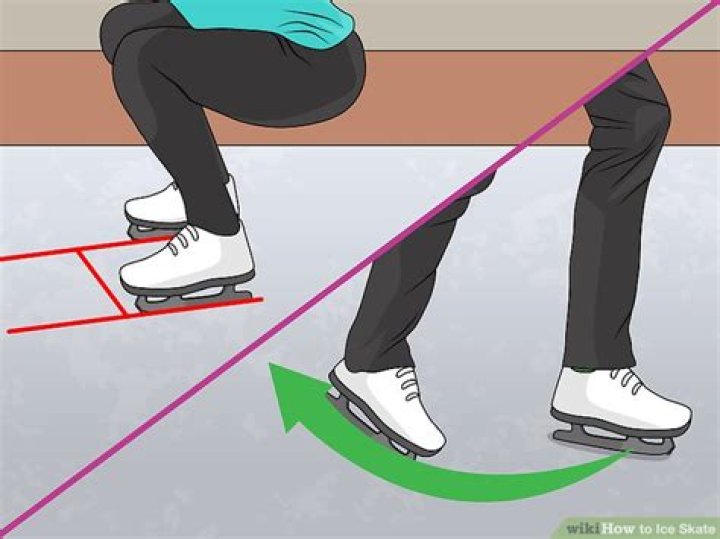
- There’s no stopping you! — Naturally, one of the basics you’ll need to know is how to stop. To stop, bend your knees, turn the toes of each foot inwards, point your heels out, and push out on your heels. This will slow you down and bring you to a stop, rather than barreling into an unfortunate stranger.
- Skate in the correct direction — While initially the direction you are skating may not be of your choosing, there is usually a directional rule to follow on the ice, either clockwise or vice-versa. Don’t try skating the wrong way round the ice rink as you’ll end up hurting others and quite possibly yourself.
- Make use of temporary rinks — If you are not fortunate enough to have a skating rink near you, then make the most of temporary ice rinks if one pops up near you. Christmas is a particularly good time to try to visit a temporary ice rink in some major cities, so go along, you’ll have a good time, whatever your skating experience.
- Don’t take it too seriously — When you fall down (and be sure you will), have a laugh about it and get right back up on your skates again. Don’t take yourself or your skating too seriously, after all, even the best end up on their backs from time to time. It’s even funnier if you do it in style!
So there you have it, some useful ice skating tips to get you started. Remember that proper instruction is important, especially if you are wanting to make the step up to more advanced skating used in figure skating, ice hockey or speed skating. But if you are skating purely for fun or even skating for fitness then make sure you actually have fun on the ice, and if the worst comes to the worst, make sure you have a good friend to take down with you.
Backyard Ice Rink (Countryman Press, 2015) by Joe Proulx guides you through every step of building your own backyard ice skating rink. From the simplest wooden frame to elaborate tall-board rinks, from measuring the slope in your yard to constructing your frame using parts found at your local hardware store, Proulx makes the project easy to tackle. This section explains how to teach your kids to ice skate.
For young kids, stepping onto the ice for the first time can be terrifying — especially in a group setting. When you take a child to a skating class, you’re asking them to strap on all sorts of unfamiliar gear, then to leave their parents and join an unfamiliar coach underneath the blazing halogen lights and surrounded by boards and glass. It’s overwhelming for sure, and not just for the young kids.
A backyard rink provides a retreat from all of that. With a rink in your backyard, learning to skate becomes a self-paced exercise, one that can take place whenever it suits you. You can turn the music up or down, you can skate under the sun or the stars, and you can see to it that your little Gretzky is as comfortable as possible while he or she tries to master a very difficult skill.
Of course, teaching them at home requires something the organized learn-to-skates have in droves: a little expertise. It’s OK, we’re here to help! How you teach your child to skate is a personal decision, but here are a few tips that will help you even if you can’t skate yourself:
Congratulations! You just taught a kid how to skate.
More from Backyard Ice Rink:
- How to Build a PVC Skating Aid
- How to Build an Ice Rink Bench
Excerpted from Backyard Ice Rink by Joe Proulx. Reprinted with permission from Countryman Press.
Tom Werner/Getty Images
Once you’ve mastered the basics of ice skating, you’re ready to try something more challenging like spinning. Perfecting the spin is essential for any figure skater, but learning how to do it will take time and patience. The best way is to begin by perfecting a two-foot spin, then progressing to a one-foot spin. Here’s how to get started.
How to Spin on Two Skates
Spinning is an advanced figure-skating technique and definitely not for the beginner. You should already be able to skate forwards and backward and know how to stop. Before you start, you’ll want to make sure you’ve taken the time to warm up. If this is your first time practicing, start with a two-foot spin. If you’re right-handed, you’ll spin toward the left; if you’re a lefty, you’ll spin to the right.
- Begin in the pivot position. Your arms should be extended at your sides.
- Push off. Plant the teeth of your left skate into the ice and push off with your right.
- Pull in. Bring your arms in, crossing them across your chest as you pull your right leg in and begin the spin.
- Spin for a few rotations. The tighter you pull into the spin, the quicker you will rotate. Go slowly at first.
- Exit the spin. As you slow down, gently pull out of the rotation by shifting your weight to your right leg. This will allow you to pivot out of the spin, glide backward, and stop.
How to Spin on One Skate
The technique for a one-foot spin is similar, but you’ll already be gliding forward on one foot when you start to pull into a spin.
- Push off. Get some momentum and begin gliding on one foot.
- Shift your weight. As with a two-foot spin, you’ll pivot on your left leg if you’re right-handed. Keep your weight centered on the ball of the foot.
- Next, lift up one foot. Gradually lift your right leg as you pull into the turn. Extend the leg slightly backward, then forward as you gain momentum.
- Raise your right knee until your leg is bent at a 45-degree angle and bring your arms into your chest. The tighter the tuck, the faster you’ll spin. Don’t forget to keep your elbows up.
- To exit, extend your right leg down and extend your left. You will be skating backward as you do this. Remember to keep your head up to maintain balance.
You may get dizzy while spinning. To prevent vertigo, focus on a stationary object as you exit the spin.
Tips to Remember
The most important thing to remember is that learning how to figure skate takes time and patience. Here are some things to bear in mind as you master the spin.
As a figure skater, I’ve always loved teaching people how to skate for the first time.
Cool fun in Copenhagen.
Lars Plougmann via Wikimedia
What to Do Before You Get On the Ice the First Time
No matter what your age is, if you are in fairly good health, you can ice skate and have fun doing it. I always recommend that adults try ice skating at least once or twice because so many just stand on the sidelines out of fear of falling or “looking silly” as one mom said.
You may be shocked by the workout that you get, particularly when you always thought that skating was for kids and figure skaters never seem to break a sweat. When you go ice skating, even if it’s 80+ degrees outside, you should go prepared with gloves, a jacket or sweatshirt, and a couple of pairs of socks if you will be renting skates. Preferably, you should not wear shorts or anything that exposes the skin on your legs because if you fall, you may have to literally peel your skin off the ice.
Before you get to the ice, you’ve got to get skates. Make sure that you know what your street shoe size is and ask for that size but be aware of the fact that a number of rinks only offer whole sizes. Bring a couple of pairs of socks with you in case your feet get cold, or you need to make your rental skates less roomy so that you don’t get blisters.
Also, the rental skates are in a word, cheap, so don’t expect to receive the support from the boots that you may see figure skaters or hockey players enjoying from their skates. Make sure your boots are reasonably comfortable, and your laces are tied up and preferably tucked into your boot or under the other laces.
Rockerfeller Center Ice Rink
Andy C. via Wikimedia Commons
You are actually skating on a thin film of water atop the ice when ice skating.
William R. Wilson via Wikimedia Commons
Time to Skate
Try not to get on the ice when there is a group of people rushing or pushing to quickly get on. This usually happens when the ice was closed for resurfacing or for a practice or event that was closed to the public. Most often, it will be the little ones and early teens pushing and shoving to get on the ice, but not always. Hang back and be patient if you haven’t skated before or you may take a spill before putting a blade onto the ice.
How to Enter the Rink
- When it’s safe for you to get onto the ice, place one hand onto the hockey boards or railing if there is one so that you can balance yourself. You will likely have to step up, over, or down to actually put your skate onto the ice.
- Make sure that you keep your knees slightly bent at all times when skating — locking your knees when skating is equivalent to asking for a fall if you are a beginner.
- Push from one foot to the other to get moving and try to move slowly around the rink if you’ve never skated or have not skated in a long time. You will need to lift one foot off the ice for a short period of time before switching feet and pushing off from the other. Observe the skaters who skate with ease to get an idea of what to do.
How to Prevent Falls
If you feel that you are falling backwards, bend your knees and try to make your rear hit first. Don’t tense up; try to sit down, using your hands to catch yourself. If falling forward or to the side, put your hands out to catch yourself. If you have gloves on, it might be easier to catch yourself because your hands won’t slip as much as they would if they were bare. It is very important to try not to tense up so much that you become rigid because that is an excellent way to get hurt.
What to Do If You Fall
When on the ice, get up immediately if you are not hurt. I’ve seen many spectacular falls and injuries because someone lounged on the ice and another skater came along and ran over/into them or their fingers. To get up from a fall roll over onto your rear and then to one knee with both hands on the ice. Next, stand up and remember to keep your knees slightly bent. Now you can start skating again. If you are hurt, someone will come to help you.
What If You Need Help?
There are skate guards and figure skaters at some rinks who might be helpful if you ask, but understand that it is not their job to teach you to skate. If they give you a couple of minutes of their time helping you to skate, thank them and let them get back to what they were doing. If you fall in love with skating and are interested in lessons, most rinks have qualified instructors for group and private lessons. Just ask for information and the staff will be able to point you in the right direction.
Ice skating is a sport you can learn at almost any age. It gives you a good aerobic workout and can improve your balance and coordination. Over time, you’ll also strengthen your leg muscles, improve your joint flexibility, and have more endurance.
Health benefits aside, ice skating is fun. You don’t need anything except access to an ice rink and the willingness to try something new. Wear clothing that is warm and lightweight and that allows freedom of movement. A helmet isn’t required, but if you’re afraid of falling, a hockey or snowboarding helmet can give you some added protection (and confidence).
You don’t need your own ice skates when you’re learning how to skate; you can rent your skates at any public rink for a small charge. But owning your own skates gives you a performance advantage and a custom fit that allows you to improve as a skater.
Off the Ice: a Proper Fit
Whether you rent skates or buy your own, make sure your skates fit properly and that you have tied them correctly. Don’t be afraid to ask someone who works at the rink for help. Your skates should fit snugly but comfortably.
Find the Entry Door
Most indoor ice rinks are surrounded by a soft mat or carpet that makes it possible to walk safely to the ice rink’s surface. The mat also protects ice skate blades. If you own your skates, walk to the ice surface with skate guards on. Remove the skate guards just before you step onto the ice. Do not walk on concrete or wood with your skates on.
Get on the Ice and Hold Onto the Rail
Some skaters are frightened when they step on the slippery ice surface; others are excited. Use the rail to acclimate to being on the ice, especially as you make your first skating moves.
Move Away From the Rail
Once you work up some courage, move just a bit away from the rail. Bend your knees slightly. Don’t let your hands and arms swing around.
Practice Falling and Getting up on the Ice
Be ready for that first inevitable fall by practicing. Bend your knees and squat into a dip position. Fall to the side and lean a bit forward as you fall down. Put your hands in your lap. Turn over on your hands and knees. Take one foot and place it between your hands. Then take the other foot and place it between your hands. Push yourself up to standing.
Move Forward
After mastering falling down and getting up, it’s time to skate forward. Start by marching in place, then march and move. Next, do short “scooter” steps with one foot at a time. Pretend you are riding a scooter down the street. You can keep your arms in front on imaginary scooter bars for balance. When you are comfortable with the scooter steps, try alternating scooter steps. Take a step on the right foot, rest on two feet, and then step onto the left foot. Try pushing from one foot to the other, and skate around the rink.
Learn to Stop
Push your feet apart and use the flat of the blade to make a bit of snow on the ice and do a snowplow stop. The toes point inward (pigeon-toed). This is similar to skiing.
Practice Gliding on Two Feet
March or step across the ice and then “rest.” Glide forward for a short distance on two feet.
Do a Dip
In a dip, a skater squats down as far as possible. The arms and rear should be level. This is a great exercise to warm up your knees. First, practice doing a dip from a standstill. Once you feel comfortable gliding forward on two feet, practice dips while moving.
Have Fun Ice Skating
Ice skating is fun, so enjoy your time at the rink. After you master these steps, play games on the ice or try to spin, skate backward, glide on one foot, or do forward or backward swizzles. And once you learn the basics, you can stick with gentle laps around the rink or advance to figure skating or ice hockey, depending on your interest.
Tom Werner/Getty Images
Once you’ve mastered the basics of ice skating, you’re ready to try something more challenging like spinning. Perfecting the spin is essential for any figure skater, but learning how to do it will take time and patience. The best way is to begin by perfecting a two-foot spin, then progressing to a one-foot spin. Here’s how to get started.
How to Spin on Two Skates
Spinning is an advanced figure-skating technique and definitely not for the beginner. You should already be able to skate forwards and backward and know how to stop. Before you start, you’ll want to make sure you’ve taken the time to warm up. If this is your first time practicing, start with a two-foot spin. If you’re right-handed, you’ll spin toward the left; if you’re a lefty, you’ll spin to the right.
- Begin in the pivot position. Your arms should be extended at your sides.
- Push off. Plant the teeth of your left skate into the ice and push off with your right.
- Pull in. Bring your arms in, crossing them across your chest as you pull your right leg in and begin the spin.
- Spin for a few rotations. The tighter you pull into the spin, the quicker you will rotate. Go slowly at first.
- Exit the spin. As you slow down, gently pull out of the rotation by shifting your weight to your right leg. This will allow you to pivot out of the spin, glide backward, and stop.
How to Spin on One Skate
The technique for a one-foot spin is similar, but you’ll already be gliding forward on one foot when you start to pull into a spin.
- Push off. Get some momentum and begin gliding on one foot.
- Shift your weight. As with a two-foot spin, you’ll pivot on your left leg if you’re right-handed. Keep your weight centered on the ball of the foot.
- Next, lift up one foot. Gradually lift your right leg as you pull into the turn. Extend the leg slightly backward, then forward as you gain momentum.
- Raise your right knee until your leg is bent at a 45-degree angle and bring your arms into your chest. The tighter the tuck, the faster you’ll spin. Don’t forget to keep your elbows up.
- To exit, extend your right leg down and extend your left. You will be skating backward as you do this. Remember to keep your head up to maintain balance.
You may get dizzy while spinning. To prevent vertigo, focus on a stationary object as you exit the spin.
Tips to Remember
The most important thing to remember is that learning how to figure skate takes time and patience. Here are some things to bear in mind as you master the spin.
Five Steps for Skate Fitting
Incorrectly sized and fit ice skate boots can cause foot discomfort, affect skater performance, cause premature skate breakdown and lead to injury. Optimize your comfort and performance on and off the ice by following this list of skate fitting ‘Dos’ to make sure your Riedell Skates are a perfect fit.
Do your research on skate fitting procedures.
One of the most common mistakes skaters make is to assume your skate size will be the same as your street shoe size. Like quality shoes, each brand of skates has different sizing unique to the manufacturer . See Riedell’s sizing chart or visit your local Authorized Riedell Skate Dealer.
Do buy skates that fit your feet today.
Skates sized too large with the hope of the skater being able to grow into them is a mistake. Skates that are big don’t fit or support the foot properly and can cause discomfort, breakdown and could lead to injury .
Do examine all parts of the foot for comfort and support when evaluating your skate fitting.
- Length: is the foot resting comfortably flat in the skate and not putting excess pressure on toes?
- Width: does the skate provide adequate comfort for the ball joint area of the foot and allow proper support of the arch?
- Heel: is the heel of the foot seated comfortably in the heel area of the skate to provide maximum foot control?
- Ankle: does the skate fit comfortably & properly around the ankle and shin area to allow the desired firmness and strength?
Do make sure your toes can wiggle slightly up & down in the boots.
The end of your toes should lightly brush the end of the boot. You do not want to be able to slide your toes side to side in the skate. If your toes slide sideways in the skate, this is a good indication that the boot is too wide and a narrower width is needed . Another way to determine if the skate is the incorrect width: look at the boot when laced up with firm lace tension. The lacing width should not be too close together, if it is the boot is too wide for your foot. Also, if the lacing width is too far apart, the width is too narrow. You can check your width against Riedell’s width chart or visit your local Authorized Riedell Skate Dealer.
Do ask questions during your skate fitting.
Your Authorized Riedell Dealer has the training and information to help you determine your skate needs . Your Riedell dealer can measure your feet, fit your skates and answer any questions that you have about sizing .
Want to ask us? We welcome you to ask us questions via email, Facebook messanger, Instagram message or Twitter direct message us.
Heat Molding for a Better Fit
What will help me “break-in” my new skates?
Every pair of Riedell boots is made with the finest materials and components. These components allow the skate to mold and shape to the exact form of your foot. Once a skate has formed to your foot the “break-in” period is complete. The length of this “break-in” period will vary from skater to skater but, the more you skate, the more quickly your boots will mold to meet your foot’s unique shape. To ease the “break-in” period and maximize comfort we recommend , have your skates fit, sized, prepared and heat molded by a trained Authorized Riedell Dealer.
This 10-step process ensures maximum heat activation of boots for effective skate fitting.
- Have a trained Riedell skate fitter measure your feet.
- Skate oven should be preheated to between 165-180˚F.
- Skates should be heated in oven for 4-7 minutes. Medium temper boots will need to be heated for a shorter time of 4-6 minutes. Firm and extra-firm temper boots will need to be heated 5-7 minutes.
- Remove boots from skate oven and flex heel counters open so foot can be easily placed in the heel pocket of the skate.
- Place foot in boot and lightly tap heel of foot back into heel cup of the boot. Lace the boot up with firm, snug tension on the laces starting at the throat area over the top of the toes. Maintain the same lacing tension to the top of skate. You can stand and put pressure on skates, but do not walk in the skates if blades are not attached.
- Leave skates on for approximately 10 minutes. This will allow skates to shape and contour to your foot.
- Remove skates and let your feet and skates relax for several minutes. Put skates back on and lace up with normal, comfortable lacing pressure.
- If discomfort or specific pressure points exist, heat area of boot with heat gun and adjust boot with boot press or shoe stretcher as needed.
- Re-fit skates using normal lacing pressure.
- Hit the ice!
Lacing: The Final Step to the Perfect Fit.
Boots laced too tightly can cause numbness and pain in your feet. To be your best on the ice, your boots must be properly laced.
How do I correctly lace my skates?
Snugly tighten the laces starting with the laces in the first eyelet near your toes. Continue to lace up maintaining even tension through the laces at the instep. The laces that you have just completed should not be pinching or pulling the boot opening around the tongue, throat area, smaller than when the laces are loose . We recommend using a couple of cross twists in your laces at the top of the eyelets before finish lacing the hooks with medium tension . This keeps your foot’s heel firmly in place while allowing maximum flexibility at the ankle joint . The lacing pattern of the entire boot should be uniform. Also laces that are to long create a tripping hazard, make sure that you have the correct length of laces with our lace chart.
Looking for more information? Check our Frequently Asked Questions for more.
Learn Ice Skating
Do you like figure skating. Or do you just want to glide elegantly on the ice? With these tips to learn how to skate on ice you will know how to make the most of this frost season.
The winter seasons begin and for those who are lucky enough to receive snowfalls, the ice skating season begins.
An ice rink may have arrived in your city and you want to learn.
One of the first tips for learning to ice skate is to know that you will fall, not once or twice, dozens, even when you are already an expert.
Falls will be the order of the day, so don’t feel sorry for that or let them make fun of you.
To learn how to skate on ice all you need is the right protective gear, skates, a place to skate and a lot of desire to learn.
Tips and tricks for learning to skate on ice
Before you enter the ice rink for the first time, follow these tips to learn how to ice skate and consider some tips for beginners.
Put these tips to learn how to skate on ice and check the results
Wear appropriate clothing
You won’t be able to skate well if you keep shivering in the cold. You will also need clothes that allow you to move freely and that don’t weigh too much when you get wet because when you fall you will inevitably get soaked.
Do not wear jeans unless they allow ample room for movement and are light when wet.
It is best to wear thick leggins or warm sweatpants. Wear a T-shirt, a jacket, a hat and gloves to keep warm.
Get some good skates.
Buy your own pair of skates. Although you can rent them at the ice rink it’s best to have your own pair, the rental skates are worn and not very sharp. You should measure them while sitting so that you can feel the width of your foot when it supports your weight.
Measure both feet. Remember, we always have one foot bigger than the other.
The skates should fit snugly, that’s normal.
However, consult a professional to explain how tight they should feel. As a general rule, the heel should not be separated from the sole of the skate when you move.
The skates you select must have a long blade. I mean, Nordic type, high and pretty firm boots.
Select figure skates because they have sawn edges, do not use hockey skates to learn to skate because they are smooth and for those who do not have good balance are unsafe.
Wear socks or stockings with your skates, never thick socks because they can increase the rubbing with your skin and produce annoying blisters, although these are common in new skates.
How to enter the ice
Place the cover on the blades of your skates and walk on the rubber of the rink for a few minutes.
You must accustom your body to working with a new center of gravity and a much smaller surface to lean on. The longer you use them on the rubber, the quicker you will get used to using them.
When you enter the ice, hold on to the wall and put your foot on the ice. When you feel comfortable enter your other foot. Hold on tight to the wall and slide with her help. You must keep your head straight and your eyes fixed in front of you.
Relax your body, do not stay tense because it will be more difficult to maintain balance. Slide as slowly as you want, you must habituate your body to the ice.
Now you should try to walk slowly on the ice, always holding on to the shore.
Do not accelerate the pace if you are not ready, go too fast because you have become frustrated will only end in a fall apparatus.
Practice your balance
Open your arms under your shoulders to balance yourself without the help of the wall. Remember, the wall is just a support while you get used to the ice. If you get used to it, you won’t learn to skate.
Relax the body. Bend your knees to the point where you can’t see the tip of your feet and bend slightly forward. Never backwards.
At this point you’ll fall several times, don’t worry.
It’s time to skate
Before you start skating, practice how to fall. Falling is part of this exercise so it is natural for it to happen and you must learn to do it in a way that does not hurt you.
When you feel like you are going to fall, bend your knees, lower your body as if you were going to do a squat and raise your arms to stop the fall.
Advance your arms to the fall, do not put your open hands on the ice because a skater who passes close to you can cut your fingers. He always falls with his fists closed.
Standing up is another art you must master. Put your hands and knees on the floor, put your foot between your hands, then the other and stand up.
To move forward you must rest your weak foot (left if you are right-handed, right if you are left-handed) in front of you and then lean on the strong by pushing diagonally. Imagine pushing the ice behind you to the left or to the right.
Return the feet to the opposite point and repeat the movement. Try to slow down to control your balance.
If you stumble while skating, you’re probably putting the tip of the skate on the ice, keep the soles of your feet parallel to the ground. The front must never get there first.
To increase the strength of your legs and your balance you sit on the ice. You just have to make them like you’re on the ground. Avoiding descending too fast to control your center of gravity and your balance. Remember: Your feet should be shoulder width apart and your knees should not cover the tips of your feet when you go down.
Go faster
Once you have mastered the technique of sliding slowly over ice, accelerate by using longer strides. Remember to bend your knees and accompany the movement with your whole body.
Your skates should always point in the same direction.
Push your toes at the end of the stride for more power and speed.
How to stop at the ice?
To stop you just have to bend your knees to the front and push with one of your feet towards the ice with force. Keep your balance and control your movement so your feet don’t slip and fall.
When you stop correctly you must have created some snow by scraping the ice.
Frequent practice
The more skates, the better you’ll be at skating. If you can afford it, take classes with a professional.
At the end of the ice season you can use inline skates to support your muscle memory with a similar technique and movements.
Always try to go skateboarding with your partner. That way they’ll help you when you fall, and if an injury occurs, you’ll have enough support and help.
After practicing, dry the blades with a towel and allow them to air dry before putting the protectors on, otherwise they will rust.
For falls use protection such as helmet, knee pads and elbow pads, if you are worried about hurting your hip, wear impact pants. Don’t be embarrassed to protect your body. You’ll be the least injured person on the entire track if you do.
I hope that with these tips for learning to skate you are completely prepared or prepared to give ice a chance, exercise and enjoy as never before skating and having fun.
Remember, if you start skating backwards, try to see where you will go, skating backwards is a great skill but, it can hurt beginners or anyone who has fallen on the ice.
Ice skating is fun, and a lot of us are interested in ice skating. Knowing how to stop on ice skates makes an important part of the sport. Stopping while ice skating is a necessary skill for ice skaters and it requires a lot of practice. There are mainly three techniques widely used to stop on the ice skates. The easiest one is the snowplow stop, and the intermediate technique is known as the T-Stop while the advanced one is called the Hockey stop. The snowplow stop does not require much skill. However, the hockey stop and T-Stop involves fitness and balance.
You have to remember one important thing is that, while ice skating you have to stop on the weaker side. It is essential to take time to learn various stopping techniques, and figure skaters should do it regularly. While in practice you should be aware of your body and arms positions and their carriage. To stop correctly, you have to scrap the ice with the flat part of your blade to cause friction on the ice. This friction will cause stop.
This article represents some first stops which are done by figure skaters so that you can learn them with little practice. These are favorite stops in figure skating universe. So, if you are interested in ice skating and want to learn how to stop on ice skates, you may read more!
| # | Preview | Product | Price | |
|---|---|---|---|---|
| 1 | | Lake Placid Summit Boys Adjustable Ice Skate, Black/White, Large/5-8 | $34.10 | Buy on Amazon |
| 2 | | Lake Placid Summit Girls Adjustable Ice Skate, White/Purple, Medium/1-4 | $35.06 | Buy on Amazon |
| 3 | | Jackson Ultima SoftSkate Womens/Girls Figure Ice Skates – 8 Women’s | $79.95 | Buy on Amazon |
The Snowplow Stop
This is the most fundamental and necessary stop for beginner figure skaters. You can use both of your feet or single foot to master this technique! However, you can try practicing your stop with one foot at first, because it is more relaxed and comfortable. You can use this technique for outdoor roller skates as well.
To perform the snowplow stop, push the blade forward to scrap the ice. Then, you should set one or both of your feet out, increase pressure on the blade, and bend your knees. It should create some snow and bring you a complete stop.
The T-Stop
Snowplow stop is not entirely elegant, and for this reason, figure skaters try to perform more attractive stops. The T-Stop is little tricky to accomplish but looks beautiful.
To perform a perfect T-Stop, you have to make a “T” shape on the ice with your feet. You have to place middle of any of your blades behind another one to make a perfect “T” shape. The behind foot does the stopping. With its outside edge, it scrapes the ice, and the forward blade slides forward. You will stop completely when you complete the “T” position. For a beginner, it might seem difficult. However, with regular practice, you can master it effectively.
The Hockey Stop
If you are wondering how to stop on ice skates more perfectly like a pro, Hockey stop comes around. As you learn more and build your skill and confidence, you will learn how to stop harder at more speed. Hockey stop is used by experienced ice skaters and professional hockey players. It is necessary to stop efficiently and quickly to carry on with the competition. However, if you are learning how to stop on ice skate as a beginner, you do not require mastering this skill.
Hockey stop involves balance and control. For this reason, figures skaters often do this on a single foot. To perform two-foot hockey stop, you have to press the front blade to the inside edge then fit the back foot on the outside edge behind your front foot. Bend your both knees and put pressure on the front side of your blades. Ride in this friction until a complete halt. Remember, only small part of your blade should be in touch with ice. It will minimize the friction and also stop you quickly.
- Top selling figure skate fits great and looks great
- Easy care wipe clean boot
- Sizing is true to shoe size
- The Package Weight Of The Product Is 6 Pounds
The Front T-Stop
Another type of stop is performed incompletions which are similar to the T-Stop. The difference here is that according to its name the front foot is the stopping foot making a front “T” shape. Figure skaters often use this stop in finishing their stop in a competition. However, front T-Stop is more laborious and difficult to master compared to the T-Stop.
Final Words
Ice skating is enjoyable as long as you know how to stop on ice skates correctly. To master a stopping skill, you need to practice it regularly. Be aware of wearing skate helmets, because you may fall and get injured. Choose wisely your accessories and skates, as Mens ice skates are different than women’s. Try to wear comfortable skate pants, as you will bend and stand too often. You should be more aware while ice skating with high top skate shoes. It is more challenging to stop on high top skate shoes than regular ones.
For more information and queries about skateboards, scooters, reviews, and accessories, you can write back to us. Finally, find a perfect skating place and start practicing. Happy Skating!
Introduction: How to Make a BackYard Ice Skating Rink
In this project we will teach you how to make a backyard ice skating rink. We also have a YouTube video of our entire process.
Items Needed:
1. A Large Tarp. The size depends on how large you want your rink to be. We used a 30×60. Make sure to get a size larger than the skating area so there is enough tarp to cover the perimeter of your rink.
2. Perimeter material. This could be sand, PVC pipe or logs. More on this in step 1.
3. Access to water and a hose
6. Outdoor Christmas Lights
Step 1: Prepare a Level Area & Perimeter for Water
Preparation goes a long way. Most of the work in setting up a rink is preparing a good area for the water to freeze. Our particular ice skating rink is just under 30×60 feet. We bought a large 30×60 tarp to hold in the water while it freezes.
We needed to create a level area smaller than the size of the tarp by a few feet in order to allow the tarp to go up and over a perimeter to hold in the water. It’s basically like building a really shallow pool. There are several materials that could be used to make this perimeter, but first make sure you select a very LEVEL area. You can pull a string tight over the area and use a small string level. Water will level itself out, but if you have an area that drops in elevation significantly you could end up with a really shallow side and a really deep side and use more water than needed.
Depending on your area, there are several materials you could use for your perimeter. We used sand (because we have a very sandy area). Initially we were going to cut down and use some medium sized logs for the perimeter. People also use PVC pipes as pictured.
We created the perimeter to be 2 feet less than our tarp. So 28 feet wide by 58 feet long.
Step 2: Position the Tarp
Be sure there are not any sticks or stones or anything sharp before laying the tarp. If you end up with a hole in the tarp it will be a nightmare to try to repair to ensure it holds water.
Use some rocks or bricks to weigh down the edges. Once you fill it with water it will stay in place, but in the meantime a good wind could cause the entire tarp to move.
Step 3: Add Water in Layers.
For this part we added enough water to just cover the surface. We let it sit over night to freeze and the next day we added more water. We ended up doing this for 3 days.
We did it this way rather than pouring all the water at one time in hopes that it would freeze faster in layers.
Be sure to get all the water out of your hose when done OR put it in an area where it won’t freeze. We have a heated garage so we put it in their to prevent the water left over in the hose from freezing.
Step 4: Add Lights and Skate!
We had some posts nearby from our volleyball area. We attached some outdoor christmas lights and it really brought the entire project together, plus it is fun to skate at night!
If you want to see this project in video form, check out our YouTube video we did for this here-
Be the First to Share
Did you make this project? Share it with us!
Share this article:
A Simple Guide on How to Ice Skate For Beginners
Ice skating is such an enjoyable experience. If you are thinking of trying it out for the first time, then it is indeed a good move. Ice skating does not have any age limits or any restrictions whatsoever; you only need to have good health and be physically fit. You may be in fear of falling or sliding off, or you probably think that it looks silly.
This activity is not only fun but also an excellent workout to keep your body exercised and hence preventing some health conditions, and it is this worth trying out. If you find enjoyment in it, then it is time to work it out. This article is meant to guide you through an enjoyable experience if you are ice skating fo r the first time.
Preparation
You need to wear some protective garments while going out for ice skating. The weather is so cold, and you need to protect yourself fully. You will need a pair of gloves, a warm jacket or a sweatshirt depending on your preferences. Avoid exposing your skin due to the cold temperatures and also for protection reasons. Wearing shorts would be risky, especially when you fall, you are likely to peel your skin off.
Get the perfect size of skates and also buy some pairs of warm socks to avoid blisters in the cold weather. The type of skates you choose can significantly impact on your skating experience. Over-sized shoes or smaller shoe sizes may be uncomfortable to skate with. Therefore you must fit them comfortably as you choose your ideal skates. Keep your laces tied up.
The skating experience
You have everything that you need in place, and it is thus time to skate in the ice. You should ensure that there a no people rushing or pushing to get on the ice quickly. You could be patient or choose a different location to skate to avoid spilling or living the blade in the ice.
Simple steps to ice skating
If you have a rail around you or a hockey board, then you could hold firmly on to it for a better balance. You can now step up and begin skating in the ice. Ensure that you slightly bent your knees to avoid falling. Trying pushing one foot to the other in slow motion until you get used to skating in the ice.
If you need to switch from one foot to the other, you could lift one foot off the ice at a time as you push the other foot forward. You can as well get an idea from what other experienced skaters are working it out, or you could as well seek some guidance from them.
In case you are accidentally falling backward a then you could bend your knees and support yourself fully with your hands on the ground. There is nothing to tense about as long as you follow the guideline keenly. If you feel that you are falling forward, then you as well need to support yourself on the ground with your hands. You will not peel off your skin since you are already in gloves. Do not try to get rigid; this way, you are likely to injure yourself on the hard floor severely. If you are not hurt, then there is no reason to long on the ice. It could be risky lying on the ice while other people are still skating. Someone can quickly run over you and incur serious injuries.
Take time to balance your feet on the ice before you can start skating again. You could roll over into your feet with both hands on the ice as you try to stand on the ice firmly. Remember to bent down your knees as begin skating again. You could as well get help from other people if you are afraid or use a rail to support yourself. It only gets difficult if you tend to be rigid or afraid. Feel free and keenly follow the steps to an enjoyable experience.
Ice skating tips for beginners
• Do not look down
It is common for beginners to keep looking on their feet. This could be risky as you could quickly run over other people. It is always recommended that you focus on the direction you are going to promptly identify any obstacles or anything that you could collide with.
•Get a decent pair of skates
The type of skate you get for your ice skating experiences is a crucial thing to factor out. Get skates that can comfortably fit you and serve you for long. Tie skates are mostly preferred for beginners.
•Get a friend to train you
You need to master out the basics, and you can as well get a friend to help you learn and master every trick for better skating.
•Skate in the right direction
There is always the direction guided upon on which to skate. It could either be clockwise or anticlockwise, depending on the guideline. Taking a different could be risky, and you are likely to hurt yourself or others.
•Make use of rinks or some nearby posts
You will probably be afraid of ice skating for the first time. You are a bit sure how to get started nor how to valance yourself on the ice. If you have a nearby post or rink, then you need to make use of it to support yourself while stepping up or whenever you want to stop.
•Don’t lean backward
Leaning backward will only get you falling from your backside. It is this advisable always to keep your knees bent in the forward direction.
Conclusion
Ice skating is indeed an enjoyable experience that you should try out. However, you need to follow the proper instructions to get started and have a better skating experience. Take it easy, and it only gets difficult if you become rigid and resistance to moving while staking. Master out the skating basics and let a friend guide you through it. It is fun, and you will also be able to keep your body fit through the regular workouts.