In marketing, it is necessary to find out who your key competitors are. The reason is that it will help you develop an effective marketing strategy. If you identify these key competitors, you should also analyze them. You have to embark on detailed research in order to identify as well as analyze the key competitors in your market segment.
Start By Researching
As hinted earlier, a major step towards identifying and analyzing the major competitors in marketing is research. First, you need to take stock of the primary products and/or services you offer. Next, research businesses that sell the listed product and or service and identify about ten of them. Those companies or businesses are in competition with your business.
Don’t forget to search both locally and nationally, and internationally too. It is possible some companies are offering the same services as you and selling the same products that you sell. While competition with the offshore companies may not be feasible , being aware of their existence as your competitors will propel you to be more strategic with your local marketing campaign.
Assess the Competition
In the course of researching your competitors, don’t forget to determine their competitive advantages. Some common competitive advantages include bundles, promotions, extra services, free shipping and so on. Also, don’t forget to find out if there’s a slight difference between the products and/or services that these competitors offer and your own products and services.
When you are properly updated on these pieces of information, including your own competitive advantages or weaknesses in comparison with your competitors, you will be better prepared to plan your marketing campaigns. If you are working with an outsourcing marketing company, you can relax and let the company do all the research and analysis for you.
Study Your Competitors’ Sales Process
You need to know how your competitors’ sales process functions. This is why you should research their sales process. Some of the sources at your disposal to study your competitors’ sales process include their websites, relevant reviews, and the BBB (Better Business Bureau) website.
Track Competitors’ Success
You can achieve this by engaging with online business software. Such online tools will enable you to find out the volume of searches on business, including the keywords people use in searching a business. Those tools would as well show the time of the day that these businesses are usually searched.
The sales process is simply the product in question, the demand for the product, its valuation, and the mode of delivery. Learning this information about your competitors is a great way to figure out your competitive advantage as well as their own competitive advantage.
The bottom line is; those competitors that attract your customers even when their products are slightly different from yours are your key competitors.
Daven Michaels is a New York Times Best Selling Author and CEO of premiere global outsourcing company, 123Employee . The company employs hundreds of young bright individuals on three continents. His International event, Beyond Marketing Live! Inspires entrepreneurs to build & grow their business with revolutionary new theories and systems allowing them to design the business and personal lifestyle of their dreams.
By Clayton Johnson | December 1, 2015
This article was contributed to our seo community blog by Sebastian Bos from Accuranker.com
Identifying competitors goes hand-in-hand with keyword research as one of the fundamental foundations of any SEO campaign.
Beyond knowing what the enemy is up to, it gives you a chance to benchmark your performance, choose your battles (why take on Goliath when you can plant a flag in an empty field?) and even steal some ideas. You can emulate their successes and learn from their failures.
But the internet is a big place. How do you really know who you’re competing against?
Let us show you.
The four types of competitors
Your competitors can be broadly split into four different categories.
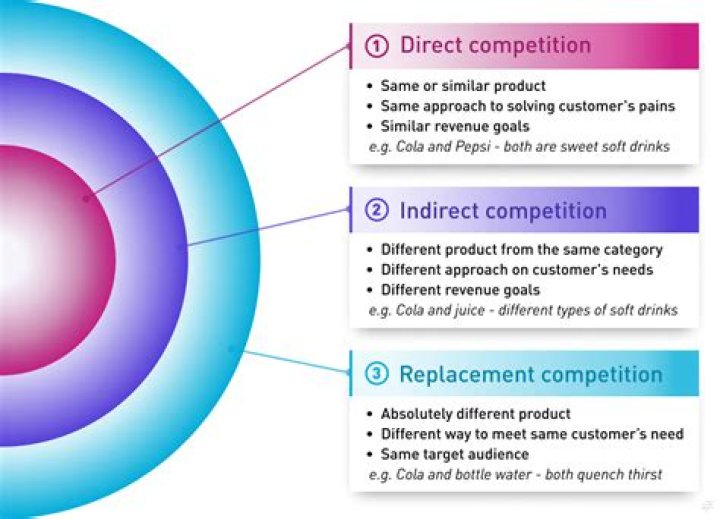
Direct competitors are the most obvious – the companies offering the same products or services as you. Think ASDA and Sainsbury’s. Microsoft and Apple. You probably already know who your director competitors are.
Your indirect competitors are businesses that sell the same products as you, but also operate in other areas. AccuRanker offer Samsung as an example of an indirect competitor to Jessops: they sell digital cameras, but among a much wider product range.
Indirect competitors can be harder to identify, but thorough keyword research can flush them out.
Replacement/perceived competitors are harder to identify. They don’t necessarily offer the same product or service, but do compete for the same resources or customer base.
Mobile phones are a different market to digital cameras, but phone manufacturers became competitors with Kodak the minute the blueprints for the first cameraphone were drawn.
Audience research is the key to identifying these, to see where crossover interests lie. Social listening tools like Hootsuite and Social Studio are useful, as are customer surveys. Google Consumer Surveys and Google Analytics affinity groups are good places to start.
Beyond business competitors, there are also those sites clogging up the keywords you want to rank for. They can be anything. Wikipedia pages, magazine articles – anything that’s stopping you from hitting the top spot.
Once you’ve fixed your keyword targeting, these will be right in front of you. They may not be redirecting your customers’ cash, but they are funnelling valuable SERP traffic from you, and as such must not be ignored.
Real world competitors
The best place to start in identifying the first three types of competitors is in the real world. If you’re an SEO working for a client – start by asking them who their competitors are. They may have a very different perception if it’s an unfamiliar sector for you. At the very least, you can see what keywords they’re targeting, which may inform your campaign.
It’s important to note though that high street competitors aren’t necessarily online competitors. SEO and social may not be a focus for them (yet, at least). But by establishing that, you’ve just identified a gap you can exploit.
And you’ll need to keep tabs on them so you know when they do start pumping money into search.
Keyword competitors
Once you’ve identified a spread of good keywords to target, the trick is identifying who’s who in each battle. Who’s directly targeting, who’s found good fortune and how strong each competitor is.
There are a range of free SEO tools you can use to get the lowdown on good, the bad and the ugly in each SERP battlefield. Using these tools you can see who’s winning by virtue of good SEO, who’s got lucky and identify keywords that are currently unexploited.
Choosing your battles
Once you know who your competitors are, what keywords they’re targeting (relative to what keywords you want to target) and how strong each one is, it’s time to choose your battles.
That is to say, there’s no point launching into a fight for a high volume keyword with $50 a month to spend when your competition is a world-beating multinational with millions in the war chest. But by this point, you may have identified gaps in their strategy that you can exploit.
Clickz has an excellent step-by-step guide for evaluating your SEO competitors on an ROI basis.
Takeaways
To summarise, here are the key takeaways for identifying your competitors:
- There are four types of competitors: direct, indirect, perceived/replacement and SERP
- Start by identifying real world competition
- Use keyword research and social listening to identify online competition
- Evaluate the relative strength of your competitors
- Make keyword targeting choices based on your research
The Best References for MBA
Marketing Notes – Identifying and Analysing Competitors
- Get link
- Other Apps
Question – What do you mean by the term ‘competitors’ in marketing? How to identify key competitors in marketing, and how to analyze them?
Meaning of Competitor
Competitor is a person or an organization against whom other person or organization is competing. In business, competitor is a business organization or a company operating in the same industry or a similar industry which offers a similar product or service. For example – Wal-Mart and Target are big players in Retail chain industry, they both are competitor of each other.
The presence of competitors in an industry means consumers have more alternatives to choose from, it forces competitors to reduce prices of their products or services to grab the maximum share in the market.
Identifying Competitors
In the process of developing a successful marketing strategy, the first step is to identify the key competitors in your market. Competitor identification is important to increase managerial awareness of competitive threats and opportunities. Identification of key competitors is necessary to gain competitive advantage by offering your customers a greater value than the competitors. Not only current competitors are required to be identified, but future competitors are also to be anticipated.
According to Ferrell, Hartline, Lucas, and Luck, 1998, there are different varieties of competitors :-
- Brand Competitors – Such type of competitors are those who market exactly similar products, at similar price, and also to the same customers. For example, Pepsi and Coca-Cola.
- Product Competitors – Such type of competitors are those who market similar products, but with different features and benefits, and at different prices. For example, Pepsi and Maaza (fruit drink).
- Generic Competitors – Such type of competitors are those who market different products, but provide the same utility or benefit. For example, Audio cassettes and CDs, or Pepsi and Water
- Total Budget Competitors – Such type of competitors are those who market different products, but competing for the same financial resources of the customers. For example, Pepsi and Potato-chips.
We use Peteraf and Bergen (2001) model for the identification and classification of competitive set. By the use of this model we sort competitors under two categories – Market Commonality and Resource Similarity. We classified candidate competitors on the basis of their resource endowments and the market needs served. Under Market Commonality, we sort competitors on the basis of the degree to which they serve market needs similar to the focal firm. Under Resource Similarity, we sort competitors on the basis of the degree to which their resource endowment is similar to that of the focal firm in terms of type and composition.
To map the competitive field of a focal firm we have to locate candidate competitors on the graph. On the x-axis we display Resource Similarity as an increasing function. On y-axis we display Market Commonality as an increasing function.
Firm that scores high in both Resource Similarity and Market Commonality is one that serves same market needs with the use of same type of resources as the focal firm. Such firm are found in the Quadrant 1 of the graph. These firms are the direct competitors of the focal firm. Example of such firm can be Coca-Cola if Pepsi is the focal firm.
Firm that scores high in Resource Similarity and low in Market Commonality is one that uses same resources as the focal firm, but serves different market needs. Such firms are found in the Quadrant 4 of the graph. These firms are the potential competitors of the focal firm. Example of such firm can be a caterer and a local restaurant. Both uses almost similar resources like chefs, kitchen equipment, etc., but their market is different, caterer serves party foods and dinners for large functions, whereas restaurant serves to individuals and small groups.
Firm that scores high in Market Commonality and low in Resource Similarity is one that serves same market needs as the focal firm, but with the use of different resources. Such firms are found in the Quadrant 2 of the graph. These firms are the indirect competitors or substitutes. They satisfies similar needs with the use of different resource or technology. For example – Kodak and Sony. Camera may be used to take picture with film based technology using mechanical capabilities or similar picture can be taken using camera based on digital technology. Kodak is a film based technology camera uses mechanical capabilities, whereas Sony is digital technology based camera uses electronic capabilities.
Firm that scores low on both dimensions is one that serves different market and uses different resources than the focal firm. Such firms are entirely outside the competitive set at present, although this could change in future as the firms change their positions. Such firms are found in the Quadrant 3 of the graph. These firms are not the competitors of the focal firm.
Analyzing Competitors
Competitor analysis helps an organization to identify opportunities for and threats to the organization from the competitive industrial environment. Competitor analysis is an assessment of the strengths and weaknesses of current and potential competitors. It is an essential component of corporate strategy; while formulating organization’s strategy, managers must consider the competitor organisations’ strategies.
Competitor Analysis can be defined as the analysis of data and information about competitors to generate intelligence that is useful in strategic decision making.
One of the first steps in developing a successful marketing strategy is identifying and analyzing your fellow competitors. You can do this through detailed market research, including surveys, Internet searches and going through the sales process with another company. If you do not know who your competitors are, it is likely that someone else can offer a competitive advantage, for example, a better website or the same product at a lower price. After you have identified your competitors, you must stay current on their offers and products, in order to stay competitive in your business. This article will tell you how to identify key competitors in marketing.
Take stock of the main product or products you sell. You will compete for consumers with other companies on these products. List the products in a column on a spreadsheet and piece of paper.
Pretend you are a consumer. Search for those products using a phone book, an Internet search on more than 1 major search engine, on Amazon and through social media sites. Write 5 to 10 names of competing businesses in the rows on your paper or spreadsheet.
- Looking in the phone book may help you identify local competitors. Looking on social media accounts will help you to identify new, emerging competitors.
- It is important to search both locally and nationally. With the rise in the global economy, there may be a company in another country that offers the most similar product to your own.
Identify your competition in your industry, your market and your strategic group. You can establish industry competition based on your service, such as supplying foreign tea imports. You can establish your market based on tea sellers in your area, and you can establish your strategic groups as all stores offering the same prices and marketing strategies to sell their tea.
Ask consumers in your area who they buy from or which services they use. Word of mouth is often the best way to tell the success of other businesses. Ask friends and family, and then consider employing a market research firm to survey a wide array of people.
Take note of any competitive advantage these businesses have, once you have your list of competitors. Some may offer promotions, bundles, free shipping, extra services and more. You should have a good idea of whether these competitors offer exactly the same thing, or a slightly different product.
Go through the sales process with these competitors, to determine how their entire sales process works. In some businesses, such as retail merchandise, this will be easier than others. If you do not have the option to analyze the competition from website through sale, then you should read reviews and peruse the Better Business Bureau website.
- If you are looking at local companies that offer the same thing, you may be able to call them and inquire about their sales practices. Try not to mislead them into thinking you are a buyer, as this is considered a somewhat unethical business practice.
Sign up to receive your competitors’ catalogs, mailings or e-newsletters. It is important to be well versed on your competition at all times, since businesses are always changing and growing. If you can mention what other companies offer, and how your business does it better, it is likely to help during the sales process.
List your strengths and weaknesses with each of the competitors you have researched. Be honest with how well you compete against your competition, so that you can strengthen your weaknesses and thus your marketing strategy.
Define your competitive advantage. Ask if there are any features that you offer that the competitors you have found do not possess. You will want to feature this in your marketing strategy.
Search again for companies that may offer that same competitive advantage. Before you begin developing print and online advertising campaigns that tout your advantage, you want to make sure you are the only business, or original business, providing that practice.
Ad Blocker Detected
Our website is made possible by displaying online advertisements to our visitors. Please consider supporting us by disabling your ad blocker.
In order to run a business smoothly, you need to do a lot of things. These things include doing a certain analysis. You forecast your profitability, decide what combination of resources to use, assign the work order to different employees and so on. The business does a SWOT analysis which is basically finding out the strengths and weaknesses of the company. It also manages to identify possible threats and opportunities the business might face due to external factors. Doing such things will help you to form a marketing strategy. With this strategy, you will look to run your business.
However, all these are for your own company. Marketing competitor analysis is done with relation to your competitors. That is to say, you do the analysis of your competitor’s firm. In marketing competitor analysis, you assess the strengths and weaknesses of your rivals. You try to figure out what situations may provide an opportunity for them. Find situations which are likely to become a threat for them as well.
A marketing competitor analysis is a critical part of your own marketing strategy. By doing the analysis, you can formulate how to run your business. This can be seen as a reactive approach. That is to say that you are basing your strategy as a reaction to how your competitor will run his company.
How to do a Marketing Competitor Analysis
The first step of performing a marketing competitor analysis is to identify your current competitors. Not only that but you also need to identify your potential future competitors. There can be two ways of doing that;
- Look at them from a customer’s point of view
- Look at them from their point of view
By looking at them from a customer’s point of view, you are looking at their major strengths and flaws. In other words, you are doing the first part of the SWOT analysis. You think like a customer would. Why would a customer go for their services? Is it because they do things differently or their quality is top notch? Either way these things are like strengths for the competitors. You put yourself in the customer’s shoes and wonder why you would go for them instead of coming to your own company.
On the other hand looking at them from their point of view will help you understand their firm better. You look at their assets and how you would play them in the marketing field. You try to see what their weaknesses are and how you would compensate for them. Once again, you are doing a SWOT analysis for your competitors.
PEST analysis
PEST is the acronym for; Political, Economic, Social and Technological factors. PEST analysis is done so that a company knows how to react when there is a change in any one of the four mentioned factors above. So how is it important for a marketing competitor analysis?
While doing the marketing competitor analysis you have to consider everything in SWOT. For that, you need to assess the external factors. This is where the PEST analysis comes into play. By doing the PEST analysis, you are getting to know how your competitors will react when there is a change. Will they consider that change an opportunity to do better or see it as a threat? This will give you an idea as to how your rivals operate. You can even base your marketing strategy on their ideas. Supposing there is a social change and your competitors cannot deal with it. However, your firm can. So you will try to strategize to take full opportunity of that social change so that you come out better than your opposition.
Questions that are needed to be asked
Before doing a marketing competitor analysis, one has to ask the right questions. Without these questions, you cannot do your analysis. The following are some of the common questions while doing a marketing competitor analysis;
- Who are your competitors?
- What products or services are they selling?
- How much market share do they have?
- What were their past strategies?
- Are they using the same strategy?
- How aggressive are they on the advertising front?
- How competitive are they?
- Are their strengths and weaknesses the same as yours?
- How big of a threat are they to you?
- How do their strategies affect your business?
Competitor Array
Another interesting technique to determine the marketing competitor analysis is by using the competitor array. It’s a simple tool where you follow a few steps to determine how your competitors are doing. The steps include the following;
- Define the industry: The nature of the industry you and your competitors are in. The scopes available to produce your goods and services.
- Find out your competitors: An industry is likely to have multiple competitors. You need to find out who is your genuine competitor that can match your level.
- Determine the customers: Find out who your customer base is and what their level of expectation is
- Key success factors: You find out what factors are the leading prospects in becoming successful. It does not matter if those factors have been used by you or your competitors.
- Rank those factors by weighing them
- Rate your competitors: You give your competitors a rating based on how much they each weight on those key factors.
This process will help you realize which competitor is contributing more in the market. It is a big part of the marketing competitor analysis. Once you figure out who is the leading pack among the rest, you can make your marketing strategy based on them.
Knowing which talent is being targeted by your competitors is a key element in employer branding. Because organizations compete for talent in the same way that they compete for customers, one way to gauge the relative strength of your employer brand is to measure it against the strength of the organizations you’re competing against. Theoretically speaking, you’re competing with every employer on the planet, but a more practical approach is to identify a reasonably small subset of your toughest competitors. Here’s how:
- Identify organizations from which you hire the most people and those your employees tend to leave your organization to join.
- Add to this list any other employers that appear to be outcompeting you for the kind of talent your organization is trying to attract.
When identifying the organizations you’re completing against for talent, broaden or narrow your focus based on functions and critical roles. Here are some examples:
- For front-line, volume-hire roles, such as customer service staff, your key competitors are likely to be the leading employers in your city or region.
- For people with sector-specific skills, your key competitors are likely to be the other key players in your industry.
- For more portable technical skills, such as information technology (IT), your key competitors are more likely to be employers from a wider range of sectors with particularly strong reputations within their chosen discipline, such as Google, Microsoft, and large banks.
You can try to collect this information yourself, but the alternative is to make use of LinkedIn’s Talent Flow Analysis tool, which provides a useful analysis of the relative current inflows and outflows of talent by company. However, be sure to supplement this insight with additional research into the talent you’re targeting but not currently reaching due to candidates’ lack of awareness or familiarity with your organization.
By Shannon Sage
Learning how to identify your competitors is essential in business and especially while writing a strategic plan. To stay competitive, and in business, you must understand who your competitors are, what they are offering and how you fit into this competitive environment.
If you’re gearing up for a big athletic competition, your training regimen is directly proportional to who you’re competing against. You really don’t want to work harder than you have to, right? Well, it’s the same thing for your business. Certainly, if you’re running a for-profit business, you’re competing to win. If you’re a nonprofit or a department head, you’re competing for scarce resources, usually funding. In all cases, you need to know who you’re trying to beat so you can position yourself properly. Regardless of your industry, competitors will likely fall into three categories:
Direct competitors
These companies are the ones you need to find out the most about because they’re your fiercest competitors. When customers are making purchasing decisions, their products or services always end up on the short list. With this group, you’re vying for the same customer dollar. More than likely, you have three or four companies that fall into this category.
Indirect competitors
These companies offer alternative products and services than your offering. Usually, you don’t worry about these companies too much, but you should keep tabs on what they’re up to. Sometimes an indirect competitor can become a direct competitor.
Customize your internal and external analysis
Use OnStrategy’s planning software and expertise to build a strategic plan that leverages your internal and external analysis.
Substitutes or new entrants
While conducting your competitive analysis, determine if there are substitute products or potential new entrants. A substitute product is anything that delivers the same set of benefits to your customers as you do, but is not a competing product. For example, DVD rental is a substitute service to cable TV. There could be new companies or entrants coming on the scene that might change your industry completely, such as satellite radio has done to the radio industry.
The Bottom Line
The clearest way to identify your competitors is to figure out if you weren’t around, who would supply your customers to fill their needs and what customers would buy to solve their problems?In answering this question, don’t restrict your thinking only to companies similar to your own. Consider firms outside of the realm of possibility such as those who compete in the industry from a corporate strategic viewpoint. When contemplating the future, it’s necessary to envision any number of possibilities.
Providing superior customer value is necessary, but not sufficient for success in the marketplace. Besides fulfilling the needs of customers, marketing strategies must build a decisive advantage over the competition. For this, a competitor analysis is the foundation: by identifying the 4 types of competitors in the market environment, the firm can respond with the right strategies.
The Competitor Analysis
A competitor analysis investigates the competing firms in the marketplace and reveals their competitive power against the own firm. For this, we need to consider the size and industry position of our own company. This is compared to the 4 types of competitors as revealed by the competitor analysis. Based on these two pillars – the own competitive strength and the power of the 4 types of competitors in the marketplace – the firm can decide how to position itself to gain the strongest possible competitive advantage.
The Competitor Analysis Process
How does a competitor analysis work?
Step one: The company constantly compares the value and customer satisfaction delivered by its products, prices, channels and promotion activities with those of its close competitors.
This gives an answer to a set of questions:
- Who are our competitors?
- What are their objectives and strategies?
- What are their strengths and weaknesses?
- How will they react to different competitive strategies we might use?
Step two: Based on the position and performance of the firm relative to that of competitors, the company can discern areas of potential advantage and disadvantage.
4 Types of Competitors
In step one of the competitor analysis, the company will cluster competing firms in its market into 4 types of competitors. The cluster is an indication of the competitive strength of the competing firm – and thus an indication of the danger it means for our company.
Market leader:
The market leader is the most powerful one among the 4 types of competitors. The market leader is the firm in an industry with the largest market share. It usually leads other firms in price changes, new product introductions, distribution coverage and promotion spending. In other words, it is the firm that dominates a market.
Examples of market leaders include Nescafé, Chanel, Johnnie Walker, Coca-Cola, McDonald’s, Marlboro and Shell.
Market challengers:
The market challengers may not be the most powerful ones in an industry, but can still be the most dangerous ones due to their aggressiveness. A market challenger is a runner-up firm in an industry that is fighting hard to increase its market share. It aggressively attacks competitors to get some of their market share. For example, Lexus challenges Mercedes, Adidas challenges Nike, and Airbus challenges Boeing. The challenger might attack the market leader, other firms of its own size, or smaller local and regional competitors. Some runner-up firms will choose to follow rather than challenge the market leader.
Market followers:
Market followers are firms that just play along. They seek stable market shares and profit by following competitors’ product offers, prices and marketing programmes. In other words, a market follower is a runner-up firm that wants to hold its share without rocking the boat.
Market nichers:
Market nichers are firms in an industry that serve small segments that the other firms overlook or ignore. Market nichers are often smaller firms in a market, but can even be larger firms that lack established positions. Market nichers avoid direct confrontations with the big companies by specialising along market, customer, product or marketing-mix lines. However, through clever niching, low-share firms in an industry can be as profitable as their large competitors.
To view this presentation, you’ll need to allow Flash.
After you enable Flash, refresh this page and the
presentation should play.
PPT – How to Identify Key Competitors in Marketing – Secured Options Binary Options PowerPoint presentation | free to download – id: 8423bf-MjI5O
The Adobe Flash plugin is needed to view this content
How to Identify Key Competitors in Marketing – Secured Options Binary Options
One of the first steps in developing a successful marketing strategy is identifying and analyzing your fellow competitors. – PowerPoint PPT presentation
Title: How to Identify Key Competitors in Marketing – Secured Options Binary Options
1
How to Identify Key Competitors in Marketing by
Secured Options Binary Options
2
Take stock of your primary products or services
3
Find companies that sell that product or offer
that service
4
Identify your competition
5
Do word-of-mouth market research
6
Do a simple survey
7
Determine if your market or industry is growing
8
Determine their competitive advantages
9
Investigate your competitors sales process
10
Use internet business software to track your
competitors
11
(No Transcript)
PowerShow.com is a leading presentation/slideshow sharing website. Whether your application is business, how-to, education, medicine, school, church, sales, marketing, online training or just for fun, PowerShow.com is a great resource. And, best of all, most of its cool features are free and easy to use.
You can use PowerShow.com to find and download example online PowerPoint ppt presentations on just about any topic you can imagine so you can learn how to improve your own slides and presentations for free. Or use it to find and download high-quality how-to PowerPoint ppt presentations with illustrated or animated slides that will teach you how to do something new, also for free. Or use it to upload your own PowerPoint slides so you can share them with your teachers, class, students, bosses, employees, customers, potential investors or the world. Or use it to create really cool photo slideshows – with 2D and 3D transitions, animation, and your choice of music – that you can share with your Facebook friends or Google+ circles. That’s all free as well!
For a small fee you can get the industry’s best online privacy or publicly promote your presentations and slide shows with top rankings. But aside from that it’s free. We’ll even convert your presentations and slide shows into the universal Flash format with all their original multimedia glory, including animation, 2D and 3D transition effects, embedded music or other audio, or even video embedded in slides. All for free. Most of the presentations and slideshows on PowerShow.com are free to view, many are even free to download. (You can choose whether to allow people to download your original PowerPoint presentations and photo slideshows for a fee or free or not at all.) Check out PowerShow.com today – for FREE. There is truly something for everyone!
presentations for free. Or use it to find and download high-quality how-to PowerPoint ppt presentations with illustrated or animated slides that will teach you how to do something new, also for free. Or use it to upload your own PowerPoint slides so you can share them with your teachers, class, students, bosses, employees, customers, potential investors or the world. Or use it to create really cool photo slideshows – with 2D and 3D transitions, animation, and your choice of music – that you can share with your Facebook friends or Google+ circles. That’s all free as well!
If you are an ambitious entrepreneur with a promising product, you probably can’t wait to show it to potential customers. But before you go into “sales mode,” you might want to sit down at your desk, take a look at your value proposition and do some research.
Two columns ago, I explained how to develop a compelling value proposition. This up-front evaluation of your product is the first in a series of exercises to assess your market opportunities. It ensures you are clear about your value to potential customers before you explore the market in detail.
At NorTech, we suggest our cluster companies then move on to in-house research to help guide their market-related decisions. In-house, or secondary research, can usually be executed from your desk – before meeting face-to-face with target customers.
In-house research is a targeted, three-step process to assess the market, identify your customer base and size up the competition. It can only provide hypothetical conclusions, which field research will either confirm or change. But, at the same time, you need to do you
r homework before you can conduct voice-of-the-customer interviews.
‘Booking.com’ Is A Trademark – Does This Matter To Your Business?
“In-house research provides pieces of the market opportunity assessment puzzle,” says Nick Bush of Bush Consulting Group, “but the key is having a framework to discern which of them are edge pieces, center pieces and corners. A sound approach can do this, allowing insight into how all the pieces fit together.”
Step 1: Market Assessment
The first questions you are trying to answer will identify market size and focus areas and indicate the necessary scale and timing of your investments: How big is the overall market today? How rapidly is it growing? And what segments are most interesting?
It is important to distinguish between the addressable and available markets. The addressable market is the total revenue opportunity for your product or service. The available market is the portion of the addressable market for which you can realistically compete. This is based on many factors, including geography, resources, capacity constraints, etc.
Once you are clear about this distinction you can begin to collect data to size the addressable market. Much of this can be done online. Sources include market studies, journals and government reports. Be aware that you will collect conflicting information and finding relevant and accurate data can feel a bit like detective work. Be critical in your evaluation.
The next step is to quantify and segment the market. One method is to create spreadsheets for each market segment and list variables such as number of installments or shipments, pricing, net revenues and investments.
The next step is to use the variables you have collected to estimate the available market. Essentially, you are determining which market segments you should pursue. Your product, for example, might be able to treat drinking water across the world and you have your eyes set on the European market. But several countries in Europe have laws limiting foreign content in municipal water systems, thus shrinking the size of your available market.
Step 2: Customer Identification & Targeting
The goal of this step is to identify and prioritize the customers that will accelerate your commercialization efforts. Some customers are more likely to buy than others and their timing in adopting new products can be dramatically different. In addition, the willingness of certain market leaders to buy your product can give it a boost in the broader market.
Start by defining the customer types along the value chain in your target markets, from sub-component manufacturers to OEMs to end users. In addition, there can be “indirect” customers who have influence over the adoption of your product. These include industrial design firms and standards bodies as well as companies that offer goods or services that are compatible with yours.
Next, name the potential customers and rank them. The goal is to identify those that best fit your value proposition and can best influence broader adoption of your product. If you determined your product’s primary value is its technology and cost, for example, identify target customers that prioritize these values. Also, determine how likely these companies are to adopt new technologies and what their influence is in the market.
Finally, identify the decision makers within your priority customers. In most companies, they are the usual suspects: product managers, buyers, general managers, etc. Use websites, personal connections and other tools to find out who they are and target them for voice-of-the-customer interviews.
Step 3: Competitive Assessment
Knowing who will compete with you for customers is essential to assessing your opportunities and odds for success. By understanding your competitors’ value propositions, you can begin to evaluate the top competitive threats and determine the availability of the market, or your next course of action.
Begin by taking a broad inventory of the competitive landscape, determine who are your key competitors and identify their customers. Then, map their value propositions along the three key dimensions: cost, service and technology. This will generate useful insights.
Examples of successful competitive strategies include highly differentiated value propositions tailored to the needs of a specific target market. Think Dell and Apple in the PC market, or BMW and Kia in the automobile market. Though they compete in the same industry, they have distinct value propositions targeting different customers.
Once you have completed in-house research to help focus your market-related decisions, you can use several strategic tools to further guide your decisions. Examples include Michael Porter’s Five Forces Model and PEST analysis, which help determine threats and opportunities from outside forces, such as political or economic change.
In-house research will arm you with the tools necessary to conduct effective voice-of-the-customer interviews to validate your value proposition, ultimately preparing you to go after your first customer. I will talk about voice of the customer in one of my next columns. In the meantime, please share some effective tools you have used to assess the market and competitors and target customers.
How to Identify Key Competitors in Marketing – Secured Options Binary Options
2016-10-25 Secured Options
One of the first steps in developing a successful marketing strategy is identifying and analyzing your fellow competitors. You can do this through detailed market .
Identify Competitors | Understand the User | App Marketing | Udacity
Learn with Udacity and Google in our FREE App Marketing course and check out the Tech Entrepreneur Nanodegree program!
How to Identify Your Competition
2012-08-06 Julie Weishaar
Identifying your competition. The first step is to check out the search results for your keywords. Include .
9- How do Marketers Identify and Analyse Competition?
by Prof. Sameer Mathur.
How To Analyze Your Competitors – Competitor Analysis Tool
2016-06-17 Dr. Lau Cher Han
How To Analyze Competitors (full guide): Competitor analysis can give you valuable .
Business plan competitive market analysis: know your competition
2014-11-25 Start & Grow Your Business
Try my full business plan course that explains how to write every section of the business plan:
Competition Analysis – Analyze Your Competitors In Your Market
2012-07-20 Ming Jong Tey
Download proven BKH Blueprint for Free -в–»в–»в–» to kick start your online business and generate cash flow daily.
4 levels of Market Competition | Understand the User | App Marketing | Udacity
Learn with Udacity and Google in our FREE App Marketing course and check out the Tech Entrepreneur Nanodegree program!
How To Analyse Your Competitors SEO
– You may think you are aware of your competitors SEO, but it’s most likely not enough. Emma explains the best ways to perform .
Episode 77: Porter’s Five Forces of Analysis: How to Determine the Attractiveness of an Industry
2013-01-19 Alanis Business Academy
Go Premium for only $9.99 a year and access exclusive ad-free videos from Alanis Business Academy. Click here for a 14 day free trial: To .
SEO Keyword Competition Tool: Lazy Way to Determine Keyword Competition
2016-11-14 Deadbeat Super Affiliate
How do you determine competition for keyword rankings on Google? I get asked this question at least twice a day, so I figured it’s high time to create a video .
identifying competitors
2015-12-18 Melissa Whitesell
Starting a Small Business, Part 3 : Dealing With Competition & Building Your Competitive Strategy
2015-08-26 Cliff Ennico
Every small business has competition. In this program you will learn how to identify your real competitors and develop a strategy for competing effectively against .
How to identify my Target Market? Use the Target Market Analysis Tool – empowering people. Onsite
2016-03-30 Siemens Stiftung
Introducing a product or service to the market is a challenge for any company. Different factors like changing customer needs, limited resources and competition .
How To Identify Your Most Relevant Competitors
This video tutorial will show you how to determine your direct competitors with Keyword Research. Serpstat.com is an All-in-One marketing intelligence platform.
Identifying Competitors
2015-06-30 Amanda Howell
This video describes how to identify competitors in an industry using LexisNexis Academic and ReferenceUSA. Created by Amanda Howell, Reference .
Competitive Analysis Framework | Understand the User | App Marketing | Udacity
Learn with Udacity and Google in our FREE App Marketing course and check out the Tech Entrepreneur Nanodegree program!
Identifying Your Competition
2011-03-22 Ian McConnell
if you would like the full training for free. In this video I show how you can research your competition online. I use Offervault and the .
How To Market Against Established Competitors | Dan Martell
2016-11-21 Dan Martell
Are you frustrated with the competition of established competitors and the resources they have at their disposal? In this video, I share 5 best practices on how to .
Market Competition 101: The 3 types of competitors to keep an eye on
I was reading The Wall Street Journal one morning about food makers using mobile games to market to children. It struck me that content marketing has a major effect on how some companies, especially publishers and media companies, must regard their competition. (It also struck me that my kids need to spend less time on the iPad, but I digress.)
So, I thought I would use that article as inspiration for an example to teach a quick marketing 101 lesson on the three types of competitors you must account for when marketing your product or service. For the sake of this blog post, our company is Spacely Games, and we make mobile games aimed at children.
I also got some input from Paul Clowe, Sr. Director of Finance & Operations, MECLABS, who has recently conducted competitive research here at MECLABS.
Direct Competitors
A direct competitor is “someone that offers the same products, with the same end game,” Paul said. “They make money from the same thing you do.”
A direct competitor is probably what most commonly comes to mind when you think of the word “competition.” When I was a communications consultant, I used to work with the competitive sales office of an IT company. They focused on direct competitors – creating a win/loss report for every deal where the sales team went head-to-head against other IT companies offering similar products and services.
Spacely Games Example: In this case, the direct competitor is Zynga. They also make games aimed at children, and seek to derive revenue directly from those games.
Indirect Competitors
“Indirect competitors offer the same stuff but have a different goal,” Paul said. “They don’t drive revenue the same way.”
Here’s where content marketing can really have an impact. Essentially, a company’s marketing can compete with your paid product, as we’ll see in the example …
Spacely Games Example: SuperPretzel is an indirect competitor of Spacely Games. While it derives revenue from selling soft pretzels and not software, it produces a free mobile game called “SuperPretzel Factory” as part of its content marketing that children could choose to play instead of the paid offerings from Spacely Games.
Replacement Competitors
“A replacement competitor is something someone could do instead of choose your product,” Paul remarked. “But they’re using the same resources they could have committed to your product.”
These are the most challenging competitors to identify. However, we must remember that our customers define our competition. After all, the competition is simply the other choices they may choose to make. So we must interview customers, listen to their social media conversations, and understand macro trends to gain an understanding of what choices they are really making.
Spacely Games Example: The Magic Tree House series of children’s books is a replacement competitor for Spacely Games. Essentially, if children have a free hour in their day, they can either decide to download a game or to read a book.
Of course, I’m being a little idealistic assuming the average 8-year-old in 2012 is really considering reading a book instead of playing a mobile game, but that’s my end point. You have to be a bit of an anthropologist and really study your customers to determine what they consider as replacement competition for your products and services.
So does an 8-year-old consider a book as competition for a mobile game? I’m guessing no. However, does a major influencer on that purchase decision (in this case, the parent) consider a book to be a replacement competitor? Well, this parent certainly does.
Related Resources:
About Daniel Burstein
Daniel Burstein, Senior Director of Editorial Content, MECLABS. Daniel oversees all content and marketing coming from the MarketingExperiments and MarketingSherpa brands while helping to shape the editorial direction for MECLABS – digging for actionable information while serving as an advocate for the audience. Daniel is also a speaker and moderator at live events and on webinars. Previously, he was the main writer powering MarketingExperiments publishing engine – from Web clinics to Research Journals to the blog. Prior to joining the team, Daniel was Vice President of MindPulse Communications – a boutique communications consultancy specializing in IT clients such as IBM, VMware, and BEA Systems. Daniel has 18 years of experience in copywriting, editing, internal communications, sales enablement and field marketing communications.
Competitor analysis is absolutely essential if you have to grow in a competitive market. It is becoming increasingly important because of the rise in competition in each and every sector. Whether electronics, automobiles, or FMCG, each sector today is facing immense competition affecting margins and sales.
Thus there are some critical steps of competitor analysis to be followed by these organizations to outperform their competition. However, they will be able to stand out only when they KNOW their competition. This is where the step by step competition analysis comes in the picture.
Table of Contents
1) Identify current and future competitors in the market
The best way to identify current and future competitors is to analyze your target products. Supposing you are currently selling hair oil. You need to know how many branded and unbranded players are there in the market. You need to know if any new company is starting to sell Hair oil or if any current company might stop selling the same.
Furthermore, you also need to know how many of your customers prefer some other product over Hair oil. Thus by doing this you know your direct and indirect competition. This is the first step in competition analysis.
2) Finding and Analysis of market share
Naturally, once you have identified the competition, the second step is to know their market share. You cannot know the strengths and weaknesses of your competition unless and until you know their presence. Thus if your product is selling in a wide region, you need to break down the region into territories and find out the share of wallets in each territory.
While doing this, you can also do a mini-market research to find the reason for the sale of your competition. Is it selling because it is easily available, quality is high or the price is low. This step will help you perform a SWOT.
3) Performing SWOT for a competitor analysis
Once you know the share of the market and you have done your secondary and primary analysis, you need to actually work out the strengths, weaknesses, opportunities and threats for each of your competitors in turn.
This is important as this shows where you currently stand in your industry, who do you need to benchmark to move forward, and what strategies can be most effective to stay on top or to avoid a drop in rank. The SWOT is indirectly responsible for showing you the steps where you can capitalize and move ahead of your competition.
4) Build competition portfolio for competitive analysis
Once you know the SWOT of your competitors, you can build a competitive portfolio. A competition portfolio will have each and every product of your competitors, their features, logistics, tangible features (product qualities), intangible features (product service), etc.
This portfolio needs to be treated like MIS and needs to be updated from time to time. The best source for building a competition portfolio is your sales force itself. They are continuously in touch with the market and therefore can immediately notify you of any changes happening in the market.
5) Plan strategies
Now you have your complete competition portfolio in front of you. Thus you clearly know your line of action. If the competition is far superior, you have two ways to move forward. You can either try the same strategies as a top competitor and slowly move on top OR you can go creative/innovative and try to directly take on the market leader. Read more on Market challenger strategies.
At the same time, if the competition is average and you can reach the top through some effort, then do not procrastinate and put the best strategies forward to reach the top at the earliest. Remember – If reaching the top takes much effort, then staying on top will take double the effort from the complete organization. You can also read, Market follower strategies.
6) Execute strategies
Quite simple. Execute the strategies which you think are the best and make sure of executing them effectively. There is no meaning of going to such an effort to analyze competition and then fail at the implementation part. At the same time, it is very important to have a contingency plan and to anticipate your competitor’s reaction.
If your competitor reacts too strongly, but the contingency plan in place to avoid any long term affects to the brand / product. This might cause you to lose the advantage of surprise, but it definitely gives you more chances to form even better strategies (To be truthful, very few companies have actually gotten their strategies “spot on” the first time itself). Thus contingency plans while executing strategies are very important.
7) Follow up and perform competitive analysis
Statistics are always useful for a firm and help the firm in practical decision making. Thus by following up you are making sure of quantitatively and qualitatively measuring the response to the executed strategy. Ideally, the same should be documented so that future generations of marketers may know the earlier strategies implemented and might be able to revive the same through different angles.
At the same time, you might actually execute a strategy that gets excellent response from customers. In these cases too, you need to stick with the same strategy for a longer time and in such cases, it is crucial to have the feedback from your customers so as to know at all times whether the strategies are working effectively. Thus follow up is essential for long term competitor analysis.
In the end, whatever strategies you make, your competitor is going to respond. This needs implementation and updation from time to time. There are very few industries in which there are only 3–4 players. In fact, major industries are characterized by as many as 10–20 different competitors (branded, unbranded, direct, indirect). Thus, it helps you in pinpointing your current standing in the market and the future direction.
Free Book Preview No BS Guide to Direct Response Social Media Marketing
The following is the fifth in the series “Marketing Like the Big Brands,” running every other week in which marketing expert Jim Joseph shows entrepreneurs on a small-business budget how to apply marketing strategies used by big brands.
They say a marketer’s job is never done, and when it comes to analyzing your competition, nothing could be truer. It’s vitally important to track every aspect of your competitors’ marketing, including their packaging, advertising, promotion, social media and website activity.
Unlike big brands, small businesses generally do not have the resources to track their competition without spending a lot of money and time. But if you make a regular process of it, there are many ways to track your competitors easily and effectively. Here are six places to start:
1. Sign up for Google Alerts. Getting updates on your competitions’ activity online is absolutely free via Google Alerts, and it couldn’t be easier to set up. Just insert your competitors’ names into the search query and select what results you want to be notified of — including news, blogs, video and discussion. You can have those notifications sent to you as they happen, every day or weekly.
2. Connect with competitors on social media. “Like” and “follow” your competition on Facebook, Twitter and other social media channels. Make sure you track both the brand and its key leaders to get a sense of what they are doing. For example, as a restaurant owner, you may want to follow the names of restaurants you compete with as well as the chefs and restaurateurs to get a full picture of their activity.
3. Enroll in your competition’s mailings and promotions. Sign up for your competitors’ e-mail and direct marketing campaigns, commonly known as Customer Relationship Marketing (CRM) programs. Become a regular “customer” and you’ll quickly see what kind of offers they provide and how they stack up to yours.
4. Become a secret shopper. Conduct shopping trips to try out your competitors’ customer experience, both online and in-store. Purchase your competitors’ products to see what the process feels like. Take notes on the customer service techniques you are seeing, as well as how the assortment of products are sourced, merchandised and priced.
5. Visit their trade show booths. When you go to trade shows, be sure to pick up your competitor’s materials. For example, if you are in the home furnishing industry, attending a local home show is a great place to pick up competitive brochures, pricing and product line information so that you can stay current to industry trends.
6. Monitor your competitors’ websites. You can learn a lot about your competition by keeping an eye on their website. Keep up with the new functionalities they add and see what kind of traction they may be getting. If you are in the floral business, for example, being familiar with your competitors’ websites will allow you to track what information they are offering customers and what trends in floral design, party planning and flower selection they are following.
The goal here is to make sure all the marketing elements that form your brand experience are better than those of your competitors. If you see something that doesn’t seem to be working, could the same be said of your marketing? Adjust accordingly. Determine the most effective ways to engage your customers.
It’s very easy to identify those other brands that offer exactly what you do. Look beyond the obvious and follow your indirect competitors as well. Who are the competitors that can draw time, attention and money away from your brand?
For example, if you run a local gift shop, other gift shops are not your only competition. You are competing for shoppers at other local stores, movie theaters, florists and restaurants in the area as well as online gift shoppers. Many small businesses see online brands as their biggest competition, regardless of location.
Looking at your competition more broadly will help you understand all the marketing messages directed at your customers. Only then can you stay on top of your game.
“How to….” undertake a competitor analysis
Updated July 2020.
A competitor analysis is one of the fundamental things you should do before you launch a new Product or business. Here’s the six-step process we follow to measure the competition.
How to undertake a competitor analysis
As Product Managers, having solid knowledge of our rivals and their activity in the marketplace helps us make better decisions during the strategic product planning phase. It ensures that we’re ready to respond to our competitors and exploit any weakness in order to gain a larger share of the pie.
An important distinction to make before we begin is that a competitor analysis is not a product comparison. Although it may contain the types of products sold, we should not include detailed product features in a competitor analysis. Quite often, two seemingly distinct products can solve the same customer problem or satisfy a similar need. At its core, a competitor analysis should evaluate the strengths and weaknesses of your rivals.
Here is Brainmates’ six-step process for competitor analysis:
Step 1: Define your market
The first step is to articulate the market you serve.
- Who are the customers that are currently buying your product?
- What problem does your product solve for these customers?
The same product may serve more than one segment, addressing different problems or challenges that each segment has. You need to establish this from the outset, before you review your competitors, because you may be competing with different companies in each market segment. When defining your market, pay attention to both demographic information as well as psychographic information. The psychographic attributes you define may mean that you identify multiple segments which will need to be targeted in different ways.
Step 2: Create a list of your direct competitors
Once you’ve established your market segmentation categories you should now look at direct competitors to your Product. These include any company that sells a very similar product or service in the same footprint as your organisation. For example; if your company sells dog grooming kits, you would normally only include competitors that also sell grooming kits to your area. The exceptions to this are if they are likely to expand to your area soon or if their product offering is interesting and useful to include in a Product Comparison paper.
If there are too many competitors in your market, choose a handful that you believe are the largest threat to your organisation. Make sure to consider where the market is heading – for example Netflix overtaking Blockbuster, Uber and taxis, Airbnb and hotels.
Step 3: Analyse competitors
To begin your analysis use available resources such as news articles, industry journals, analyst reports, the company’s website, marketing collateral, company reports and so forth. You may also want to do a general blog search to find out what their customers’ and others are saying about the company and the products they offer. Networking events and tradeshows also present great opportunities to collect data about your competitors. Your more loyal customers may also share information with you.
According to Hugh Davidson in his book “Even More Offensive Marketing” grouping your sources of information into three categories can help you determine how useful it is and also whether it’s true or false . He suggests:
- Recorded data: this includes easily available published information such as an annual report.
- Observable data: this data has to be found and put together, often from different sources – like pricing, or advertising campaigns.
- Opportunistic data: qualitative data coming from discussions with suppliers, ex-employees or information from blogs by customers.
Step 4: Summarise competitor product and market strategies
Once you’ve gathered your data, a table is an easy way to organise it. Consider the following headings:
- Company name
- Company description
- Competing product’s purpose and high level functionality.
- Competing product price
- Target market for competing product
- Company’s distinctive strengths
- Company’s distinctive weaknesses
- Company market strategy – eg niche market player, price leader etc
- Competing product’s overall market share in your main target market
- Product sales volume
- Threat level – estimate the threat level the competing company and product poses to you
Once you’ve completed this another useful tool is to produce a simple value curve model for your industry. This can be particularly helpful if you’re seeking out ‘gaps’ where competitive threats are weakest.
Step 5: Compare and contrast competitors with your products
The final step in preparing a competitor analysis is to review and analyse the data. What story is the data presenting? Are your competitors a threat or is your organisation on par with the largest competitor? Is your product lagging in the marketplace?
More importantly, analyse the data against your company’s strategy and Product so you know where your company and Product stand compared to your competitors.
Your conclusions should be presented to other business stakeholders especially when you’ve decided what steps you will take with your strategy. For example, you may alter your Product Roadmap as a result of the competitor analysis. Sales and marketing teams may benefit from summaries that contrast your Product with key competitors and emphasise your Product’s strengths so that they can take this message to market.
Step 6: Keep your competitive analysis accurate up-to-date
Lastly, review the competitor analysis every 6 months, or more often if your market changes frequently. It provides you with a valuable external perspective which can help to inform your business and product strategy as well as more tactical decisions like which products or features to prioritise. You do need to make sure your competitive analysis is integrated with other product management and marketing activities.
One note of caution is to not focus too heavily on what your competitors are doing. A competitor analysis is a useful tool and guide but your overall priority should be to continue to delight your customers by solving their problems.
Even if you think your email marketing campaigns are successful and they’re delivering great results, it can always pay to keep an eye on what your competitors are doing.
In this article, with help from Dan Barker, we’ll look at some clever ways of checking out competitors’ email marketing, and some key aspects to look for.
Subscribe to your competitors’ emails
This is the best place to start. Identify your key competitors and subscribe to their email newsletters.
Create a dedicated inbox so you have an automated archive – this way you can see the other offers, content and promotions that some of your target customers are receiving.
See what post-purchase emails look like
It can also be an idea to make test purchases so you can see how they handle things like conformation and post purchase emails as well.
This allows you to see your rival from the customer’s point of view, and provides insight into how they follow up on the first purchase.
Analysing order confirmation emails can give you some ideas. Here, for example, ASOS uses this email to encourage customers to update their profile and provide more useful information and promotes its mobile app.
You can also see how often they follow up, and how they use customer data to tailor emails to individual customers or segments.
Review competitors’ landing pages
It’s useful to click a few calls to action from rivals’ emails and check out their landing page design.
Are your competitors using specific landing pages for campaigns? Are they sending email recipients to product pages?
It can be useful to look at the link between competitors’ emails and landing pages. Does the landing page follow up and match the email content? Do the visuals follow on?
The key here is to see where their landing pages may differ from yours, and how they help the shopper.
Here, for example, Schuh advertises its Spring sale in an email, with several different calls to action.
Clicking on the ‘20% off’ sale takes users straight to this sales page. The text reinforces the promise of the email, and shoppeers are sent to a page where they can quickly start shopping.
Note that the email offers other calls to action, by brand for example, shoppers can start to narrow their choice straight from the email. This save user’s effort and makes it more likely they will find relevant products in the sale.
See how often competitors are sending emails
For marketers, finding the right email frequency can be tricky. If you ask consumers, they’ll often say they receive too many emails, but this doesn’t mean sending more doesn;t work sometimes.
Sending more email can produce results, especially at times of peak consumer interest, around Christmas for example. However, you can’t keep sending more and more emails as there’s a point when returns will diminish and you’ll risk annoying subscribers.
This last point is important as, if customers start reporting your emails as spam then this can affect your sender reputation with ISPs.
It can be helpful to check what your competitors are doing in this area. If they’re sending emails more frequently, or perhaps using different timings or days, then do they know something you don’t?
These are all areas where you can potentially experiment and improve your own results.
Get ahead of rivals on promotions
Knowing about the patterns of sending from your competitors means you can potentially use this information to your own advantage.
For example, a direct competitor may have a predictable pattern of sending promotions at particular dates and times, or perhaps starting key seasonal campsites on a certain day.
Using this knowledge you can potentially steal a march on these competitors by sending your promotions ahead of theirs, In many cases your email list will have some overlap with rivals, so this can be very effective.
Check email campaign trends from rivals
Learning from long term trends in email marketing from your rivals can also be very useful.
You don’t even need to have subscribed to their emails for this, as there are some useful resources that can help here. For example, Milled.com contains emails from lots of brands, all sorted by date.
Using tools like this, or your own archive of competitor emails, you can see what they were up to the previous year. For example, you could look to see when they started Spring sales, or began to ramp up Blak Friday email campaigns.
In this example from M&S, we can learn that they began their 2019 sale around March 12, with previews and VIP access a few days before that. We can see that it started at 40% off, how many emails were sent, and how long the campaign lasted.
That’s a lot of potentially useful information from a few emails, and can help you to determine the length of your own campaign, or to get ahead by starting yours earlier.
In Summary
Your own email marketing may be very effective, but there’s always something you can learn from your competitors.
Competitor analysis on rivals’ email marketing is easy to do, and there’s a lot of useful information to be extracted if you know what to look for.
Graham Charlton is Editor in Chief at SaleCycle. He’s been covering ecommerce and digital marketing for more than a decade, having previously written reports and articles for Econsultancy. ClickZ, Search Engine Watch and more.
One thing standing between you and your goal to gain as much market share — and revenue — as possible is your competitors. When you have a thorough understanding of how they operate, it will help you develop better marketing strategies, identify underserved geographical areas and product lines, plan future expansions, and pinpoint competitors’ weaknesses so you can leverage your strengths. Here is a five-step plan for creating a competitive analysis on your key competitors.
1. Identify and Narrow Down Your Key Competitors
You will first need to create a list of all the competitors in your area so you can pinpoint those that pose the greatest threat to your sales. Look for the obvious competitors, like the store down the street, as well as the businesses that sell products or services like yours as only one part of their offerings. For example, if you run a bakery, all other bakeries in your area would make the list, but so might the grocery store around the corner with a great bakery department. Now narrow down that list to the three to five competitors you feel you are losing the most sales to.
2. Gather Information
Now that you’ve identified the competitors that pose the greatest threat to your sales, you will need to gather as much information about them as you can. There are four ways to do that.
- Gather information from newspaper articles, press releases, company brochures, company websites, copies of presentations and speeches, and annual reports if they are a public company to learn about their profits and products. Make it easy to track this information by using services like Google Alerts and Talkwalker.
3. Define Your Competitive Advantage
Next, you will need to identify what advantage you have over your key competitors. For instance, you may learn that your cash flow is healthier than your fiercest competitors, and that would be an indication they might not compete with you in an aggressive marketing campaign. You may also find they aren’t using social media to attract local business, and you can use that to your advantage. Analyze each key competitor and identify what advantage you have over each of them.
4. Define Their Competitive Advantage
Just as you pinpointed what you do better than your competitors, you will also need to identify what they do better than you. Some may offer faster delivery, lower pricing, greater selection, better customer service, or other things that would cause customers to choose them instead of you.
5. Do SWOT Analyses on Your Business and Theirs
Now that you have a better understanding of what makes your competitors tick, it’s time to use all of that information to increase your market share. You can use a SWOT (strengths, weaknesses, opportunities, threats) analysis to assess your current business status — and you can create one for your competitors to better understand their current position and help predict their future strategies. To do this, use all the information you have gathered and apply it to each area of the SWOT. For example, one of your competitors’ strengths may be their easily recognizable brand, while their weakness may be poor-quality products. In that case, you should devise a marketing strategy that highlights your products’ quality.
Creating a competitive analysis takes some time and effort, but it can pay off in increased market share. When you better understand how your competitors operate, you can better predict their next moves, and play up your strengths against their weaknesses.
For phase II of your marketing plan, you will develop a Situation Analysis. The Situation Analysis follows the Executive Summary and table of contents in the marketing plan. This will be the first section of the plan. The purpose of the Situation Analysis is for the marketer to assess the situation and the market in which the company competes. The Situation Analysis contains background information on trends, competitors, market needs, target markets, and products. The Situation Analysis is an in-depth report, as it contains numerous elements. Your Situation Analysis begins with a Market Summary, followed by a SWOT Analysis, Competitive Review, and Product Review. Complete your Situation Analysis by providing 1-2 paragraphs covering each of the following areas: Target Markets: Provide information on your target market. Who will you be targeting and why? What are the demographics for your target market? What geographic areas are you targeting and why? Market Needs: What are the market needs? What unmet need will your product or service meet? How will your product benefit your customers? Market Trends and Growth: Are there any market trends that you will be capitalizing on? Discuss Online and Internet market trends and how you will leverage them? Has there been any growth in the market? Please provide specifics. SWOT Analysis: List the key product strengths, weaknesses, opportunities, and threats. Competitive Review: Identify key competitors, describe their position in the market, and briefly discuss their strategies. Product Review: Discuss the main features and benefits of your product.
Grow Your Business, Not Your Inbox
The competitive analysis is a statement of the business strategy and how it relates to the competition. The purpose of the competitive analysis is to determine the strengths and weaknesses of the competitors within your market, strategies that will provide you with a distinct advantage, the barriers that can be developed in order to prevent competition from entering your market, and any weaknesses that can be exploited within the product development cycle.
The first step in a competitor analysis is to identify the current and potential competition. As mentioned in the “Market Strategies” chapter, there are essentially two ways you can identify competitors. The first is to look at the market from the customer’s viewpoint and group all your competitors by the degree to which they contend for the buyer’s dollar. The second method is to group competitors according to their various competitive strategies so you understand what motivates them.
Once you have grouped your competitors, you can start to analyze their strategies and identify the areas where they are most vulnerable. This can be done through an examination of your competitors’ weaknesses and strengths. A competitor’s strengths and weaknesses are usually based on the presence and absence of key assets and skills needed to compete in the market.
To determine just what constitutes a key asset or skill within an industry, David A. Aaker in his book, Developing Business Strategies suggests concentrating your efforts in four areas:
1. The reasons behind successful as well as unsuccessful firms
2. Prime customer motivators
3. Major component costs
4. Industry mobility barriers
According to theory, the performance of a company within a market is directly related to the possession of key assets and skills. Therefore, an analysis of strong performers should reveal the causes behind such a successful track record. This analysis, in conjunction with an examination of unsuccessful companies and the reasons behind their failure, should provide a good idea of just what key assets and skills are needed to be successful within a given industry and market segment.
For instance, in the personal-computer operating-system software market, Microsoft reigns supreme with DOS and Windows. It has been able to establish its dominance in this industry because of superior marketing and research as well strategic partnerships with a large majority of the hardware vendors that produce personal computers. This has allowed DOS and Windows to become the operating environment, maybe not of choice, but of necessity for the majority of personal computers on the market.
Microsoft’s primary competitors, Apple and IBM, both have competing operating systems with a great deal of marketing to accompany them; however, both suffer from weaknesses that Microsoft has been able to exploit. Apple’s operating system for its Macintosh line of computers, while superior in many ways to DOS and Windows, is limited to the Macintosh personal computers; therefore, it doesn’t run many of the popular business applications that are readily available to DOS and Windows. To an extent, IBM’s OS/2 operating system suffers from the same problem. While it will run on all of the personal computers DOS and Windows can run on and even handle Windows applications, the number of programs produced for OS/2 in its native environment is very small. This is the type of detailed analysis you need in analyzing an industry.
Through your competitor analysis you will also have to create a marketing strategy that will generate an asset or skill competitors do not have, which will provide you with a distinct and enduring competitive advantage. Since competitive advantages are developed from key assets and skills, you should sit down and put together a competitive strength grid. This is a scale that lists all your major competitors or strategic groups based upon their applicable assets and skills and how your own company fits on this scale.
To put together a competitive strength grid, list all the key assets and skills down the left margin of a piece of paper. Along the top, write down two column headers: “weakness” and “strength.” In each asset or skill category, place all the competitors that have weaknesses in that particular category under the weakness column, and all those that have strengths in that specific category in the strength column. After you’ve finished, you’ll be able to determine just where you stand in relation to the other firms competing in your industry.
Once you’ve established the key assets and skills necessary to succeed in this business and have defined your distinct competitive advantage, you need to communicate them in a strategic form that will attract market share as well as defend it. Competitive strategies usually fall into these five areas:
Many of the factors leading to the formation of a strategy should already have been highlighted in previous sections, specifically in marketing strategies. Strategies primarily revolve around establishing the point of entry in the product life cycle and an endurable competitive advantage. As we’ve already discussed, this involves defining the elements that will set your product or service apart from your competitors or strategic groups. You need to establish this competitive advantage clearly so the reader understands not only how you will accomplish your goals, but why your strategy will work.
Keeping pace with market trends is never easy – day-to-day you’ve got a business to run, after all.
However, it’s important to acknowledge that industry is ever-changing and in order to stay ahead of the curve and avoid competitors passing you by you need to be able to move with the times for the benefit of long-term business planning.
Market trend analysis needn’t be as scary as it sounds. It’s simply the comparison of industry data over a set time period, designed to recognise any consistent trends or results that could be used to map your business strategy – aligning it with the general direction of your industry.
Market trends tend to be heavily influenced by consumer habits and behaviours. By carrying out the following types of industry trend analysis you’ll be able to determine the moves that could have a direct impact on your overall business performance:
Keep track of industry influencers and publications
As a busy entrepreneur, being pressed for time is by no means a rarity! We don’t always have the time or head space to be able to read through every interesting thought leadership article within our respective industries, so how can we keep track of industry developments? Social media is a powerful tool to keep track of industry influencers, their points of view and ensure you remain part of the conversation.
Absorb up-to-date industry research and trends reports like a sponge
To get a real picture of your industry landscape and determine the direction it is heading in, you really need to be reading up on the wealth of industry reports readily accessible to you. At the British Library’s Business & IP Centre, we house more than £5m worth of online market reports from top publishers such as Mintel, Frost & Sullivan, Euromonitor and many more, as well as up-to-date sector and company data for over 144 million UK and global companies.
Did you know? Entrepreneurs based in London can tap into this exhaustive resource for free with a British Library Reader Pass.
Make the most of digital tools and analytics to assess industry behaviour
If you’re a bit of a nerd when it comes to numbers, you’ll love the wide variety of analytical tools and systems available at your fingertips. It’s great because you can let these tools do all the legwork for you to help you understand the bigger picture of your marketplace much more quickly.
Digital analytics can help you discover trends increasingly searched for by consumers online. For instance, Google Trends displays a long-term overview of niche trends while Google’s Keyword Planner allows you to search the most popular keywords used by your target demographic online and the potential scale for using and bidding on them for your business as part of a digital advertising campaign.
Listen to your customers
It pays to talk to your customers. After all, they are the ones that help put food on the table! Don’t be afraid to have a chat with them and learn more about their pressure points to discover what more your business can do to help them.
Regular quantitative surveys of your existing customer base or – if you’re a completely new start-up – your target market could provide valuable insight into possible changes in their behaviours and needs.
Competitor observation
Most successful businesses don’t follow the crowd; they innovate and break new ground in order to stand out from the noise. However, observation of your competitors can often give you a good picture of their market positioning and whether they are reacting to what could be seen as an emerging trend. Competitor analysis doesn’t have to cost the earth. By simply reviewing their website, customer reviews and social media channels it is possible to understand how you compare to your competitors.
At the Business & IP Centre we’ve helped hundreds of entrepreneurs across London and beyond achieve business success. With free access to a comprehensive collection of business data we can help you make informed decisions about the development of your business ideas. To learn more about our Centre, make sure you sign up to our ‘ Introduction to using the Business & IP Centre’.
How can a company’s marketing organization ensure that it is able to identify newly emerging competitors in time to plan and execute an effective marketing strategy in response to to these competitors?
© BrainMass Inc. brainmass.com June 3, 2020, 8:29 pm ad1c9bdddf
Solution Preview
This is a very interesting topic, and the key to staying aware of what is going on with competitors is to keep up-to-date with your research. It is very important to continuously read up on your industry (journals, trade magazines, conferences), and be active in all industry activities (seminars, conferences, lectures).
The goal of your competition is to produce a product or offer a service that you do not offer (that is related to your core business strategy). Or, they might try to enter in on your industry, and offer similar products or service that you offer.
In the case where new competition emerges that offers the same service that you offer, you need to immediately start a promotional or PR campaign. This campaign should stress the fact that you have the experience, the knowledge, the expertise – the new player is just starting and might not have the same resources that you have. This is a preventative campaign. Hopefully, you are able to run this campaign before .
Solution Summary
How can a company’s marketing organization ensure that it is able to identify newly emerging competitors in time to plan and execute an effective marketing strategy in response to to these competitors?
Competitive analysis is just a fancy way to describe the process of checking out what your competitors are doing, or not doing, and using that information to your advantage. Observing your competitors’ marketing strategies is a great way to measure their strengths and weaknesses and gain insight into your own. The first step into developing a solid competitive analysis strategy is determining who your main competitors are. After you’ve established who they are, you can begin to monitor and analyze. Below are four simple ways:
1. Sign up to receive their email or newsletter – Many companies make it easy for just about anyone to sign up and receive email newsletters. Most link to a signup form on either their website or Facebook page.
A good way to receive a competitor’s non-newsletter emails (such as their signup or purchase confirmations, lifecycle series or other transactional emails) is to sign up for a free trial, or make a small purchase in order to be classified as a new customer. Be aware, though, some savvy companies will “blacklist” competitor work email addresses.
Receiving emails from your competitors can help you see things from the perspective of a customer within your industry. You can get a good idea as to the tone of voice, creative style and offer you want to include in your email, and which ones you would like to steer clear of. It’s always interesting to consider a point of view or positioning that may be different or even similar to your own.
2. Explore their website – Visit competitors’ websites to see what they’re doing right and what they may be doing wrong. For example, if you’re unable to find certain vital pieces of information such as contact info, a simple way to sign up or make a purchase, it may give you some insight into what you can capitalize on for your own website.
Viewing a competitor’s website is also a great method to get information on new products they’ve released, positioning, special promotions and discounts or other strategies you may not have been aware of.
Also, take a look at their “careers” or “jobs” sections as well. You can learn valuable information about a company and their areas of growth based on the positions they’re looking to fill.
3. Like and follow on social networks – ‘Like’ your competitors on Facebook, connect with them on LinkedIn and follow them on Twitter. Many companies release special promotions on their social networks, so if you don’t see their pages or profiles, you won’t be aware of their social media strategies. You can also check out competitors’ social media networks to see how they position themselves, and how individuals interact with their brand. Again, this gives you insight into what strategies and ideas are effective and which to avoid.
4. Give them a call – This strategy can give you insight into the way your competitors do business, especially if you and your competitors sell over the phone. You can find out how firm their pricing structure is and whether or not they throw in incentives in order to close a sale. The best part of this competitive analysis strategy is that you can basically ask them anything you’d like to know while you’re on the phone with them.
Competitive analysis is an important part of your overall marketing strategy. And, there is much more information on this topic out there. If you’d like further details on competitive analysis and the tools used to measure and rate competitors, Wikipedia provides a nice overview.
Do you have any other suggestions on strategies you’ve used for competitive analysis? We’d love to hear about them in the comments!
© 2012 – 2018, Contributing Author. All rights reserved.
Growing your business without understanding your competitors is risky. Market research can prepare you for changing markets and prevent your business being left behind by the competition.
Conduct market research
Market research involves collecting and analysing information about your market, including your customers and competitors. It is vital to research any new market you are moving into to avoid wasting time and money on failed projects.
There are 3 main ways to conduct market research:
- desk research — using existing information from the internet and industry associations
- field research — gathering the information yourself using surveys, questionnaires and other research tools
- commercial agencies — hiring external organisations that carry out the research for you.
Assess what competitors offer
Researching your competitors is easier than it may seem — for example, you can simply collect any flyers and price lists they produce for customers, read their online material, or even buy their products and services to compare them with your own.
Analyse what they do better than you:
- Are their prices lower?
- Are their products of a higher quality?
- Is their customer service highly regarded?
- Is their marketing material more engaging?
Ask yourself these questions to see where you can improve. Being critical of your own business and taking inspiration from your competitors can help you be more competitive.
SWOT analysis
A SWOT analysis can be a useful way to assess where you stand in your market in relation to your competitors. It is a common and easily used business analysis tool. A SWOT analysis can help you to:
- build on strengths (S)
- minimise weaknesses (W)
- seize opportunities (O)
- counteract threats (T).
The Bigger Picture
Collecting competitor data takes some effort, so it’s essential to understand why you are doing it and what you can achieve. Your goal is to create a richer picture of the customer’s experience with your competitor and identify the key drivers behind consumer behavior.
What is it they like or dislike, why are they choosing one business over another, and what other factors have a major business impact?
The Big 3 – Product, Sales, and Marketing
There are three major themes for gathering competitor analysis data.
Product
The lifeblood of any business is its products and services, which makes this a solid place to start collecting data. Information on their product range, prices and quality should be freely available, as should details of any special offers or loyalty programs they offer.
To help target the most useful information, consider questions like:
- Are these seen as high-end or low-cost products?
- How does the online experience differ from bricks and mortar stores?
You can also look for key differences between their products and yours – try to identify why consumers choose them over you and be specific about particular product features or aspects of their services.
Sales
Sales data is harder to come by than product data, but it’s possible to glean valuable insights on your competitors’ sales strategy. Your own sales team can help here by tracking what customers have said about competitors and how they’ve made a decision between providers. You can also check the annual reports from public companies online.
If you’re able to bring together a large enough panel to include a representative sample of your competitors’ customers, you can dig deeper into their sales process and the key touchpoints that made people choose your competitors or not.
Some useful questions include:
- What channels did they interact through? E.g. in person, via phone, online
- Do they use franchises or partner reselling programs?
- Do they offer regular discounts or promotions and were these a factor in their decision?
- Why have customers chosen to leave them or not to buy from them?
Marketing
The website is usually the center point of your competitors’ marketing operation. Social media may also be a powerful conduit for their brand as well as any print, TV, or online video advertising.
It’s worth showing your respondents a selection of marketing materials from different competitors to understand what’s working well for them.
In some cases, you might want to anonymize the assets you show – say for example you want to understand how consumers respond to their print advertising you could show them with the brand names removed, or just get their reactions to straplines, special offers and other parts of the advertising.
This can allow you to assess different elements of their marketing, controlling for things like brand perception.
With each thing you test, ask your respondents to tell you:
- How it made them feel
- What was the main takeaway?
- What key benefits did they understand from it?
- Would they be more or less likely to buy after seeing this?
And for all of these questions, make sure you include an open text field for your respondents to tell you ‘why’. This allows you to gather deep insights about what lies behind their responses – you can analyze these automatically using text analytics to surface key topics and sentiment so there’s no need to spend days sifting through all the comments.
Do you want a competitive edge in your marketplace? Are you using LinkedIn to research your competitors?
In this article, you’ll learn how to use LinkedIn to gather valuable insights about your competitors and use what you learn to grow your own business.
Why You Should Research Your Competitors on LinkedIn
There are many benefits of using LinkedIn within your business including showcasing your experience, skills, and career achievements; sharing content for thought leadership positioning; building and nurturing a network; and accessing job opportunities. But the benefit people often overlook is the value of using LinkedIn as a research and insights tool.
In today’s business world, we’re all competing for our audience’s attention across a multitude of channels and against an increasing volume of content. There are strong arguments for and against monitoring your competitors. It can be a huge distraction from your own business if you let it. However, it can also be hugely inspirational in driving your own activities forward. There is, after all, always something to learn.
If you choose to monitor your competitors on LinkedIn, you need to first understand who your competitors are. You might have direct competitors that offer identical or similar products and services to your own, or indirect competitors that you compete with for the resources your target audience holds. You may not feel that a person or business is your competitor but if your target customer does, you might want to pay attention to who they are and what they’re doing.
LinkedIn is the world’s largest professional network with more than 650 million users so there’s a treasure trove of information available within it.
#1: Adjust LinkedIn Profile Privacy Settings Before You Research Competitors
Before seeking out insights about your competitors, first review your own LinkedIn presence to ensure you’re not leaving yourself open to sharing valuable information about your own business. While the content you post on LinkedIn might be well-considered, if you haven’t reviewed your privacy settings, you could be giving away more information than you realize.
To access your privacy settings, click your profile photo and select Settings & Privacy. From here, consider modifying these privacy settings for your LinkedIn profile.
Allow “Only You” to See Your Connections
By default, your 1st-degree connections can see your list of LinkedIn connections. This lets them browse your network, which might include your clients, prospects, and business partners. While you can’t hide any mutual connections, you can amend the setting so that only you can see your connections. This setting will also stop advertisers from serving ads to your connections.
The rapid pace of technological innovation dictates that the revenue mix of companies will constantly change. To gain competitive advantage, it is important to understand not only how emerging and disruptive technologies and opportunities could impact your business, but also how they could impact your clients’ business and your clients’ customers.
This is why gathering competitive intelligence is so important and crucial to the sustainability of a business. To help leadership make more informed and strategic business decisions, I’ve included three ways senior management — including chief strategy officers (CSOs), chief marketing officers (CMOs) and chief market intelligence officers (CMIOs) — can leverage competitive intelligence effectively based on my experience in market research.
1. Understand your markets.
The world is becoming increasingly interconnected, product life cycles seem to be becoming shorter, and change is accelerating technological innovation faster than ever before. To stay ahead of the curve, senior management can leverage competitive intelligence to better understand the evolving business environment as well as the interplay between different markets, rather than looking at each individual market in isolation.
To start, senior management should work closely with their research teams to gain a deep understanding of the current business landscape. This includes identifying and analyzing known market share, market drivers, restraints and threats. After evaluating the potential of your existing business lines, you’ll begin to recognize the industry and customer trends impacting your business the most, as well as opportunities for revenue growth.
Are you present in the markets that will have the highest impact on your business in the next five years? If yes, you can make your revenue estimates more precise by calculating how new products, new technologies, new markets, extended applications, overlapping ecosystems, changing business models and new use cases will impact your business. If you’re only partially present in them, leverage your holistic understanding of the competitive landscape within these markets to dial up your opportunities. If you’re not present at all, plan your entry.
2. Track your existing and emerging competitors.
Once you begin to understand your business ecosystem and the interconnectedness of various markets, you could notice new dynamics coming to the fore. Competitors will often become partners and vendors will become competitors. To prepare for this inevitable shift, senior management should maintain a pulse on the competitive landscape.
While identifying future competitors can be a complex and time-consuming process, a good first step is to monitor the activities of existing competitors. This includes tracking competitor mergers and acquisitions, product launches, partnerships, marketing activities and staying up to date on industry news.
Have your competitors entered into a market that you’re not currently selling to? Have they identified new strategic partnerships that fill a void? What are their strengths and weaknesses? A thorough understanding of what your competitors are doing and why can be used to refine your business strategy and guide future growth.
Additionally, keeping a watchful eye on activity in adjacent industries, monitoring competitors’ social media activity and attending events that present opportunities to network and share best practices with peers in other industries can help leaders spot emerging competitors that may have a significant future impact on their business. As a result of identifying emerging competitors, successful leaders can gain first-mover opportunities to collaborate with or acquire emerging competitors that can yield new revenue opportunities.
3. Solve for the “unknown.”
Most companies understand the value of competitive intelligence and have built strong and smart teams to identify areas of growth. While those teams have historically been successful at identifying the revenue impact of known and mature markets, I believe it is next-generation, unknown opportunities that will account for future growth.
Like the name, unknown markets are those which companies haven’t identified or explored yet. This includes high-growth niche markets and opportunities in converging industries likely to impact a business. To remain competitive and thrive in the long run, senior management can prepare and solve for both the “known-unknown” as well as the “unknown-unknown.”
To solve for the “unknown,” senior management will need to think outside of the box. This can be done by running brainstorming sessions with cross-functional teams to identify potential disruptors or by executing scenario-planning exercises that force the team to imagine unbelievable or extreme future scenarios and then identify revenue opportunities within these extreme states. This approach to thinking helps free employees’ minds from more tactical short-term filters around knowns and enable them to uncover unknowns.
Understanding the interconnectedness of various markets and drawing actionable insights can be challenging. By digging deep and mapping out the entire business ecosystem — including direct and indirect competitors, clients and clients’ customers — senior management can gain the extended lens needed to help prepare leaders to successfully navigate future disruptions. When they’re armed with a clearer holistic road map, companies can then use quantified sizing of various opportunities and run cross-functional workshops to select and prioritize new revenue-enhancing initiatives to go after.
Subscribe to our Blog
It’s a dog-eat-dog world out there. That’s why competitive analysis is an essential skill for marketers who want to beat the competition.
Conducting a marketing competitive analysis helps you:
- Compare the topics, tactics, and channels driving market performance for you and your competitors.
- Uncover opportunities to outperform the competition and differentiate your brand.
- Benchmark your brand against competitors, industry leaders, and market influencers.
The goal of competitive intelligence is to inform and validate your marketing strategy to stakeholders. So before you get into how to do a competitive analysis, you need the right framework in place.
Follow our four-step guide for performing a marketing competitor analysis below, and download this free competitor analysis template, complete with examples, so you can back-up your marketing plan with clear market research.
How to do a competitive analysis in four steps
1. Choose the right metrics.
Many marketers struggle to identify the right marketing KPIs and metrics to track their performance.
Key metrics for competitive analysis include:
- Audience growth
Tracking follower growth on social media channels allows you to determine the increases and decreases in your brand’s digital audience. By benchmarking audience growth against competitors you can spot where competitors are having a greater impact and improving brand awareness. - Content distribution
Are competitors posting more or less frequently than you are? You can optimize your brand’s distribution strategy by identifying your competitive advantages and maximizing the impact of your content calendar.
For example, if your competitors are focusing on tweeting at lunchtime, when Twitter users in your industry are the most active, don’t just add more tweets to an already noisy conversation. Find times when there is less competition for your audience’s attention, but there is still activity among users in your industry, and optimize your content schedule around those times. - Content engagement
Content engagement tells you what your audience really cares about based on the number of interactions a piece of content receives. Paired with content distribution, tracking engagement lets you compare the effectiveness of your content strategy versus your competitors. - Share of interactions
Share of interaction (SOI) graphs show how your marketing performance on a particular channel changes over time. SOI graphs are excellent for competitive analysis as a tool for visualizing head-to-head comparisons of your industry ownership of specific channels.
Surface more actionable insights by comparing share of interactions for content on specific topics. For example, a retail brand may want to find out how much engagement their holiday content is getting across different marketing channels versus its competitors to measure the success of its digital holiday marketing campaign.
2. Choose the right marketing channels.
When exploring how to do a competitive analysis, ask yourself: What are the key digital channels for your brand? For your competitors? Keeping tabs on your marketing performance across both core and emerging channels will prevent a competitor from sneaking into your content marketing blind spot.
Here is a list of marketing channels you could use in a competitive analysis:
- Blog
- Search
- YouTube
- Earned media
- Website (traffic)
Take a look at this guide to choosing the most effective marketing channels for your B2C brand.
3. Choose the right competitors.
Brands use competitive analysis to benchmark their marketing performance against leading competitors, industry influencers, and aspirational brands.
For example, Target might benchmark directly against other retailers, like Walmart and Kmart, as well as specialized retailers, such as Best Buy, and luxury retailers, like Nordstrom and Saks Fifth Avenue.
4. Prove your marketing value with a competitive analysis report.
Now that you’ve collected your competitive intelligence, you need to report on your team’s successes to executives.
Highlight the key performance indicators that show how your brand is beating the competition. Growth in areas such as engagement, share of interactions on specific topics, audience size, and website traffic, can demonstrate how your marketing team is helping the company to overtake its competitors.
Don’t forget to update stakeholders on new or rising competitors in the marketplace, and how you plan to stay ahead of the pack.
The Power of Proactive Marketing
There are many aspects of life for which a proactive outlook is prescribed: health, homework, saving for retirement. Yes, for those with ambitious natures, a proactive outlook…
How Effective Is Your Content Marketing?
In their 2015 B2B and B2C Content Marketing Trends reports, Content Marketing Institute and Marketing Profs presented a sobering view of marketers’ self-perception. In the…
A Guide to Understanding Your Competitive Landscape
It never hurts to know your competitive landscape. But for many companies, the roster of brands elbowing for market share is so vast and varied, it’s…
How to Motivate Your Team With Competitive Marketing Intelligence (+ Free Template)
There are many ways a business can go belly up. Disruption. Irrelevance. Obsolescence. For marketers, the most pernicious is the so-called Schumpeterian gale of creative…
Digital Marketing in the Entertainment Industry: Using Analytics to Prove ROI
Digital marketing in the entertainment industry presents an opportunity for executive marketers to use analytics to prove the ROI from their efforts. Traditional marketing has…