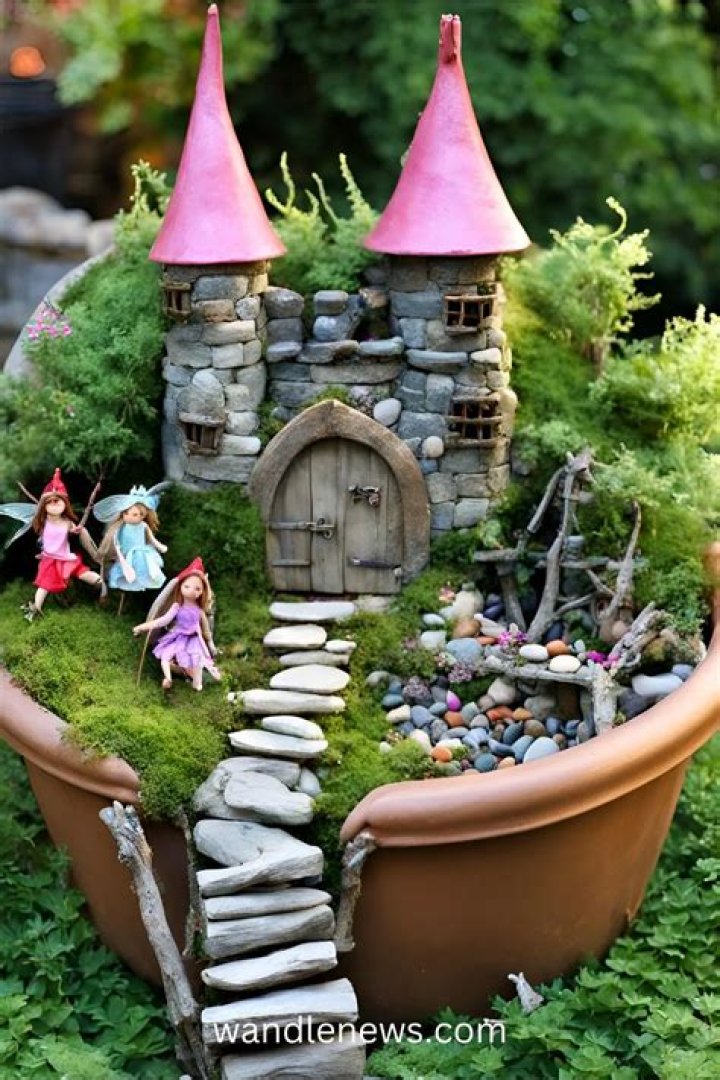
Did you know that your child learns lots of brilliant new skills when you give them the freedom to try new activities, like making a fairy garden, and get messy in the process? The Dirt Required series of blog posts share fun activities from around the world that will help your child express themselves and develop self-confidence.
Experiencing messy play activities from different countries is not only beneficial for child development but also enriches their understanding of other cultures. There are more blogs in the series that tell the story of messy play activities – find them on our Kids’ Activities page! Our recipe for making a mini fairy garden has all the ingredients you need for teaching kids something new. It’s a great activity for 3 to 11 year olds as they are able to plan, execute and evaluate whilst having fun and it includes a bit of good, old fashioned dirt!
What is a fairy garden?
Making your own fairy garden is a fantastic kid’s craft. Doing this with your child will teach them how to turn the simplest of things, like an old tray and a bit of mud, into a magical garden straight from their imagination. All your child needs is a bit of mud and the encouragement to think creatively.
There’s lots to learn through making a fairy garden for kids
Planning a fairy garden gives children the chance to talk through their ideas for their garden creation. It may be that you don’t have a garden of your own or aren’t keen to let them loose in your flower beds just yet. Giving them their own mini fairy garden means they can be in charge of their own tiny space which will build their confidence and teach them the basics of plant care. And when they get their hands in the dirt and actually make the garden they’ll be developing their manual dexterity too.
Ingredients and fairy garden ideas
The most important ingredient here is you. Give your child confidence by letting them know that it’s absolutely fine to get messy while they’re planning and making their fairy garden. (And if you’re worried about muddy stains, we’ve got some good advice on how to deal with them at the end of this blog post.) Next you need:
- Lots of dirt! (Any sort of soil or compost will do)
- A small container or box to make the mini garden in (a shallow tray or foil-lined shoe box will work)
- Things to put in the fairy garden – such as twigs, small plants, flowers
- Decorations for the garden – like toys, decorations, pebbles
- Water to make things grow
- A trowel or a big spoon
- Some old newspaper to catch any spilt soil
Encourage your child to be creative when they’re thinking of things to put in their mini fairy garden. Twigs can be turned into mini trees, small plants can be mini bushes or hedges, pebbles can be mini paving stones. Perhaps a small cup of water can be a mini pond? And toy people and animals can be used to populate their mini garden.
How to make a fairy garden
Firstly, the really messy part. This is where you let your little one get muddy hands, face and clothes.
- Lay down some old newspaper on a table or floor so that it’s easy to clear up after the garden is complete
- Put the box or container on the newspaper and then trowel or spoon the soil into it
- You probably need to help smaller children with this but older children should be encouraged to get hands-on. Remember, they won’t just be making a mess, they’ll also be learning good hand-eye coordination skills
Next comes the planning of your mini fairy garden.
- Ask your little one to think about what they want to put in their garden and how they want it to look
- They could do a drawing first to design the garden like a landscaper would
- Help them to gather the right things for the fairy garden – either from around the house or from your own garden or a nearby park
Then comes the planting.
- Let your child do this themselves unless they really are too young. They should plant their garden according to their design
- Don’t forget that plants will need water so you’ll need to water the mini fairy garden just like any other
- Once the plants are in it’s time to add the “design features” such as pebbles, garden furniture, or even a mini pond
- Finally help your child add the finishing touches – this could be grass or flowers – and some toy people or animals to live in the fairy garden
You’ll know the garden is ready when you’ve got a smiling child who is covered more or less from head to toe in mud or soil and a beautifully crafted mini fairy garden. These creative little fairy gardens make a thoughtful gift for a friend or relative!
Don’t worry too much if you find they have got mud on their cotton clothes from all the digging, it’s easy to get out. Just let the mud dry, then scrub with a brush. Once you’ve scrubbed, wash on a normal cycle with the OMO detergent of your choice. And we have lots more stain removal tips!
If you’re looking for a fun addition to your outdoor space or a craft project for kids, creating a fairy garden fits the bill. These miniature gardens consist of small landscapes filled with small plants, and trinkets designed to “attract” fairies to your garden. It’s simple to get started, and customizing the garden with special touches is where the magic lives. You don’t even have to believe in fairies, but if you do, even better. Here’s how to get started.
Fairy Garden Ingredients
- Potting mix
- A container with drainage holes
- Plants, twigs, and/or flowers
- Pea gravel, pebbles, glass marbles
- Mini garden decorations such as a fairy house, mini table and chairs, and a fence
Getting Started
Theme —
Decide your theme first. Are you going with English cottage, a forest backdrop, or a tree house? Beach themes fit the Southern California landscape nicely, but the sky’s the limit. Pick whatever theme matches your existing garden or your imagination. Whatever style you choose will help decide which accessories and plants to fill your garden with after it’s created.
Some themes include:
- Wooded wonderland
- Tree interiors
- Fairy home
- Castle
- Fairy city
Plan —
Once you decide your theme, choose a location to house your fairy garden. You may select an indoor or outdoor location, you just need to ensure your container will fit the space. Collect the materials you need to fit your theme. Craft stores, nurseries, and online comprise the best sources to shop for fairy garden materials. If you’re going with the beach theme, get your shells and sand; for a forest backdrop, pick up peat moss and plenty of plants.
Select Your Container —
Choose almost any container for your project. Whatever you pick will need drainage holes because you’ll be using live plants. Glass bowls, terrariums, and terra cotta pots all work well.
Other containers include:
- Flower pots
- Tin buckets
- Wheelbarrows
- Wagons
- Wooden boxes
- Large bowls
- Baby tubs
Make sure your container measures at least six inches deep and approximately 14 inches across to accommodate enough features and plants to build a proper fairy garden.
Building Your Garden
Soil —
Choose composted soil full of organic matter and small bark pieces to lend the most “alive” look to your fairy garden. Ensure proper drainage by adding a layer of pea gravel to the bottom of your container. It’s also a good idea to include a layer of charcoal to keep the garden fresh.
Fill the container with potting soil and add bark, pebbles, or moss on top to create paths for the fairies.
Plants —
Narrow your plant selection by considering where your fairy garden is located. If outdoors, will the garden be in full or partial sun? If indoors, pick your plants accordingly because some plants don’t do well indoors. Choose miniature plants for your landscape and flowers for color and visual interest. Select options with interesting shapes and texture. Don’t overcrowd the container because you’ll be adding additional items and accessories to make your garden a fairy home. However, clumping plants together in some areas make for good fairy hiding places. Look for two-to-three-inch plant pots with low-growing and small-leaf plants that will be easy to grow and maintain. And as always, use your imagination. Some plants can be pruned to look like tiny trees. Rosemary is a fine example of this strategy.
Good plants for fairy gardens include:
- Ferns
- Baby tears (for ground cover)
- Ornamental strawberry (another ground cover option)
- Wooly thyme (more ground cover)
- Miniature roses
- Primroses
- Calendula
- Rosemary
- Tiny violas
- Succulents
- Small bonsai trees
- Ivy
- Licorice plants
Accessories —
Here comes the fun part. Decorate your garden with small mushroom stools, little benches, a fairy house, fences (popsicle sticks can be repurposed nicely as fairy fences), and fairy lights. Make your own accents or buy online – there’s plenty of sources, and a list follows below.
Some popular fairy garden decorations include miniature versions of:
- Chairs
- Trellises
- Birdhouses
- Toadstools
- Birdbaths
- Watering cans
- Pails
- Lanterns
- Animals
- Don’t forget the fairies themselves!
For make your own elements, use sculpting clay to make mushrooms or a table, wire sticks together for a small fence, design a mini garden gazing ball with a marble hot glued to a small stick or golf tee. Customize a small birdhouse by gluing pebbles to the roof and moss to the siding. Make a birdbath and glue a small terra cotta pot to a saucer.
One cute do-it-yourself container idea is to take a large broken terra cotta flower pot, and insert the broken pieces into the soil as steps leading to the top of the fairy kingdom.
Example of a Theme: Beach Scene
If you decide on a beach theme for your fairy garden, try using a seashell planter (make sure it can drain properly) and plant some eye-catching elements to include beach chairs fashioned from popsicle sticks, shells, tiny pieces of driftwood, flat, shiny glass stones used to make “water”, tiny sago palms, and mini mounds of sand. For a cute accent, take two sturdy sticks, hot glue a piece of wire or twine between them, and affix tiny shells to the wire or twine to make a beach light stand. Add mini tiki huts using raffia for the roof.
Sources for Fairy Accents
There’s no shortage of places to find fairy furniture and garden accents. Try Ebay, Amazon, Etsy, craft stores, flea markets, thrift stores, gardening supply shops, nurseries and garage sales. Keep an eye out for Christmas miniatures – the houses and furniture make great fairy garden additions, craft items such as twine, wire, and sticks for do-it-yourself projects, and garden elements such as river rock, glass marbles, and mini wind chimes.
For online specialty shopping, browse some of these sources:
Final Thoughts
Designing a fairy garden can be addictive. There are so many different themes and accessories that you’ll probably never run out of design ideas. Add the fact that fairy gardens are fairly easy to build and you may never stop adding these magical wonders to your garden.
Have you created a fairy garden? Share your photos on our Facebook page!
It’s a lovely project, that you can do with your kids to let them have fun and be creative. Fairy Gardens are a magical garden filled with small plants and small accessories. It’s a tiny place created and tended with Love.
Easy Steps for DIY Fairy Garden
Things you will need
You will need a container at small, or medium, or large size. Just choose the size your kid prefers and also consider the space you have for your Fairy Garden.
If you have a big or small garden at your home, large size can be a good choice for you, but if you don’t have, you can put your Fairy Garden inside your house, or inside your kid’s room, and in this case, a small container can be better for you.
You can also use some of your old stuff in the kitchen, like an old tray, teapot, or teacup.
You will need also, soil, small rocks, Fairy Garden decor like mini furniture or fairy house, and small plants, and small colorful flowers to add some colors.
For Fairy Garden decoration, you can use some toys that you have at home, or you can visit Amazon and get some cheap and lovely stuff .
Best Plants for Fairy Garden
Top plants for Fairy Garden Are Silver Sprinkles, Polka-Dot Plant, Gray Lavender Cotton, Golden Japanese Stone Crop, Wood Sorrel, and Alyssum Flowers are also perfect for Your Fairy Garden as they attract Butterflies.
Also you can pick any flowers or plants from your garden.
DIY Fairy Garden with your Kids
First you can let your kid plan for it, and draw his Fairy Garden.
Then Prepare a list with the things that he will need, and check if he needs to buy some staff or he will use things that he has at home.
Start adding together soil to the container, and add some grass, and flowers.
Let your kid add decoration and arrange fairy staff as he likes.
The last step is to add some small rocks.
I hope you make your own Fairy Garden with your Kids and enjoy it on one sunny day.
You can visit also some of our wonderful activities
Have you ever had a day when your kids are totally out of control, shouting, crying and fighting over everything? And you never understand how to keep them busy because they are tired of coloring bunnies over and over again. Well, I hope many say it is almost every day, right? Then it is time for you to make this Simple Fairy Garden with your kids next time you’re about to go crazy. Ha!
I happen to babysit my nephew (innocent and crafty) and niece(naughty and nice) often during holidays only to realize that I burn more calories than any other day. They keep me running on toes all the time. Though they have the capacity to draw out all my energy, there is never a single moment I regretted the time I spent with them.
I always find a way to keep them busy and occupied, else I (as their only aunt!) would be dragged out of the house to play with them in the hot sun. Yes, they show no mercy even if you’re an adult. Lol! So, I and my sister come up with easy craft projects that they ‘ll be interested in. Sometimes, I’ll be in awe seeing how creative and fast learning they are for their age. Honestly, it’s because of them I keep learning new stuff.
[adToAppearHere]
This Simple Fairy Garden project is one among those many memories I had with them. My crystal clear memory reminds me how excited they were when they created their Fairy Garden on their own. They were quite proud of themselves, snatched my phone and snapped most of the photos by themselves (I bet your kids are far better than you with mobile phone usage, don’t you agree?).
Okay, so here we go into the action!
Learn how we made our simple fairy garden with all the objects found in and around our house and garden! You can also read tutorials on mini furniture for your fairy garden here.
How to make Simple Fairy Garden with Kids
Supplies:
- Wild Flowers
- Young Coconut (optional)
- Bottle Cap
- Few thin sticks
- Glue
- Rubber band
Time Required: 1 hour
Difficulty Level: Easy
Instructions:
Step 1:
Collect the Objects! This step is the most exciting!!
Take them around your house and let them pick up whatever they like.
My nephew and niece picked all the wildflowers, plants, sticks along with few immature young coconuts that fell from the tree. They had a beautiful collection in short. Look at the door that is drawn on the coconut, it’s their imagination.
Step 2:
Build a house for the fairies!
[adToAppearHere]
Use a bottle cap as the base and glue the sticks around it. Make use of a rubber band/hair tie to hold it in place. We removed the top part from one of the coconuts to be used as a ceiling for the fairy house. Isn’t that pretty?
Step 3:
It’s time to decorate around the fairy house. Place all the objects your kids collected around the house. We placed the wild plants around the house. The flowers that were picked were scattered on the plants. You can see the red flowers arranged over the yellow flowered plant here.
We placed all the leftover coconuts around as the border.
Step 4:
Add Additional decorations!
Add if you have any additional magical items you have around your house.
We added the Origami trees and the doll to our scenery. My Lil niece placed the flowers on the doll’s head and hand. Lol!
Step 5:
Welcome the fairies!
Let your kids write the sign. My nephew wrote the sign “Welcome Fairies” on a piece of colored paper and glued it to the wall.
Tada. Congratulations, you just completed the Simple Fairy Garden with your kids.
Pin Now, Read Later
Hope you enjoyed reading this article, if you want more of some Shine Crafts in your mailbox, please subscribe below!
DIY Mini Paper Cacti with Wine Cork Planters
Light Bulb Miniature – Valentine’s Day DIY
Perfect Salt Dough Recipe + Creations
How to Make Fairy Furniture Set – Fairy House Crafts
Leave a Reply Cancel reply
This site uses Akismet to reduce spam. Learn how your comment data is processed.
About
Meet Dyana!
The Crafter behind ShineCrafts!! Follow my Craft Obsession Journey as I create a Cata(b)log of DIY, Crafts and much more…Read more
My girls and I have been LOVING the gorgeous spring weather we’ve been having here lately! It’s been so therapeutic to be out in the sunshine, work on our yard, and do a bit of gardening. One of our recent projects was a fairy garden for our front steps. It’s been in the works for a while, and I thought I’d share it with you today. My daughters and I made this potted fairy garden over the course of a few weeks, adding things on as we went and making most things ourselves out of things we had on hand or things we found in our yard. This fairy garden was inexpensive and easy to make, and I think the result is just as cute as something you might spend more money on. Plus, it’s fun to make all of the little props!
We chose to feature simple annuals in our fairy garden – alyssum, pansies and carnations – because I liked their small scale and their price! You could use any sort of plant for your garden depending on your area. I’ve seen sweet fairy gardens that have featured succulents and even herbs.
Excuse the “rustic” porch and construction mess we have going on here – our porch is one of our current projects this summer. We’ll slowly and steadily continuing to finish Our DIY House as we’re able to. It’s been a massive, fun, exhausting & wonderful project!
Here’s how we built our easy + inexpensive potted fairy garden:
First, I found a wishing well garden ornament made out of bark and twigs at my local antique shop. The girls and I embellished it with twigs, moss, leather, faux flowers and leaves to make a little fairy house. We simply planned the project out, and glued everything on with a glue gun.
We decided we wanted a fairy garden featuring three pots of different sizes. For the first pot, my hubby cut a “U” shape out of the front of a cheap terra cotta pot. Then, I smashed the part he cut out into a few pieces, and put the cut piece inside the main pot as shown. I filled it with soil and my mom and I had a fun afternoon arranging stones and plants in the broken pot. We placed the fairy house we had made in the center of the pot and designed everything else to fit around it. We found some moss in our forest to fill in the empty soil patches. I love how the plants are settling in and growing in this pot!
For our next largest pot, I found an antique steel bucket at our local antique store, filled it with gravel and then with soil, and planted four little plants inside. My daughters and I then covered the soil with found moss, and made a wee river out of blue marbles. We made a bridge from willow twigs and a glue gun, and a banner from twigs, twine and fabric scraps. We had these leftover little mushroom ornaments from this project.
In the final and smallest pot, we used a little planter we had on hand, filled it with soil and planted a couple of flowers inside. Then, we made a miniature pond out of a blue Tupperware bowl with a recycling bag smushed inside and some rockes glued around its perimeter. We covered the bare soil with moss.
The girls absolutely adore playing with their fairy garden, and we’ll probably keep adding and rearranging things in it as we go along. I think that’s the fun of fairy gardens – you can tinker and fiddle and keep changing them around.
What I’m really liking about our simple version is that it didn’t cost us much at all, and it’s completely kid-friendly. The girls can actually take their little plastic fairy toys and wander through their tiered magical garden and PLAY!
Happy fairy gardening! If you have any fun fairy garden ideas, please let me know in the comments below!
Although they’re small in size, these fanciful abodes are nothing short of stunning.
When you’re designing a garden, it can hard to figure out which kind—English! Butterfly! Container!—you want because all gardens are beautiful. So you have to make some decisions about what’s most important. Is space limited? You should check out the best hanging plants. Does your plot of land get a ton of sun? Best to consider some full-sun perennials. Are you interested in attracting pollinators? Then you should investigate some of the best plants and flowers that attract bees, flowers that attract hummingbirds, and flowers that attract butterflies.
On top of flower selection, it can be fun to add a little extra flavor to the garden. Our suggestion: Try a fairy theme. After all, what’s more magical than a garden? Tiny furniture, cars, and houses placed throughout the garden make it a little extra special, and your kids will love it! You can even get them involved by recruiting them to help you construct sweet little abodes for the various fairies who will be visiting. But don’t worry—if you’re not up for a DIY, many fun elements can be purchased via Amazon and Etsy. Setting up the tiny vignettes all over the garden is a fun activity, and adults and children will delight in stumbling across these “secret” scenes. Check out some of these fun to ideas to make your fairy garden even fairer.
Mini fairy gardens are one of the hottest trends in gardening right now. Here’s how to save money by making your own with this easy DIY project.
How to Make a Mini Fairy Garden
Materials:
- Organic rose soil
- Rosemary
- Thyme
- Flowers
- Chives
- Wagon
- Drill
Be creative with a container: we used on old wagon. Drill out holes on the bottom for drainage. Fill the container with soil all the way to the top. Add plant, herbs or vegetables making sure to use plants with like sun and water requirements. Add accessories.
Ideas for Fairy Garden Accessories
- Blue marbles
- Bottom half of a water bottle
- Broken pot
- Decorative fairies ($1.99 and up)
DIY Fairy Hammock For Mini Garden
Materials:
- Burlap
- String
- Sticks
Cut a piece of burlap for the bed of the hammock. Because burlap frays you want to reinforce the long-sides of the hammock by weaving the string from one corner to the other. Repeat on the other side. At each end add a stick securing with string.
DIY Mini Fence for Fairy Garden
Materials:
- Sticks
- Floral Wire
Pick several stick that are the same length and width. The length of your fence will be determined by the number of sticks you have. Twist floral wire around end of one stick, leaving a little space between and add the second stick wrapping wire around. Continue adding sticks until you have the desired length of your fence.
DIY Flags for Mini Garden
Materials:
- 2 Shepherds Hooks or Wire Hanger
- Ribbon or fabric
- Stapler
Cut small diamonds out of ribbon fabric. You can make your flags as colorful as you want. Loop each diamond on to a string, creating triangles. Staple or glue each triangle into place. Tie the end of the strings on to a piece of wire and hang in your garden.
We made our annual Fairy Garden last week and my children have been playing in it’s magical realm hour upon hour.
Our wishing well is made from a recycled jar which works wonderfully to give the well the depth it needs. We used raffia covered wire (found at most craft stores) to wrap around the mouth of the jar and form the arch of the well.
We used my hot glue gun to stick pebbles around the outside of the jar.
Three layers of pebbles was the perfect height for our well. The rest of our jar, we left uncovered.
We used hemp string (found at craft stores) to tie our water bucket onto the arch of the well. Hemp string has a waxy coating and will stand up well to getting wet.
We placed the jar in the spot we intended for our well. With my sharp moss knife, I cut around the circumference of the jar, cutting a hole in the moss.
With the moss circle removed, we had to dig just a little to get the right sized hole for our well. Popped it in up to the pebbles and there it was… a perfect little well.
Kitty filled it with water in the afternoon sun.
What an enchanting place our Fairy Garden is… a place of such inspiring play. Both children rush home from school to play with the fairies.
I love that it has drawn them outside, on their own… just think what magical imaginings are happening in this little boy’s head.
I hope these little glimpses in to our Fairy Garden journey is inspiring you to make a fairy garden with your child too. Please do… it will be a gift to both of you. And when you have made yours, be sure to enter it into our Fairy Garden Contest… click here to learn how to enter.
I have set up a Fairy Garden Page at the top of this blog which has links to all of our past and present Fairy Garden posts.
Happy Fairy Gardening,
Blessings and magic,
Donni
Donni
Donni Webber is the mom behind the popular natural living Waldorf website and blog, The Magic Onions – where the magic of nature and the wonder of childhood collide to make each moment a precious gift. She is a photographer, writer, crafter, wife and mother of two inspiring young children. Her work has been featured in many popular publications, including HGTV, Better Homes and Gardens, Disney and Apartment Therapy.
Do your kids love to play make-believe? Do you ever find yourself wanting to escape into their childlike world of wonder and whimsy?
Today I want to encourage you to do just that! Here’s how to create magical memories building a fairy house and fairy garden with your child!
A must-have ingredient in every happy childhood is wonder. Wonder is what transforms a walk in the woods into an exciting, epic exploration and few things brings out wonder like fairies and other whimsical creatures! Fashioning a fanciful dwelling for fairy fun is such a memorable way to spend time with our kids that they’ll remember for years to come.
To create your own fairy home, you’ll want to gather your choice of items to construct your fairies’ dream dwelling. Some ideas include:
Ideas for Materials
- Leaves, grass and moss
- Flowers, acorns, rocks
- Tiny animals
- A set of toadstools
- Miniature birdbath
- Seashells
- Small pieces of wood, baskets, or other natural containers
- Glue gun and glue sticks
- Extension cords (if building outside)
- Wood glue
- Polymer model clay
- Twine (for swings or clotheslines)
- Fake fur or fabric scraps
- Small dollhouse items
- Tiny rustic furniture
- White wood picket fence
- Potting soil and tiny plants for a fairy garden
Preparation Time
20 minutes+ to gather supplies
Activity Time
45 minutes+, depending on how elaborate you decide to make your house and garden. Once you start designing together, you’ll probably find that the time flies because get lost in the fun.
Creating wonder can take a little time and imagination on the part of the parent, but it won’t take too much money. We found most of our fairy house decor on clearance at Hobby Lobby and a few other natural items around the yard. We are just getting ready to add miniature plants that will do well both indoors as we wait for Spring, and outdoors when the weather warms up enough. My girls can’t wait to plant a mini garden to grow up around the perimeter of their fairy house.
There is no right or wrong way to design, however! Perhaps you decide to help your kids build a fairy house right into the tree line of your yard. Or maybe you want only a fairy house or only a fairy garden. This is the fun part where you claim complete artistic license! Anything goes 🙂 We once went to a little garden event showcasing fairy house creations in a local park. The best part was that every single one looked completely different – each were intricate and captivating in their own way.
Gather Supplies and Create a Fairy Garden
Let’s talk about supplies for any and all directions you could take this! First, find a large basket or other container to use for the house itself. Natural, rustic looking containers are perfect for fairy houses. If you decide to add small plants for a garden area, you can line the inside with plastic and poke holes for drainage. Fill your container with potting mix and miniature plants to line the perimeter of your fairy home.
Once you’ve settled on a theme for your design, collect your plants and objects. No need to go to the store if you’d rather not – you and your kids can forage your yard for little items to construct your house. Look for a variety of natural materials and/or decorative craft items that suit your vision for your dream house.
The little details are what make fairy homes extra special. Create to your heart’s content! Cover the floors with sands, leaves, or moss to create soft padding. Make a hammock from the fronds of a fern or a piece of stocking and add scraps of fabric for curtains. Turn an upside-down teacup or saucer into a table and use acorn caps as bowls. You can even add “wallpaper” made of dried leaves, leathers, or hand-made paper.
If you want to add furniture like what we added (shown below), you can either use doll furniture or make your own. Polymer model clay is the perfect product to use to build your own details such as door hinges and a door knob on a craft stick door.
Protect your special creation in Winter by bringing the container indoors and setting in a sunny corner or a heated garage. You may need to replace some plants in the Spring if you did decide to add a garden to your fairy abode.
We’ll soon be adding some miniature Spring plants to line the perimeter of our fairy home! A few plant ideas that may be the perfect fit in a fairy garden include:
- Dwarf heronsbill
- Brass buttons
- Lobelia
- Sedum
Don’t forget to grab the camera – You’ll want to remember these magic moments!
Have you ever built a fairy garden house before? Let us know if you’ll be building one this Spring or Summer! You might even want to invite your kids to write a story about the adventures of their own fairies. For more on gardening with kids, check out this post on how to grow a love for gardening in your kiddos – no green thumb required 😉
Browse our simple ideas to make your fairy garden one-of-a-kind.
Related To:
Photo By: Cassidy Garcia
Photo By: Jalynn Baker
Photo By: Cassidy Garcia
Photo By: Cassidy Garcia
Photo By: Emily Fazio ©2016
Photo By: Cassidy Garcia
Tent Fit For a Fairy
Create the perfect place for a fairy to rest with skewers, twine and scrap fabric. Glue cut skewer pieces together to create a tent frame and secure with twine binding. Trim scrap fabric to lay evenly over the frame and secure with hot glue as needed.
Fairy Twinkle Lights
What’s better than a fairy-gnome get-together? Create cafe lighting for a friendly gathering, fairy campsite or garden with battery-operated twinkle lights. Wrap the lights around skewers for lighted posts and create an atmosphere that fairies are certain to enjoy.
Wish I May, Wish I Might
Reuse a bottle cap to create a wishing well. Glue two skewer pieces into the base of the cap on each side, then cover the sides of the bottle cap in small pebbles. Secure a short piece of twine to another small piece of skewer then wrap the remaining twine around it, letting a small piece hang loose. Attach this piece horizontally to the front of the wishing well posts. May all the fairy wishes come true!
Here’s how to make a simple fairy garden using a planter and a small garden bed. Such a fun way to combine the outdoors with imaginative play!
Follow our Outdoor Play and Learning Pinterest board!
This post contains affiliate links.
Although we started a bit later than usual, we’ve finally got this year’s fairy garden underway! We bought all kinds of plants from our local nursery and added some homemade fairy garden additions to make an imaginative fairy land for the kids!
Since we hadn’t really planted anything in our little garden area in the backyard, we decided to make our garden bed part of the fairy garden! We replenished the soil in the garden bed and also the soil in our little wooden planter. We added a few plants we had found at our local nursery: some succulents, strawberry plants, lettuce and some ground cover.
Lucy made some sparkling pools of glass beads and stones. Sometimes she fills the pools with water so the fairies can swim.
We had an old fairy lamp left over from last year (similar to this one) that we placed up on a rock. Maybe it will help the fairies once the sun sets and provide some warmth on our cool, misty nights.
Next we needed to create a way for the fairies to be able to get up to the garden in the wooden planter should it rain and their wings get wet. (Many fairies cannot fly with wet wings.) We decided a ladder would be perfect!
This was super easy to make. We used some mini craft sticks and some string. We simply tied the craft sticks together to form a rope ladder.
We also decided to add our letter stones to the garden. Now we can leave messages for the fairies, and they can leave messages for us!
Lucy felt the garden wouldn’t be complete without adding a decorative nature wreath. She added some flowers and long blades of grass to our outdoor weaving loom and left it right where the fairies would be sure to see it.
We’ve been trying our best to keep the garden looking extra nice for all our fairy visitors. We often find little clues that they’ve been visiting. Hopefully, soon, one may come to stay with us for a while!
Here’s how to make a simple fairy garden using a planter and a small garden bed. Such a fun way to combine the outdoors with imaginative play!
Follow our Outdoor Play and Learning Pinterest board!
This post contains affiliate links.
Although we started a bit later than usual, we’ve finally got this year’s fairy garden underway! We bought all kinds of plants from our local nursery and added some homemade fairy garden additions to make an imaginative fairy land for the kids!
Since we hadn’t really planted anything in our little garden area in the backyard, we decided to make our garden bed part of the fairy garden! We replenished the soil in the garden bed and also the soil in our little wooden planter. We added a few plants we had found at our local nursery: some succulents, strawberry plants, lettuce and some ground cover.
Lucy made some sparkling pools of glass beads and stones. Sometimes she fills the pools with water so the fairies can swim.
We had an old fairy lamp left over from last year (similar to this one) that we placed up on a rock. Maybe it will help the fairies once the sun sets and provide some warmth on our cool, misty nights.
Next we needed to create a way for the fairies to be able to get up to the garden in the wooden planter should it rain and their wings get wet. (Many fairies cannot fly with wet wings.) We decided a ladder would be perfect!
This was super easy to make. We used some mini craft sticks and some string. We simply tied the craft sticks together to form a rope ladder.
We also decided to add our letter stones to the garden. Now we can leave messages for the fairies, and they can leave messages for us!
Lucy felt the garden wouldn’t be complete without adding a decorative nature wreath. She added some flowers and long blades of grass to our outdoor weaving loom and left it right where the fairies would be sure to see it.
We’ve been trying our best to keep the garden looking extra nice for all our fairy visitors. We often find little clues that they’ve been visiting. Hopefully, soon, one may come to stay with us for a while!
Related To:
A View From Above
A bird’s eye view of a tiny world below.
A little while ago, I shared how to make a Coastal Fairy House. Today, I thought I would share how you can easily make a miniature sized garden in a container.
It is incredibly easy to do, as many garden centers are now catering to customers’ cravings for miniature items. Most garden centers now have areas entirely devoted to this fairy garden hobby. From the tiniest of trees, plants, succulents and accessories anyone can make a garden like this on their own. A project like this is for the young and old alike. But be forewarned, for some reason, many find these gardens highly addicting! Here is what you need to get started:
- A container—I used a basket approximately 20 inches x 16 inches
- Plantings, such as fairy vine, ‘Platt’s Black’, brass buttons, dwarf grasses, ferns, miniature evergreens, hens and chicks, succulents, wooly or creeping thyme, lavender, miniature roses, miniature daisies, Selaginella, miniature African violets, dianthus.
- Moss
- Potting soil
- Accessories—purchased or homemade.
Take a peek at the gallery below on how you can get started.
Planting a Fairy Garden
Shop This Look
To care for your fairy garden, be sure to water it regularly. Also, feel free to give a gentle pruning to any plantings that seem to outgrow their space. If you happen to lose a plant or it is not doing well, just gently remove it from the garden and replace it with something else. These gardens are always growing, changing and evolving—just like our regular gardens.
When you think about adding accessories, the only limit is your creativity. In all of my miniature gardens, I like to incorporate both store-bought and homemade items. When I am out and about, I seem to always have my miniature gardens in mind. I love discovering fun little items at thrift stores, garden centers and even recycling found items in nature. Acorn lids make perfect plates. Leaves are natural blankets and place mats. Sheets of moss can be transformed into rugs for houses. Take a peek at the craft store too and be sure to stroll down the dollhouse aisle. You will be amazed at what you find. Some people even like to decorate their gardens for the holidays.
From the editors of Faerie Magazine comes an enchanting guide to throwing parties worthy of the faeries.
When I was in elementary school my best friend Claire and I were convinced that faeries were real. Claire’s family kept a garden outside the apartment where she lived, and when we had play dates at her house after school I would stop outside the front door and stare at the flowers planted in the dirt, trying with all my might and imagination to will a faerie to appear among the petals. None ever did.
My godmother bought me Faeries A to Z, a book that I read nightly as a child, which detailed their habits and routines, and included a fairy house in the book that you could set up next to your bed, inviting the creatures to leave you gifts as you slept. Despite my deep conviction that they were real, no faeries left me any presents—not even a piece of string—in the fairy house.
I am not bitter that my unwavering loyalty to the faerie realm never resulted in any visitations from the creatures themselves—after all, they obviously aren’t real—but when The Faerie Handbook (Harper Design, November 14) arrived at my desk this week, I was never-the-less tossed back into my old childhood infatuation with the winged creatures.
The Faerie Handbook is a thick, lavender tome that will serve as your guide to all things related to the faerie kingdom: How to dress and smell like a faerie, how to make faerie dust, even how to make sure you don’t get kidnapped by faeries and taken to their realm, or alternatively, how to find pathways that will lead you there—and most importantly, how to eat to like faerie and throw a party worthy of their kingdom.
So how do faeries party? How you might expect: With enchanted garden parties under the branches of ancient trees, decorated with strings of lights, paper butterflies, and golden candles lining the dinner table. To throw a dinner party worthy of the faeries, the book advises you to decorate with green moss, hang crystals from tree branches, and fill the space will all kinds of candles, especially those dripping with old wax.
Now on to what you would serve at said party: Best to focus on the flowers, like I did as a little girl, gazing into Claire’s garden with hopeful eyes. The Faerie Handbook recommends integrating edible flowers—like hibiscus, rose, and orchid—into your recipes, and teaches you how to make candied violets and clear lollipops filled with dried flowers. Just in time for fall, it also includes recipes for frosted cranberries (pictured above), and lavender shortbread cookies, both perfect additions to your Christmas dessert table. Think ahead to spring with their instructions for a tea party adorned with pink and purple flowers, tea cakes, and platters of fruit. Want to get really into the spirit of the faerie kingdom? Issue invitations to your celebrations on a scroll.
The elaborate party ideas and recipes contained in this book are enchanting fantasies that probably only the most dedicated host would have the resources to recreate, but I was still swept off my feet by this charming book, which filled me with nostalgia and provided a visual feast for my eyes. Whether you live your life like a faerie princess, or you just tried your best to as a kid, this is a book is a must-have. I’ll be using the book to reignite my search for the faerie realm using the recipe for fairy dust, which I plan to sprinkle on everything I own.
The Faerie Handbook: An Enchanting Compendium of Literature, Lore, Art, Recipes, and Projects, $24 on Amazon
How to make a fairy door? There is no need to wonder about that. Just close your eyes and let your imagination free. Well, if this does not work, ask your children. Kids know where fairies live – in a fairy garden and in magical tiny homes. Although this may sound as a joke to you, it is a fact that fairy doors for the garden are a special and very popular item for young children and a very interesting craft not only for kids, but for moms and dads too.
How to make a fairy door – DIY garden decorating ideas
With sprig already here it is about time to think of your garden decoration. The warm weather means that the children will spend more and more time outdoors and if you have a playground or a playhouse in the garden, some magical fairy doors for the garden will add to the outdoor pleasure of the kids. If you have never thought of how to make a fairy door, we have some adorable ideas for opening fairy doors which will be the perfect decoration for the trees and will transform the patio into a Fairyland.
Fairy doors for the garden are easy to make and you have the liberty to choose any material. Wooden fairy doors are, of course, the most authentic looking ones, but you can use polymer clay, wooden lollypop sticks, a wood plank or any other material. The fairy door accessories are a must, whether you like it or not, as a true fairy needs a beautifully decorated door to match her magic powers. You don’t believe that? Ask your daughter!
How to make a fairy door – step by step tutorial for crafting wooden ones
Garden fairy doors do not need to be expensive or time consuming. With creativity and imagination you can make magnificent miniatures which will make your children happy and will encourage imaginative play.
Here is a list of the materials for crafting a wooden fairy door:
– An oval wooden plate
– Strip of balsa wood
– a small doorknob or a cabinet hardware
– Wood paint in any color (or a wood stain)
– Adhesive and wood glue
How to make a fairy door – step by step instructions
How to make a fairy door? Here are some ideas! First you have to cut the wooden plate so that it resembles a door. For a more authentic appearance, the balsa wood strips are perfect as they are thin and soft and the material that can be cut beautifully and easily with a stencil knife. The balsa wood strips will add texture to you wooden fairy door and a genuine look. Use a ruler so that you cut straight lines and the ruler will help you with cutting the strips with same length. If necessary, sand the edges of the strips until smooth.
After you have cut all the elements, glue the balsa wood strips to the wooden plate. Leave a small distance between the individual bars. Paint the wooden door and let the paint dry completely. After that you are ready to add decoration to the fairy door. You will surely find something suitable in the craft store or craft your own fairy door accessories. You can cut out a wooden medallion like the one on the pictures.
Adding a doorknob is the final step for a true fairy door. After your wooden fairy door is completed, you can finally decorate the garden. Find a suitable tree or a larger stone.
Garden fairy doors from lollipop sticks
If you wanted to make a child happy, the idea of opening fairy doors is absolutely brilliant. You can craft fairy doors for the garden in a couple of hours using wooden lollipop sticks. All you need is enough sticks, glue, buttons or other fairy door accessories.
Glue together the sticks to make the main body of the door. A glue gun is the most suitable tool, as the sticks will be glued immediately. Add reinforcement sticks, two horizontal reinforcements, and one diagonal, for an authentic look. Glue on a plain small button which will act as a doorknob and adorn the door with any kind of fairy door accessories that you like.
Garden fairy doors from modeling clay
This is one of the easiest ways to make garden fairy doors and is a cool craft idea for kids. You need modeling clay, a rolling pin, a stencil knife and water color paints.
Soften the clay and flatten it with the help of the rolling pin. Outline the desired door size and cut it with the stencil knife. Leave the door to dry out and it can be painted in any color. After the paint has dried out completely, decorate the door with leaves (you can make them from the clay) or other accessories.
Fairy doors for the garden – the perfect gift
Fairy doors for the garden can be crafted in any style to match the landscape style of the garden. There is no doubt that fairy doors are very romantic and a very original garden decoration. A great idea to extend the project is to add windows, a beautiful path, a chimney or a mailbox for even more charm. Decorating with plants – a nice garden path of tile or stone pieces, a small front garden with flowers, moss or other plants is also a good idea and makes the decorated area look even prettier.
Fairy door accessories ideas for a magical garden look
Besides leaves, flowers or medallions, you can use different fairy door accessories which will complement the overall look and will add the finishing touches of your fairy home. Benches, lights, a miniature pond, a bridge or whatever else that comes to mind will complete the design.
You can see – there are no limits and rules. There are ideas suitable for children, for beginners in DIY projects and for people with improved craft skills. Just have fun while crafting your magical fairy garden doors!
By L Brooks | Submitted On February 02, 2010
If you have a suitable space in the backyard and have kids who love fantasy and nature, then why not make a children’s fairy garden? It is the perfect project to get them outdoors!
Five Reasons to Make a Children’s Fairy Garden
- A magical space for them to play in
- Helps them learn about nature
- Encourages them to get involved in gardening
- Fires the imagination
- Teaches them to take care of the environment
Designing Your Fairy Garden
Things to think about when planning your garden include:
- Planting interesting flowers that stimulate imagination, such as bold colors and tactile plants
- Creating an area for the children to take care of
- Decorating with fairy statues and miniature furniture or houses
- Creating secret hiding places for both kids and fairies
- Building homes for wildlife such as log piles or bird boxes
- Feeding the birds
- Leaving a wild area or even planting a wildflower meadow
- Trailing fairy lights in the bushes
- Creating a space to leave gifts for the fairies
Projects for the Fairy Garden
Encourage your children to broaden their horizons in the garden. You could get them gardening or growing fruit and vegetables, or why not help them to build something for the garden, such as a bat box or fairy house?
Teach them about the different plants and wildlife, and get their imaginations working hard by asking them to draw pictures or write stories and poems about the fairies in the garden. You could also get them looking for signs of fairy presence, or create games such as fairy treasure hunts!
Fairy Fun
There are lots of reasons to make a children’s fairy garden, and hopefully the above will have sparked your imagination and got you keen to know more!
While shopping for wedding florists recently I stumbled upon a shop in Encinitas which offered some unexpected surprises. At Twigs by Teri, located just inside the Sunshine Gardens Nursery area you’ll find among the buds and blossoms tiny pieces of Victorian lawn furniture. Lining the shelves are miniture bird baths, gazebos, picnic tables, even candelabras and bell jars. When I asked the shop owner, Teri Brand what these were for, she explained cheerfully “for your faerie garden!”
At the time, I myself could not boast to having said faerie garden. Mrs. Brand then told me about the class offered by her store, which teaches prospective faerie keepers how to set up their own little nook for the wee folk. I decided to attend a class with my fiance, to find out just what faerie gardening was all about.
We arrived at the class promptly a 12:45, and were handed a plastic bin with a baggie of moss, a spray bottle, a plastic spoon, a chopstick and a little tin bird ornament taped to the side. We were then instructed to pick out a container (boxes, flower pots, tin troughs, anything to hold the garden.) We selected a long, basin style tin trough.
Next, we were told to select from an assortment of miniature plants set out on the table. Having a taste for the exotic, we chose a prickly succulent type plant and another called “string of pearls” which looks very much like it’s name suggests.
Our plants in hand, we moved on to select our accessories. There were tiny lawn chairs, park benches, lamp posts, swing sets, nearly anything your heart might desire. We chose an old stone table (which reminded me of the table from C.S. Lewis’s The Lion, The Witch and The Wardrobe) a lamp post (keeping with that same Narnian theme) a candelabra, and a set of bell jars.
With all our pieces at the ready, we began the process.
Without giving away any trade secrets, I can tell you that you want to began by lining your container with plastic, to prevent any leakage when watering. This of course only applies to faerie gardens using living plants, if you chose to work with silk or plastic greenery, this isn’t a concern.
Next, we filled our container with gravel (to hold the plastic down and serve as filler) and a layer of soil, which we patted down till flat.
We used our spoon to dig out two holes where our plants could rest, and added more dirt so that they could get properly nestled in. We used a small paint brush to dust away any excess that spilled over on to the leaves. We gave our plants a few healthy squirts from our spray water bottle, and moistened the dirt, then we were ready to begin placing our decorations.
There really is no wrong way to do a faerie garden. You can place pre-made decoration, or make your own from household items (that’s what a resourceful faerie would do anyway, don’t you think?) For example, a ridged toothpaste cap glued atop a marble or a bead makes an excellent lamp. A pincushion can become a beanbag chair and pizza savers (those three pronged plastic things stuck in the top of delivery pizzas) are just right for patio tables. We laid down a bed of moss for color, and low and behold, we had created our very own faerie refuge.
I went around, looking at other gardens. Many of the guests at this class were young ladies of grade school age, who were absolutely brimming with creativity. Some girls had brought along miniature animals, such as turtles and bunnies to inhabit their gardens. Another actually had a ceramic fairy resting on the side of her pot. The variations of your own faerie garden are limited only by your own imagination.
Find out how to make a DIY miniature fairy garden and get ideas for this enchanting and fascinating garden trend, suitable for both kids and adults.
1. Broken Pot Fairy Garden
Broken pot? Make a fairy garden!
2. Fairy Garden with the Castle
DIY reuse your broken planters to make this beautiful fairy garden.
3. DIY Sparkly Beach Stone Fairy House
Stock up on smooth round rocks from the beach. You can get your kids creative to cover the rocks in paint and glitter.
Add a few “fairy” touches like mini mushrooms and a birdbath to complete the fairy garden.
The Little Monster Blog
4. DIY Teacup Fairy Garden
Grab a teacup to create this little vignette.
You’ll have the perfect mini garden for your apartment or windowsill.
5. Wooded Wonderland Fairy Garden
This mossy hill is just the place to relax among cork mushrooms in the looking glass pond.
6. Fairy Door Clay Pot Planter
This fairy door clay pot planter is an easy DIY that is super cute and will look fabulous in your garden.
Check out the popsicle stick fairy doors too!
7. Mini Fairy Garden
Garden in a pod is the most common style with miniature plants and decorations.
8. Wooden Box Fairy Garden
An old drawer is a perfect fit for this fairy garden, with its tiny birdhouse and birdbath, garden chairs, watering can and pretty arch.
9. Mini Garden in a Mini Pot
Beautiful mini garden.
10. Suitcase Fairy Garden
Create your own little world with a vintage suitcase fairy garden.
In just an hour you can furnish your own secret garden with fairies, plants, moss, and other miniatures for a wonderful display.
11. Fairy Garden Wishing Well
Make a Wish! – Now that’s a lovely fairy garden well.
12. Stone Fairy House
Simply made with one planter base and a few tiny fairy accent figurines with a beautiful, heartwarming tone.
This miniature fairy garden comes with an adorable miniature cottage, fish pond, stepping-stones, fire pit and of course, a couple of chairs.
13. Tiny Fairy Garden
14. Enchanted Door Fairy Garden
Create a miniature fairy garden filled with magic!
15. Beautiful Mini Garden
Beautiful mini garden with a real twig arbor, a hand-painted, white, picket fence made with match-sticks, and a tiny patio chair and table set.
16. A Lakeside Cottage Fairy Garden
Miniature fairy garden with a lake.
17. Fairy World in a Basket
Very creative idea to use a basket to create a fairy garden.
18. DIY Beach Fairy Garden
Bring the beach vibes to your home.
Add moss, marbles and a few toys to create the ultimate beach vacation right on your porch.
19. Tiny Hammock Life Fairy Garden
Try tying embroidery thread together with twigs and scrap fabric to fashion a little hammock.
20. Fairy Garden in a Bucket
A bucket can be transformed into a very magical location for a fairy garden.
The lilac blooms are truly beautiful and the little red house is absolutely precious.
21. DIY Fairy Garden
This little DIY project installed in a larger and shallower pot has that whimsical, handmade charm because of the simple tree house and small sparkling pond.
22. Fairy Garden Inside a Small Grapevine Sphere
This little fairy garden almost looks like a scene from a snow globe.
The grapevine sphere is really beautiful and delicate, and it blends in quite nicely with the garden’s base.
The decorations inside are quite neutral, but they stand out beautifully.
23. Fairy Garden Broken Pot
Magical broken pot fairy garden.
24. Bird Bath Fairy Garden
Beautiful terraced miniature garden straight out from a fairy tale.
25. Magical DIY Fairy House Planter
If you’re into fairy gardens, you’re going to love this DIY fairy house planter.
This working planter is decorated with your favorite fairy miniatures!
26. Terra Cotta Pot Fairy Garden
Celebrate in miniature – Make a fairy garden in a terra cotta pot
27. Miniature Garden in a Pot
Bonsai trees make a very realistic miniature garden.
28. Magical Fairy Garden with Lights
Add some whimsy to your life with this cute little creation and make a tiny garden complete with twinkly lights.
Create your own fairy tale story with this beautiful, tiny wonders.
29. Fairy Garden DIY
Easy fairy garden DIY idea.
30. Barbecue Themed Fairy Garden
This project involves a lot of pieces, but you get to recycle a barbecue into an adorable summer conversation piece.
And you never have to worry about over-cooking your burgers.
31. Small Indoor Fairy Garden
Everything becomes cuter when it’s shrunk down to miniature size.
Twigs look like giant trees and miniature ferns turn into a lush forest for the fairies.
32. Popsicle Stick Roof Cottage
Craft the cutest cottage ever with a popsicle stick roof and a lot of glitters.
Top it off with a faux butterfly and wait for the fairies to move on in.
33. Perfect Fairy Home in a Cup
It was just a chipped teacup — until they transformed it into the perfect fairy home…
34. Fairy Garden in a Terrarium
Make a magical forest terrarium.
35. TreeHouse
If you have a big enough tree in your backyard, the roots can easily become a magical getaway for fairies.
36. Pinecone Fairy House
To make creative fairy house, use dried birdhouse gourds and pine cones.
37. DIY Flower Pot Miniature Fairy Garden
There are many ways to create a whimsical garden but the greatest way is by making a flower pot miniature fairy garden. You will have a lot of fun while making it.
Your fairy garden pot will definitely become the centerpiece of your garden.
If there’s one day a year when a person should be permitted to parade around like a faerie queen, it’s your birthday. But let’s not discriminate. Like watermelon and marshmallows, flower crowns belong at summertime picnics. And Midsummer parties. When I recently took Chelsea Fuss’s online flower class (more about my exploits here and here), one assignment was to make a flower crown.
So let the flower crowning begin:
Photography by Erin Boyle, except where noted.
Above: Photograph by James Casey.
My previous experience with flower crowns consisted of the countless dandelion crowns I strung as a child. Those versions have their proper place in flower crown history, of course, and the technique used there will not be criticized by me. But those braided dandelions have long stems and floppy flowers; they’re not right for a faerie queen.
For this crown, you’ll need feathery flowers. And start with a frame. To begin, I chose three flowers that looked as close to wild as I could find in New York City. From the bodega down the street, I bought goldenrod and sea lavender, and from the garden I’ve been trying to maintain in front of my building, I plucked gooseneck loosestrife. It’s not often that I get to snip from a city garden, and I relished the opportunity.
Above: If you have the space and want to grow plants from seed, you can find packets of Goldenrod Seeds and Sea Lavender Flower Seed for $2.49 each at Outside Pride. White Flower Farm sells potted Gooseneck Loosestrife (shown here) seasonally.
Above: When I tried making flower crowns in the past, I wanted them lush and leafy, so I left most leaves attached. Chelsea taught us that less is more in the leaf department, so this time I stripped the stems. (See below for details on how to sign up for Chelsea’s class.)
Above: From Chelsea, I learned that a flower crown starts with a frame of light wire, sized to fit your head and covered with green Floral Tape ($5.73 from Amazon). Then you make a series of tiny bouquets, wrapping the stems of each with tape.
Above: Next, attach the bouquets to the frame with more tape. I wanted the loosestrife to hang down in a decorative way, so I left some of those sprigs longer.
Above: My biggest challenge was adding the final miniature bouquet. Luckily I was able to email Chelsea for emergency advice.
Above: Photograph by James Casey.
Here’s a closeup of my crown in action, loosey-goosey gooseneck loosestrife and all.
Chelsea’s Floral Arranging 101 is offered online through Nicole’s Classes. The four-week course costs $125 plus the cost of floral supplies. For more beautiful examples of student work, see Chelsea’s blog, Frolic.
For more of our favorite DIY Bouquets, see our Floral Arrangements archive. And for my other adventures in floral arranging, see our Bouquet of the Week posts.
Children love nearly anything pertaining to the great outdoors. They love digging in the dirt, creating yummy treats, and playing in trees. Children are curious by nature, and there is no greater joy than that from a child who has cultivated plants from his or her own vegetable garden. Making a children’s vegetable garden is easy. Keep reading to learn how to make a vegetable garden for kids.
Children and Vegetable Gardens
Kids enjoy planting seeds, watching them sprout, and eventually harvesting what they have grown. Allowing children to become involved in the planning, caring, and harvesting of a garden not only gives parents a unique opportunity to spend time with their children, but it helps the kids develop an understanding of that which they are curious about – nature. Children also develop a sense of responsibility and pride in themselves, which can ultimately improve self-esteem.
One of the best ways to encourage enthusiasm for gardening is appealing to a child’s senses by adding plants not only for the eyes, but those they can taste, smell and touch. Vegetables are always a good choice for young children. They not only germinate quickly but can be eaten once they have matured.
Veggie Gardens for Kids
Making a children’s vegetable garden effectively means choosing appropriate plants. Vegetables that are good choices and easy to grow include:
Of course, children love to snack, so include favorites like cherry tomatoes, strawberries, or peas as well. You might consider implementing a fence or trellis for vine-growing vegetables or even a small sitting area where children can snack on these favorite treats.
Kids also enjoy plants that offer unique shapes, such as eggplant or gourds. After harvesting, gourds can be decorated and used as birdhouses. You can even turn them into canteens or maracas.
To add interest and color to the vegetable garden, you might want to add some flowers and herbs. These can also appeal to a child’s sense of smell. Good choices include:
Keep away from any plant that may be poisonous, however, and teach kids to eat only those they know are safe.
Children love to touch soft, fuzzy plants. Appeal to these needs with plants like lamb’s ear or cotton. Don’t forget sounds. Adding unique features such as water fountains, windmills, and chimes will often spark additional interest in a child.
How to Make a Vegetable Garden for Kids
When you are making a children’s vegetable garden, allow them to be involved in deciding where and what to put in the garden. Let them help with soil preparation, seed planting, and routine maintenance.
Locate the garden where it will be easily accessible to the child but in an area that can be viewed by others as well. Also, make sure that the chosen site gets plenty of sunlight and an ample supply of water.
As for the layout, veggies gardens for kids should allow for imagination. Gardens do not have to be planted in a traditional rectangular plot. Some kids might enjoy a having a container garden. Nearly anything that holds soil and has good drainage can be used, so let the child pick out interesting pots and encourage him or her to decorate them.
Other children may desire only a small bed. This works fine, too. You may even consider a raised bed. For something a little different, try a circle with divided sections for various plants, like a pizza garden. Many children love to hide, so incorporate sunflowers around the edges to provide a sense of seclusion.
Vegetable gardening with children also includes tasks, so create a special area for storing garden tools. Allow them to have their own child-sized rakes, hoes, spades and gloves. Other ideas may include large spoons for digging and old measuring cups, bowls and bushel baskets, or even a wagon for harvesting. Let them help with watering, weeding and harvesting.
Before you start planting, you need to create a garden plan. Start by using graph paper and drawing a plan of your garden site to scale. Plot every feature you find on your site, both natural and those you or your predecessors have put in place. Use a measuring tape to get approximate measurements. You may also want to indicate areas of sun and shade.
After you’ve completed the initial drawing of your yard or garden plot, you can move forward and add the elements for your garden plan. Here are some recommendations:
Gather any pictures you’re using for inspiration, and prepare a list of your main goals, assets, and limitations.
Study your current plan carefully and decide which features you want to incorporate into your final plan, which ones you want to highlight, and which ones you want to downplay or remove.
Place a piece of tracing paper over your plan and sketch in or leave out various features and designs.
When designing your garden plan, you don’t have to get bogged down in details, listing every plant by name. Instead, “sun-loving perennials,” “blue and yellow bed,” or “pots of annuals” may suffice.
With your sketched yard in hand, your next step is to decide which area you want to start with and to roll up your sleeves. Break big projects down into manageable pieces, and do them one at a time.
Like rooms in a house, a garden area has four major elements. And as in building a house, going from the ground up is best. Tackle the four major elements in this order:
Floor: Lawn grass, a groundcover, paving materials, or good, plantable soil
Walls: Supplied literally by a wall of your house; by a fence, hedge, or trellis; or by backdrop of evergreens or shrubs of some kind
Ceiling: Can certainly be open sky but may also involve an umbrella, awnings, overarching tree or large-shrub branches, or a pergola with or without a cloak of plants
Furniture: Tables and chairs and benches and the like, but also major containers or garden ornaments and décor
Don’t go overboard with garden gnomes and pink flamingos. Limit yourself to one or two ornaments and keep the focus on the sense of space and the living parts of your garden.
About the Book Author
Suzanne DeJohn is an editor with the National Gardening Association, the leading garden-based educational nonprofit organization in the U.S. NGA’s programs and initiatives highlight the opportunities for plant-based education in schools, communities, and backyards across the country. These include award-winning Web sites garden.org and kidsgardening.org.
The National Gardening Association (NGA) is committed to sustaining and renewing the fundamental links between people, plants, and the earth. Founded in 1972 as “Gardens for All” to spearhead the community garden movement, today’s NGA promotes environmental responsibility, advances multidisciplinary learning and scientifi c literacy, and creates partnerships that restore and enhance communities.
NGA is best known for its garden-based curricula, educational journals, international initiatives, and several youth garden grant programs. Together these reach more than 300,000 children nationwide each year. NGA’s Web sites, one for home gardeners and another for those who garden with kids, build community and offer a wealth of custom content.
discovering life one art adventure at a time
Pages
- Home
- 3D Sculptural
- Paint & Paper
- Textiles
- Mixed Media
- Art Elements
- Summer Projects
- Fall Projects
- Winter Projects
- Spring Projects
- Writing and Visual Arts Projects
- Supplies, Techniques, Tips
Thursday, September 11, 2008
How to make a Mushroom Decoration for the Garden
Good luck mushroom hunting.
13 comments:
Been reading thru your blog, and you have some really neat ideas here. I would like to add you to my blog favorites list if that’s OK.
Tom, that will be fine, thanks for visiting. I’m glad you like the blog. I checked out your blog and would like to add yours to my bloglist as well.
gail
Gail,
You might know from my blog that I love toadstools. I love this idea!
You really are a creative genius!
Hi!
I love this idea and was wondering whether I can post it on my blog (as a link back to you)?
My blog:
Thanks, and congrats on the site 🙂
Crafter-holic, sure go ahead, Thanks for asking.
gail
We did this project, too, after seeing it in Family Fun using those laminated woven wooden bowls from the thrift store and regular acrylic craft paints and they too have withstood the test of time. It is the logs that are rotting away before the paint wears away!
Just came across your site and will be back for more inspiration.
Just found this post via a friend. I live in the woods and have lots of logs and love fun crafty things like this! They will live happily in a corner of our yard and also along the side of our “nature trail” out back. Thanks so much for the great idea!
Hello – I am so excited to find your website!! I’ve looked at the exact same mushrooms which are pretty pricey — these will be so fun to make. Thanks so much for your artistry. I will be following you & looked at all the great ideas you have.
Sandy
Hi, my name is Margaretha. My grand daughter is having her 7th birthday party in our garden. It will be a Tinkerbell party. Our garden is mostly green and no flowers, no colours. I was happy to find the easy way of creating some mushrooms for the fairytale garden. Can’t wait to make them. You have exciting ideas. It looks great and thanks for that. Keep on creating.
Gail,
I noticed that the mushrooms in the top picture are different from the ones in the bottom pictures. Did you make those as well, and are the bottoms wood painted white?
Thanks!
Hi Anna,
The mushrooms in the bottom picture are small, only 2-3″ high and were part of a series of Gnome dolls that I was making 8 yrs ago. I just really liked the picture I took so I included it.
I hope you can help with a problem. I made garden mushrooms. i used craft paint to make dots on plastic bowls, than i strayed with a sealer 3 times, but i noticed that the dots are peeling off some of them, can you maybe tell me why?? they came out really pretty though.
Thank you
Dee
Hi Dee,
I think the issue is that they were plastic bowls and the paint does not stick so well to them. Some ideas you could try when painting on plastic, sand them a bit to give the bowl some ‘tooth’ or texture for the paint to stick to. You could also try painting them first with acrylic gesso.
Hope that helps and I glad you like they way they came out.
Gail
about me
CONTACT ME
COPYRIGHT ©
All paintings, visual art projects and posts are original creations done by the artist, Gail Bartel 2008-2020.
Educators please feel free to use tutorials/projects to add to your art curriculum.
If you wish to borrow an image or post for reproduction, please ask. Unauthorized use is just not cool. Thanks.