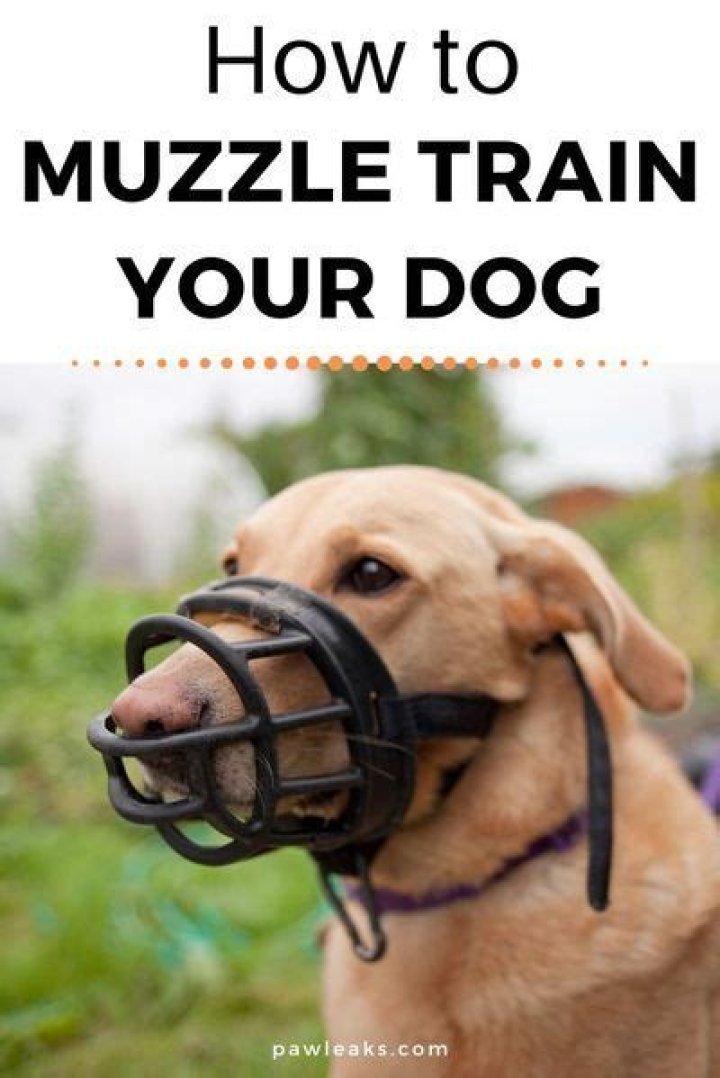
Top dog muzzle tips:
- Muzzles are an ideal solution for taking fearful dogs to the vet or out in public
- It is vital your dog associates wearing a muzzle with positivity and fun
- Take your time with muzzle training – do not be tempted to put it on your dog straightaway
- Be prepared for the fact your dog may need a muzzle someday – you never know how your dog will react until it is in a frightening situation
- Baskerville-style muzzles are the kindest
- If you dog does have a problem (with other dogs, wildlife, humans) it is your responsibility to keep him/her safe
- For easy visibility, purchase a muzzle that is a contrasting colour to your dogs coat
- Learn more about muzzle training on our pet advice pages
What are the best dog muzzles?
Dogs that are used to wearing muzzles are very comfortable with them. The best type of dog muzzle is the Baskerville muzzle – its open basket weave allows the dog to breathe freely. Other types of muzzles that completely close a dog’s mouth do not allow them to pant to lose heat. The Baskerville is available from vets and good pet shops.
Make sure you get the correct size for your dog. The piece that goes across the nose mustn’t rub their eyes.
How do you muzzle train your dog?
To get your dog used to wearing the muzzle, put some of their favourite food in the bottom of it (cream cheese is useful as it’s sticky) and raise the muzzle to the dog’s nose. They’re likely to smell the food inside and put their nose into it themselves. Don’t try to fasten the muzzle at this stage, just let the dog eat the treat. Do this a few times and make sure that you behave in a jolly and positive way throughout.
With time, you can actually work up to fastening the muzzle. At first, just fasten it and take it off right away. Gradually leave it on for longer periods – but be unpredictable. Sometimes remove it immediately; other times leave it on for longer. Vary the places where you put the muzzle on (including doing it outside, in the garden or while you’re out for a walk) and vary the times of day that you practice. But remember to always associate wearing the muzzle with something your dog likes, such as going for a walk or being fed food treats while wearing the muzzle. By keeping your dog active and feeding them treats you’ll also reduce the opportunity for them to try and take it off.
How to properly fit a muzzle
When your dog is used to the muzzle, make sure it’s properly fitted. If it’s too loose, they may be able to shake it off. The clasp around the neck should not allow more than ONE small finger to be inserted under the strap. When you’re sure it’s tight enough stitch the strap so that it’s always the correct length and doesn’t work loose.
One of the most humane tools that you can use to train your dog is a muzzle, because it will help to manage their behavior while protecting them, you, and others. Of course, in order to actually use a muzzle on your dog, you have to get them to accept it, and that, in itself, takes training.
How do you do it?
Teaching your dog to wear a muzzle isn’t as tough as it seems, but you need to practice patience and consistency, and work to make your pup associate it with positive things, such as affection or treats. For the sake of this guide, we’re going to use positive reinforcement via the treat method. You’ll need:
- A bag of treats that your dog enjoys
- A muzzle
- A clicker (optional)
- Associate rewards with a sound
The first step is to make your dog associate the sound of the clicker (or some other sound; you can even choose a specific word) with getting a treat. You can do this by putting a treat in your hand while engaging in a completely separate activity such as reading a book or surfing the web.Your dog will most likely be excited by the treat, but wait until they calm down to give it to them. As soon as they stop behaving badly, use the clicker and then give them a treat. Repeat this until they start reacting to the sound of the clicker and looking around for their treat.
Slowly introduce the muzzle
While still holding a treat and the clicker, bring out the muzzle and attempt to get your dog to sniff it. As soon as they do, click and treat them. Repeat this to get them to put their nose in the muzzle and eventually to keep it there for longer and longer periods of time.After you can get them to keep their nose in the muzzle on their own, move the straps around as if you were going to strap the muzzle on. Continue clicking and treating for each step they let you take without pulling out of the muzzle. Once you finally get the muzzle on completely, click and take it off to give them another treat.
Increase wearing time
Once your dog can successfully get into the muzzle, your next goal should be to get them used to wearing it for longer and longer periods of time. Initially, this can be done by continuing the above strategy and clicking and treating as they reach various thresholds — 30 seconds, 60 seconds, and so on. Don’t scold your dog if they start to fuss with the muzzle, but do try to distract them.As soon as they can comfortably wear the muzzle for a few minutes at a time, head outside and there will be lots of things to help with that distraction! It’s all about getting them used to wearing the muzzle at this point, and that’s something that will happen with time.
One way to use a muzzle to help with the socialization process is to use the Funny Muzzle. Why? Because it’s designed to help other people react more calmly to your dog wearing the muzzle, and that, in turn, can help your pup to be more relaxed, too.
Remember: if you’re using a tube style muzzle that restricts your dog’s ability to pant, only use it for a few minutes at a time. If you’re going to have the muzzle on longer or have your dog engage in any strenuous exercise, you should use a basket style muzzle, which does allow them to pant. And, in all cases, never leave a muzzle on an unsupervised dog.
When muzzle training your dog it’s important to make sure you allow enough time for your dog to get used to the muzzle on their own terms before you need them to wear it out and about.
Muzzle training should take place over a series of short sessions, ideally over a period of at least a few days, taking care to make sure your dog associates the muzzle with fun and positive situations.
Here’s a step by step guide on muzzle training your dog.
What muzzle should I buy?
We recommend using a basket type muzzle as these allow you to feed your dog treats while they are wearing it. A basket muzzle will also allow your dog to pant and drink freely. The most important thing is to make sure that any muzzle you buy fits your dog correctly – with a basket muzzle there should be a small space between their nose and the end of the muzzle so it is not uncomfortable to wear.
Step 1 – Introducing your dog to a muzzle
Gently hold the muzzle in a cupped hand. You will need to be able to place a treat in the muzzle without it falling through. Take a treat and let your dog see you place it just at the opening of the muzzle. Allow your dog to take the treat from inside the muzzle. Repeat this as many times as required, ideally over a few sessions. Your dog should come to see the muzzle as a treat dispenser and be keen to put their face in it. Once your dog is willingly placing their head into the entrance of the muzzle to retrieve the treat, start putting treats further back into the muzzle, closer to the front, where their nose should eventually be.
Step 2 – Getting your dog comfortable with the muzzle
Hold the muzzle in your hand and wait for your dog to place their head inside. Once inside, take the treat and feed it to your dog through the side or end of the muzzle. At this point you may find it easier to use a treat in a squeezy tube that will fit in the gaps of the muzzle such as a small amount of pâté or spreadable cheese. Repeat as many times as required until your dog is happy keeping their face in the muzzle. The aim is to get them readily placing their head in the muzzle in anticipation of a treat whenever the muzzle comes out.
Step 3 – Introducing the straps behind the head
Next, instruct your dog to put their head in the muzzle using the treat. Once their head is in the muzzle, lift up the straps behind their ears, without fastening them. This will introduce them to the sensation of the straps. Treat your dog through the muzzle again. Remove the muzzle and repeat this step a few times, still without doing up the straps. This will familiarise your dog with the feeling of the straps around their head without the muzzle being closed.
Step 4 – Fastening the muzzle
When your dog is happy with the straps being lifted, fasten the muzzle. Reward them immediately and then calmly remove it. If your dog panics or tries to get the muzzle off then you may have moved too fast. If this happens, go back a few steps and try building up to it again. Repeat this step until your dog is relaxed about having the muzzle on and fastened. Once your dog is happy, you can slowly build up the amount of time you leave between fastening the muzzle and giving them a treat.
Step 5 – Wearing the muzzle regularly
Once your dog is relaxed wearing the muzzle for a short period of time, make sure you continue regular training so that wearing the muzzle is part of their daily routine. You could try putting the muzzle on as you get your dog ready to go for a walk or put it on at home and do some other fun training. This will keep your dog engaged with the muzzle and get them used to associating wearing the muzzle with fun things happening.
Download steps as a handy advice sheet and use it as a reminder to train regularly:
Learn which nine foods to avoid around your dog
Using the muzzle is mandatory for breeds considered potentially dangerous by law which often leads to members of the public thinking the worst of a dog wearing one. However, there are many instances where you might want to muzzle your dog regardless if they are aggressive (actually, the appropriate word is ‘reactive’) or not. It is helpful if your dog becomes nervous at the vet, it prohibits the dog eating things it shouldn’t when outside and it can be used effectively in certain training techniques. Using a muzzle as a method of punishment is not recommended. If they are given a muzzle at a time when they are being reprimanded, they will feel distressed wearing it when necessary.
In this AnimalWised.com article we will explain what you need to do when Training Your Dog to Use a Muzzle.
What is the Best Type of Muzzle?
The most suitable muzzle for a dog is the “basket” type, as shown in the picture below. Unlike those made of fabric, they allow the dog to breathe properly, drink water and receive treats without having to remove them. However, there may be different types of muzzle for different circumstances. Soft fabric muzzles allow for breathing, but are not as durable as basket muzzles.
Tube type muzzles are good for grooming, but should not be left on for long or be used when the dog is exercising as it can restrict breathing. Lastly, strap muzzles are ones with a simple fabric strap which goes over the dog’s snout. These are least effective in big aggressive dogs, but can be useful for tamer animals.
1. Create a Positive Association Between Your Dog and Their Muzzle
It is important to not put the muzzle directly on your dog if it is not familiar with it, since this has a greater chance making it permanently uncomfortable when wearing one. The animal will feel annoyed and confused, so it is better to go step by step. By using positive reinforcement, your dog will learn that putting the muzzle on is a happy experience which can result in rewards and praise.
To do this, put some tasty treats in the bottom of the muzzle. Let your dog eat them and congratulate it for doing so. The better the experience, the sooner it will let you put it on.
2. A Gradual Process
You should try putting the muzzle on your dog little by little everyday. At first, don’t strap it on, but simply introduce it to your dog. Reward it at every stage, even if this is merely involves them giving it a good sniff. Don’t force it on the dog if it doesn’t seem to enjoy it. Positive reinforcement will take time, but the effort you put in at the start will reap dividends later.
When you notice that your dog starts to positively relate to the muzzle, you can start tying it on for short periods of time. Games and fun should always be part of the process. If you induce fear and dread in your dog it is likely to feel nervous, anxious and sad every time you put the muzzle on.
3. Avoid the Following Situations
In order for your dog to let you put the muzzle on properly, you should avoid these situations at all costs or it will only relate to it negatively:
- Don’t force it on
- Save it for particular situations (e.g. going to the vet or on public transport)
- Don’t use it for too long
- Avoid using it if the dog suffers from stress
- Don’t use it as a method of punishment
- Don’t leave your dog alone with the muzzle attached
If you follow our advice and don’t put too much pressure on your dog, you should achieve very positive results. However, if the process becomes complicated and your dog doesn’t seem to accept the muzzle under any circumstances, it is best to go to a dog trainer who can recommend some guidelines.
If you are just beginning on the journey of training your dog, why not read How to Make a Dog Ethogram to get started. Then you can continue training with the basics by reading How to Teach Your Dog to Stay Still on Command.
If you want to read similar articles to Training Your Dog to Use a Muzzle, we recommend you visit our Basic education category.
John Gollop / Getty Images
Muzzles on dogs often evoke unfair stereotypical reactions. The dog may not be wearing the muzzle because it is aggressive and, even if it is, it doesn’t mean the dog is “bad” — just that the owner is responsible. As long as you have the right muzzle for your dog, guided by your veterinarian, a muzzle could be a practical choice.
Why Might a Dog Wear a Muzzle?
History of Aggressive Behavior
If a dog has a history of aggression, with other dogs or people, using a muzzle as a management tool can minimize the risk in certain situations.
Some dogs may always need muzzled, but it may be possible to teach your dog to offer an alternative, more desirable behavior and to help them feel more relaxed and safe, often with the support of a qualified Canine Behaviorist.
In Sudden Frightening/Painful Situations
Some dogs may not usually be aggressive, but if they are in a very uncomfortable situation, and their warning signs are ignored (often in the vets or groomers), they may feel they have no choice but to snap or bite. If your dog is in pain, they may react in a way that is out of character. If they have had a severe injury, a muzzle may be needed while moving them.
Breed Specific Legislation (BSL)
Sadly, some states have legislation that mandates particular breeds are muzzled when in public places. While BSL does not provide a solution for the real problem of irresponsible dog ownership and it is discriminatory towards dogs that are often extremely gentle, to avoid your dog being seized, these rules should be followed.
High Prey Drive
Some dogs, such as the Spanish Galgo, have an instinctual high prey drive and, while it is better not to have them off-leash where they could give chase, they may try to snatch smaller animals even when they are on the leash, and a muzzle could prevent injury or fatality.
Scavenging
Some dogs are notorious scavengers on walks, and they can end up with serious gastric upsets or blockages. While a muzzle is not a foolproof solution, it can help minimize what your dog may ingest. Working on strong “leave it” and “drop it” commands is also recommended.
Traveling on Public Transport
In certain countries and on certain modes of public transport, dogs may be allowed to travel but only if they wear a muzzle.
Which Muzzle is Best?
There are a variety of muzzles on the market. Many favor aesthetics over practicality, and it is crucial that you choose a well-fitting muzzle that allows your dog to pant freely, take treats and drink water. Also, take guidance from your veterinarian whenever possible.
Basket Muzzle
The basket muzzle, is generally the best choice, but people veer away from it as it tends to be the most noticeable. A well-fitting basket muzzle is effective while still allowing your dog the opportunity to pant easily.
Mesh Muzzle
This softer style muzzle is often popular as it is the least obtrusive. To allow it to be effective, it needs to be pretty tight-fitting, but dogs are at risk for overheating. While it is okay to use for short sessions at the vet or the groomer, it is not suitable for walks or extended periods.
Breed-Specific Muzzles
Sighthound muzzles are commonly used for breeds like Greyhounds and Whippets, with long, thin snouts.
It can be difficult to find a well-fitting muzzle for the flat-faced, brachycephalic breeds like French Bulldogs and Pugs, and there is a greater risk of them overheating in one too.
When Is a Muzzle Not the Best Solution?
Sometimes, muzzles are used for the wrong reasons. This can cause pain or discomfort, and it can lead to alternative problem behaviors.
For Punishment
If a dog has not been properly introduced to wearing a muzzle, it can be a frightening—even traumatizing—experience. Some owners will use it as a form of punishment for undesired behavior. Usually, the dog will not associate the two things, so it is not effective long term. It can also erode the bond of trust between you and could cause them to snap when the muzzle appears.
To Stop Barking
Muzzles are sometimes used to try to stop barking. While this may work temporarily (if the dog is terrified of the muzzle), the dog can still bark when wearing one unless it’s way too tight. It’s much better to use positive training methods with your dog.
To Stop Destructive Behavior
If your dog has been chewing on household items, a muzzle may seem a good solution. However, it is not a good idea to leave a muzzle on for prolonged periods, especially when unsupervised, and you are not addressing the underlying issue. You should establish why your dog is being destructive and work on resolving this. Perhaps they are bored and need more stimulation, or they could be stressed as a result of separation anxiety.
How to Train Your Dog to Accept a Muzzle
Always start by offering a tasty treat every time you bring the muzzle into your dog’s view. You want them to associate it with good things. Next, lay it on the ground and reward your dog every time they voluntarily move towards it, working up to them actively touching it.
Then, encourage them to put their snout into the muzzle for just a second. Never force their snout in. Build up the time they have their snout inside gradually. Initially, you could use a treat or doggy-safe peanut butter on the inside of the muzzle. Once they are relaxed with this stage, move on to fastening it around their ears. The length of time it is fastened should be built up over several sessions.
Always introduce the training sessions in a low-stress, familiar environment, and make sure that you keep the training sessions short (five minutes maximum), use high-value rewards, and don’t try to go too fast or skip any steps.
Make your dog wearing a muzzle can sometimes be controversial. Some people argue that you are abusing your dog or shouldn’t use it when working on reactivity because the dog can’t behave as he would typically do.
Well, it depends a lot on how you train your dog to wear a muzzle.
First, I want to list some of the reasons why every owner should train his dog to wear a muzzle :
- It protects your dog as much as the others around him.
A dog who has an issue being around people or other animals can’t harm anyone seriously while wearing a muzzle. Plus, your dog won’t be at risk of being put down because he would have bite someone. Preventing an accident to happen will also prevent this behavior to be reinforced. Make your dog wear a training muzzle that keeps everyone safe.
- Some public spaces or public transportations require your dog to wear a muzzle. Having your dog comfortable wearing a muzzle allows you to take him with you during your trips.
- Your vet could be more comfortable practicing cooperative husbandry without restraint if your dog wears a muzzle. I personally love using the dog muzzle as the start button during vet care.
- If your dog is really in pain, you could have to make him wear a muzzle to treat him or transport him in an emergency. Having him used to enjoy wearing the muzzle will make this moment less scary than if you put this thing on his nose for the first time of his life without training.
- Wearing a muzzle can help to create some space around the dogs who need it.
Better than any sign on a bib, most people will give your dog some space if he wears a muzzle (even just around the neck). Muzzles for dogs is safe to use and It can really help your dog feeling safer and prevent regression in your reactivity training caused by people letting their dogs run to yours or trying to pet him without asking.
- Some owners will feel more relaxed knowing their dog can’t harm anybody, and it will allow them to work on the issue more efficiently. The owner’s stress can affect the dog’s stress.
- In some areas, specific dog breeds have to wear a muzzle because of the law.
WARNING: If your dog is wearing a muzzle, it doesn’t allow you to put him in situations he is not comfortable just because he can’t harm anyone. Wearing a muzzle or not, you should always keep your dog emotionally safe.
Choice of the muzzle
You need to choose a dog muzzle that allows your dog to pant, drink, and eat treats while wearing it and prevent biting.
Prefer a basket muzzle from a mesh one for these reasons.
So how to train your dog to wear a muzzle?
Teaching dog to wear a muzzle is very sensitive issue. Merely putting the muzzle on the nose of your dog, having him trying to remove it till he just gives up, can put him in a state of learned helplessness. It is traumatic, and that’s why some dogs just shut down and stop behaving when they wear a muzzle. It is not because of the muzzle itself but because of how they “learned” to wear it.
You can teach your dog actually to enjoy wearing it. It should be a proactive training. You should start the training a dog to wear a muzzle before you actually need your dog to wear the muzzle.
- Associate the dog muzzle with good things. Whenever you show the muzzle, make good things happen just after your dog sees the muzzle like tasty treats ou playtime.
- Teach him to put his nose voluntarily in the muzzle while you hold it using positive reinforcement.
- Reinforce with treats for keeping his nose in the muzzle while you hold it for longer periods.
- While he keeps his nose in the muzzle, start touching behind his neck, then gradually manipulate the straps till you can actually clip on the muzzle. Reinforce each step when he stays calm in the muzzle.
- Once your dog can wear the muzzle for some seconds while being static, we want to teach them to move while wearing it. You can lure or cue some simple behaviors with a previous high history of reinforcement like touch and follow your hand/sit / down / spin/heelwork / recall from a static position…
- Again at each step, we want to use high-value reinforcers. It will help create good associations while moving with the muzzle on.
- The final step is switching from a “working mode” to “exploratory mode.” Mark and reinforce whenever your dog explores something: sniff the air, the ground, anything in the environment, look at something, listen to something. Gradually he will be able to do these activities, which are self-reinforcing for a longer time without your support.
Tags: dog, dog training, science of learning, szkolenie psów
TROMPLO Agnieszka Janarek,
ul. Jana Kowalika 7, Niegoszowice,
32-064, Rudawa, woj. małopolskie
Why this is useful for your dog to know: Like a bike helmet, a muzzle is a piece of safety equipment. A muzzle protects the dog as much as the people around him. Every dog can benefit from muzzle training, since any dog may need to wear a muzzle in the case of high stress or injury. Proper training makes it much less stressful (and maybe even pleasant) for a dog to wear a muzzle.
End behavior: The dog will comfortably and happily wear a properly fitted muzzle for up to 30 minutes.
Step 1: Show the dog the muzzle from a foot away; reward him with food whenever he looks at it. Do this 2-5 times. Gradually move closer to the dog until the muzzle is within touching distance.
- Tip: If the dog retreats from the muzzle, start from farther away. Hold it at a distance where he can see it but doesn’t try to move away. Toss him the food while the muzzle is in view, then take the muzzle out of his view (e.g., put it behind your back) and stop feeding him. Show him the muzzle again and start feeding, then take it away and stop feeding. Gradually move the muzzle closer until it is within touching distance.
Step 2: Wipe some wet food, peanut butter or soft cheese around the inside edge of the muzzle. As the dog approaches, let him lick the muzzle. When he will comfortably approach the muzzle and touch it, go to Step 3.
Step 3: Place high-value treats in the muzzle and allow the dog to eat the treats from the muzzle. Cup your hand under the muzzle to hold in the treats. Let the dog place his nose in the muzzle to get the treats. Slowly pull the muzzle away from the dog as he eats the treats, so that he wants to follow and push his mouth into the muzzle. Do not force the muzzle on to the dog. Gently remove the muzzle before the dog has a chance to remove his nose. This step will ensure that the dog does not develop a habit of taking the food and pulling away from the muzzle. When the dog will keep his nose in the muzzle for 30 seconds, go to Step 4.
- Tip: If treats fall out of the muzzle as you’re working on this step, try putting some duct tape inside the bottom of the muzzle to hold them in.
Step 4: Gradually require the dog to keep his nose in the muzzle for longer periods. For this and all following steps, use treats (e.g., jerky and Pup-Peroni) that you can easily give the dog through the muzzle. Even better, use tasty foods with paste consistency, such as soft cheese (e.g., Cheez Whiz), Kong filler and peanut butter, to squeeze rewards through the muzzle into the dog’s mouth. When the dog will wear the muzzle for 2 to 3 minutes, go to Step 5.
- Tip: If your muzzle does not allow for easy delivery of treats to the dog’s mouth, consider cutting out one small section of bars from the front.
Step 5: Allow the dog to place his nose in the muzzle and reward him with treats. Begin to fumble with the straps and clips, and attempt to touch the straps together. When you can hold the straps for 10 seconds, go to Step 6.
Step 6: Allow the dog to place his nose in the muzzle and reward him with treats, then clip the muzzle straps around his neck. Make sure the muzzle is snug enough that he can’t pull it off, but also not too tight. Give him treats quickly and constantly for the entire time the muzzle is on. Keep the sessions short — 20 seconds to start. When you can easily place the muzzle on the dog, and clip it, go to Step 7.
- Tip: If you notice that the muzzle seems to be chafing or looks uncomfortable, check to be sure that you are using the right size. If you are, then consider applying adhesive foam padding to the chafing points on the inside to make it more comfortable for the dog.
Step 7: Put the muzzle on the dog and immediately begin to reward him with treats while he is wearing it. Then, while he’s wearing the muzzle, take the dog for a brief walk inside the run or kennel. Keep giving treats frequently (every few steps). It’s helpful to have two people to do this at first: one to keep the dog moving and one to reward. Do this exercise a few times and then go to Step 8.
Step 8: Put the muzzle on the dog and and immediately begin to reward him with treats while he is wearing it. Take the dog for a short walk (outside, this time) while he’s wearing the muzzle. Click and reward at regular intervals. Do not remove the muzzle until the dog is back in his run.
- Tip: If the dog starts to paw at the muzzle, keep him moving and reward more often. Do not remove the muzzle while the dog is pawing at it. If he gets very uncomfortable, wait until he stops pawing at it for a few seconds (feed him treats to distract him if necessary), and then remove it and end the session. In the next session, reduce the amount of time he wears the muzzle.
Step 9: Have the dog wear the muzzle for all walks. He should look forward to being muzzled at this point, because it predicts a walk. Give the dog treats frequently during walks.
Proofing
Proofing means teaching the dog to generalize the behavior in different contexts.
Location: Have the dog wear the muzzle for short periods in places where he’ll be likely to need it. If you are training him to wear the muzzle for grooming or medical purposes, make several visits to the vet’s office or the groomer before the actual appointments. Put the muzzle on the dog and give him lots of treats. During the actual appointments, continue to reward the dog periodically while he’s muzzled. Make sure he wears the muzzle for walks or other enjoyable activities more often than he wears it for medical reasons.
Handler: Have different people practice putting the muzzle on the dog.
Notes
The goal of muzzle training is to make wearing the muzzle a safe, happy game that the dog loves to play. If at any time during muzzle training the dog appears anxious or unhappy about the muzzle, back up in the plan to the previous step.
I’ve encountered many clients whose dogs have such a negative association with a muzzle that they either leave the room when they see it, or are too afraid to approach it for food. This happens if dogs have been forced to wear a muzzle, or only wear muzzles during unpleasant activities like the veterinarian. It also happens when a dog has severe fear or anxiety. While going slow is important to ensure any dog is completely comfortable with the muzzle training process, it’s imperative for dogs who have existing negative associations to focus solely on changing those emotions before moving forward in the training plan.
The first step in the muzzle training plan is desensitization and counterconditioning: The muzzle appears, the trainer drops food, and once the dog eats the food, the muzzle disappears. After repetitions at random intervals, the dog will learn that the muzzle predicts food, a signal that it’s time to move to the next step in the training plan.
If you are struggling getting past this initial step, don’t panic. Your dog simply needs more time to realize that the appearance of the muzzle will not be a tip-off to something scary. Dogs remember scary events, and remember them well, so it takes time to erode those negative associations. Along with patience, here are some tips to help your dog overcome fear of the muzzle:
- If your dog is suspicious of being forced to wear the muzzle when it appears, place the muzzle on the ground, drop food, and then leave the room. Wait for your dog to explore the muzzle and eat the food on his own time, instead of pressuring him to explore before he’s ready.
- If your dog is hesitant to approach the muzzle, place the food three to five feet away from the muzzle, gradually placing the food closer as your dog becomes more comfortable.
- Make sure your dog has plenty of space to gain distance from the muzzle. Drop it a good distance away from his safe space (his crate, bed, etc), so that he can retreat if he needs. Remember, the goal isn’t pressuring your dog to be OK with the muzzle; it’s creating an environment where your dog feels safe enough to explore and eat food around the muzzle.
- If your dog chooses not to approach the muzzle, it’s OK. Let your dog set the pace of training. If he isn’t approaching for food, he isn’t comfortable. Adjust the environment and training set up with the tips above so that he feels safe.
- Give your dog a fresh start, and avoid using the muzzle for scary experiences until he is ready. Otherwise you will erode your hard work overriding the negative associations and implementing positive ones.
Don’t worry if your dog’s muzzle training is progressing slower than you think is normal. Train the dog in front of you, and be kind to yourself. Your dog will let you know when he’s comfortable and ready to move forward, and by using the above tips, you’ll be engaging in clearer conversation with him.
2 Comments on “How long does muzzle training take? Wrong question.”
My 19month female boxer wants to attack my male boxer but only in the house or bedroom. The situation is effecting the household . My female can sleep in the same room with my male UNTIL it’s either light where she can see him or it’s time to go out . I don’t want to get rid of her so I am going to try to train her to use a muzzle hopefully 🤞🏻 This works and my boxers can be happy
Long Island, NY
The Importance of Muzzle Training
Believe it or not, the use of a muzzle can come in handy even if your dog does not have aggression issues. For most of us the typical response to hearing about the use of a muzzle may be to feel a little uneasy, and that’s not a surprise as there is often a negative stigma attached to the thought of a muzzle on a dog. So, I’ll say it again, muzzles can come in really handy!
Yippy, The Muzzle.
You might be surprised to know that we can train animals to enjoy and tolerate wearing a muzzle. While we as humans may think of a muzzle as a bad or negative thing, most dogs, unless they’ve had a bad or traumatizing experience with one, don’t have an opinion one way or the other. That’s where training comes in! With the right techniques and enough time, most dogs can learn to love wearing a muzzle, just as they are comfortable wearing a collar or a harness.
Times that dogs may need to be muzzled include at the vet’s office or for grooming appointments. These are stressful events for many dogs and putting a muzzle on an untrained dog adds more stress! And while we never like to think of our dogs getting hurt, if your very gentle and friendly dog is badly injured a muzzle may be necessary so he or she can be handled by medical personnel. Even the gentlest dog may bite if they are in extreme pain.
As mentioned above, it takes time to acclimate a dog to wearing a muzzle, and most dogs can learn to think it is something great. I have attached two popular videos here on how to train a dog to wear a muzzle. Because every dog learns and processes things differently, you will need to tailor your muzzle training plan to your own dog. If you train the muzzle to be a fun thing, chances are your dog will learn to love the muzzle!
Micheal Shikashio Muzzle Training
Chirag Patel Muzzle Training
Muzzle Training Tips: For more information and a plan of action, you can also visit The Muzzle Up Project website by clicking here.
When is Muzzle Training Helpful?
In addition to the reasons stated above, we generally think of muzzles for dogs that display aggressive behavior. Dogs may display aggressive behavior for a variety of reasons. Some of those reasons could be:
- Fear, Anxiety, Stress
- Predatory Behaviors
- Resource Guarding
- Territorial Behavior
- Physical Pain
- Conflict
- Getting Startled
- Lack of Impulse Control
Muzzles come in useful during the training and behavior modification process to keep everyone, including the dog, safe. If your dog has a history of biting, I encourage you to take the time to train your dog to wear a muzzle. Muzzles are tools that provide a layer of safety for the reasons listed above. Muzzles do not stop or cure reactive or aggressive behaviors. This is where hiring a certified behavior consultant can help provide behavior modification.
Some dogs need muzzles if they have the potential to display aggressive behaviors and/or potentially bite someone. I describe the word biting as a dog’s teeth making contact with a person or other animal. A bite does NOT need to cause a scratch, bruise or puncture to be considered a bite. Plain and simple, a bite is when a dog’s teeth make contact with the skin of a human or other animal.
What Type of Muzzle is Right For Your Dog?
There are many different types of muzzles out on the market. My advice would be to buy one that allows your dog to eat and drink while wearing it. The most popular brand is the Baskerville Ultra Muzzle, which can be found at most pet stores and online.
WARNING! There are many knockoff brands that look similar to the Baskerville Ultra Muzzle. The issue is that these muzzles are made from weaker materials. Some of these knockoff muzzles are very soft and flimsy, which can allow most dogs to bite someone through the muzzle.
My advice would be to stick with the name brand Baskerville Ultra Muzzle if that is the type of muzzle that you are looking to purchase. The difference in price is not worth the liability of having a dog who will bite in a substandard muzzle.
There are many other types of muzzles out on the market, so if you need something other than a Baskerville Ultra, take the time to watch this awesome video created by aggression expert, Michael Shikashio to learn more about each muzzle so that you can decide which muzzle is right for your dog.
Choosing A Muzzle:
Muzzle Up Project
To learn more about muzzles, the use of muzzles, additional muzzle training videos and exercises and anything else you want to learn about muzzles, I encourage you to visit The Muzzle Up Project website.
Hire a Professional to Help
Did you know that the dog training industry is not regulated? This means that hiring the closest trainer or the one recommended by your friends might not be the right choice for you and your dog. Below are links to organizations that have high standards for certifying trainers. This means you have a better chance at hiring someone who is reputable.
And of course, I also provide in-home consultations and virtual video consultations. Feel free to check out my website to learn more! Get in contact with me to find out more about how I can help you and your dog.
If you are seeking professional help for behavior issues such as aggression, fear, anxiety etc. then read my blog post on what behavior modification is. This will help you know what to expect in your consultation and what to look for when hiring a professional.
Need a Veterinary Behaviorist? Click here to learn more:
BSc (Hons), PGDipCABC
BSc (Hons), PGDipCABC
Rosie is a qualified Clinical Animal Behaviourist with a degree in Zoology & Psychology from the University of Bristol & a Post-Graduate Diploma in Companion Animal Behaviour Counselling from Southampton University.
She is a full member of the Association of Pet Behaviour Counsellors, a member of the Association of Pet Dog Trainers (No. 1006), and registered as both a Clinical Animal Behaviourist & as an Animal Training Instructor with the Animal Behaviour & Training Council (the regulatory body that represents trainers & behaviourists to both the public & to legislative bodies).
Dave is Clinical Director at Bath Vet Group and Natures Vet in Somerset.
He lives near Frome with his wife, their two children and their ginger cat, Baker.
There’s no reason your dog can’t be comfortable when wearing their muzzle. Let’s take a look at the best ways to get your dog muzzle-ready, happy and cooperative.
Finding the best dog muzzle
There’s lots to take into account when finding the best dog muzzle: do you want a small dog muzzle, or is your dog a large breed that may need something stronger? You might be torn between soft muzzles and hard muzzles. The best thing to do when looking to get a muzzle for your dog is to have a chat with your vet – they’ll understand your dog, their reasons for needing a muzzle and will be able to alter their recommendations based on this.
I have a dog muzzle, how do I train my dog to wear it?
Much like crate training a puppy or teaching a kitten to use the toilet, the best muzzle training technique is to get your dog used to their new accessory slowly, and in stages.
Use food
Use a tasty treat like peanut butter (assuring it’s free of xylitol of course!) and put it at the end of the muzzle on the inside. Feed it to your dog, but don’t attach the muzzle just yet. Once you’ve done this a few times, they’ll form a positive association with their muzzle.
Baby steps
Once your dog is used to voluntarily popping their nose into the muzzle – they don’t jerk away from it or regard it with fear – hold the straps around the back of the head for a second. Feed your dog a treat through the muzzle and then take it off. Build up the length of time spend holding the straps, feeding treats into the muzzle as you hold them. You want to form a strong association that the muzzle = delivery of tasty things. Then you can fasten it, feed a treat and immediately remove it.
Gradually build up the length of time your dog is wearing their muzzle, starting with just a few seconds. Make sure it isn’t so tight that it’ll hurt, but also not so loose that it will fall off when your dog moves around. Keep your dog distracted when wearing the muzzle – do some training with them, rewarding them all the while. Take it off before they start to paw or rub at it. If this happens, just distract them with some training and then take it off. Make a note not to leave it on so long the next time.
Practice makes perfect
Based on your dog’s progress, begin to leave their muzzle on them for longer periods. Try not to do this in a linear way, instead, apply your dog’s muzzle at random – for different lengths of time, in different places and at different parts of the day. This will help them to accept and understand that the muzzle just comes and goes, and that it’s nothing to be feared. Never just strap a muzzle onto your dog and force them to accept it – this can cause distress and injury.
Need more help with dog muzzle training?
Because your dog might need a muzzle for a number of reasons, and no two cases are ever the same, it’s always best to chat with your vet if you need more help with muzzle training.
How to train a dog to a muzzle?
The training of a dog to a muzzle. The puppies of large breeds are trained since they are 5 months. A muzzle is chosen according to the size of a puppies head. A blind muzzle, made of a solid piece of leather with holes for air, is supposed to be the most comfortable. A puppy should smell a muzzle before wearing. Put some delicacy in a muzzle and put it on a puppy. Then they take it off after 2-3 minutes and give the delicacy to a puppy and flatter it. Repeating this approach every day, the time of wearing of a muzzle by a puppy should be gradually prolonged. If it is made every time before walking, a puppy is not very depressed with the procedure of putting on of the muzzle and it gets used to it soon. While a puppy grows, a muzzle should be changed several times. Try to put it on in such a place, where a puppy has no chance to hide. Does your dog perform the orders? For example, call it to a kitchen and order ‘sit’. Put it before feeding for a minute or two and let it know that a muzzle is uncomfortable, but it is not for long and there is something good waiting after. At first a muzzle can be a little loose-fitting in the order to make it possible for a dog to half-open a mouth and take a delicacy.
Put a muzzle on with a delicacy in your hand, then praise your dog, at once draw it away with a play, pat it, flatter, ask a couple of orders (showing delicacy in your hand) and take a muzzle off sitting a dog . It is better if you do not give a chance to a dog to take off a muzzle itself. Let it know that it is only you who takes a muzzle off and only for a good behavior, no matter what does the dog do good.
Look at our Wire Dog Muzzles here
Collection of Leather Dog Muzzles
It’s for the vets. She’s terrified and gets fear aggressive. I’ve heard that baskervilles can still allow a dog to bite? She has vaccinations booked for September so I have till then to get her used to it. She is not aggressive at all in any other circumstances, only at the vet due to various cock ups as a rescue pup before we got her and poor socialising. Any advice?
A correct fitting baskerville will not allow the dog to bite
I had a baskerville for my dog because he was fear agressive. It worked very well, you need to make sure that it is the right size. I also had a cloth one to stop him from barking everytime someone moved past our window.
Thanks both. I’ll look again at the baskervilles. I hate the idea of ones which would hold her mouth completely shut as it would stop her panting etc. It’s so sad she gets so terrified but I can’t risk her biting.
Your vet will have various sizes of muzzles that they use daily and will generally put it on themselves and for the least possible length of time. These muzzles will hold the mouth closed but the dog can still breathe, just not pant. I find it much easier if the owner just tells me that the dog may want to bite and then I can judge the situation myself very sympathetically and strategically. Also, you may not like this but we find that most dogs behave much better away from their owners, with our trained staff doing the handling. It’s a bit like a kid who is naughty with his parent and good for his teacher. In lockdown we’ve been doing all the handling ourselves, with owners waiting outside, and honestly it has been so easy.
Hi Villainous, yes I agree re:talking to the vet and I have done, when I called to book her vaccinations I explained the situation. Unfortunately she’s not better without me as she had to be taken to the vets by our dog walker with a piece of stick lodged in her hard palate and was so horrendous she had to be pinned down by the dog-catching implement (whatever that’s called). I’m not even sure if the vets I go to are the best or most sympathetic. The vet didn’t seem to believe she wasn’t showing aggression in other circumstances, even though I told him she absolutely wasn’t.
I would consider switching practises and trying to build up a positive association with the new vets.
Ours encouraged me to bring my puppy in regularly, even if we didn’t have an appointment. He’d get lots of fuss and treats from the reception staff, nurses and vet. Then slowly build up to appointments – lots of treats and praise etc.
He now tries to drag me in every time we go past because he wants a pig snout
Muzzle Training a Dog
It is vital that your dog perceives the muzzle as a positive experience. Quite often the dog’s first encounter with a muzzle is in a stressful and fearful situation,
This could be at the Vets, when the dog may become aggressive or difficult to handle because of fear, panic or injury. It is therefore prudent to introduce a dog to a muzzle over a period of time, irrespective of whether you ever intend to muzzle.
Remember a muzzle may be a necessity at sometime during the dog’s life. Click on the muzzle on the right, to go to my shop Therefore you should introduce this aid in a non-confrontational positive manner before you need one. All my dogs are muzzle trained despite never having to use one yet.
Which One to Choose
Depending on what muzzle you are using, there are numerous on the market, ranging from the Baskerville type which is normally either a plastic or rubber type, canvas or a mesh muzzle. The one I normally prefer is a ‘mesh muzzle’, which has tiny pinpricks that stop it overheating of the skin, and allows treats to be fed directly into the dog’s mouth.
This type seems to be acceptable to most dogs. click on the image above for more information on sizes or to purchase a muzzle.
Introducing the Muzzle
Irrespective of which type you choose, you must make the experience rewarding and positive. Most dogs will not be over happy with this type of restriction. We are therefore going to use treats and a gradual desensitisation program.
Initially just take out the muzzle and let the dog sniff it ,then treat and praise; I always use Dried Sprats for this as they are a great totally natural treat. Brilliant for the coat with essential oils and Omega 3.
They also smell great, you can also break the Sprats into any size you want very easily, because they are air dried. After allowing the dog to just sniff treat and praise a number of times, putting the muzzle away in between,.
Then either hold a titbit up to the open end of the muzzle and bring it up to the dog’s nose, or if a Baskerville drop the treat inro inside.
The dog will smell the food and press forward to get at the titbit, pushing its face a little bit into the muzzle, when he does this either roll or push the treat toward the dog in the inside of the muzzle and praise.
Do this on a number of occasions over another day or so. Then do the same thing but gently slide the muzzle a little way over the nose so he can get the treat, easier then immediately remove it praising at the same time.
Do this regularly but never attaching the muzzle or forcing the issue at this time. You can use a word like good, or even muzzle whilst you are sliding it over the nose.
Continue these exercises over a number of days in different places in the house and garden, say 4/5 times a day, if possible. After 4 or 5 days actually clip the muzzle on for a few seconds, then take it off immediately. Do this on a number of occasions gradually increasing the time the muzzle is left on from seconds to minutes then longer.
Make sure it is not too restrictive and tight around the mouth and nose as this can restrict drinking and breathing and could distress the dog. I do not recommend muzzles for anxiety related problems such as separation anxiety, whereby the dog is destructive, or for barking or howling problems, there are much safer and more appropriate techniques for these types of behaviour. Never leave the muzzle on for long periods and always supervise the dog when he is wearing one.
The use of a muzzle can be advantageous in a number of circumstances:
1. In certain veterinary procedures a muzzle may be required
2. When introducing another dog or puppy into the household.
3. In cases of pain related temporary aggression.
4. When introducing cats and other animals.
5. Certain breeds are required by law, other breeds may be added to the list in the future.
6. Some behavioural modifications or training procedures may require a muzzle
Whatever the reason, the earlier you introduce a Muzzle the easier it will be to accept. I muzzle train all my dogs when puppies. For instance when taking blood tests or they are injured and need handling or manipulation or when they are in pain.
None of my dogs have ever shown aggression or bitten either a dog or a human. That is not the point, I still feel more comfortable knowing if they need one it will not need to be forced on them when they are injured, hurt or fearful. A muzzles can be very helpful when desensitising a fearful or aggressive dog to certain situations., such as children or other dogs,
If you need the muzzle for outside and the dogs run a lot then a Baskerville one would be the best.
- Created August 16, 2016
- Author Michael D’Abruzzo
- Category Dog Training Tools
More and more people are training their dogs to wear a muzzle so that they have one in hand in case it is needed at the Veterinarian’s office and for introducing their dog safely to another pet, guest, or child. I am happy to see that muzzles are being more accepted as a tool to help make your dog’s life easier. When a dog is happy to see a muzzle and put it on the benefits are obvious.
We use muzzles a lot with aggression cases and have used just about every different type of muzzle there is. Many people have a hard time finding the right muzzle for their dog and training situation so I decided to post this quick article to help people out.
Certain muzzles will clamp your dog’s mouth shut which prevents them from being able to drink, eat, pant, and otherwise be comfortable.
Metal basket muzzles are heavier and more likely to cause injury when the dog bumps into you. These also are more likely to damage furniture.
We mostly use plastic basket muzzles. These are light weight, comfortable, and allow the dog to drink, pant, and take treats. The fact that the muzzles are plastic also allows us to modify them for training (we make a larger treat hole in the front). There are now new muzzles that are already modified for this purpose. This blog post has a video which explains how we get a dog to not only wear a plastic basket muzzle but also to enjoy wearing one. Also, for your convenience I mapped out some little steps you can take to do what you see in the video. It is important not to skip steps until your dog has no problem with the step you are currently working on. Lastly, I posted a link where you can buy the same muzzles that we now use. This is the best price and quickest shipping I have found. If anyone has any questions feel free to post in the comments.
For the new muzzles in the link I have found that size 4 works for most average sized pit bull type dogs and we use size 5 for most German Shepherds. Size 6 for exceptionally large German Shepherds. The old style muzzle that is in the video you can find here although I strongly recommend the newer variety since it is stronger and has better ability to adjust the fit.
Woof woof! Your dog may bark to alert you to danger or to just say hi. But constant barking can be a problem. Here’s how to keep the peace.
Dogs bark to communicate with each other and with their owners, but sometimes all that barking can get out of hand. Constant barking can fray a family’s nerves and create turmoil in a neighborhood.
But keep in mind that your dog is trying to tell you something by barking. Before you quiet him down, you will first need to figure out what he’s trying to say.
What’s Behind the Barking?
These are some of the reasons dogs bark:
- To protect their territory. Dogs guard their territory from people, other dogs, and animals. That territory includes your property, but it can also include other places where the dog has spent a lot of time.
- Because they sense danger. The dog could be reacting to an alarming situation.
- To communicate. Sometimes dogs bark to get attention from people.
- Out of frustration. Barking can result from becoming frustrated by a situation, such as being in a confined space or being unable to locate an owner or playmate.
- Because they’re anxious. A dog’s anxiety can be caused by separation from the dog’s owner.
- Because they’re in pain. Barking can communicate pain caused by injury or illness.
- To say hello. A friendly bark could be how a dog greets people or other dogs.
Tips to Get Your Dog to Stop Barking
There are a lot of stop-barking devices available on the market. The most commonly known are bark collars that deliver an electric shock, high-pitched squeal, or stinging spray of citronella mist whenever a pet dog barks. Other devices include ultrasonic emitters that are placed in a room and activated by barking and muzzles that keep the dog’s jaws held shut.
These devices may offer a short-term fix, but they do nothing to address the underlying cause of your dog’s barking. Eventually, the problem may surface through other behavioral problems, as your dog continues to try to communicate his need or problem to you. A dog prevented from barking caused by separation anxiety may instead take to destroying furniture or urinating indoors when his owner is away.
The devices also can be inhumane. Any dog’s bark can set off a bark collar or ultrasonic device, meaning your dog may end up receiving punishment for another dog’s behavior. Also, a muzzle will keep a dog from being able to eat, drink, and cool off through panting.
For these reasons, an owner frustrated by his dog’s barking is better off using some simple tricks to head off the behavior or taking the time to train the dog out of the behavior. Try these tips:
- Offer distractions. Bored dogs will be less inclined to bark if they are given plenty of toys to play with. If your dog is barking due to outside noises, playing the TV or radio while you’re away can drown out those sounds. A TV or radio also can help soothe separation anxiety.
- Keep your dog active. A pooped pooch is less likely to overreact with a barking fit. Take your dog on regular walks or play fitness games like fetch or Frisbee.
- Work your dog’s brain. Obedience training, either in a class or at home, can improve your dog’s ability to discern threats. It also can lay the groundwork for other anti-barking solutions that require more intensive training.
- Desensitize your pet. If the barking fits are being caused by an outside stimulus, you can try to desensitize your dog. For example, ask friends to walk by your house while you work with your dog inside, encouraging your pet to be quiet.
- Teach the “quiet” command. Train your dog to respond to the word “quiet” by allowing three or four barks, then saying “quiet” in a calm, clear voice. When you say “quiet,” break the barking jag by holding his muzzle gently, dropping a loud object that distracts him or squirting him in the face with a spray bottle of water. In this instance, you could use a manually-controlled bark collar as a distraction method. Eventually your dog will learn that “quiet” means he should stop barking.
- Change up his routine. A dog barking compulsively or out of boredom might stop if you make some changes. If he is being kept in a backyard and barking there, bring the dog indoors and place him in a crate. If the dog is barking because he’s confined in a crate, try leaving him free in one room of your house.
- Teach her how to meet and greet. A dog that barks when greeting can be trained to meet people and other dogs more gently. Be sure to keep greetings at your front door very low-key and calm. Keep a toy near the door and encourage your dog to pick it up and hold it in his mouth before opening the door. On walks, distract your dog when passing other people or dogs by offering a tasty treat.
- Don’t reward barking. Above everything else, don’t inadvertently encourage barking through your own behavior. Don’t reward barking by giving the dog a treat after he has barked. Only treat when the dog has been quiet. Also, don’t encourage barking at outside noises by asking, “Who’s there?”
Training can be a lengthy process, but in the end you will improve your relationship with your dog and be better able to make sure his needs are met.
Home / Blog/Training Tips / Train Your Dog to Wear a Muzzle
Train Your Dog to Wear a Muzzle
A muzzle can be a fantastic tool to use in a variety of situations but it is (very, very!) important that the dog has a positive association with the muzzle. We do NOT want to slap a muzzle on a dog and put him in a situation in which he is uncomfortable. We actually want the dog to really LIKE it when the muzzle appears (and goes on his face)! Often, after a dog bites (a dog or human) he is then restricted and isolated. A muzzle can free that dog to be able to experience the world with many more activities that would not be safe for him to participate in without the muzzle. Sometimes a dog has no bite history but just likes to eat dangerous/disgusting objects on the ground and in order for that dog to be able to participate in fun, off-leash hikes, a muzzle may be needed. To get your dog comfortable in a muzzle follow these steps:
SUPPLIES NEEDED:
- Basket muzzle such as a Baskerville or Bumas.
- High value treats, both squeezable and small pieces. To begin, you will need small pieces (hot dogs, chicken, cheese, liver, steak). Once the muzzle is on the dog, you will need treats that can be squeezed through the sides of the muzzle. Options include using a food tube filled with peanut butter, liverwurst, baby food, wet food, cream cheese or cheese in a can – yum! Also, hot dogs or string cheese cut into sticks or using a pretzel or jerky treat that can be dipped in peanut butter or other soft food and delivered through the muzzle.
- Your patience! We must work at the pace of the dog so that we create a positive association for the dog with the muzzle. We want the dog to be happy when he sees the muzzle so great things happen when the muzzle appears! Initially, short (2-5 minute), fun sessions are best.
STEPS FOR MUZZLE TRAINING:
- Show the dog the muzzle and give him a treat whenever he looks at it. Do this 2-5 times. Gradually move closer to the dog until the muzzle is within touching distance.
- If the dog knows a targeting cue (“touch”) have him target the muzzle and treat. If you use a clicker or a verbal marker (“yes”), mark and treat for targeting the muzzle. If he does not know a target cue, go directly to step 3.
- Wipe some wet food, peanut butter or soft cheese around the inside edge of the muzzle. As the dog approaches, let him lick the muzzle. When he will comfortably approach the muzzle and touch it, go to next step.
- Place high-value treats in the muzzle and allow the dog to eat the treats from the muzzle by choice. Do not force the muzzle on to the dog. Pull (gently) the muzzle from the dog’s nose before the dog pulls his nose away.
- Gradually let the dog to keep his nose in the muzzle for longer periods of time and treat continuously when the muzzle is on.
- While the dog is comfortably eating treats from the muzzle, begin pull the straps over the dog’s head and attempt to touch the straps together. If using a marker: Click or “yes” and treat.
- Allow the dog to place his nose in the muzzle, then clip the muzzle on. Make sure the muzzle is snug enough that he can’t pull it off, but not too tight. Give him treats quickly and constantly for the entire time the muzzle is on. Keep the session short: 5 seconds, 10 seconds, 20 seconds….
- With the muzzle on, start doing some simple cues the dog already knows and treat through the muzzle. If the dog is not able to do known cues or his body language changes (stiffens, paws at muzzle) then go back to previous step where he is still relaxed and happy to have the muzzle on.
- Take the dog for a short walk while he’s wearing the muzzle and reward frequently. If he starts to paw at the muzzle, keep him moving and reward more often.
- Put the muzzle on the dog whenever you take him for a walk. The dog should look forward to being muzzled at this point, because it predicts a walk. Continue to give the dog treats frequently during the walks.
- If you plan to have the dog wear the muzzle for grooming or medical appointments, make several visits to the vet’s office or groomer before the actual appointments. During these “trial runs,” put the muzzle on the dog and give him lots of treats. During the actual appointments, do the same. Make sure the dog wears the muzzle for walks, or other enjoyable activities. We do not want to only associate the muzzle with things the dog does not find pleasurable.
- You can find several videos on teaching your dog to wear a muzzle on our Fear Free and Low Stress Handling Pinterest Board . There is also a ton fantastic information on using a muzzle and muzzle training on The Muzzle Up Project website.
About the Author
Danette Johnston
Danette Johnston, Owner, has been a Licensed Veterinary Technician (LVT) in the state of Washington and is a Certified Professional Dog Trainer (CPDT-KA) as well as a Certified Fear-Free Professional Trainer. She has trained dogs (and people!) working in animal hospitals and shelters prior to opening dog’s day out in the beginning of 2000. She has published articles on dog day care and dog-dog interactions for The Society of Veterinary Behavior Technicians and the Association of Pet Dog Trainers (APDT). She has lectured on dog behavior to Veterinary Technicians and students at the Society of Veterinary Behavior Technicians conference. Danette is a Licensed Canine Good Citizen and Tricks title evaluator for the the AKC and worked as a Delta Society Pet Partner’s (animal assisted therapy) Instructor and Team (with her dear departed dog Georgia). She is a “Be A Tree” presenter and the NW Coordinator for Doggone Safe, an organization dedicated to education on the prevention of dog bites. She created a comprehensive Shelter Training Program working with shelter and rescue organizations. Along with her group classes and private lessons at DDO, she teaches seminars including: Difficult Dog, Canine Body Language and Barks & Babes, a class for expectant parents. She currently shares her home with a brown tabby (with many extra toes), a Pittie/Border Collie mix, a growing (too fast!) human boy and a very tolerant husband.
How to Train Your Dog to Wear a Muzzle
Great Dane Wire Basket Dog Muzzle with Nose Padding
Besides, there are many types of dog muzzles which are suitable for different purposes. Each of them has its unique characteristics, for example, wire cage muzzles are very durable, so they are perfect choice for training, dog socialization, but it is not recommended to use some of them in winter because wire can stick to dog’s snout; leather muzzles are very comfortable and proper for everyday walking; bear-loop muzzles prevent dogs from excessive barking, and they are good for visiting public places. In any case, if you train your pet to wear one type of a muzzle you won’t have problems in use of another one.
We would like to offer you several steps how to train your dog to wear a muzzle. Please be advised that the best way to do that is to consult a professional trainer and we are only able to provide you with some information upon it.
Step One: Introducing the Muzzle
Let your dog sniff the muzzle to assure that there is no treat. Do not let him to play with the muzzle or to chew it. Wait until your pet turns away and give him a treat. In case if your dog doesn’t try to sniff the muzzle when you extend it to him, show him that you’re rubbing a bit of the treat on it. Then extend it toward him again. It will smell delicious, so he’ll probably sniff it.
Step Two: Teach Your Dog to Put His Nose in the Muzzle
Put a treat into the muzzle. If your dog wants it, he will have to put his nose into it. Do not put the muzzle on your pet’s snout; let him put it off himself. He should understand that this dog item is totally safe for him. But remember that your dog can try to get a treat in other way not putting his nose into the muzzle. Despite it, follow the rule: a treat will get a dog whose nose is in the muzzle. Repeat this step until your four-legged friend leaves his nose in the muzzle for several seconds waiting for the next treat.
Riesenschnauzer Nappa Padded Leather Spiked Dog Muzzle
Step Three: Teach Your Dog to Keep His Nose in the Muzzle
Once your dog is sticking his nose all the way into the muzzle, teach him to hold his nose in there by treating him. If you see that he stays calm almost muzzled for 5-7 seconds, try to fasten the muzzle, treat your dog, and then quickly unfasten it. It needs to be done several times until he is used to the click of fastened muzzle.
If you have a muzzle with leather straps, follow this advice. Take the strap and hold it up behind your dog’s ears, as though you are about to buckle or snap on the muzzle. Now move both of the straps at the same time. Take one strap in each hand and lift them up, as though you are about to buckle, snap or hook the straps together. Treat your dog. Continue until your dog can stick his nose into the muzzle and hold it there while you fasten the neck straps behind his ears. Right after you fasten the straps, unhook the straps and allow your dog to pull his nose out of the muzzle to get his treat.
Step Four: Teaching Your Dog to Wear the Muzzle for Longer Periods of Time
Now you’ll build up the length of time your dog wears the muzzle, remove it and deliver a treat. It’s normal for your dog to fuss with the muzzle a little, but do your best to distract him and give him something else to do instead. Ask him to walk with you, let him sniff the ground, watch a bird, whatever interests him. You can also teach your dog to take treats that you pass through the side of the muzzle. Now it’s just a matter of letting your dog gradually get used to wearing the muzzle for longer periods of time and in a variety of circumstances and locations.
Painted German Shepherd Dog Muzzle
There are several rules you must follow during training your pet to wear a muzzle:
A muzzle is an effective humane tool for dog training.
The wire basket or the Italian basket muzzles are the best for the dog because the basket muzzle will allow them to pant and drink water.
Muzzle training your dog does not need to be hard and stressful.
You should slowly introduce your dog to the muzzle.
Let the dog sniff the muzzle.
Put treats in the muzzle and let him put his nose inside to get the treats out.
Some customers use peanut butter, dog food, cheese or any treat that your dog likes. Make the muzzle a happy and positive experience.
For some dogs getting them comfortable with the muzzle can be done within 20 to 30 minutes, for other dogs it might take a few days.
Once you feel the dog is not afraid of the muzzle put it on him.
During this time be sure to praise him.
Some dogs actually associate putting the muzzle on with getting to go outside.
Basket Dog Muzzle Information
CIRCUMFERENCE
How does my dog drink water with a basket dog muzzle on??
LENGTH
Video Description:
In the world of dog behavior, one of the most essential pieces of safety equipment we have is the muzzle. Unfortunately, their appearance and the judgments associated with them prevent their usage, sometimes with tragic consequences. Dogs wear muzzles for a plethora of reasons.
In this seminar video, learn why dogs wear muzzles, how to properly muzzle train a dog, incorporating enrichment activities into the muzzle training plan, and strategies to educate clients and the public on muzzle safety.
Presentation by: Maureen Backman, MS, CTC, PCT-A
Copyright © 2015, Tawzer Dog LLC
Presenter Bio:
Maureen Backman, MS, CTC, PCT-A owns Mutt About Town, which offers private dog training services in the San Francisco Bay Area, and is the founding director of The Muzzle Up! Project.
She graduated with honors from Jean Donaldson’s prestigious Academy for Dog Trainers, is certified in training by the Pet Professional Accreditation Board, and has a master’s degree in rehabilitation psychology from the University of Wisconsin-Madison.
Maureen’s particular strength is combining her knowledge of counseling and coaching along with her studies in positive reinforcement training techniques to help humans understand how to communicate and work with their dogs.
This video qualifies for 4 trainer CEUs
Getting a dog muzzle is often one of the first steps towards safely living with, training, and rehabilitating an aggressive dog (check out our Aggressive Dogs E-book for more on that).
If you have a dog who is aggressive around kids, reactive on leash, or highly prey driven, you might want to look into a dog muzzle. A muzzle is a key component of most good management plans for aggressive dogs.
Picking out the best dog muzzle is challenging, though, if you have a dog with an odd head shape. It can be particularly difficult to find a good dog muzzle for dogs that:
- Are very small or very large, like chihuahuas or mastiffs.
- Have a lot of fur around their face, like chows.
- Have very flat faces, like pugs and French bulldogs.
- Have very long, skinny faces like greyhounds.
Getting the perfect-fitting muzzle will help keep your dog comfortable while you’re working on a training plan.
I’m a huge fan of using muzzles for any dog that struggles with barking, lunging, growling, or hiding in certain situations.
The muzzle gives you peace of mind and allows training to proceed smoothly.
Additionally, a muzzle can work as a warning to other people that this dog might not be a good one to let your kids run up to!
Three Features of a Good Dog Muzzle
There are several common features of a good muzzle for your aggressive dog. You and your dog will be happiest if you purchase a muzzle that:
- Allows your dog to pant, eat, drink, and bark easily. We don’t want to use a restrictive grooming muzzle for training aggressive dogs. These muzzles don’t let the dogs eat, which makes training almost impossible. Your dog is also at danger of overheating because he can’t pant to cool off.
- Fits extra-securely. Most good muzzles will attach have at least two points of attachment. My personal favorite muzzle attaches to the dog’s collar, to the back of the head, and to the neck. We don’t want it to be easy for your dog to paw it off.
- Can be customized. Even the best muzzle rarely fits a dog perfectly right out of the box. Many of the best dog muzzles out there are fully custom or can be molded to fit your dog (like a hiking boot is molded to your foot).
Now that we know what we’re looking for, let’s examine some of my favorite dog muzzles on the market.
The Six Best Dog Muzzles for Tough-to-Fit Dogs
Keep in mind that the most perfect dog muzzle won’t work if it isn’t fitted properly. Each muzzle requires you to take different measurement of your dog to get the right fit.
Be sure to read manufacturer specifications before entering your credit card number!
1. Best All-Around: Baskerville Ultra Muzzle
This is my hands-down favorite muzzle for *most* dogs. It’s the one that my dog Barley wears when we’re hiking (so he doesn’t pick up and choke on sticks). You can customize it for your dog by boiling it and then fitting it to your dog’s face.
This muzzle allows for plenty of panting, drinking, and training. I use squeeze cheese to reward Barley for wearing it – he loves it!
The Baskerville Muzzle (not the Ultra) runs a bit smaller, which can help with sizing.
2. Best for Flat-Faced Small Dogs: Canine Friendly Muzzle
Fitting a muzzle onto chihuahuas, French bulldogs, pugs, Pomeranians, Pekingese, Maltese, and other small breeds is really tricky. This muzzle is a bit more of a face mask, but it’s hands down the best option for really small, flat-faced dogs.
Your dog cannot drink with the Canine Friendly Muzzle on, but you can reward with squeeze cheese and he can pant.
While this muzzle isn’t perfect, it’s still the best option you have if you’ve got a really flat-faced dog.
3. Most Customizable: BUMAS Muzzle
The BUMAS muzzle is fully custom and comes in a variety of colors. The company, based in German, aims to help educate people about muzzles and change the stigma regarding muzzles.
Though ordering can take a while (you have to get a lot of measurements so that the muzzle is perfect), it’s worth it. These muzzles are also on the expensive side – but they’re worth it if you’ve got a dog that will need to wear a muzzle regularly.
My go-to muzzle for Barley is a custom BUMAS muzzle.
4. Best for Small Dogs: Jafco Muzzle or Barkless Muzzle
The Jafco muzzle is softer and more flexible than many others on the list, making it extra comfy for long-term use. Many users really like the clear option, saying it’s the softest option. This muzzle also comes in extra-small sizes, as small as 2.25 inch long snouts. Most muzzles don’t come smaller than 2.5 inches – so this is a good option for ultra-small dogs.
If you want a muzzle that’s similar, but a bit easier to feed your dog through, check out the Barkless Muzzle. I love that this muzzle comes with a training/fitting guide and a free clicker! Its smallest size is 2.3 inches, just a touch longer than the Jafco muzzle.
Unfortunately, I don’t know of any good basket muzzles that will fit the smallest toy chihuahua.
5. Best for Long-Nosed Dogs: Bronzedog Greyhound Muzzle
Greyhounds, Whippets, Salukis, and even long-nosed border collies can be tricky to fit a muzzle onto. A muzzle that’s long enough is often too wide for their face, causing gaps that rub. Luckily, Greyhound racers often muzzle their dogs.
And since these muzzles are made for racing dogs, they’re definitely easy for your dog to pant in. This muzzle is metal wire, but comes with a comfy leather strap to ride on the bridge of your dog’s nose.
6. Best for the Bull Terrier Schnozz: Jafco Muzzle
Yet again, that Jafco Muzzle is a winner. It is moldable enough to fit the potato heads of bull terriers and miniature bull terriers. Most users love that it’s soft and moldable. The clear plastic is softest, making it the most comfortable and easy-to-use option for bull terrier noses.
Remember: Dog Muzzles Don’t Replace Training
Keep in mind that dogs can still cause injury through a good muzzle. A dog muzzle is not a solution for training. If you need help with an aggressive dog, feel free to reach out and I’ll help you create a training plan.
Do you have a favorite muzzle for a tough-to-fit dog? Let me know, I’m always looking for more good dog muzzles!
Kayla is from Ashland, Wisconsin but lives in Missoula Montana. She holds a degree in biology from Colorado College and has spent years working in zoos, animal shelters, and as a private dog trainer. When not working on Journey Dog Training, Kayla works at Working Dogs for Conservation. She is a Certified Dog Behavior Consultant. She shares her life with her dog Barley.
Some livestock guardian dogs are aggressive to strangers (such as the vet) and may need to undergo muzzle-training.
As an Amazon Associate, I earn from qualifying purchases at no extra cost to you.
Our livestock guardian dogs (LGDs) would give life and limb to protect both us and our livestock, but they aren’t always so keen on other animals or people.
Some breeds, such as Kangals or Central Asian Shepherds, tend to be more aggressive than others on average. And LGDs of any breed can be aggressive to strangers if they haven’t been properly socialized. I’ve even known some Great Pyrenees dogs to be aggressive, and this breed is known as the gentle giant!
All livestock guardian dog breeds are large and powerful. Some individuals weigh 200 pounds or more. They can do major damage to others if they feel threatened!
For these reasons, you may need to train your dog to wear a muzzle for vet visits, or when she has to be around new people and animals. I recommend socialization as a better long-term option for your dog, but for ranchers or homesteaders living in remote locations, socialization may not be an option.
Are dog muzzles humane?
Not all muzzles are humane. Some muzzles make it difficult for dogs to breathe or drink water. And forcing your dog to wear a muzzle for an extended period of time or unsupervised is inhumane and dangerous.
However, if you use the right kind of muzzle (see below), you can train your dog to actually enjoy putting on a muzzle and wearing it around. That’s always the goal of positive training: get your dog to want to follow the command.
The instructions in this article will teach you exactly how to get your dog to want to wear a muzzle.
What type of muzzle should you get for your livestock guardian dog?
The most humane type of muzzle is called a basket muzzle—you can buy one here on Amazon. These muzzles are designed for canine comfort and safety.
Basket muzzles are open enough that dogs can breathe well, drink water, and take treats while wearing them. The muzzle allows enough space for your dog to be able to pant when she’s overheated—this is a must-have for a large, heavy-coated LGD!
Leash training a dog or puppy involves teaching the dog to walk calmly on a leash without pulling or tugging at the leash. A special training tool called a Gentle Leader Head Collar provides a good tool to assist in training a dog or puppy to walk on a leash.
The Gentle Leader Head Collar is a specialized head harness made for a dog or puppy which resembles a harness used for a horse. The Gentle Leader Head Collar has two separate straps, one which fits around the muzzle of the dog or puppy and another which extends behind the ears.
The purpose of the Gentle Leader Head Collar is to allow the dog owner to gain control over the head of the dog or puppy. By properly controlling the head of the dog, the dog can be trained to walk properly on a leash without pulling or otherwise misbehaving. When using the Gentle Leader Head Collar correctly, a dog does not have the ability to pull because the handler is able to guide the dog’s nose.
The Gentle Leader Head Collar can be used to prevent dogs from jumping, pulling or lunging while on a leash. It can also be used to control excessive barking while on a leash because it gives the handler the ability to close the dog’s mouth as necessary.
Many people mistake the Gentle Leader Head Collar for a muzzle because of the way the head collar fits around the mouth. However, there are important differences between a muzzle and the Gentle Leader Head Collar. The Gentle Leader Head Collar allows the dog to open the mouth freely in order to eat, drink, play, pant, bark or perform any other activity as long as the handler is not exerting pressure on the collar to close the mouth.
Positive reinforcement should be used in conjunction with the Gentle Leader Head Collar when attempting to leash train a dog or puppy. With the Gentle Leader Head Collar installed on the dog’s head, start by walking a few steps with the dog. Use the Gentle Leader Head Collar to encourage the dog to walk calmly at your side without pulling or tugging at the leash. When the dog walks calmly with you as asked, reward him with a favorite treat.
Repeat this exercise several times a day, restricting training periods to 10-15 minutes at a time. Keep the training exercises fun for the dog and be generous in rewarding with treats when appropriate. Do not punish the dog if he does not perform up to expectation. Simply return to the exercise when the dog is in a more calm and relaxed state.
Soon, the dog or puppy will be walking on the leash at the handler’s side whether wearing the Gentle Leader Head Collar or not. Once the dog is consistently walking beside the handler as asked, the Gentle Leader Head Collar can be removed. If the dog returns to the previous undesirable behavior of pulling or tugging at the leash, simply use the Gentle Leader Head Collar again for a time, until the dog is once again walking calmly and quietly beside the handler.
Choke chains and spiked choke collars are sometimes used to train dogs and puppies to walk on a leash. However, many dog handlers now feel that these types of devices are inhumane. Additionally, these devices work by placing pressure on the throat of the dog which may actually make the dog pull even harder in response.
I currently have a 2 year old female boxer mix that I have been fostering for some time. She has some major aggression issues towards other animals and young kids. She is great with our dogs but not to other animals. She was saved from a home that never socialized her and she was crated all her life so we want to socialize her. How do I use a muzzle to socialize this dog safely with other dogs? Is there any advice you have for me? Will she ever be safe around other dogs? I will never put her with children just to be safe but have very little luck for most of the interest we have had has other pets and we need your opinion. Thanks to all answers
Me and my dad are going to work with her together and my dad is a retired K-9 police and has handled aggression in dogs before
3 Answers
hi i had the same problem with my lab you and your father should manage to get the aggression out of her as with any dog you have to spend 100% of your Patience and time, My advice is to take her out on her own ask a Friend who owns a dog preferably one that isn’t to hard on other dogs walk them together muzzle on for 2 weeks then slightly introduce more dogs to her time will tell with this young dog my thoughts are she hasn’t mixed with a lot of dogs and she could of been attacked as a pup so bring this into consideration just take your time give her plenty of praise when she does a good deed and remember it needs to be done everyday and try and make sure she gets to mix with other dogs as this is how my lab now walks away from other dogs
Muzzles for dogs can sometimes be a controversial topic. Some dog owners are completely not in favour of them, while others insist that their dogs learn how to wear muzzles very early on. Indeed, most ‘working’ dogs may have to wear muzzles during the duration of their work day, and during the entire time they are in the vicinity of other people, and/or other dogs.
But while that rationale may make sense for service dogs, you may find yourself wondering- should I muzzle my dog? If so, why? And how long can my dog even wear a muzzle?
There are some factors that decide whether your dog should wear a muzzle. And then, some more factors that influence how long he can wear one. To start with, muzzles are perfectly safe for dogs to wear. There are different types of muzzles, for example. Mesh or grooming muzzles are something your dog should wear only for the duration of their grooming session. These keep your dog’s mouth closed rather tightly. Which is okay for a quick wash and blow dry, but not something that your dog should endure every time he goes for a walk.
Similarly, strap muzzles, that are good for active dogs and for training young dogs and pups, and are not so great while grooming them. Strap muzzles are lightweight, single or double straps of leather or synthetic material that wrap a loop around your dog’s snout. These are very useful for taking dogs on walks, for training your dog to walk alongside you without running off on his lead, and for basic training for young dogs.
Then you have basket muzzles, which are much larger and more form-fitting, but also allow dogs more freedom with their snouts. So your dog can eat, drink, and pant freely while wearing this, but he won’t bark or be able to bite at people or things. These muzzles are better for longer durations of time as well as for dogs who have a tendency to lunge or bite. But the disadvantage is that if you have a dog who eats everything his curious nose comes across, this kind of muzzle won’t prevent him from getting into every pile of garbage, and getting every pile of garbage into him.
And of course, you have the softer muzzles that basically hold the dog’s snout in place, and are anti-bark devices, so to speak. They are also a better option for dogs who eat too many foreign objects or frequently sample the rubbish bins.
Now, which of these is best? That depends on what you want to muzzle your dog for. Depending on the outside temperature and the duration of time you want your dog muzzled, you can choose between these muzzles. In hot places, it’s good to leave your dog freedom to move his jaw and drink water, if he will. A tight muzzle that holds his mouth closed will become too uncomfortable for your dog within 15 minutes. But a more relaxed basket muzzle will be okay for him for 30-45 minutes, with no issues.
So When Should You Muzzle Your Dog?
This is a relative zone. Some dogs need to be muzzled even while on a walk. Others don’t need a restraint even when getting their nails clipped. Here’s how to tell.
Has your dog every demonstrated biting behaviour? Whether towards other dogs or other people, a dog who has a history of lunging or biting behaviour should preferably be muzzled when interacting at close quarters with others. In the bus, for example, or at the vet’s.
Does your dog frequently eat garbage out on walks and make himself sick? Then you should consider a soft muzzle for him. But this should be done only as a stop-gap measure, till you train your dog to not eat trash.
And most importantly, you should muzzle-train your dog early on. Muzzle training should ideally be done when your dog is a puppy. This way, it remains in his skillset, and you can muzzle him if the need arises. You won’t have to start him off on the learning curve again.
Obviously, the next question is, how to put a muzzle on a dog to start with. You need to remember and reinforce upon your dog, that wearing a muzzle is not a punishment. Start by familiarizing your dog with the muzzle. Let him sniff it, lick it, see that it is a non-threatening object.
A good idea is to give him treats right off the bat, every time you introduce him to the muzzle. Positive reinforcement will take his fear of being tied up away. You can even put his treat inside the muzzle, so that he associates the muzzle with getting a treat, like a little jerky or peanut butter on the inside. Let him lick it off without putting the muzzle on, the first few times.
Slowly start strapping the muzzle on, after he’s gotten treats from inside it a few times. Each time, leave the muzzle on for a longer time. So start with say, 10 seconds, and work it up to 15,20,30 seconds, and then progressively into minutes. This way he’ll slowly get used to it.
Make a game of it. Adding a verbal cue like ‘Muzzle time!’ etc. also helps reinforce the command. Wearing the muzzle for short periods of time at home will help your dog slowly fall into the habit.
Bear in mind though, that you don’t leave it on for too long. Also, make sure that the muzzle fits well and is comfortable for your dog’s snout. Otherwise, it can quickly turn into a traumatic and negative experience for your dog.
When he has to wear it for extended periods of time, make sure he gets small pauses in the middle to snack, drink, or stretch his face out a little. And you’ll have a dog who will never shy from having his muzzle strapped on!
To most people, muzzles provoke images of lunging and snarling aggressive dogs. It’s unfortunate and unfair that the stigma associated with a dog wearing a muzzle is that the dog must be dangerous. Personally when I see a dog wearing a properly fitted muzzle I feel reassured that their owner is being responsible and keeping their dog and the public safe. There are many reasons a dog may be wearing a muzzle: the dog may be recovering from a painful injury, the dog may get nervous around strange people or dogs or in some cities/states there are breed specific laws requiring it regardless of the dog’s history.
Don’t wait until you NEED your dog to wear a muzzle. Start conditioning your dog to wearing a muzzle as early as possible. Maybe you have a dog that gets anxious at the vet. Training your dog to wear a muzzle can help lower the tension in the exam room for both the humans and your dog because no one is worrying about getting bit. Even the friendliest dog may bite when injured and in pain. We never want to think about an emergency happening to our dog but it’s best to be prepared just in case. Part of preparing a doggy first aid kit is to have a properly fitted muzzle for your dog and to condition your dog to happily wearing it. Some dogs absolutely hate having their nails trimmed. Your groomer will thank you for bringing them a dog who will happily wear a muzzle while they groom your dog so they can keep all their fingers and toes.
If you have a dog who has shown any aggression towards people or dogs, now is the time to start conditioning the muzzle. Prevent a bite before it happens. A dog with a bite record is a serious thing and can spell disaster not only for you from a liability standpoint but also for your dog as they can be declared a dangerous dog which can have deadly consequences. Work with an experienced trainer to come up with a training plan in addition to your muzzle conditioning.
Using a muzzle can allow you to work on behavior modification with your dog. Whether the issue is human or dog aggression or fearful behavior, your first priority should be the safety of everyone involved.
If your dog already has a bite history, whether with people or dogs, your first step should be muzzle conditioning your dog. Seek help from an experienced trainer to come up with a behavior modification and training plan. Muzzling your dog should not be used in place of training. A muzzle will only prevent your dog being able to bite; but a dog wearing a muzzle can still cause injury.
Muzzles should NOT be used for things like stopping your dog from barking, chewing, or eating things off the ground or for a puppy who is play biting. Work with a trainer for tips on how to deal with those issues.
Things to remember when using a muzzle:
- Proper fit of the muzzle is very important! Make sure you purchase the right size and style muzzle for your dog. It should be well-fitted and comfortable for your dog, allowing for panting and ideally drinking water and eating treats. Contact the manufacturer directly for assistance in sizing your dog. I recommend using a basket type muzzle such as Jafco or Baskerville brand muzzles.
- Create a positive association with your dog to their muzzle. Go slow and introduce it in a fun way. Make it a game! It’s “Party Hat” time!
- Mesh muzzles aka grooming muzzles should not be used except for extremely short periods of time or in an emergency. These muzzles work by holding the dog’s mouth closed which prevents panting and can cause a dog to overheat quickly especially in a stressful situation.
- Always use a muzzle in combination with training. Muzzles are not a replacement for addressing the issues your dog is having. Finding an experienced trainer and working with them to help your dog is a must.
Steps to Muzzle Condition your dog:
- You will need some super duty high value treats like spray cheese, cooked chicken, hot dogs, etc. Sitting in a chair with your dog sitting in front of you, show the muzzle and give your dog a jackpot of treats. Put the muzzle away (behind your back) and stop giving treats. Continue showing your dog the muzzle and treating until your dog looks excitedly for a treat when he sees the muzzle. Your goal is to make the muzzle a good thing.
- Put a few treats or spread some peanut butter/spray cheese inside the muzzle and let your dog eat/lick it out of the muzzle. When the muzzle has been licked clean, put more treats/cheese in the muzzle and repeat.
- You can add a verbal cue like “muzzle” or my favorite “party hat” immediately before your dog puts his nose in the muzzle to eat the treats. Encourage your dog to keep his nose in the muzzle by feeding more treats through the muzzle, increasing the length of time over several sessions that he holds his nose in the muzzle before treating. When your dog is happily pushing his nose into the muzzle on your verbal cue, continue to the next step.
- As your dog is licking the muzzle clean and you are feeding treats through the muzzle, gently secure the strap for a brief moment and then remove the strap. Gradually leave the straps secured for longer: 15 seconds, 30 seconds, 1 minute, 3 minutes, etc.
- Remember to keep sessions short initially. Multiple, short sessions each day is ideal. Gradually increase the time your dog wears the muzzle, building up to wearing the muzzle for 15-20 minutes at home before using the muzzle for training or in stressful situations.
Questions about your dog’s behavior or need help muzzle conditioning your dog? Contact Argos Dog Training and Enjoy Your Dog.
Dog muzzles can be a very helpful aid to a dog training program, but they can also be dangerous if used improperly. Our certified dog trainer and owner, Jess Rollins, wrote up these dog muzzle guidelines to help you decide if a muzzle is the right tool for you and your dog and to help make you aware of some of the potential problems. Please note, that using a muzzle does not guarantee your safety when working with a dangerous dog. Pet Expertise does not assume any responsibility for injuries involved in the use of a dog muzzle. Be careful and be safe!
Do: Teach your dog to wear to be comfortable wearing a muzzle using rewards and lots of patience. This will help your dog to relax while wearing the muzzle and not struggle so much to get it off.
Do: Make sure that your dog’s muzzle fits properly and is secure. If your dog will be wearing the muzzle for more than a few minutes, make sure it allows for your dog to open his or her mouth to pant.
Do: Use the muzzle as a safety aid for your dog’s fear or aggression training program. Working with a well qualified, positive trainer is the best way to go!
Don’t: Use a muzzle to “fix” a fear or aggression problem. Using the muzzle this way could make the aggression worse. Teaching your dog to be comfortable around what he is upset about by using positive training while using a muzzle as a safety measure is the most effective way to help your dog.
Don’t: Leave a muzzle on your dog while unattended. Your dog could scratch at it to try to get it off and injure himself.
Don’t: Trust a muzzle completely, as dogs can be amazing Houdinis at the most inopportune moments! A back up plan such as a leash is always a good idea.
Don’t: Use a muzzle as a replacement for a crate and other prevention methods to stop destructive chewing when you are not there to supervise. This could result in your dog injuring himself trying to get the muzzle off or in other behavioral problems due to frustration.
Don’t: Use a muzzle as a way to get dogs to stop fighting with each other. Dogs can still fight while muzzled and injure themselves and could make the fighting issue worse. It’s best to use a muzzle as a safety measure together with positive training methods to help your dog’s learn to like each other.
Don’t: Use a tube or grooming style muzzle that restricts your dog from panting for more than a few minutes at a time. Dogs can overheat very easily. A better option, is a basket-type muzzle.
Don’t: Muzzle your dog for off-leash play unless you are preventing your dog from eating objects and are using it as a safety back up for that. If your dog has a fear or aggression problem, a muzzle can be a helpful safety measure, but you should also keep him leashed so that you can supervise interactions.
Don’t: Use a muzzle on an unsupervised dog to stop a barking problem. Most likely if your dog is barking while you are away he is either anxious or bored and the problem would be best solved using positive training methods to help your dog be comfortable alone or by providing more exercise or puzzle toys and chew toys. Muzzling a barking dog while unattended could cause the issue to become worse or your dog to injure him or herself by trying to remove the muzzle.
Good luck working with your dog with a muzzle! I hope these tips helped and if so, we really appreciate you giving us your business or sharing this article with a friend.
Dog and Cat Boarding, Doggie Daycare, and Dog Training in La Crosse, WI p: 608.622.7387 f: 608.237.2004
In my opinion, muzzles receive a bad-rap, especially the basket muzzle. I LOVE the basket muzzle and in particular the Baskerville Ultra basket muzzle. I like this muzzle because it fits almost all breeds of dog, it has four points to secure it and it allows the dog to pant, drink and take treats.
Baskerville Ultra Muzzles fit all types dogs. They have 4 points of attachment so they are very difficult for the dog to remove.
Baskerville Ultra Muzzles attach with the built-in strap but also attach to the dog’s collar under the dog’s chin. In addition the strap on the top attaches to the collar’s ring or back onto the built-in strap to provide the 4th point of anchoring for a secure fit.
Dogs can pant and give kisses while wearing a Baskerville Ultra muzzle. Dogs that are properly introduced to the muzzle and associate it with FUN, will gladly wear their muzzle.
Proper fit is extremely important and the ability to eat, drink and pant while wearing the muzzle are vital.
Muzzles are of no use if the dog cannot take treats while wearing the muzzle. It takes practice for both the dog and handler to master treat delivery and consumption.
Once you have your Baskerville Ultra Muzzle, you need to slowly and properly introduce the muzzle so that it becomes a good training aid for you and your dog. I use the method show in the following video to introduce and acclimate dogs to the muzzle. Remember muzzles are not bad, they are not punishment. Muzzles allow us to keep dogs and handlers safe.
The first thing we must do is protect the dog. Dogs with a bite record can be life-threatening to the dog. Most bites are the result of fear, we need to build confidence and teach proper behavior with people and/or other dogs. We can only do that safely and humanely with the use of a safe, secure and properly fitted muzzle.
Join Us on Facebook – Daycare, Training & YouTube
Dog Daycare Hours
Monday – Friday
– 5:30 am to 10:30pm
– later by special arrangements
Saturday
– 6:30 am–6:30 pm
Reservations are required.
Click for more information
Boarding Drop-off and Pick- up Times
Monday–Friday
– 5:30 am–10:30 pm
Saturday
– 6:30 am–6:30 pm
– 9 pm–10:30 pm
Sunday
– 6:30 am–8 am,
– noon–1:30 pm
– 5 pm–6:30 pm
– 9 pm–10:30 pm
Click for more information on boarding
Reserve your Space in a Levels Training Class
Your Training Account provides you with your booking and payment history. Allows you to register using your Training Package.
Please register 24 hours in advance of the class. Reservations are required due to limited space in each class.
Dr Jan Schilling visits FFP Each Month
Dr. Jan Schilling of Vet-Energy practices holistic veterinary medicine including acupuncture, veterinary spinal manipulation and Qigong Energy Balancing
Dr. Schilling is Certified by the American Veterinary Chiropractic Association and
licensed to practice veterinary medicine in WI and MN.
Responsible dog owners know that their usually friendly pets cannot be in their best behavior all the time. Dogs can snap for no apparent reason at all so it is important to have a muzzle ready just in case. There are many scenarios where a muzzle might come handy such as when your dog does not do well with strangers visiting your house for the first time. Remember that dogs have tendencies to be territorial so if your dog suddenly jumps and barks at your visitor, chances are, this is your dog’s way to act this particular behavior out. Another situation that may require you to put a muzzle on your dog’s mouth is when he is scheduled for a vet check-up. Most dogs get terrified in veterinary clinics so if you bring yours in for examination, he may not respond to his doctor very well and may become agitated.
Do you own a dog that has close encounters with random people? If so, then you might want to consider giving him his very own muzzle. Muzzles are great protective guards that you can tie around your dog’s mouth to prevent him from attacking and eventually hurting someone. If you don’t want to spend on them, don’t worry. You can actually make one for your canine friend. Read on to find out how.
Although it is highly recommended to use a pair of nylon stockings, you can still opt for a fabric that you prefer. Just keep in mind that it needs to be soft and flexible enough so as to not cause injury to your dog.
To make your homemade dog muzzle, start by taking your nylon stockings and folding a loop under to make two rings. By doing so, you can choose which side of the knot will you slide to tighten and which one to untie right away. Once decided, you can now pass the chosen side through the side you did not choose. If you choose the right side, for example, it means that you need to slide the right side through the left one and slowly pull to tighten uniformly.
Assuming the need for a muzzle arises, calmly walk up to your dog to calm him down. It is best not to scare it because the unnecessary stress might just be the final push for your dog to attack. Try petting it first and talk to him in a soothing voice. Gently slip the pair of nylon stockings over your pet’s mouth and snout.
After doing so, swiftly pull the muzzle to tighten it properly. Wrap the ends around your dog’s snout twice and then tie ends around its neck. Make sure that it is secure but not too secure that you risk hurting your pet in the process.
Pay attention to your muzzle-wearing dog. If his stressor is already gone and he has calmed down significantly, you can take its muzzle out by simply untying the knotted ends and setting him free.
And there you have it, a homemade muzzle made especially for your beloved dog! You can give it around family and friends or if you want, you can stash one inside the car should you encounter a stray one that needs your help as well.
I recommend getting a basket muzzle, so your dog can pant a bit and drink water with it on. Here is a photo of that type of muzzle:
Such muzzles are available in plastic or metal.
I would start by leaving the muzzle on the floor and letting her sniff it. you can put a treat under it so she has to nose it around to reach the treat. Repeat this until she associates the muzzle with treats. Next, slip the basket over her nose, and then immediately take it off. Don’t fasten it. Give her a treat. Repeat this step until she is comfortable with it. Then hold it in place for perhaps 10 seconds before removing it. Always continue the treats each time. When she doesn’t seem annoyed by the muzzle being in place for about a minute, go ahead and fasten it. Reward her and take it off quickly. Repeat this step until she is comfortable with it. Gradually increase the time she has it on. You may want to start taking her for walks while wearing the muzzle so she has something to occupy her mind while it’s on. Always speak pleasantly to her, pet her, and do fun things while she has on the muzzle. If she starts to paw it, distract her with a treat, a walk, or something else she enjoys.
To keep her more comfortable on the train, consider getting a DAP collar. These collars release a pheromone that is calming to dogs. You can buy them in larger pet stores or online:
Bring along water from home for her, so she doesn’t have to adjust to different water, which can cause digestive upset. I would also bring along a blanket from home for her to lie on. Try to stick to her regular schedule for feeding. Any time you can get off the train to walk around for a few minutes, do so. If it’s safe to do so, take off the muzzle while you walk. Check often to make sure the muzzle straps aren’t rubbing uncomfortably on her. Put ID tags on her collar on the off chance that she might escape.
If you have more questions, let me know by clicking on REPLY. I wish you and your dog a comfortable trip.
If you are satisfied with this answer, please be sure to rate only SMILEY FACES to complete this transaction, or, if you are not 100% satisfied, click on REPLY and let me know what else you need. Thank you.