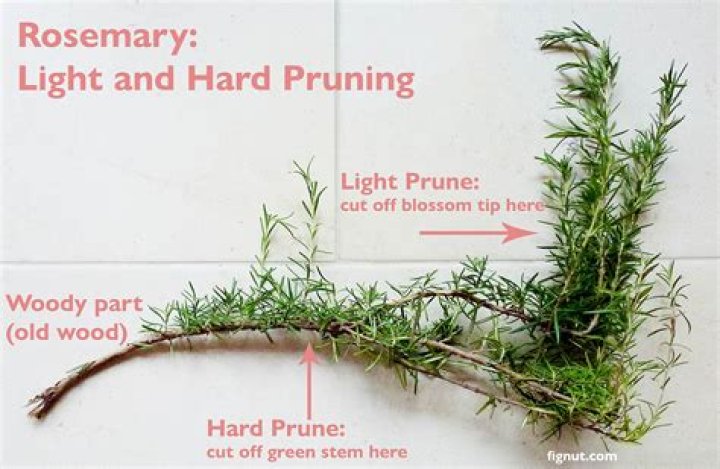
While pruning a rosemary plant is not needed to keep a rosemary healthy, there are several reasons why a gardener might want to prune a rosemary bush. It may be that they want to shape the rosemary or reduce the size of the rosemary shrub or to create a more bushy and productive plant. Whatever your reasons for wanting to prune your rosemary, there are a few things you need to know about how to prune a rosemary bush.
When to Prune Rosemary
Rosemary pruning can be done anytime during the spring or summer up until four to six weeks before the first frost.
Pruning rosemary after this time, or in the fall and winter, can cause the rosemary shrub to focus on growing new, tender growth rather than hardening off and protecting the growth that it has. If a rosemary bush does not harden itself off, it will be more susceptible to winter damage which can kill it.
Tips for How to Prune a Rosemary Bush
Before you prune your rosemary bush, make sure that your pruning shears are sharp and clean. Blunt or dirty pruning shears can result in ragged cuts that can leave the rosemary plant vulnerable to bacteria and pests.
The next step in how to trim rosemary bushes is to decide why you want to trim the plant.
If you are trimming the rosemary to shape it, say as a hedge or a topiary, draw a mental picture of what you would like the plant to look like and trim away the branches that do not fall into that outline. If your shaping needs to remove more than one-third of any branch, you will need to prune the rosemary back in stages. You can prune back branches by one-quarter, but you will need to give them a season to recover before pruning again.
If you are looking to reduce the size, you can prune back the overall plant by one-third at a time. Then wait two to three months and you can prune back by one-third again.
If you are doing rosemary pruning simply to create a busier plant, you can remove the end one to two inches (2.5 to 5 cm.) of the branches. This will force the branch to split and will create a bushier plant. This technique is particularly helpful if you are growing rosemary for cooking, as this creates more foliage in a more compact space.
You may also find that your rosemary plant is in need of some rejuvenation. Find tips for this here: Rejuvenating Rosemary Plants.
The steps for how to prune a rosemary bush are simple but important. Knowing how to trim rosemary bushes properly will help you keep your rosemary happy and manageable.
How to prune rosemary?
Keep it Ornamental
Pruning Rosemary – My neglected flowerbed, or should I call it “my laboratory for how not to treat your plants”. I know it’s a little crazy, but I am committed to doing whatever it takes to show you how, when and most importantly what you can do with your hand pruners, and the affect it will have on your garden. It took me time, mental strength and lots of patience to bring my flowerbed to the state that you see here. But it was done in the name of вЂeducation’ J
Before pruning – Not so fast. Unless its branches are in your way, or the plant reaches the heights you see in the picture, and has no strong stable stem to lean on, I see no reason for pruning rosemary – that beautiful ornamental shrub. Unless of course the cuttings are going straight to the kitchen and being used for dinner. Daily pruning for cooking purposes is fine – it is after all the life purpose of Rosemary, What I want to explain is the what, how and when of pruning for growth. Rosemary can handle both gentle and hard pruning methods easily, and she (yes, I think of Rosemary as a girl J )will respond well in both cases. So don’t be afraid to prune hard if needed, and I’ll show you how in just a moment.
A new design in the making
When? – Trimming short stems for your everyday use can be done throughout the year (mid-spring until mid-fall). Hard pruning, the way I did, can be done only from early spring until early-fall.
Why? Because if you let your Rosemary grow and grow without pruning her, she will lose energy. At some point she will stop growing new leaves, and the main stem will lose its strength and ability to support the height and weight of the plant. What you want, is for your Rosemary to develop new “super green” leaves and build a strong stable stem.
Where – I felt O.K about sticking my pruners inside the stem because I wanted to show you the exact spot I was choosing to prune, as well as the average height I plan for my Rosemary bush. In the next few weeks new leaves and future stems will grow beneath that point. New “super green” stems will develop the specific stem will slowly become thicker.
Pruning rosemary
After the big cut – As you can see, the blue line shows the new height of the Rosemary. After some fairly hard pruning, the plant’s capacity had changed, there are less branches, and less weight on the main stem, but my Rosemary is well on her way to becoming queen of the herb garden!!
My preferred pruning shears – For this specific job, I used heavy duty hand pruners. Rosemary has those tough woody stems (see where I stuck my pruners in) and will require a tool that can handle it.
Rosemary packs an extra punch when used as a landscape plant: it’s lush, requires little maintenance and repels some insects. Whether you’re looking for an attractive perennial hedge, a creeping ground cover or a flowering plant that is also fragrant and drought-tolerant, rosemary is an excellent choice. It’s also the perfect plant for the kitchen gardener, offering up its fragrant leaves as a savory addition for soups, stews and breads.
Rosemary Growth Basics
The options for rosemary plants are almost as plentiful and different as the varieties of roses available from garden retailers. When it comes to plants ideal for the garden rather than growing in portable pots, most varieties of rosemary prefer climates without cold winters, thriving in USDA plant hardiness zone 8 or warmer. One exception is Arp rosemary, an upright plant which thrives in zone 6 or warmer. Upright rosemary varieties grow up to 6 feet tall and can be used as shrubs or hedges; these also look beautiful in pots when pruned into conical tree shapes. The leaves on upright rosemary plants tend to contain the most fragrant oils and are therefore favored by the chefs who use fresh herbs in their culinary creations.
Semi-upright varieties grow up to 3 feet tall and may be a bit wider than high. Creeping or ground-cover rosemary plants seldom reach more than 2 feet high, but can spread out indefinitely in ideal conditions.
To Prune or Not to Prune
When grown as ground cover or a hedge, rosemary usually doesn’t need to be pruned to stay healthy, but it may need pruning for shape. As an evergreen perennial, rosemary plants tend to develop more woody growth as they mature. Over time, the weight of such branches may spread the plant outwards, detracting from its once pleasing shape. If this occurs, cut back the leaning branches to just above a point where two leaves or another branch grows, or to just outside the branch collar. When cutting near new growth or nodes, look for the nodes, leaves or branches pointing inwards, as these will continue to grow towards the center of the plant, helping to shape the entire shrub. Use clean hand bypass pruners to make the cuts.
Regular Pruning Considerations
To help prevent a rosemary plant from looking too wild, huge and overgrown, regular light pruning is necessary. Weekly or bi-weekly pruning also helps guide the shape of the plant, whether your goal is to keep it somewhat symmetrical or train it into a tree-like form. Only trim the new growth_,_ cutting 5 inches or less off each sprig at a time. Pruning can be done any time during the growing season, but should be avoided while the plant blooms. Pruning to thin the plant also helps ensure that each sprig receives ample sunlight.
If you prefer to prune seasonally rather than every week or two, prune in early spring or mid-fall, before the weather gets cold. In the spring, wait until green growth appears, then remove dead wood from the plant with hand bypass shears. Removing this wood will also provide more space and potentially more light for new growth, as rosemary prefers lots of sunshine. Whether pruning once a season or more regularly, clearing out overgrowth in the middle of the plant helps improve airflow and sunlight reaching each sprig.
Once a rosemary plant becomes woody and gnarly without producing much new growth, it is difficult to rejuvenate. Pruning regularly can help prevent the plant from getting to this stage. If the plant still produces a few new shoots on some of the branches, feel free to try rejuvenating it by cutting out some of the old, unproductive growth. Leave at least one-third of the plant intact. Note: removing old wood from a rosemary plant also removes any chances of new growth, so any cuts made could permanently affect the plant. Rosemary is not a plant that benefits from being cut all the way down to the ground.
Rosemary shrubs are relatively trouble-free. However, they do require a bit of pruning from time to time. In recent years we have seen the re-introduction of Rosemary Topiary specimens.
Left to their own devices, Rosemary generally look after themselves, but pruning after flowering is sometimes beneficial. Be aware that like the Lavenders – with which they are often confused – Rosemary are not particularly fond of being hacked back. That having been said, hard pruning at the right time – late spring – is an option for well overgrown and neglected plants.
In keeping with most evergreens, the best time to prune is when in active growth. Rosmarinus are best pruned immediately after flowering in late spring. This will encourage good flowering growth for the following year, and also keep the shrub from getting untidy – or leggy.
When to Prune Rosemary – Rosmarinus officinalis and others.
The same time of pruning is required for all types of Rosemary – whether upright, bush or spreading types. If grown in containers the growth is sometimes a little bit woody – as a result of too little feed (not a problem) – so the active growth timing is particularly important.
Rosemary flower in late winter – early spring, and often further into the year. Whilst waiting for the flowering to finish is tempting, the shrubs should not be trimmed or pruned too late in the year. End of July being the latest to ensure flower the following winter/spring.
Hedge-grown Rosemary should be clipped as soon as flowering has finished. This prompts soft attractive growth, and does not leave the unsightly bare patches that are often the result of unclipped hedge Rosemary plants. Do not cut back too far into the mature wood, for the hedge will take a little time to re-generate, and you may even lose a few of the plants – not good for an attractive hedge.
How to Prune Rosemary
As has been intimated above, it may well be that your Rosemary plants do NOT require pruning. Don’t prune them for the sake of it – unless as a hedge or you are trying Topiary!
General pruning of Rosemary simply entails clipping off the faded flower – you can save them for drying and potpourri. This can be done with a paid of hedge clippers if you want a formal shape to your finished shrub/herb, but is best carried out with a pair of secateurs. Snip back to just below the faded flower section, but not too far into the old wood. If you have a valuable plant (sentimental etc) then if you need to reduce its size dramatically, do it in two or even three stages. Starting in late spring and finishing by the end of August.
For hard or rejuvenation pruning, cut out a third of the plant – NO MORE than a third of the way back. That is to say, cut back/prune one out of every three branches. Then six to eight weeks later – as new growth starts on your pruned section, you can cut half of the remaining branches (You have now pruned two thirds of your old Rosemary shrub. The remaining third can be cut back finally after your last pruned sections start to send out new shoots.
I have always found that Rosmarinus prostratus (R. lavenduloides) – the creeping one, responds well to a good clip after the first flowers have faded. They often flower again early winter if the weather is not to hard!
Don’t waste the old Rosemary clippings. Either put them in a paper bag and allow to dry out, when they will give many months of heady aroma, or chop them up into small sections and place them into a linen bag for immediate use. DON’T use these old clipping for the kitchen. The lamb deserves the best. After your new growth has started, that is the time for a few sprigs for the kitchen!
Growing herbs is a great way to add an edible element to your garden. Rosemary is normally quite easy to control if you keep it in a pot, but if you have it growing freely in the garden, it can easily get woody and shabby looking. This is when these tips for pruning rosemary are helpful.
All garden plants need pruning at some stage, and rosemary is no exception.
Rosemary is a perennial herb that I use all the time in cooking. It is earthy, flavorful and very hardy in the garden.
This herb can be grown in containers (I grow mine on my vegetable garden on a deck) or planted directly in your flower garden, or vegetable garden. It is versatile and adds great flavor to all sorts of recipes.
Generally, rosemary is fairly easy going and won’t need much in the way of care. However, if your plant is really overgrown, hard pruning may be necessary.(removing quite a lot of the old wood.) This technique is best done in the spring since it will send off lots of new growth and the long growing season to follow will help it.
But general pruning of rosemary can be done throughout the growing season and right into early fall. My plants get lightly pruned during the spring and summer, since I cut rosemary for use in recipes all year. By fall, the plant can look pretty unkempt so this is when I set about the task of pruning rosemary in earnest.
Tips for pruning rosemary
When to prune rosemary
This can be done as early as late winter and then through spring and summer. It’s not necessary to wait for the flowering to finish and, in fact, this is not a good idea. Pruning too late in the year might encourage new growth that will not have hardened before the first frost. In many locations, late July is a good time, and for warmer hardiness zones, you can prune in September. A general rule is to prune no later than about 4-6 weeks before the first frost.
Is pruning necessary each year?
Rosemary is very good at taking care of itself, particularly plants grown in pots. It’s not necessary to prune plants unless they are overgrown, over woody, or unless you are trying to make a hedge or prune into topiary shapes. Also, you may simply want to prune rosemary to reduce the size of the plant or to make your existing plant more productive next year.
My rosemary has quite a bit of older growth on it, so I want to prune it now so that the time I have left will give me some fresher tips to use in Thanksgiving cooking. Rosemary grows for me pretty much all year round, here in zone 7b.
How to prune rosemary plants
Before you start the job of pruning rosemary, be sure that your garden shears are nice and sharp. Dirty shears with blunt tips will mean that your cuts are ragged, which can encourage disease and pest problems. All garden tools need to be tended to this time of the year. Be sure to check out my general tips for winterizing your garden tools, as well.
General Pruning. To prune rosemary, clip off the faded flowers, if any. You can preserve the flowers with Borax for use in dried flower arrangements, craft projects or potpourri. Use a good pair of pruning shears to trim back just below the flower area. If the plant is not flowering, just snip off the top few inches of the stems, being careful not to move too far into the old wood.
If your aim is a bushy plant, just remove about 1 – 2 inches of all of the branches. This encourages each tip to split into two and will give you a nice bushy looking plant before you know it.
Hard Pruning. Since rosemary is a perennial,if it is grown freely in the garden can get to heights of 6-8 feet! Any plant this size will get woody and unkempt looking if not pruned.
If you decide to do more of a hard pruning, earlier in the year, ratcheting pruners will make cutting the old wood easier, but never cut more than 1/3 of the plant or you may kill it. With old wood, a good rule of thumb is one branch out of three. Then, 6-8 weeks later, as the new growth is growing vigorously, you can cut back another woody branch and so on. At all costs, don’t cut all the old wood off at once.
Pruning Rosemary Plants in Containers
Rosemary is a perennial herb, so it will continue growing year after year in containers. This can result in pot bound plants.
A pot bound rosemary plant will produce less and less new growth and get quite woody. Re-pot the plant into a larger pot, if you can. If not, remove the plant from the container and carefully prune the roots back and bit and add a fresh layer of soil. I find that I can grow rosemary for several years in a large pot before it needs this step..
What to do with rosemary clippings
Rosemary can be easily dried for use in recipes during the winter and, like most herbs, can be preserved many other ways. Rosemary oil and rosemary herb butter are just a few ideas.
You can also root the cuttings of newer shoots of rosemary to get more plants for free. Either place the springs in water to grow roots and plant them in soil, or use a root powder on the tips and plant them directly into soil. Before you know it, you’ll have a new plant. Rosemary makes a great indoor plant to grow on your kitchen counter near a sunny window.
These tips for pruning rosemary bushes are easy to do but important in the overall look and health of the plant. Knowing how to prune rosemary plants will make for a happy plant that gives you sprigs of lovely flavor for cooking.
Disclosure of Material Connection: Some of the links in the post above are “affiliate links.” This means if you click on the link and purchase the item, I will receive a small commission from the sale, but the price is the same for you. I am disclosing this in accordance with the Federal Trade Commission’s 16 CFR, Part 255: “Guides Concerning the Use of Endorsements and Testimonials in Advertising.”
Rosemary is a great addition to any herb garden, however, it does require annual pruning to keep it looking at its best.
The main reason for an annual prune is to help slow down the formation of wood and extend the vigour and lifetime of your rosemary.
The best time of year to prune rosemary is just before growth starts in mid-spring after any risk of frost has passed.
Pruning at this time of year should avoid any frost damage to new growth, and any pruning scars that occur will be covered by new foliage in the growing season ahead.
Rosemary can be pruned from mid-spring right up until four to six weeks before the first frost in the autumn.
If rosemary is pruned after this time, it can cause the shrub to focus on growing new, tender growth rather than hardening off and protecting the growth that it already has.
If a rosemary bush does not harden itself off, it will be more susceptible to winter damage which can kill it.
One advantage of an early autumn prune is that it will encourage good air circulation, which guards against your rosemary rotting.
Rosemary blooms in late spring to early summer, and if you lightly prune after its first flourish of flowers it will more than likely bloom again in late summer.
How To Prune Rosemary
Before embarking on a rosemary pruning session make sure your secateurs are nice and clean, and sharp. Ragged cuts caused by blunt and dirty blades could leave your shrub open to infectious diseases or pests.
The shaper your blades, the cleaner the cut you will achieve, rewarding you with branches that grow back stronger.
A Light Prune Or Trim Of Your Rosemary
If you wish to give your shrub a light or a hard prune the first port of call should be to remove branches that have crossed and those that are dead and diseased.
Cut stems that have been frost damaged back to the first set of healthy leaves. Do the same for low-lying branches that show signs of fungal infection, such as drooping or discoloured foliage.
If the entire branch appears to be affected, it’s usually best to get rid of the whole thing to keep the condition from spreading.
To produce a nice bushy foliage, lightly trim your plant by cutting back two to three inches from the outer most stems. This should encourage the stems split in two, producing a nice bushy shrub.
Avoid cutting below the lower leaves and into older wood, as removing too much foliage can harm your rosemary, causing it to grow only woody stems.
Shaping Your Rosemary
Shaping your plant is one of the main reasons for trimming your rosemary. You may wish to shape it as a topiary or a hedge.
You can shape your shrub as desired, keeping the depth and angle of each cut consistent will give your rosemary, a neat and well-manicured appearance.
Try to avoid making it too uniform though, as rosemary is naturally bushy, so it’s ok for it to be a little thicker in some places.
You may wish to focus on one part of the shrub for a practical prune. For instance, your rosemary may be overtaking a nearby plant or overhanging on to a pathway, cutting back those sections will help open things up creating space.
Hard Pruning Your Rosemary
Before you give your rosemary a hard pruning, it is best to evaluate whether to cut it back or if it has become too woody, replace it with a new edition.
If your rosemary has become overgrown and needs rejuvenating start by lopping off any stems that are dead, diseased or are no longer producing foliage.
Overgrown shrubs can be cut back a third of their total size. Cutting back your rosemary by more than this could kill it off by leaving only non-productive foliage.
If you want to reduce the size of the plant further, wait six to eight weeks before cutting back the rosemary again by another third.
If you wish to keep your plant the same height, you can also cut every third stem to thin it out without affecting the overall dimensions of the shrub.
The practice of cutting out a significant amount of foliage from this woody shrub is known as “rejuvenation pruning,” and can be useful for saving shrubs or trees that are failing due to exposure to harsh weather or disease.
How To Harvest Your Rosemary
If you wish to harvest your rosemary for some sprigs for your Sunday roast, the best time to do this is just before it flowers, as this is when the flavour of the rosemary will be at its peak. If you also plan to dry some rosemary this is also the best time to so.
When trimming look for stems that are at 8 inches (20cm) in length, and do not take cuttings from newly grown stems.
Cut sprigs off that are around two inches long, making sure you don’t cut too close and always leave some foliage on the stems.
To ensure you always have enough mature stems to clip, it is a good idea to keep more than one plant in the garden. Two or three should be more than adequate for most households.
Never harvest more than a 1/4 of your rosemary bush at a time. Leaving at least 3/4 of your plant will ensure that it continues to thrive and produce new sprigs.
When drying your cuttings, tie them together in evenly sized sprigs and hang them in a dark, dry and well-ventilated part of your house.
After around ten days your rosemary should be completely dry and ready to take down to strip off the leaves and store in a jar or an airtight container.
Also if you cut sprigs for harvest while your plant is in bloom, you can use the flowers for cooking as well, as apparently, they are edible as well.
Growing Rosemary From Cuttings
As mentioned before it is a good idea to keep more than one rosemary in your garden if you plan on using it for harvesting, but instead of purchasing more plants why not grow your own from cuttings from the plant that you already have planted in your garden.
Even if don’t use your rosemary for harvesting, you can grow free plants from the cuttings that you take from your annual prune of the shrub.
There a couple of valid reasons for growing rosemary from cuttings:
Earlier Harvest
A rosemary plant raised from a cutting will mature more quickly than a plant grown from seed, and rosemary seeds tend to have a low germination rate and take a long time to grow. A rosemary cutting will reach a usable size in just a few months, and be ready to harvest much more quickly.
Same As The Donor Plant
The plant you grow from a cutting will be an exact clone of the donor plant and have the same disease resistance, growth and flavour.
Given the right conditions, rosemary plants thrive, eventually reaching heights of 6 to 8 feet (1.8-2.4 m.). They grow out as well as up, sending out stems that seem determined to explore their surroundings and invade the space of adjacent plants. If your rosemary plant has grown out of control, it’s time to take drastic action. Rejuvenation pruning of rosemary may be needed.
Can You Hard Prune Rosemary?
Gardeners are sometimes hesitant to make drastic cuts on rosemary shrubs because a few herbs with similar, woody stems don’t recover if you make severe cuts. A mature rosemary plant, however, tolerates this drastic pruning, even into the woody parts of the stem.
You can do light pruning and harvesting any time of year, but a rosemary plant responds best to hard pruning in winter when it isn’t actively growing. When pruned in winter, the plant grows back in spring looking better than ever. Read on to find out how to rejuvenate a rosemary shrub.
Note: For most people who grow rosemary, the plant will go through a cold period. It isn’t a good idea to prune any herb, rosemary or otherwise, shortly before or during cold because it will cause the plant to grow new shoots, which are very vulnerable to cold damage. In warmer areas where rosemary is more apt to grow to the size in which rejuvenation pruning is needed, the plant is not experiencing the same killing cold, so winter pruning while it’s in dormancy is best. That being said, for those of us NOT living in such areas, stick to spring pruning after the threat of frost has passed.
Rejuvenating Rosemary Plants
The first step in rejuvenating rosemary plants is to determine the size at which you want to maintain the plant. Cut the shrub back to about half of the desired size, and by the end of spring it will fill the allotted space. You can maintain the size of the shrub through summer with light pruning and harvesting.
Cutting through the thick, woody parts of the stem on a mature rosemary shrub may be too much for your hand pruners. If you find the stems hard to cut, use loppers with long handles. The length of the handles gives you more leverage and you’ll be able to make the cuts easily. When tender new shoots replace the old growth, you’ll be able to make cuts easily with hand pruners.
Don’t toss the prunings on the compost pile! Save the best tips to start new plants, and strip the needles off the remaining stems for drying. The tough stems make excellent kabob skewers.
Related Articles
Pruning is a chore you may not look forward to, but pruning fragrant rosemary is a sensory pleasure. Rosemary (Rosemarinus officialis) is a perennial herb with evergreen foliage on woody stems that may be either upright or trailing, depending on the cultivar. Suitable for U.S. Department of Agriculture plant hardiness zones 7 or 8 through 10, you can keep your rosemary bushy, productive and to a size that fits your site with regular trimming.
Training Young Plants
To get the most from your rosemary, whether as a landscape plant or a culinary herb, you need to encourage full, branching growth. Begin training the plant when it is young, about 4 inches tall, by pinching out or trimming off the tops of each stem with scissors. The plant will branch out with multiple stems at each point you pinch or cut. To create a fuller plant, shear it back to one-half its height when it is about 8 inches tall.
Harvesting Rosemary
Beginning in the plant’s second year, when it is well established, you can start harvesting your rosemary — a form of trimming or pruning. The flavor of the herb is at its peak just before the plant flowers when new growth has hardened off, but is not yet woody. Snip off the stem above the woody growth, shaping it as you go — shorter toward the edges of the plant and taller in the center, if you want a rounded shape on an upright rosemary. Remove entire stems where they join another branch when harvesting trailing rosemary. Don’t take more than 20 percent of plant’s growth at any one time.
Established Plants
Cut out yellowed, or dead shoots any time with bypass pruners. Trim off the tips of lanky shoots by at least one-half, cutting at a 45-degree angle, in early spring. Cut the entire plant back in late winter to early spring to renovate an older rosemary. Don’t trim past the lowest cluster of your rosemary’s needlelike foliage when pruning to rejuvenate a plant. Like some other needled evergreens, the plant does not regrow from bare old wood. Stop pruning — including harvesting — in the middle of fall to avoid prompting new growth that could be too tender to survive cold weather.
Winter Damage
Upright rosemary varieties can reach 3 to 5 feet tall in warm climates. When your area experiences the occasional freeze, an established plant is likely to survive and look as good as new in a few weeks after some trimming. After a cold snap, the tips of the rosemary turn dark brown and look dry and brittle. Leave the damaged plant parts on the bush until temperatures are consistently warm because it can protect the parts of the plant that are still healthy, farther down the plant. Cut the stems back to living wood with bypass pruners, cutting at a 45-degree angle. Trim the stems back all the way to the base of the plant if there is no live wood on the stem.
Related Articles
Rosemary (Rosmarinus officinalis) grows as an evergreen perennial in U.S. Department of Agriculture hardiness zones 7 through 10. The leaves resemble bristles and have an exceptional aroma, and they provide distinctive flavor to cooked dishes and breads. These small shrubs benefit from light trimming throughout spring and summer to help maintain their shape and size. Frequent trimming also provides a steady harvest of rosemary to use fresh or dried in the kitchen.
Cut out dead and winter-damaged branches and stems in early spring as new growth begins on the stem tips. Cut the rosemary back to the nearest healthy portion of the stem with sharp shears.
Trim back the entire plant by about half its height in late spring or early summer to control the size and shape of the rosemary. Make the cuts in the succulent green stem portions. Do not cut into the woody bottom section of each stem, because rosemary may not grow back well from the woody stem sections.
Remove overgrown stems anytime during the summer growing season to maintain the basic shape of the rosemary bush. Cut each overgrown stem back so it’s the same length as surrounding stems.
Prune back overgrown rosemary in mid- to late summer to maintain its shape and size if it begins to look unkempt. Remove up to half the new growth on the shrub, taking care not to cut into the woody portions of the stems.
Space to play or pause, M to mute, left and right arrows to seek, up and down arrows for volume.
SERIES 18 | Episode 33
Rosemary is a woody perennial herb with fragrant evergreen needle like leaves. It’s a native of the Mediterranean region and is part of the large mint or Lamiaceae family which also includes many other herbs.
As well as its popular culinary uses, rosemary is often grown as a hedging plant. It loves a hot dry climate. It grows in a range of well drained and slightly alkaline soils. The ancient Greeks used to say that rosemary helped memory, and in Australia signifies remembrance – particularly on Anzac Day.
Rosmarinus officinalis is the original species and grows to a height of about a metre and a half. During summer it becomes smothered in long spikes of pale mauve flowers.
Some other rosemaries to look out for include:
The blue flowered ‘Gorza’ – the one the chefs use in cooking and as skewers. Just de leaf the stalk, sharpen the ends and then load your tasty morsels onto the skewer for great barbecues.
A prostrate grower called ‘Huntingdon Carpet’ only reaches about 25 centimetres, but is still covered in beautiful blue flowers and looks great when planted so it tumbles over rocks, a wall or looks good in a hanging basket. It really is a stunning plant.
‘Salem’ is a rosemary that came to Australia from Auckland, New Zealand. It’s an upright grower, attains a height of just under a couple of metres, with a width of about a metre, and makes a great hedging plant with spikes of deep blue flowers through summer.
‘Pink Remembrance’ has pink flowers instead of blue, but otherwise has the same characteristics of the other rosemaries and grows to a height of a couple of metres.
Generally the smaller the leaf the more drought-tolerant the plant, and that’s true of rosemary. Because it is drought-tolerant, it’s often used as a landscaping plant, especially in Mediterranean climates.
The Queensland climate, with a hot humid summer, can be harsh on the rosemary, so make sure it’s in a well-drained soil. Don’t over-water it because the roots are sitting in warm moist soil and that’s a perfect environment for the root disease, Phytophthora. And prune them back just before summer, to open up the plant and minimise disease.
The good thing about pruning is that you can use the prunings as cuttings. Rosemaries grow from cuttings easily and also from seed – some of the newer cultivars even produce viable seeds.
Propagating from cuttings is pretty easy. Just strip off the bottom leaves. Remember, the gritty feel of the potting mix can damage the tip, or rooting end, of the cutting. This means it won’t form roots easily and so it’s important to make a little hole in the potting mix first, pop the cutting in, and then firm the potting mix down.
Rosemaries love soil with a high pH, so add dolomite at least once or twice a year. If you live in a hot humid climate then dust the whole plant with dolomite, because that works wonders and helps minimise disease.
The ancient Greeks were obviously on the money with this herb and nowadays it’s recognised by modern-day practitioners of aromatherapy as an aid to mental clarity. Rosemary is also dried and used in potpourri, the oil can be found in many perfumes and cosmetics – and there’s nothing better than throwing it in with the roast lamb.
Do you use fresh herbs when cooking? Do you want to make sure that you have enough when you need it? If so – pruning is the way to go. Here is a look at how to prune rosemary so that you never run out.
This post contains affiliate links to products. We may receive a commission for purchases made through these links.
Pruning is an important part of growing any plant – no matter if its herbs or a decorative plant such as a rose bush. Plants need to be pruned to promote new and healthy growth. Rosemary is no different! We love using our rosemary bush pretty much all year so in order to have an endless supply of rosemary – we like to prune our rosemary and even start new plants from those cuttings!
How to prune rosemary
When it comes to pruning rosemary – you should first think about the reason you are pruning. Are you just taking some off to cook with? Are you wanting to propagate new plants from your existing plant? Or are you just trying to promote new growth.
In order to prune your rosemary plant – you will need a pair of sharp pruners to make the cuts. Using sharp pruners will take off the cuttings without damaging the mother plant. This will ensure that you have a healthy mother plant to continue taking cuttings from.
Pruning Rosemary
Just take your pruners and clip off some of the growth to use in your recipes or to propagate new plants. Pruning rosemary can be done anytime during the spring and summer. You should not prune rosemary or any plant in the fall. Pruning rosemary in the fall will cause the plant to focus on putting out new growth late in the year which uses a lot of the plant’s stored energy. This weakens the plant and makes it more susceptible to a frost.
You can even shape your rosemary plant into different shapes or even into a bonsai. Simply, draw a picture of what you want the plant to look like and then trim away the stems that do not fit into your drawing. If you drawing calls for the removal of more than one third of the plant then you should prune the plant in stages.
Pruning rosemary over the course of multiple seasons will help to promote healthy growth and give the plant enough time to recover from each pruning. If you were to prune it back hard by taking away more than one third of the plant – you are likely to lose the entire mother plant.
Using your clippings
Once you have pruned your rosemary plant the desired amount – make sure to use the clippings that you have pruned off of the mother plant. These clippings can be used fresh or dried for later use. In order to use – just remove the leaves from the stem.
There is nothing better than having herbs growing in your garden and being able to use them fresh or store them in your pantry. The flavor and health benefits of using herbs in your cooking definitely makes growing them worth it.
If you like this article on how to prune rosemary, please share it on social media and with friends. For all the latest recipes, container gardening tips and growing guides subscribe to our newsletter in sidebar.
Be sure to Like us on Facebook and Follow us on Instagram, Twitter, and Pinterest!
Learn how to plant, care for, harvest and store rosemary, in our easy-to-use Grow Guide.
| Jan | Feb | Mar | Apr | May | Jun | Jul | Aug | Sep | Oct | Nov | Dec | |
|---|---|---|---|---|---|---|---|---|---|---|---|---|
| Plant | ||||||||||||
| Plant | ||||||||||||
| Flowers | ||||||||||||
| Flowers | Plant does not flower in January Plant does not flower in February Plant does flower in March Plant does flower in April Plant does flower in May Plant does not flower in June Plant does not flower in July Plant does not flower in August Plant does not flower in September Plant does not flower in October Plant does not flower in November Plant does not flower in December | |||||||||||
| Harvest | ||||||||||||
| Harvest | Do Harvest in January Do Harvest in February Do Harvest in March Do Harvest in April Do Harvest in May Do Harvest in June Do Harvest in July Do Harvest in August Do Harvest in September Do Harvest in October Do Harvest in November Do Harvest in December Average YieldPick leaves as required Rosemary is a versatile herb, providing evergreen interest all year round, fragrant leaves for use in cooking, and nectar-rich flowers for bees in spring. Grow rosemary along a path, so every time you brush past, the leaves release their aromatic oils. Hailing from the Mediterranean, rosemary thrives in a sunny, sheltered spot in well-drained soil. It can struggle in heavy clay soils, particularly in winter, when the ground tends to be wetter. You can grow rosemary in pots, but bear in mind this perennial herb can grow quite big, and will need potting on in fresh compost every couple of years. How to grow rosemary at homeGrow rosemary in well-drained soil in full sun. Young plants can suffer if their roots are sitting in wet soil in winter, so it’s a good idea to grow rosemary in a container for a couple of years before planting into the garden. Cut back annually to prevent the plant from becoming woody, and mulch in autumn with leaf mould, well-rotted compost or manure. More on growing rosemary: How to plant rosemary Rosemary seeds can take an age to germinate, so buy young plants instead, which are widely available, or wait until after flowering and take rosemary cuttings. Plant rosemary in spring or autumn. Although rosemary is frost-hardy, the combination of cold and waterlogging can kill immature plants. With this in mind, choose a well-drained soil in a sunny, sheltered spot. If you have a cold clay soil, dig in lots of bark, grit or leaf mould to improve drainage. Alternatively, grow rosemary in a pot. Caring for rosemary plants Rosemary requires little maintenance during the year except cutting back after flowering to prevent plants becoming straggly and woody. Save the trimmings to propagate new plants or dry them for cooking. Rosemary does well in containers in a soil-based, peat-free compost. Add crocks to the bottom of pots to aid drainage. Keep rosemary plants well watered during dry spells and feed with a general fertiliser during the growing season. In cold winters, bring plants under cover for protection. Harvesting rosemary Harvest rosemary by gently pulling small sprigs away from the main stem. You can also use secateurs to remove large branches of rosemary, for roasting. Storing rosemary As rosemary is an evergreen, it’s available fresh all year. It dries well (on a baking tray in the airing cupboard) but doesn’t freeze. Preparation and uses of rosemaryPop a few sprigs of rosemary in with your roast potatoes and meat, it goes especially well with lamb, or in casseroles, tomato sauces, baked fish or egg dishes. Unless you’re using rosemary leaves to flavour gravy or perk up a roast, strip the leaves off the inedible woody stems. Add it to vinegars or oils for extra flavour. Take care when using fresh rosemary in your cooking, it’s a pungent herb that will overpower delicate flavours. Growing rosemary: problem-solvingA native of southern Europe, the rosemary beetle was once thought to be a severe threat to rosemary, but usually doesn’t cause too much damage. These small metallic-green and purple-striped beetles can be found on the underside of leaves during early autumn to spring. Plant a rosemary hedgeOne of the best rosemary varieties for a hedge is ‘Miss Jessopp’s Upright’. Space the plants about 45cm apart. To promote bushy growth, cut back after flowering in early summer. Aim to keep the hedge around 60cm tall. Rosemary is a shrub that can add a little vibrancy to an estate or a small house. Whether you are planning to get some or recently planted one, you may be wondering if trimming is necessary. There is no need to cut rosemary as it doesn’t grow big and rapidly unlike other bushes. However, you may want to learn how to trim rosemary the proper way for other reasons. Many people like to trim it just to create a good shape or reduce the size. Whatever you have in mind, trimming this plant is not that difficult. 1. Determine the Right Pruning TimeKnowing when and how to trim rosemary is important. Do not start cutting unless it is between spring and summer. As much as possible, this kind of plant should have been pruned about 4 to 6 weeks before the first phase of winter. It needs to harden itself off in preparation for frost. This makes it less vulnerable to damages during cold weather. It’s also vital to cut during its second year. Never cut anything unless it’s at least 4 to 8 inches tall. You also check if the stems or woody parts are hard enough. 2. Prepare the ToolsWhile a pair of regular scissors can be used, it’s highly suggested to use hedge clippers. How to trim rosemary may be very simple but without the right tools, it can create a mess. You do not want to cut parts of it without reshaping in a perfect form. Aside from hedge clippers, a pair of small secateurs or shears is a good option. A bucket might be also handy. Basically, there’s no need to use high-technological devices or several tools for trimming this plant. If you are curious as to what other items may be important for you, see recommended products below. *Fun Fact: Do not throw the cut parts as you may want to use them for seasoning or marinating. Instead, put them in a brown bag and set aside. You can also allow them to dry out, which can be added to teas or some boiling solutions. 3. Form a ShapeRosemary owners usually form their plants like a rainbow or half C. This is an easy shape to create when trimming a small bush. But you have the freedom to choose other shapes. Be it a Christmas tree shape, cone or round, it’s your decision to make. Do not forget, however, that the simpler the shape is the easier to cut parts. Do you use fresh herbs when cooking? Do you want to make sure that you have enough when you need it? If so – pruning is the way to go. Here is a look at how to prune rosemary so that you never run out. This post contains affiliate links to products. We may receive a commission for purchases made through these links. Pruning is an important part of growing any plant – no matter if its herbs or a decorative plant such as a rose bush. Plants need to be pruned to promote new and healthy growth. Rosemary is no different! We love using our rosemary bush pretty much all year so in order to have an endless supply of rosemary – we like to prune our rosemary and even start new plants from those cuttings! How to prune rosemaryWhen it comes to pruning rosemary – you should first think about the reason you are pruning. Are you just taking some off to cook with? Are you wanting to propagate new plants from your existing plant? Or are you just trying to promote new growth. In order to prune your rosemary plant – you will need a pair of sharp pruners to make the cuts. Using sharp pruners will take off the cuttings without damaging the mother plant. This will ensure that you have a healthy mother plant to continue taking cuttings from. Pruning RosemaryJust take your pruners and clip off some of the growth to use in your recipes or to propagate new plants. Pruning rosemary can be done anytime during the spring and summer. You should not prune rosemary or any plant in the fall. Pruning rosemary in the fall will cause the plant to focus on putting out new growth late in the year which uses a lot of the plant’s stored energy. This weakens the plant and makes it more susceptible to a frost. You can even shape your rosemary plant into different shapes or even into a bonsai. Simply, draw a picture of what you want the plant to look like and then trim away the stems that do not fit into your drawing. If you drawing calls for the removal of more than one third of the plant then you should prune the plant in stages. Pruning rosemary over the course of multiple seasons will help to promote healthy growth and give the plant enough time to recover from each pruning. If you were to prune it back hard by taking away more than one third of the plant – you are likely to lose the entire mother plant. Using your clippingsOnce you have pruned your rosemary plant the desired amount – make sure to use the clippings that you have pruned off of the mother plant. These clippings can be used fresh or dried for later use. In order to use – just remove the leaves from the stem. There is nothing better than having herbs growing in your garden and being able to use them fresh or store them in your pantry. The flavor and health benefits of using herbs in your cooking definitely makes growing them worth it. If you like this article on how to prune rosemary, please share it on social media and with friends. For all the latest recipes, container gardening tips and growing guides subscribe to our newsletter in sidebar. Be sure to Like us on Facebook and Follow us on Instagram, Twitter, and Pinterest! Are you investing some quality time into building a herb garden but want to learn the basics before you get started? Our guide on how to grow rosemary will help equip you with all the knowledge you need to be successful. So, what is rosemary, what’s its story and what does rosemary look like? Rosemary is a very hardy plant that’s native to the Mediterranean region. It is one of the most commonly used herbs in Italy, especially for roast lamb. Rosemary is a woody perennial herb with blue flowers. However, the flowers can also be pink, purple and white, depending on the type of rosemary. Rosemary makes a great addition to any garden, whether ornamental or edible. Discover quick tips from Fabian on three other essential herbs to start growing at home: How to plant rosemaryGrowing rosemary from cuttings is the easiest way to grow this perennial herb:
Can you grow rosemary from cuttings? Oh yes you can! And the best bit – once established, your hardy rosemary cuttings will require minimal water. Hurray! Picture: Getty Propagating rosemaryMore from LifestyleHow to build a scarecrow for your garden The moveable garden: Gardening tips for renters Spring is a good time to plant many kinds of plants, including rosemary. Rosemary cuttings grow best in a well-drained loam in a sunny location. Some varieties are susceptible to frost. It likes a soil that is neutral to alkaline in pH (7–7.8) with average fertility. When to mulch & feed rosemaryUse a straw-based organic mulch to help soil retain moisture and suppress weeds. Rosemary will benefit from an annual feed of organic fertiliser, and the occasional application of seaweed extract. Add dolomite lime at least once a year to keep the pH high. If you live in a hot, humid climate, dust the whole plant with dolomite, because that works wonders and helps minimise disease. How to prune rosemaryRosemary plants are renowned for becoming woody, so give them a neat haircut with garden shears to shape and keep the bush dense. Pruning rosemary is something you should do regularly, particularly just before summer – this will help open up the plant and minimise disease. When to prune rosemary? Regularly. That way you’ll prevent the plant from from becoming woody. Picture: Getty Rosemary plant care 101Pests and problemsAphids and whiteflies are common pests that affect rosemary. Powdery mildew and root and crown rot often affect this herb too. If the plant is under-fertilised or root bound in a pot, its growth will be slow and its lower leaves will turn yellow. Rosemary growing tips
Planting rosemary cuttings in your herb garden will encourage bees to visit from late spring to early summer, as bees love rosemary flowers . Picture: Getty How to harvest rosemaryYou can harvest rosemary whenever the plant looks healthy. Snip off about a 5-7cm stem and use to flavour lamb and roast potatoes. Freshly picked leaves are also great in tea or even added to a bath with lavender. You can also take rosemary cuttings and hang them up to dry, for use at a later date. Rosemary has many divine uses outside the kitchen. Picture: Getty Types of rosemaryThere are several rosemary plant varieties, including:
*Edited text has been extracted from Growing Food The Italian Way by Fabian Capomolla, published by Plum (RRP $44.99) Growing Food The Italian Way by Fabian Capomolla, published by Plum (RRP $44.99) is available now. Picture a little rosemary tree at your kitchen window, standing there upright and green as if in defiance to the wintry scene beyond the panes. This little tree offers more than decoration and winter cheer. Pass your hand lightly over the leaves, close your eyes, and the scent will carry you to a sunbaked Mediterranean hillside, the plant’s native habitat. Snip off a few leaves for cooking, and your tongue will similarly transport you to milder climes. Grown as a little tree rather than as a sprawling shrub (its natural inclination), a rosemary plant takes up little sill space and is easy to prune. Here’s how to make that tree. START WITH A TRUNKBegin with a small rosemary plant, grown from seed or cuttings, or bought. Seed is slowest and most difficult, cuttings root easily, and the bought plant will still offer you the satisfaction of training the tree. Even naturally creeping varieties can be coaxed into becoming little trees, but if you have a choice, choose a naturally upright variety such as Majorca Pink or Salem. Single out one stem to become the future trunk of your plant, completely removing all stems except for this trunk-to-be at the base of the plant. The most vigorous, upright stem is the obvious candidate. In the case of a creeping variety, just select any healthy stem and stake it upright. Poke a dowel or thin piece of bamboo into the soil near the base of the plant and tie a piece of soft yarn tightly around the stake, then loosely around the stem. As growth begins, the trunk-to-be will elongate, new stems will sprout out along it, and other stems might sprout near the base of the plant as trunk wannabes. The latter are most common with creeping varieties, which have bushier inclinations. Your goal in the weeks ahead is to promote elongation and thickening of the trunk-to-be. To that end, keep cutting away any new stems sprouting from the base of the plant. Pinch back to just a few leaves any stems sprouting along the trunk-to-be. Doing so keeps them subordinate but lets them help thicken the trunk. AND NOW THE HEAD Once the trunk reaches full height, your goals change: You now want to stop growth and create a bushy head. But how high is “full height”? It’s all for show, and what looks good depends on how big a head you are going to give the plant and how big a pot the plant will eventually call home. Generally, a head 2 to 3 times the height and just slightly more than the width of the pot looks good. Stop growth at the desired height by pinching off the growing tip of the trunk, a simple operation that awakens growth of buds down along the trunk. Create the bushy head by repeatedly pinching – and thus inducing more branching – the tips of all shoots that sprout from the top few inches of trunk. Now define that head more clearly by completely removing all stems and leaves further down the trunk. All these prunings need not be wasted, of course. They could be used as flavoring or as cuttings to make yet more plants. ONGOING CARE Maintain your little tree by repeatedly nipping back the ends of stems, which keeps your plant compact, neat and elegant. A final tip: Although rosemary thrives in the dry air of the Mediterranean region and of our homes, the soil must be kept moist. Rosemary’s narrow leaves never droop, so your only indication that the plant needs water might otherwise be a dead plant. Hi, I have several rosemary bushes and over time, they start to look like this. The birds love them, but they appear to be squashed in the center, loosing shape. How and when do I prune them? way down? Thanks for any help. Clackamas County Oregon 2 ResponsesIt looks like the weight of the branches are doing this, but rosemary can get extremely woody and easily overtake and area without regular pruning. I would wait until mid-March to do any serious pruning, but if you want it to have a mounded shape, then you need to regularly prune to maintain that shape. What I would do is take a long look at the major branches and cut off those where the plant is spreading in a direction you don’t want it to grow. If it is looking thin in the center, then prune to where you can see new growth directed where you want to fill in. Most woody herbs won’t send out new grow on bare wood stems (this is especially true of lavender, but rosemary is similar) and you will see that leaves drop as they get shaded. If you regularly prune to make sure the plant has an open structure, you make sure that the leaves that are there get plenty of light. With rosemary, you can easily snip out every other branch and still have a full-looking plant. The good news is that if you go a little too far with the pruning, you can always purchase a new plant for not a lot of money and start over. Answered byThis question is grouped withAsk an Expert is made up of groups and individual experts. Rosemary is a truly amazing herb that’s a feast for the senses. Not only does it offer year-round garden splendour, but it’s also delightfully fragrant and super flavoursome – just think of how well it complements lamb and roast potatoes! Certain varieties also provide great flower colour, when they bloom in late spring or summer. These florals range from dark to pale blue, through to pink and crisp white. Rosemary can also be used as an evergreen hedge, trimmed into a standard or kept as a long-life shrub – it even thrives in pots. Follow this guide and discover how you can plant up this all-rounder in your garden. It’s no surprise that rosemary is a favourite among gardeners. This popular shrub is a wonderful addition to your edible garden, being both attractive and versatile. To cover a sun-drenched wall, consider planting a prostrate form of this herb such as Rosmarinus ‘Irene’. It spreads quickly and will cascade neatly over a surface. To create this cute mini double hedge in your garden, grow rosemary behind a row of lettuces and trim or pick to keep it compact. What a lovely display! Depending on the variety you choose, you can expect an abundance of blooms in spring or summer. Plant under your kitchen window for an easy-reach herb patch – It’s handy if you ever need a last-minute sprig for cooking. Or, simply open your window and enjoy the sweet scent. How to grow • Climate Native to the Mediterranean region, rosemary thrives in hot, dry areas with little to no frost in winter. However, it will grow well in just about any climate, providing it’s not too humid, wet or cold. • Aspect For rosemary to flourish, choose a sunny spot that receives at least six to eight hours of sunlight daily. Also ensure it’s protected from cold, drying winds. • Soil Plant in a well-drained soil that’s neutral to slightly alkaline. Add dolomite or lime at least once a year to increase the pH level and keep the herb happy. If planting in a pot, use a quality potting mix that drains freely. For even better drainage, try planting it in a cacti and succulent mix, such as Debco Cacti & Succulent Superior Potting Mix or Yates Thrive Cacti & Succulent Potting Mix. • Water This herb doesn’t like to be completely dry, nor does it thrive when saturated, so water regularly but sparingly. If pot grown, water when the soil feels dry. • Feed In spring, feed with organic food such as blood and bone or cow manure. Alternatively, apply a slow-release fertiliser such as Scotts Osmocote Plus Organics. • Maintenance Remove any dead stems and straggly shoots in spring. Lightly trim your rosemary after flowering to encourage bushy growth – keep the cuttings and use them in the kitchen or place them around your home for a natural perfume. Click here for information on how to propagate rosemary. Rosemary is a perennial herb native to the Mediterranean regions, but is found in cooler, northern climes as well. A favorite in home gardens, rosemary shrubs can live, on average, for 15 years in temperate climates. If grown in a container, the plant may be taken indoors during the winter months and returned to the outdoors once the weather has warmed. Though rosemary requires little maintenance, you should cut back, or prune your rosemary occasionally. Pruning encourages new growth as well as giving the shrub an aesthetically pleasing shape. How to Prune a Rosemary Shrub Begin by clipping any stems that extend beyond the general shape of the plant. You want to start with the plant having an even surface all the way around. Start at the bottom of the shrub and cut the new, softer growth back 2 to 3 inches. Work your way upwards approximately 3 inches, cutting back the stems so they are the same length. This establishes a “base” for the plant shape. Continue working upward, trimming back approximately 1/2 inch, on a diagonal, for every 1 to 2 inches. As you prune the rosemary shrub, create a conical shape by clipping around the shrub and upwards. Step back every time you make a full circle so as to assess the overall shape. This type of pruning gives the rosemary shrub a neater, tidier appearance, and for a single plant, adds an aesthetically pleasing element to the garden. Consistently snipping the new, softer stems for cooking or for medicinal purposes, helps maintain the shape as well as encourage new growth. Prune to Maintain a Hedge-like Appearance If you have several rosemary shrubs growing together, shape them into a hedge. Do not, however, use an electric hedge clipper as this will damage the delicate stems. Use a hand clipper and trim the front of the rosemary shrubs so the surfaces are even. Do the same for the sides and back. Clip the top of the plants into a rounded shape to keep the bushy appeal; the rounded tops give the hedge a topiary aesthetic. Best Times to Prune Rosemary You can take rosemary clippings anytime you wish, trimming the new growth for your personal needs. Rosemary may be used fresh or dried in cooking, for teas, and for medicinal purposes. Do not prune rosemary during flowering. The flowers attract pollinators to your garden as well as contribute to the propagation of the plant the following season. The best times to prune a rosemary shrub, that is, when you cut back a significant amount of the plant, is in the summer after the flowers have dried and fallen off. Tips for Growing Rosemary Rosemary thrives in dry, arid climates but has adapted to more humid climates provided the soil drains well. Use a sandy soil and allow the plant to dry out between watering. Rosemary requires six to eight hours of sunlight a day, and may grow as wide as 3 feet and as tall as 6 feet if planted in-ground in a temperate climate. When planting rosemary, allow for a sufficient amount of space if you intend to let the plant reach its full width and height. Rosemary cannot survive in below freezing temperatures. If you live in a northern region, plant rosemary in a large container and bring it indoors before the first frost. Keep it in a sunny window. References: Once you’ve planted herbs in the garden or containers, you may be tempted to walk away and let them grow unchecked. However, knowing when and how to prune herbs is so important. It helps your plants stay vigorous and productive, and keeps them growing longer than if left to fend for themselves. Editor’s Note: For the best flavor from your fresh herbs, plan to harvest them in the morning before it gets hot and plants are stressed for water. Herbs also have more vibrant, fresher flavors when harvested from younger stems—another good reason to prune herbs often! How to Prune BasilBasil plants will grow quickly in the garden, getting leggy with oversized leaves. Pruning every couple of weeks will keep the plant tidy, prevent flowering and encourage growth of new leaves. Prune basil by snipping the stems about 3 to 4″ down from the tops, just above a leaf node. This is how to store fresh basil. How to Prune ParsleyRegularly cutting your parsley plants not only stimulates new growth, but also keeps the plant from getting overgrown and going to seed. To prune parsley, go for the stems growing around the outside of the plant—new stems come up through the center. Trim outer stems close to the ground. Prune throughout the season when you see the plant getting gangly, to remove flowers or when you need parsley for a recipe. How to Prune RosemaryRegular pruning of rosemary plants will keep the stems from getting thick and woody. If your rosemary has survived the winter, prune back older stems in the spring. On young rosemary plants, snip the top 2 to 3″ of the stems weekly or even more often if the plant is growing vigorously. Prune through the spring and summer. How to Prune ThymeThyme is another woody type of herb and frequent trimming will promote new growth. You can pinch leaves from thyme plants as you need them, or trim the top couple of inches of the stems. Cut stems just above a leaf node (where the leaves grow from the stems). Flowers can be removed so that more leaves will grow; however, thyme plants will still grow even after flowering. How to Prune MintYou will be much happier with your mint if you prune it frequently throughout the season. Left unchecked, established mint plants will overrun your garden and even the lawn! Begin pruning and harvesting mint in spring as soon as leaves appear on the stems. Trim mint stems back by as much as half, and this can be done every few weeks. Pruning this way works with all varieties of mint. How to Prune CilantroCilantro plants that are not pruned will quickly produce flowers, and then die back. Snip stems from your cilantro before it flowers, cutting about one third of the way down the stem with leaves remaining below so the plant can regrow. The plant loses energy later in the season and you’ll have to let it go to seed at this point. (Those seeds are coriander!) This is why some gardeners do successive plantings of cilantro seeds to have new plants growing all summer. How to Prune DillDill is a vigorous grower (it’s one of the fastest growing herb plants), but will quickly bolt (go to seed) in hot weather. The fragrant, leafy stems can be harvested beginning when dill plants are 6 to 10″ tall, and doing so will help prevent the dill from flowering. When cutting dill, take only about one third of the plant at a time. And if your dill does flower? Save and dry the flower heads to harvest the dill seeds. Like cilantro, many gardeners do successive plantings of dill to have more plants to harvest. Gallery: 17 Easy Vegetables to Grow at Home (Taste of Home) Rosemary is an ornamental evergreen shrub with attractive, aromatic, deep green leaves and blue flowers in spring and early summer. Although it is usually thought of as a herb for use in the kitchen, it is a colourful and attractive garden plant in its own right. Rosemary looks great in beds and borders and in Mediterranean planting schemes. It makes a perfect container plant for a sunny patio. Rosemary can also be used to create informal hedges, and there’s even a low growing, sprawling variety that is good for ground cover – Rosmarinus officinalis ‘Prostratus Group’. How to grow rosemaryCultivationRosemary is easy to grow and look after. It grows well in relatively poor, well-drained soil and a sunny position. The sunnier the site, the stronger the scent from the foliage. The best time to cut stems for use in the kitchen is in early afternoon, when their flavour will be its strongest. Rosemary varietiesAlthough most varieties produce blue flowers, there are those with white flowers, such as ‘Lady in White’, and those with pink flowers, such as ‘Majorca Pink’. Suggested planting locations and garden typesFlower borders and beds, patios, containers, city and courtyard gardens, hedges. How to care for rosemaryRosemary is fairly drought tolerant, but like all other drought-tolerant plants, needs watering until established. Although reasonably hardy, plants may suffer in severe winters and in cold, exposed gardens. Avoid feeding with high-nitrogen feeds, which encourages soft growth that is more susceptible to cold damage, so use balanced and high potash ones instead. The latter will encourage flowering and stronger growth. Pruning rosemaryIt’s a good idea to prune newly planted rosemary plants to encourage strong, bushy growth. Established plants need little in the way of regular pruning, apart from removing wayward or overly long shoots. But cutting back plants by around one-third will help prevent plants growing too tall. Prune immediately after flowering. Rosemary does not readily re-shoot from old wood, so never prune old, brown, leafless stems – otherwise the plant will die. Old, neglected plants are best replaced with new ones. PestsRosemary may be susceptible to the following pests and diseases: Rosemary beetle, Root rot. Rosemary (Rosmarinus officinalis) can resist many pest and disease problems, but plants weakened or stressed may fall prey to problems. The shrub grows in U.S. Department of Agriculture plant hardiness zones 8 through 10, but it also thrives as a potted plant in any climate. Soil or site conditions are common problems, although pests and fungus can also kill rosemary. It can be difficult or even impossible to save rosemary once it begins to die, but quick diagnosis and treatment sometimes prove successful. Winter KillWinter freezes can kill a rosemary shrub, but it may not become obvious until after the temperature begins to warm in spring. The evergreen sprigs begin losing their color, become dry and brittle, and eventually turn completely brown or yellow. (ref 3) Minor freeze damage only kills a few branches, allowing you to save the plant, while major damage kills the roots and plant entirely. Cut back the damaged branches to the nearest healthy wood using pruning shears disinfected with isopropyl alcohol. The healthy roots and remaining living branches will usually survive and put on new growth through spring and summer. Prevent future stress by growing the rosemary in a pot and overwintering it indoors, or by covering it with a frost blanket when short hard freezes are expected. Water StressLocations that easily become wet or waterlogged slowly kill rosemary plants. Rosemary can tolerate more moisture in summer, but wet winter soil quickly kills the plant either by suffocating the roots or by freezing solid. Rosemary prefers well-drained soil and moderate moisture conditions. Dig up and transplant the shrub to a well-drained, full sun garden bed, or transplant it into a pot with bottom drainage holes. Water rosemary about once a week when there is no rainfall and when the top 1 to 2 inches of soil feels dry, providing no more than 1 inch of water at each irrigation. Fungal DiseaseFungal issues typically go hand-in-hand with wet soil. Root and crown rot, caused by the Phytophthora spp. fungus, cause stunted growth or branch death. The rosemary sprigs yellow and dry out, while the base of the stem and roots become soft, mushy and produce a foul odor. Moving the rosemary to a site with better drainage and refraining from watering until after recovery may allow it to live if the roots aren’t badly damaged, but most shrubs won’t recover from root rot. Powdery mildew fungus, which forms as a white powder on the rosemary needles, favors dry conditions and warm temperatures between 60 and 80 degree Fahrenheit. Providing the rosemary with full, all-day sunlight and spraying the foliage with water early in the day to rinse away spores can minimize mildew issues. For extreme infections, cut out the mildewed branches with disinfected shears so the remaining healthy branches can recover. Leaf and Stem PestsVarious pests feed on rosemary plants, including spittle bugs, aphids and whiteflies. Rosemary usually recovers from pest damage unless the infestation is severe or if the plant is already weakened by cold or water stress. Pear-shaped aphids feed on the underside of the stems. Spittle bugs leave behind a white, foamy residue that resembles spittle. Treat both by rinsing them off the rosemary with a sharp spray of water, or drench the plant with a ready-to-use insecticidal soap at five-day intervals until the pests are gone. Water sprays and soap products can also help control whiteflies. Spray the plants several times a day with water to discourage the flies and their larvae. Yellow sticky traps or reflective mulch spread around the rosemary may also minimize whitefly problems. Chemical DamagePremature needle death, yellowing of the needle tips or a general burned appearance may indicate chemical damage from herbicides, pesticides or improper fertilization. Herbicide drift, which occurs when the wind carries the spray beyond its intended target, causes leaf dieback or kills the entire plant. Pruning out the affected branches may allow the plant to recover if the chemicals haven’t reached the roots. Excessive use of fertilizers can lead to the buildup of fertilizer salts in the soil, especially in container-grown plants. Watering the rosemary deeply so the excess moisture drains freely from the bottom of the pot at least once monthly during the summer helps flush out any excess salt. Nutritional DeficienciesFertilizer is seldom necessary for a rosemary shrub, especially those grown in garden beds where the trace nutrients in the soil provide sufficient fertilization. Potted plants or those grown in exceptionally poor soil may be suffering from a nutrient deficiency if the plant grows slowly or develops stunted, pale yellow needles. An application of a general purpose fertilizer in early spring should provide enough nutrients to help the plant recover. Follow package instructions or mix 1/2 teaspoon of a soluble 24-8-16 blend with 1 gallon of water, and water the rosemary with the solution. Avoid applying fertilizer directly to the foliage because it can damage the needles. Rosemary is a perennial herb native to the Mediterranean regions, but is found in cooler, northern climes as well. A favorite in home gardens, rosemary shrubs can live, on average, for 15 years in temperate climates. If grown in a container, the plant may be taken indoors during the winter months and returned to the outdoors once the weather has warmed. Though rosemary requires little maintenance, you should cut back, or prune your rosemary occasionally. Pruning encourages new growth as well as giving the shrub an aesthetically pleasing shape. How to Prune a Rosemary Shrub Begin by clipping any stems that extend beyond the general shape of the plant. You want to start with the plant having an even surface all the way around. Start at the bottom of the shrub and cut the new, softer growth back 2 to 3 inches. Work your way upwards approximately 3 inches, cutting back the stems so they are the same length. This establishes a “base” for the plant shape. Continue working upward, trimming back approximately 1/2 inch, on a diagonal, for every 1 to 2 inches. As you prune the rosemary shrub, create a conical shape by clipping around the shrub and upwards. Step back every time you make a full circle so as to assess the overall shape. This type of pruning gives the rosemary shrub a neater, tidier appearance, and for a single plant, adds an aesthetically pleasing element to the garden. Consistently snipping the new, softer stems for cooking or for medicinal purposes, helps maintain the shape as well as encourage new growth. Prune to Maintain a Hedge-like Appearance If you have several rosemary shrubs growing together, shape them into a hedge. Do not, however, use an electric hedge clipper as this will damage the delicate stems. Use a hand clipper and trim the front of the rosemary shrubs so the surfaces are even. Do the same for the sides and back. Clip the top of the plants into a rounded shape to keep the bushy appeal; the rounded tops give the hedge a topiary aesthetic. Best Times to Prune Rosemary You can take rosemary clippings anytime you wish, trimming the new growth for your personal needs. Rosemary may be used fresh or dried in cooking, for teas, and for medicinal purposes. Do not prune rosemary during flowering. The flowers attract pollinators to your garden as well as contribute to the propagation of the plant the following season. The best times to prune a rosemary shrub, that is, when you cut back a significant amount of the plant, is in the summer after the flowers have dried and fallen off. Tips for Growing Rosemary Rosemary thrives in dry, arid climates but has adapted to more humid climates provided the soil drains well. Use a sandy soil and allow the plant to dry out between watering. Rosemary requires six to eight hours of sunlight a day, and may grow as wide as 3 feet and as tall as 6 feet if planted in-ground in a temperate climate. When planting rosemary, allow for a sufficient amount of space if you intend to let the plant reach its full width and height. Rosemary cannot survive in below freezing temperatures. If you live in a northern region, plant rosemary in a large container and bring it indoors before the first frost. Keep it in a sunny window. References: How often do you get a haircut? Every six weeks or so? How does it make your hair feel? Pretty good, huh? Like your hair cut, plants benefit from a trim every now and then, too—especially herbs. But, how do you prune herbs? Keep reading… Pruning herbs will help promote growing and, for the most part, make the plant more attractive. When you let the plant just grow, it will become lanky, woody, and sprawl all over the place. Many first time gardeners are afraid to prune. They think, “Hey, how can I cut my beautiful baby! It’s so pretty, I cannot bear to cut any of it!” I’m here to tell you that I too was once like this. After many years of growing herbs, I learned to make the cut. And, guess what? They grow back. Besides helping the plant look more attractive, the main reason I prune them is to get more herbs. If you let your herbs go to flower, then that’s the end of that. Instead, regularly pruning will give more delicious herbs for a longer period of time. How do you prune herbs? Let me show you. I will use my lovely basil plant to demonstrate. DisinfectThe first thing you need to do before you prune anything is to disinfect your tools. The last thing you want to do is spread disease from one plant to another. Use rubbing alcohol to carefully clean the blades of your scissors or pruners. on September 29, 2015 We’ve got an extensive collection of herbs for culinary, medicinal and garden health purposes and while they mostly need nothing from us, I do give the woody herbs a drastic haircut around now (spring’ish) to bring on fresh, abundant growth. Left alone, herbs like sage, rosemary, curry bush, oregano, chamomile will become leggy, sparse and woody at their base. To manage this, you can literally cut them back to the ground (or close to), allowing them to grow a whole new plant above ground – here’s how… Meet our curry bush (Helichrysum italicum). It’s been quietly cranking in our herb garden and was well overdue for a big haircut.
All you need to do is get a sharp pair of secateurs and cut the bush back close to the ground. You can also do this before you see fresh growth coming from the base, in which case you can cut it back to pretty much ground level. While it initially looks a bit shocking, this little stump will shortly be bushy up nicely, promise. What should you do with all that leaf? Usually we make small bunches of all our herbs and dry them for using in the kitchen, however we don’t use a huge amount of curry bush so we put it back into the garden as mulch, plus we do dry some. If you want to, you can also take some cuttings to propagate more plants. One bunch of curry bush amongst some already drying calendula flowers and mint. In the same garden we’ve also cut back our sage plants, salvia officinalis and salvia elegans a few weeks earlier and you can already see their fresh growth coming on strong. To reduce the shock from going to having a very bushy, large herb patch to one full of small “stumps”, you can stage the pruning sessions like I’ve done – it can help the visual side of things a bit if you have some fresh growth amongst the other stumps. Pineapple sage, salvia elegans, coming back strong after a big pruning session. If this is your first time, just remember – it’s really really hard to kill these types pf perennial herbs, so there’s no need to be shy or nervous. And if you’re wondering what herbs you should include in your herb patch, have a look at some of the ones we think are essential. 8 Responses to “How to Prune Woody Herbs”Great post! I like to make sure to “pinch back” my woody herbs through their growing season, to ensure they don’t get a bit leggy or over the top. This is a super simple thing to do that helps their overall growth! Top tip Kathy! Thanks for sharing :-). Thank you for your tip, i have a question, as we grow all our herbs and manufacture our all natural skin care, i grow Lavender Augustafolia (from a cutting from my nans place to now a hedge row) I was wondering if i can do the same treatment to them for they are getting woody and rather large, i was told not to cut them past the green growth! Would love your opinion. Kind regards kay I believe you don’t cut them to the ground – but trim them as you suggested :-). (sorry for the slow reply!) Really appreciate you putting this post up, thank you. Off out now to drastically cut back our sage, was thinking of pulling it out before reading this. Thank you! That was simple advice without fluff. Off to prune my curry bush! What can you do with a large amount of harvested camomile overgrown woody lawn branches and clippings? You could chop/mulch them up and pop them in the compost bin/system 🙂 In Shakespeare’s tragedy Hamlet, there is a famous scene where the mentally ill Ophelia sings songs and hands out flowers, citing their symbolic meaning. “There’s rosemary, that’s for remembrance,” she says, handing her brother the herb that had long been associated with memory. In medieval times, rosemary was worn at weddings as a symbol of fidelity and funerals as a sign of remembrance, and before that, in ancient Greece students braided rosemary it into their hair or wore garlands of it around their necks to aid their memory. New research suggests that rosemary oil may have some benefit for Alzheimer’s sufferers because it helps prevent the breakdown of acetylcholine, the neurotransmitter that enhances memory and learning (read more about rosemary’s health benefits here). HOW TO GROW PRUNING VERSATILITY If you’re keen on a rosemary hedge, the good news is that this herb is easy to propagate from cuttings. The best time to take rosemary cuttings is summer or autumn. In spring the tender new stems will wilt. Just cut 10–12cm stems, strip off the lower leaves, dip the cut ends in rooting hormone and poke into the soil around your parent plant, or in pots of moist potting mix. Expect an 80 per cent success rate. Before planting a hedge, make sure the site is well drained and add pumice and grit if not. Tip prune your hedge each year. Creeping rosemary is easy to propagate by layering. Scratch away a section of bark on a long stem where it touches the ground. Keep the stem in contact with the ground with a wire staple or a stone. Alternatively, attach the stem across the top of a pot of potting mix. Roots will grow from the stem. Cut the stem away from the parent plant when the roots are well established. CULINARY USES Early in the season, the new foliage is softer and less punchy on the palate; by autumn it has hardened off and a concentration of volatile oils in the older stalks can make it taste decidedly stronger. You can intervene in this process by pruning in early summer, so that you’re heading into winter with lots of fresh growth. Upright types are best suited for culinary use. Look for ‘Chef’s Choice’ (from garden centres) for intense flavour and great form. Use rosemary stems as edible skewers when making kebabs, add it to stuffing, combine a few chopped tablespoons in shortbread mixes and fruit salads to offset sweetness. Or try these rosemary polenta cookies! It’s not just us who use rosemary for culinary purposes. Because it flowers almost all year round, it’s also a reliable food source for bees, particularly when other flowers are scarce. Remember that! Learn why and how to prune herbs in this detailed guide. Pruning herbs make these plants productive, healthy, and flavorful! Your herb garden needs your attention for optimum growth. Of all other aspects of caring for herbs, pruning is also a significant one. Overlooking it can give you a not-so-productive herb garden. Why Prune Herbs?
Types of Herbs and PruningWhile it’s true that pruning herbs is beneficial but excess pruning can be detrimental. Cut back the plant too much, and it’ll not grow back the same again. It’s best to avoid cutting more than one-third of the plant at one time. Pruning Herbaceous Herbs Herbs such as basil, stevia, oregano, cilantro, chives, lemon balm, mint, etc. are herbaceous plants and do not have woody stems. Many of these plants do not survive harsh winters (unless you live in a mild climate) and grow with vigor only in springs and summers–they are technically annuals. These plants are most suitable for light pruning. Don’t prune these herbs heavily, trim mainly from the top, skipping the sides. The herbs will grow bushier and productive with each light pruning cycle.
Evergreen Herbs Rosemary, lavender, thyme, bay, and sage are some of the herbs that show robust growth without much care and require hard pruning. In other words, the evergreen or perennial herbs in your climate require hard pruning. Best Time to PruneThe best time for pruning such herbs is at the beginning of the growing season when the herbs start to grow. Wait until you see some new growth, young leaves, and buds forming. Perennial herbs can go on without pruning. But, to maintain their shape and size and to get new and more flavorful foliage, it’s required.
Pinching Young PlantsNo matter the type of herb, pinching a young plant prevents leggy growth and make it bushier and improve its structure from the beginning. For this, pinch out the stem tips along with the first set of leaves.
Rosemary is easy to grow, provided the plant has three things it will be happy and should flourish! Sun, sun, sunRosemary comes from the Mediterranean and is a true sun-worshipper! Rosemary should get full sun throughout the day so, a south-facingВ siteВ isВ best.В Rosemaries can tolerate a little shade but will have fewer flowers and less frequentВ flowers. Soil with good drainageRosemary must have well-drained soil. It hates the wet. To test drainage dig a hole 25cm square by about 25cm deep and then pour in about 2 litres of water.В В In well-drained soil the water should have gone after 15 minutes.В If water remains longer than this you may be better to grow your rosemary inВ a pot. Lime rich soilThe soils of rosemary’s native regions are limestoneВ based.В В Rosemary will grow well provided the soil or compost is not too acidic.В В If you do not know your soil’s pH then you can check it with a simple testВ kit. Adding limestone chippings can help make the soil more alkaline and improvesВ drainage! More information…For more detailed information about growing rosemary please check ourВ FAQsВ orВ visit the pages below: How to Grow RosemaryRosemary is an attractive plant for your garden thanks to its brilliant blue flowers and needle like leaves. An added bonus besides the fragrance, colour and use in cooking, is that bees love Rosemary because of the lovely blue flowers they produce. Planting plenty of Rosemary together in your garden will give the bees lots of foraging opportunities. The scientific name for rosemary roughly translates to ‘mist of the sea’ as the grey/green foliage is thought to resemble the mist against the cliffs in the Mediterranean where rosemary originates. Rosemary seed sowingTo give Rosemary seeds the best possible chance of germination, follow the following guide lines:
On-going care for rosemaryOnce established in the garden, Rosemary are easy to grow, they love a sunny position and can grow in a wide range of conditions. They can handle a variety of soils but prefer a reasonable well-draining soil. Prune Rosemary often and hard, that way they look nice and fresh and because of the fresh new growth they are easy to use in the kitchen. If you fertilise Rosemary regularly with Tui NovaTec slow release fertiliser they will rarely get pests or diseases, and will continue to reward you and the bees for many years. Making a differenceIf you want your herbs to grow into their most luscious, abundant self, then you need to know how to prune them. Pruning herbs or cutting off leaves and parts of stems helps them grow well. Left unpruned, your plant will grow and blossom but also starts to die. Regular pruning also alerts you to disease and insect problems that may start small and you could possibly remove before they affect the entire herb. Why Prune Your Herbs?Pruning is good for your plants. Firstly, it encourages fresh growth, which often helps a tall, thin plant develop bushier foliage. Furthermore, you prune to propagate new, rooted growth (more plants!) and to control the size of the plant itself. Also, regardless of what type of herb, whenever they start to blossom, you should remove them to redirect the growth energy back to the leaves and roots. The blossoms use up a lot of the plant’s energy, slowing the plant’s growth. You can either light prune or hard prune. However, you shouldn’t over-prune. The goal is to help your plant thrive and grow, not impair it’s ability to produce new growth. Light PrunningLight pruning applies more generally to herbaceous plants such as basil, stevia, cilantro, etc., plants that thrive in summer. You have to continuously monitor growth in herbaceous plants because frequent trimming encourages the plants to sprout new growth, and continue to grow bushier and more productive. The process of “tipping” refers to cutting off the top few new growths to encourage the branch to grow outwards in two directions at the break. When you don’t prune herbaceous plants, they either get large and begin to suffocate neighboring plants in the same shared bed, or their growth slows tremendously too early in the season, reducing the amount of leafy growth for you to harvest. Hard PrunningHard pruning refers to evergreen or heartier perennial herbs like rosemary, lavender, thyme and sage that without much maintenance, are still capable of becoming robust garden perennials. You’ll need strong clippers to prune these. You might also like: How to make cheese – For beginners How Often Should You Prune Your Herbs?It’s important be wary of removing too much plant. Big leaves, or leaves at the base of the plant are really important for the health of the plant because they absorb so much more sunlight than smaller leaves with new growth. Ensure you keep those leaves in tact for the overall health of the plant. That said, you’re often safe to prune back half of a healthy plant without reducing it’s ability to rebound. You should only prune herbs in the evergreen family occasionally; no more than once or twice a year. The act of pruning encourages new growth, so it’s important to avoid pruning near the end of the growing season because at that time it’s important for them to be “toughening up” and not developing tender growth. Also avoid pruning during the cold season when the plant is in dormancy. For best results, cut your herbs back early in the year when new growth is beginning to show. For both herbaceous and evergreen plants, it’s important not to trim back too much growth at a single time, but you do want to remove any dead branches that get in the way of new growth. A good rule of thumb is to cut dead branches back to the soil, but avoid cutting more than 1/3 or 1/4 from the overall healthy plant branch. Trimming a large herb back too quickly will thwart it’s ability to rebound. Lavender is an exception: You’ll need to trim it way back towards the end of the rainy season, so that only 3-4” of green remains atop the wooded stem. Avoid cutting off all new growth, leaving only wood stems, as the plant may not be able to regenerate. A similar pruning in the early spring will help spur new growth. ( Click here to read about growing lavender ) What Should You Do With Herb Trimmings?As you practice light pruning, take advantage of your herbs and use them in fresh recipes. You can also dry herb trimmings to use all year long. If you’re growing commercially, you could start selling just from the beginning of the growing season. What’s great about herbs is that many of the trimmings will easily reroot with a little effort, giving you more plants! Al you have to do is place your clean-cut herb trimmings into a jar with a little bit of water, and allow them to soak up sunlight from a window. Rotate the water every few days. After a few weeks, fresh roots will emerge from the herbs, and you can transplant the trimming back into the soil. Herbs, like all plants will grow better with a bit of appropriate pruning. Pruning is a gardening task which tends to make new gardeners nervous, and although it need not be difficult, a little knowledge about what you are doing can go a long way. We are often unaware that we are pruning out herbs, but harvesting fresh herbs is doing just that – pruning the plant. When harvesting fresh herbs we usually take the young growing tips where the leaves are softer and tastier as these are the best to eat. This is called tip pruning and works very well for many plants to encourage compact and bushy growth. Tip pruning via regular harvesting of young leaves for cooking is ideal for encouraging vigorous and bushy growth on herbs which grow as small shrubs or ground covers, or the ones which tend to develop woody stems over time. This includes basil, rosemary, mints, thyme, oregano and sage. This also applies to chillies although we do not eat the shoots, by tip pruning a few times while the plant is young you will encourage the plant to be denser and therefore increase the number of branches which will bear fruit (chillies). Regular tip pruning of all of these herbs will encourage bushy growth and abundant new shoots for a continual harvest. Infrequently harvested herbs will have fewer new shoots and the plants will be sparser. Even if you do not cook with the herbs regularly, tip pruning the plants every week or two will encourage new growth and denser plants which are more attractive and will also provide a more plentiful harvest for the times the harvest is desired. By regularly tip pruning these plants they will ensure a continued supply of soft new growth, and will delay the plants from developing woody stems. As these herbs age they develop woody stems and fewer young palatable leaves for harvesting. The woody stems do not reshoot readily when pruned, so always avoid cutting into woody growth unless you intend to replace your plant. If the plant needs to be pruned into a more attractive shape this will need to be done as the plant grows and the stems are still supple, as pruning woody growth will not correct a poorly shaped herb plant. Once these woody herbs start to flower they will stop producing new leaves. Pruning off the flowers as they form will encourage more leaf growth and extend the productive life of your herb plant. The fresh young flowers of these herbs are also edible and can be added to your cooking along with the leaves. An exception here are chillies. If you remove the flowers you will prevent the plant from setting the chilli fruit. Tip pruning is also the most beneficial harvesting and pruning method for those herbs which form woody trees such as bay leaf and lemon myrtle. These can both be grown in large pots in the herb garden and with regular tip pruning you will have a constant supply of flavoursome leaves. Pruning into the woody stems of these trees can be done to shape the tree and keep it small, and will not harm the tree. Herbs which do not produce woody stems can be pruned quite heavily to encourage new growth. Herbs which form a soft leaved rosette, including parsley, coriander, dill and some fennel varieties are best harvested by removing outside leaves regularly and before these leaves become old. Once the outside leaves age they become too course to be palatable and should be regularly removed to encourage new growth in the centre of the plant. These plants can have the majority of their leaves removed as needed, with the very new central shoots left intact, and will go on to provide further harvests. Regular harvesting will delay the plant setting seed and ensure a far more productive plant. Once the plant starts to send up a tall central shoot, it will flower and set seed. At this point it is no longer putting energy into producing the leaves desired for harvest and will need replacing. If the plant is allowed to flower and set seed, it will attract many bees and beneficial insects to the garden and provide seeds for future crops. Lemon grass, a popular herb, is actually a grass and can be treated like other ornamental grasses in the garden. All grasses respond will to regular pruning and will thicken their growth in response to good pruning. When harvesting lemon grass leaves for cooking or making tea, choose outer leaves which are still dark green and cut them low to the ground. Once a year, cut the entire plant off very short. This will not only tidy the plant but will increase vigour and the production of sweeter leaves. When the plant is cut low, it can easily be lifted and divided. If you like to use the base shoots of the lemon grass in cooking, it is recommended that the plant be divided and new plants established regularly as this harvesting method can deplete the plant. If you have concerns about pruning herbs, practice frequent harvesting as this will encourage new growth and will negate the need for any further pruning in most herbs. A rosemary plant has to be pruned in spring or summer. It is not necessary to prune these trees but a few farmers may consider this process for maintaining the tree at a desirable height. A few others may prune the trees to a particular shape. They have to be pruned before the first frost season begins. If you have decided to prune the rosemary, ensure that the pruning shears are extremely sharp and clean. Blunt shears will cause unwanted damage to the branches and barks. The wounds may not heal completely and the vegetative shoots will not be strong either. Blunt unclean shears will make the tree susceptible to bacterial and fungal attack. Prune the tree according to the shape and height you want. For example, you can shape it according to a hedge or topiary. If you have to remove more than 1/3rd of a branch, you will have to prune the branches in stages. If you want to prune the plants to reduce their size, you can safely chop off extra branches to reduce the plant to at least 1/3rd of its original size. You would have to wait for two to three months to prune the plant again. You can also prune the pant to remove one to two inches of the branches that are protruding out at the end. This does not require any particular scientific technique. The branches will split and grow. This will make the tree look bushier than it normally is. It will also encourage a luxuriant leaf formation making the plant look green and fresh.
| |||||||||||