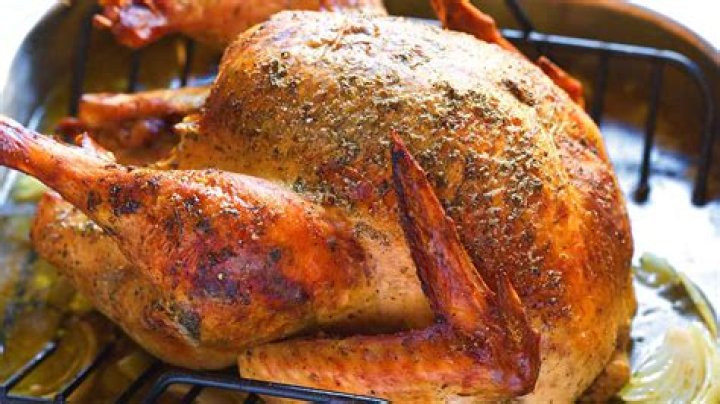
With help from our Test Kitchen experts, learning how to roast a turkey can be easy. There’s a fine line between a bird that’s properly cooked and one that’s unsafe for guests to eat (or one that’s too dry!). Use our simple tips to keep track of how long to cook a turkey in the oven so it comes out juicy and tender. Our must-have tips and pro secrets about roasting turkey will make this year’s Thanksgiving feast easier and more delicious than ever. Plus get our best roast turkey recipes and ideas for completing your Thanksgiving dinner menu.
© Provided by Better Homes and Gardens Brie Passano
Selecting a Turkey Roasting Pan
You may not use a roasting pan every day, but it’s a valuable piece of kitchen equipment to have on hand for your holiday turkey roast recipe. The proper pan ensures that your turkey cooks up moist and golden brown. The pan should just hold the turkey with no part of the bird extending beyond the pan, or the meat juices will drip into the oven. On the other hand, if the pan is too large for the turkey, the juices in the pan will burn.
- Shallow depth
- Heavy weight
- Good heat-conducting qualities
- Handles (especially helpful when pulling the hot pan from the oven)
- A rack or trivet to hold the bird out of the drippings and to allow the heat to reach the underside of the bird
- The right fit
If you aren’t looking to invest in a roasting pan, you can use your broiler pan. Place a wire rack in the bottom of the broiler pan to keep the turkey out of the drippings.
Lightweight, disposable aluminum roasting pans should not be used for cooking turkey; those pans are simply not heavy enough to support the weight of the bird. It could spill or break, causing serious burns when you try to remove it from the oven.
How to Roast a Turkey
Prep your oven by placing the rack in the lowest position and preheating to 325°F. Place the turkey, breast side up, on a rack in a shallow roasting pan. To enhance browning, brush with oil. Then insert an oven-safe meat thermometer into the center of an inside thigh muscle so the bulb doesn’t touch bone.
Cover the turkey loosely with foil, leaving space between the bird and the foil. Press the foil over the drumsticks and neck. Roast turkey using the timings below as a guide. When the bird has been in the oven for two-thirds of the time listed, cut skin or string between drumsticks. Remove foil the last 30 to 45 minutes.
The turkey is done when the thigh meat is 175°F and the stuffing is at least 165°F (stuffed birds usually need 15 to 45 minutes more roasting time than unstuffed birds, so adjust the timing as needed). To check temperatures, pull the bird out of the oven, then insert the thermometer into the thickest portion (if you haven’t already inserted an oven-going thermometer), not touching bone or the pan. The temperature should register in about 15 seconds.
After removing the bird from the oven, the temperature of the meat will rise about 5 degrees. The drumsticks should move very easily in their sockets, and their thickest parts should feel soft when pressed. The juices from the thigh should run clear when pierced deeply with a long-tine fork. Cover loosely with foil, and let stand before carving. Release legs from leg clamp, if present. To avoid burns or splatters, do not remove the clamp until the bird has cooled slightly. Remove stuffing before carving.
Timing Guides for Whole, Unstuffed Turkeys in a 325°F Oven:
- For 8- to 12-pound turkey, roast 2 ¾ to 3 hours.
- For 12- to 14-pound turkey, roast 3 to 3 ¾ hours.
- For 14- to 18-pound turkey, roast 3 ¾ to 4 ¼ hours.
- For 18- to 20-pound turkey, roast 4 ¼ to 4 ½ hours.
- For 20- to 24-pound turkey, roast 4 ½ to 5 hours.
For stuffed turkeys of the same weight, increase the total cooking time by 15 to 45 minutes.
Before Carving Turkey
After your bird is removed from the oven, let it stand 15 to 20 minutes before carving the turkey. This allows the flesh firm up so it’s easier to slice and gives the juices time to evenly redistribute throughout the meat. Cover the bird with foil to keep it warm. Then place the bird on a carving board, remove the stuffing, and use a sharp carving knife or an electric knife for slicing.
Now that you know the basics of how to roast a turkey, all you’re missing is a recipe! We’ve got plenty of roast turkey recipes for you to choose from, or you could even branch out and try deep-frying your turkey this year. Any way you cook it, our tips will help you ensure your turkey is the star of your Thanksgiving dinner menu, just the way it should be.
Oven roasting is all kinds of yum! Tune in to our video to learn how to roast a turkey in the oven. This classic turkey technique is perfect for a first-time cook or a seasoned pro.
Turkey cook-time varies by weight, so there’s also a handy chart to help you plan. Don’t forget the foil tent when you’re ⅔ of the way through cooking to prevent dryness!
Jump To Section:
Fresh or Frozen Whole Turkeys
Roasting a whole turkey is easier than you think. Just follow these simple instructions for a fresh or thawed turkey:
Roasting Tip
If you don’t have a rack, crunch aluminum foil into a coil or use vegetables like carrots to keep your turkey off the bottom of the pan.
Fully Cooked Whole Turkeys
Fully cooked turkeys are an easy way to get a great tasting turkey on the table in less time. Follow these special directions for a delicious meal:
- Preheat oven to 325° F. Remove wrapper. Do not stuff.
- Place thawed turkey, breast side up, on flat rack in shallow roasting pan 2 to 2½ inches deep.
- Brush or spray skin lightly with vegetable or cooking oil for best appearance.
- Insert oven-safe meat thermometer deep into the thigh without touching the bone.
- Place turkey in pre-heated oven and heat until hot (140° F).
For Smoked Turkey
- Cover pan completely with foil for the entire cooking time.
For Baked Turkey
- Cover breast loosely with foil after 1 to 1¼ hours to prevent over-browning and drying.
- Begin checking the turkey for doneness about 30 minutes before the recommended cook time.
- Your turkey is done when the meat thermometer reaches 140° F in thigh.
- Carve and serve immediately.
Whole Turkey Breasts
Turkey breasts cook up tender and delicious, and are easy to roast when you follow these instructions:
- Preheat oven to 325° F.
- Remove whole breast from bag. Drain juices and pat dry with clean paper towels.
- Place breast, skin side up, on a flat roasting rack in a 2-inch deep roasting pan. Do not add water to pan.
- Brush or spray skin lightly with vegetable or cooking oil for best appearance.
- Roast uncovered according to Cooking Schedule or until meat thermometer in thickest part of breast reaches 170° F. If breast is stuffed, center of stuffing should be 165° F.
- Roasting time will vary if turkey is covered or placed in an oven-cooking bag.
- Before you remove the stuffing and carve, let your turkey breast stand for 15 minutes to allow the juices to set.
You can roast a frozen turkey breast too. Just follow these steps:
- Roast skin side down, uncovered, on a flat rack in a 2-inch deep open roasting pan at 325° F for the first hour.
- Remove from oven and carefully remove gravy packet and refrigerate packet for future use.
- Turn breast skin side up, and brush or spray skin lightly with vegetable or cooking oil for best appearance. Return to oven.
- Roast uncovered according to Cooking Schedule or until meat thermometer in thickest part of breast reaches 170° F. If breast is stuffed, center of stuffing should be 165° F.
- Let breast stand for 10 minutes before carving.
Boneless Roasts
For smaller groups that love that roasted turkey taste, try a boneless roast. It’s easier than ever with these directions:
Roasting Tip
Since you can’t adjust the string netting when roasting from frozen, be sure to wrap the roast in foil after it comes out of the oven.
To cook roast from frozen, try this method:
- Preheat oven to 325° F.
- Remove gravy packet with spatula and refrigerate.
- Place roast, skin side up, on a flat roasting rack in a 2-inch deep roasting pan. Do not add water to pan.
- Roast uncovered according to Cooking Schedule or until meat thermometer in center of breast roast reaches 170° F and in center of turkey roast reaches 175° F.
- For easier net removal after roasting, wrap roast in foil and let stand 10 minutes. Remove netting and slice roast.
Everyone who has ever roasted a turkey has an opinion on how to do it. Here’s a simple, foolproof method, step by step.
Related To:
Photo By: Matt Armendariz ©2014, Television Food Network, G.P. All Rights Reserved
Photo By: Matt Armendariz ©2014, Television Food Network, G.P. All Rights Reserved
Photo By: Matt Armendariz ©2014, Television Food Network, G.P. All Rights Reserved
Photo By: Matt Armendariz ©2014, Television Food Network, G.P. All Rights Reserved
Photo By: Matt Armendariz ©2014, Television Food Network, G.P. All Rights Reserved
Photo By: Matt Armendariz ©2014, Television Food Network, G.P. All Rights Reserved
How to Roast a Turkey
There are breast-side-down devotees, deep-fry fanatics and those who swear that the highest of heats is the only way to go. They all are right — every one of those methods can produce a delicious, moist bird. But sometimes the simplest way, especially if you’ve never roasted a turkey before, is the best of all.
Pick Your Bird
Don’t be intimidated by a turkey. One that’s not huge (in the 10-to-12-pound range) is basically just like a big chicken. The markets are full of fresh, organic turkeys these days. If you get one of these and have never before cooked a turkey that wasn’t “self-basting,” you may worry about it being dry. In this case, brining can be a good insurance policy. Frozen turkey? Plan ahead for safe thawing, allowing at least 1 day for every 4 pounds of turkey.
Prep Your Bird
Brush
Get More Flavor
Roast and Carve
Roast at 325 degrees F for 1 hour and 45 minutes, then turn up the heat to 425 degrees F for the last 45 minutes of cooking, until juices run clear when you cut between leg and thigh. Rest the turkey, covered with aluminum foil, about 20 minutes before carving.
Prefer a stuffed bird? Fill the cavity loosely with prepared stuffing instead of aromatics, immediately before putting the turkey in the oven. A good rule of thumb is to use about 1/2 to 3/4 cup of stuffing per pound of turkey — don’t overstuff!
Allow a bit more time for roasting: The stuffing should reach a temperature of 165 in the deepest part, to be safe. Let the bird rest, with stuffing in place, about 20 minutes, then remove stuffing to a serving bowl and carve the turkey. Now that you know how to roast a perfect bird, try these turkey recipes.
Whether you’re roasting your first bird for Friendsgiving or hosting for the 26th time, use this handy guide to roast the perfect holiday turkey. This foolproof method has been tested (and tested and tested) by the Delish kitchen—it’s the best. Find our top tips below.
Choose the right size turkey.
Buy about 1 1/4 lb. turkey per person. We have an easy-to-read chart so you don’t have to read through an annoyingly long article while shopping for your turkey.
Adjust the cook time based on the size of your bird.
A 12- to 14-lb. turkey needs 3 to 4 hours in the oven. But an 8-pounder will likely only need 2 hours 45 minute. The cook time depends on a number of things, including whether or not the bird is stuffed (this recipe isn’t), how big it is, and if it has been thawed. According to the USDA, a frozen turkey requires about fifty perfect more time in the oven than a fully thawed turkey. Find out exactly how long yours needs with our turkey cook time chart.
Bring the turkey to room temperature.
While the oven is preheating, bring your bird to room temperature. This ensures even cooking.
Use a roasting rack.
Though you don’t technically need one, a roasting racks allows the air to circulate around the bottom of your turkey in the oven, which means that soggy skin is way less of a risk.
Start with a super hot oven, then reduce the temperature.
We like to blast the turkey with extremely hot heat (450°) for the first 30 minutes to get the skin really crispy, then we drop the temp to 350º so that it doesn’t burn.
Use more butter than you feel comfortable with.
Before the bird goes in the oven and while it roasts, add A LOT of butter. It’s key for crispy, flavorful, golden skin.
Still need to plan your sides? We’ve got everything you need to complete your Thanksgiving menu.
Updated: Dec 19th 2019 • Published: Dec 9th 2015 • 18 Comments
You are going to love this Slow Roasted Turkey. It is juicy and so simple. Without any basting, brining or intricate butter rubbing bacon weaving skills, you get a super moist delicious bird.
There is no babysitting, you stick it in the oven and leave it overnight. This is the BEST turkey you will ever cook!
I’ll say that again – There is no babysitting, you stick it in and leave it overnight.
Plus you can have the bird cooked and resting whilst you get the sides done, and then just give it 15 minutes before you serve it.
AND. this is a biggy, (especially if you are a fellow Australian!) you don’t have to have to the oven cranked up at the 200ºC level for 3 hours. No upping the air-con because the turkey is about to go in the oven.
Seriously this recipe is a scream it from the roof tops winner.
How to slow roast a turkey
You can slow roast a turkey overnight and it will be the juiciest and most tender turkey you have ever eaten! Cooking a turkey low and slow allows the meat to cook thoroughly without driving off moisture. Resulting in a really juicy turkey!
I originally read about this recipe in a newspaper article. It is based around the way that Heston Blumenthal cooks turkey, except it is home cook friendly with no fancy equipment needed.
What equipment do you need for Slow Roasted Turkey?
For this slow roasted turkey all you need is an oven, a roasting tin and a digital meat thermometer.
I am afraid the thermometer is a must. But they are not expensive and I promise you that once you use one, you will never question the purchase. In fact, I would say that cooking this turkey once is justification enough for buying one. But any roast dinner is better if you have one.
Here is Australia you can buy them in Myer, David Jones and the other day I saw one in my local supermarket. They are about $15 and worth every cent! I asked my Dad to do me some research and in the UK “They’re everywhere” (quote unquote. 😉 ) He says, Marks and Sparks have them for £15, Lakelands and Argos also do them and then there are plenty on Amazon.
I also checked with some food blogger friends, in America you can get them in most supermarkets, Walmart, Bed Bath and Beyond and Target also stock them. And again Amazon have a large range.
What temperature do you cook a turkey to?
You need to ensure the internal temperature of the turkey gets to 64º (148ºF)
This is why the thermometer is essential. Getting the turkey to 64ºC/148ºF will mean it is perfectly cooked and not at all dry.
I am not going to lie, when you first take the turkey out of the oven you will think I have gone a little crazy! It looks very sad and pale.
But it sits and rests whilst you get on with everything else, then just before you want to eat, you blast it in the hottest oven you can and get the most golden skin.
At this point there is one basting needed. But it is a case of pouring some brown butter over the bird before you get it back in the oven.
Make sure you get your turkey out of the refrigerator in plenty of time.
You need to ensure that the turkey is at room temperature before it goes into the oven. I removed the turkey from the fridge for about an hour and a half before I put it into the oven. This will vary depending on the size of your turkey. The bigger your turkey the longer it will need to come to room temperature.
What temperature to cook a turkey at?
For this slow roasted turkey we are going to set the oven quite low and cook the turkey nice and slowly.
You want to set the oven so that the temperature is at 155ºF-170ºF (70ºC-80ºC) or if your oven won’t go that low then just set it to the lowest you can.
Then there is nothing left, but to cover the turkey, sit it on a trivet, pour in a little water, get it in the oven, and there it will sit for 10 hours.
This method works with the pre-brined turkeys that supermarkets sell, the amazing free range turkeys you can buy from local farms or a standard frozen turkey (Just make sure it is fully defrosted!!)
Juicy turkey, so delicious and succulent. Cooked overnight in the oven. And just look how glorious it looks! This Overnight slow roasted turkey has been one of my most popular Christmas recipes for years and it is easy to see why!
What readers say:
“Just made this yesterday for Christmas. It came out perfect! First time I’ve made turkey too! Sooo juicy and tender. Thank you very much for the recipe.” Zee
“Just wanted to say a massive thank you for posting this. I made it last weekend and the turkey was by far the best I’ve ever done, and so much better than last year’s haha” Marion
Do let me know if you try it, and if you have any questions add them to the comments below.
For more delicious Christmas Recipes try:
- Easy Turkey Breast
- The BEST Stuffing
- Prepare Ahead Turkey Gravy
- Make Ahead Roast Potatoes
- Sausages wrapped in Bacon
- Brussel Sprouts with Chorizo
- Roasted Rutabaga
- Homemade Brown Gravy
- See ALL Christmas Recipes.
RECIPE NEWSLETTER
Signup and get my FREE soup cookbook.
Pin this recipe for Slow Roasted Turkey – (Overnight Turkey). Pin it here.
The holidays are coming up, and while literally anytime can be turkey time, there is nothing more festive than a Christmas or Thanksgiving bird that you went out and harvested yourself. That being said, if you try to put a wild turkey on your holiday table cooked like that frozen ice cube of a turkey you defrosted from the store, it will ruin the dinner. Store bought turkeys are a completely different beast. Well, okay, they are the same beast, but they cook very differently.
What Makes a Wild Turkey Different?
Just by looking at a plucked and cleaned wild turkey, you will note some distinct differences that will affect how it is cooked. Here are a few differences between a store-bought bird and its free-running brother.
- Wild turkeys are typically smaller and drier if not cooked with care
- Skin can be more rubbery
- Leg meat is filled with tough tendons
- Flavor can vary with age or diet
How to Cook a Wild Turkey
Most hunters just end up harvesting the white meat (breasts) of a bird and leaving pounds of otherwise perfectly good meat in the field because they don’t know how to cook it. There are so many different things that can hurt a wild turkey during the cooking process that leaves many hunters to not even try to whole roast a bird.
Since wild turkeys live an active life, they are tougher, have less fat, and end up much drier. However, the only reason most store-bought turkeys end up so moist is because they are pumped full of salt water. Essentially, the same moisture can be kept in a whole roasted wild bird by soaking it in a brine overnight before cooking, then basting with ample fat while cooking. The brine helps moisten and flavor the meat, retaining a good bit of moisture, while the fat will help crisp up some otherwise rubbery skin. Remember to brine and cook with great aromatics and meat flavoring herbs like onions, garlic, rosemary, and thyme. The herbs will help to cover up any gaminess that was left over.
The Brine
Ingredients
- 1 gallon vegetable broth
- 1 cup sea salt
- 1 tablespoon crushed dried rosemary
- 1 tablespoon dried sage
- 1 tablespoon dried thyme
- 1 tablespoon dried savory
- 1 gallon ice water
Directions
- In a large stock pot, combine the vegetable broth, sea salt, rosemary, sage, thyme, and savory. Bring to a boil, stirring frequently to be sure salt is dissolved. Remove from heat, and let cool to room temperature.
- When the broth mixture is cool, pour it into a clean 5 gallon bucket. Stir in the ice water.
- Wash and dry your turkey. Make sure you have removed the innards. Place the turkey, breast down, into the brine. Make sure that the cavity gets filled. Place the bucket in the refrigerator overnight.
- Remove the turkey carefully draining off the excess brine and pat dry. Discard excess brine.
- Cook the turkey as desired reserving the drippings for gravy. Keep in mind that brined turkeys cook 20 to 30 minutes faster so watch the temperature gauge.
When whole roasting a wild turkey, no matter how low and slow you go, you shouldn’t even try to create a moist leg. There are so many tough tendons; it will never be like the legs of a pampered store bird. The best option is to take them off, boil or slow cook them until all that great meat falls off and make some shredded turkey tacos or turkey noodle soup. Those tendons will never soften and break up, so making some juicy shredded meat is really your best option.
On that note, don’t fret that you might be short on dark meat. Unlike store birds, wild turkeys, aside from the breasts, are almost all dark meat. Save the breasts for those white meat eaters and everyone else can enjoy the rest of the bird. There is one part of a wild turkey that does match up with its store-bought brother, though – the thighs. Out of any part of both turkeys, the thighs are the most similar bits in flavor and texture. So if you have someone who is a bit peeved that you aren’t defrosting a massive butterball, dish them out thigh meat.
Know How Long to Roast That Bird
The Spruce / Sage Youngblood
As everyone knows, Thanksgiving is one of the most high-pressure meals of the year for the home cook. Not only are there several side dishes to prepare (as well as trying to figure out how they’ll all fit in the oven and be hot at mealtime), but there is, of course, the centerpiece of the holiday meal—the big old bird.
First, one of the best ways to alleviate some of the stress is to plan ahead and get organized. Make a list of what you want to cook and how long each component will take, and then structure your day (or days, because cooking ahead is the best way to tackle meals like this) around the menu.
Since the star of the show is the turkey, you should base your Thanksgiving day timeline around when it will be done. There are handy charts to help you calculate minutes-per-pounds, but there are some other factors that you will need to take into consideration as well.
Watch Now: How to Roast a Perfect Turkey
Fresh or Frozen?
Before you can even think about putting the turkey in the oven, you need to do a little prep ahead of time, no matter if your bird is fresh or frozen. If fresh, it is ideal to remove the wrapping the night before, take out the giblets from inside the cavity, rinse and pat dry (if your turkey hasn’t been brined), and let sit, uncovered, in the roasting pan in the refrigerator. This way the skin dries out, allowing it to crisp up nicely in the oven.
If your bird is frozen, then you need to start thinking about it a few days ahead of Thanksgiving—you will need one day for every four pounds of meat. A 12-pound turkey will take three days to defrost in the refrigerator, while a 20-pound takes five days to thaw. See our handy guide to Thawing a Frozen Turkey for more information. Once it is defrosted, follow the same instructions for a fresh turkey to assure crispy skin.
Stuffed or Unstuffed?
The general rule for cooking a large bird is about 20 minutes a pound. But these cooking times vary, depending on whether you begin with a turkey that is stuffed versus one that is not. A stuffed turkey will take up to 30 minutes more than one that is unstuffed. In addition to checking the temperature of the turkey, you need to check the temperature of the dressing as well. The center of the stuffing inside the bird (or in a separate baking dish) must reach a temperature of 165 F for food safety. For an unstuffed turkey, place the meat thermometer in the thickest part of the thigh, taking care that it does not touch any bone. Roast the turkey until the meat thermometer reaches 165 F.
Approximate Times for Roasting a Stuffed Turkey
| Weight | Time |
| 6-8 lbs. | 3 to 3 1/2 hours |
| 8-12 lbs. | 3 1/2 to 4 1/2 hours |
| 12-16 lbs. | 4 1/2 to 5 1/2 hours |
| 16-20 lbs. | 5 1/2 to 6 hours |
| 20-24 lbs. | 6 to 6 1/2 hours |
Approximate Times for Roasting an Unstuffed Turkey
| Weight | Time |
| 6-8 lbs. | 2 1/2 to 3 hours |
| 8-12 lbs. | 3 to 4 hours |
| 12-16 lbs. | 4 to 5 hours |
| 16-20 lbs. | 5 to 5 1/2 hours |
| 20-24 lbs. | 5 1/2 to 6 hours |
Cooking Time
If you are using a conventional oven recipe, the chart above will help you determine approximately how long to roast a stuffed and unstuffed turkey. If you have a convection oven, know that this will move things along faster. The roasting times in the chart are for a preheated 325 F oven.
Oven cooking times vary, though, so always use a meat thermometer to gauge doneness; this does not include the pop-up timer that comes in the turkey. You can use an instant-read thermometer, which you place in the turkey (in the thickest part of the thigh) every once in a while—and then remove—to check the cooking progress, or an ovenproof thermometer which is inserted in the bird before it goes into the oven and left there while the turkey is cooking. There are also probe thermometers that allow you to see the internal temperature on a monitor—no need to open the oven. (Some oven models actually include a probe feature.) No matter which type of thermometer you use, start checking the temperature a half hour to an hour before the turkey should be done and then every 15 minutes thereafter. You are looking for a temperature of 165 F.
Turkey Roasting Tips
In addition to the preparation tips for a crispy skin, there are a few other things you’ll want to have ready to achieve the perfect roasted turkey. First, make sure you have the right size roasting pan—a heavy construction is best to hold the weight of the bird—as well as a roasting rack (unless you plan on sitting the turkey on a bed of vegetables). And an instant-read thermometer is crucial—do not rely on the pop-up timers!
You should also have decided ahead of time how you are seasoning the turkey. Whether you are using an herb butter under and on top of the skin, stuffing the cavity with aromatics, or sprinkling a flavorful rub over the whole bird, you will need all of the ingredients prepared before the turkey is ready to go in the oven.
Because of the variability of cooking times, it’s always safer to cook stuffing outside of the bird, but if you are going to stuff it, check the temperature of the dressing before serving and don’t be afraid to microwave it to make sure the temperature is right. A moist, low-temperature environment (like the inside of a turkey) is ideal for bacteria, and these are guests no one wants at their holiday dinner.
When you get your turkey, remove the giblets, which should be in the body cavity, and place the uncovered turkey on a plate in the lowest part of the refrigerator. Make sure you know how much it weighs so that you can calculate the cooking time – the timings given here are for a 14 lb (6.5 kg) bird. Late the night before, take it out of the fridge so that it will be at room temperature by the time you cook it. Try, if possible, to get a fresh bird. However, if you can only buy a frozen one, or if it’s more convenient to do so, try to buy one that has been frozen without added water, then don’t forget to allow plenty of time for it to defrost slowly and completely.
Stuff the turkey with your chosen stuffing – the quantity of stuffing will be the same whatever the size of your turkey. Place about two-thirds in the neck end between the flesh and the skin, then tuck the neck flap under the bird’s back and secure it with a small skewer. Place the rest of the stuffing in the body cavity – there’s no need to pack this in tightly. Note that it is only dangerous to stuff the body cavity if either the turkey or the stuffing is not defrosted properly, because the heat will not penetrate it quickly enough. If both are at room temperature it is perfectly safe. Spread 6 oz (175 g) of softened butter all over the bird.
Lay about 8 oz (225 g) of streaky bacon rashers over the breast of the bird, overlapping slightly, then season with freshly milled black pepper and a little salt.
Arrange two large sheets of foil across your roasting tin, one widthways and the other lengthways. Lay the turkey on its back in the middle of the foil then loosely wrap it: the parcel must be firmly sealed but with room for air to circulate around the turkey, creating ‘an oven within the oven’. Place in a pre-heated hot oven, gas mark 7, 425°F (220°C), for 40 minutes – this initial blast is so that the heat gets right into the turkey and the stuffing very quickly. Then reduce the oven temperature to gas mark 3, 325°F (170°C) for 3½ hours.
After this time, remove the turkey from the oven, uncover it and discard any excess foil. Baste with the juices then increase the oven temperature to gas mark 6, 400°F (200°C). Cook the uncovered turkey for a further 40 minutes – once the bacon on top of the turkey has browned you can push it down into the tin to allow the breast to get a final browning.
After the final 40 minutes, remove the turkey from the oven. Pierce the thickest part of the leg with a skewer then press the skewer against the leg to see if the juices run clear without any trace of pink – if the juices are clear, the turkey is cooked. You can also give the legs a little tweak – if they feel like they’ve got some ‘give’ in them, then the turkey is done. Cover it loosely with foil and allow it to rest for about 45 minutes before serving – it will be fine at kitchen temperature.
This post may contain affiliate links. We receive a small commission at no cost to you when you make a purchase using our links. Please see our Privacy Policy for more details.
How to Roast a Turkey – easy tips and tricks on how to make the perfect turkey for your family for Thanksgiving or any Christmas holiday gatherings.
PIN HERE for later and follow my boards for more recipe ideas
A big Thanksgiving holiday dinner just wouldn’t be the same without a whole roasted turkey on the table.
Our Thanksgiving Turkey has been a big reader favorite over the years. I love hearing how many of you have made this turkey for your family.
So today, I thought I’d share the recipe again along with some tips and tricks on how to make our absolute favorite go-to turkey recipe for any new readers.
So you may be wondering with all the turkey recipes out there, should you brine, smoke, no brine, dry rub? This oven roasted turkey recipe is actually super easy and is brine free. Instead, we’re going to use a garlic herb compound butter and cooks up deliciously flavorful, tender, juicy, moist and always has everyone raving at our house!
Plus, it’s gluten free, low carb, keto friendly and perfect for Thanksgiving, Christmas or any holiday gathering. And, for a Whole 30 and paleo friendly version, you can simply swap out the butter with ghee.
HOW TO DEFROST TURKEY:
First off, this recipe works for either a fresh turkey or a frozen turkey. If your turkey is frozen, you’re going to need to know how to properly thaw the turkey.
- PLAN AHEAD: Allow 2 to 3 days for it to fully defrost in the refrigerator for a 10 pound bird. If your bird is over 13 pounds – you might want to add an extra day.
HOW TO PREPARE A TURKEY FOR ROASTING:
- remove giblets & neck, rinse & pat dry.
- tie the legs together
- tuck the wings underneath the turkey, using small skewers to secure, if necessary.
HOW TO ROAST A TURKEY:
- First off, if your turkey is frozen, allow 2 to 3 days for it to fully defrost in the refrigerator. Remove giblets & neck, rinse & pat dry.
SO HOW LONG DO YOU ROAST A TURKEY FOR?
Depending on the size of your turkey, the general rule of thumb according to USDA is 15 minutes per pound for a fresh unstuffed turkey. If you want to cook your turkey from frozen, then it would be 22 minutes per pound.
TIPS FOR COOKING A MOIST TURKEY?
To ensure the best moist turkey every time:
- butter your turkey
- baste the turkey with the pan drippings every 30-45 minutes
- start the oven temperature high then turn it down low to 350 F
- tent with foil the last hour of cooking:
WHAT TEMPERATURE TO COOK A TURKEY
We don’t’ have a convection oven and generally cook our turkey at 425 F then reduce the temperature to 350 F. This ensures the best moist and juicy turkey.
The minimum internal temperature of the turkey should be 165 degrees F. Use a probe thermometer to check if the turkey is done. Insert the thermometer into the thickest part of the thigh and breast. You will want to avoid touching the bone as this will give you an inaccurate temperature.
HELPFUL TIPS TO MAKE THE BEST ROAST TURKEY:
Who doesn’t want to make the best moist and juicy turkey for Thanksgiving? Following these tips and tricks will help you to achieve the best juicy roast turkey on the big day:
- Plan ahead and allow enough time for the turkey to thaw – if your turkey is frozen, be sure to allow 2-3 days to defrost
- Add chicken or turkey stock – pour in 1 cup chicken broth/stock into your roasting pan along with herbs and aromatics and you’ll end up with a juicy and moist turkey plus a delicious gravy when you serve your turkey
- Temperature – Start cooking your turkey at 425 F then reduce the temperature to 350 F for the remainder of the cooking time. This allows even browning. Tent the turkey with foil the the last hour of cooking
- Basting – basting every 30-45 minutes using a turkey baster or large metal serving spoon keeps your turkey moist during roasting.
And after you’re done making the turkey, don’t forget you can use the pan drippings to make the best turkey gravy.
This post may contain affiliate links. Please read my disclosure policy.
How to Roast a Turkey – learn easy techniques to perfectly roast a turkey. Step by step instructions from start to finish.
Roast Turkey
Well with Thanksgiving and Christmas right around the corner, it’s time to roast a turkey. I love love this season. And how can you not? You can’t turn the TV on without seeing a Christmas movie on and I just can’t help myself, I watch them all. I can watch Christmas movies all day long.
So have you roasted a turkey before? Don’t be scared, it’s just a big bird. Over the years, I’ve watched my mother roast turkeys over and over again. I love everything about roasting a turkey. The smell in the kitchen, the holiday atmosphere all around and of course, eating that delicious turkey.
This recipe here for a roast turkey is quite simple. I stuffed the turkey with an onion, quartered, garlic cloves and lemon. I brushed it with a lemon flavored butter, generously and I mean generously and seasoned it with salt and pepper.
How to Thaw a Turkey
The safest and easiest way to thaw a turkey is in the refrigerator, but it takes the longest. It will take a few days, depending on the size of your turkey. All you have to do is put the turkey in a pan to catch any drips and leave it in the fridge for a few days. Allow 24 hours for every 5 lbs of turkey.
If you’re planning to brine the turkey, wet or dry, you can do this while the turkey is partially frozen.
Can You Cook a Frozen Turkey
Believe it or not, you certainly can cook a frozen turkey. The only difference is that it will take a lot longer to cook than normal, 50 percent more time. For example, a 10 lb turkey will take about 5 1/4 hours to cook. Best way to check if it’s cooked is still to use a meat thermometer.
The turkey cooks as it thaws, with the legs and wings cooking faster. If cooking a frozen turkey, you won’t be able to do any fancy rubs or brines.
How to Roast a Turkey
Prepare your turkey for roasting. Make sure to remove any packaging from it and the bag of giblets from inside the cavity. Pat the skin dry with paper towels, this promotes browning and crisping.
If stuffing your turkey add the dressing inside and season your turkey generously on the skin with herbs and spices.
I do not recommend adding water to the pan because it creates a steam and may steam-burn the turkey. The turkey produces its own flavorful juices.
Cover the turkey and cook if covered for the first couple hours. You can baste it every 30 minutes if preferred. Cook it uncovered for the last hour and a half so that to turkey turns golden brown.
Brining a Turkey
I never used to brine my turkeys until recently. Brining involves immersing the turkey in a salt-water solution or dry-brining it in salt for a day or so before cooking. This results in a moist and perfectly seasoned turkey.
If you have the extra time, I strongly recommend to brine your turkey. Check out my post on Brined Roast Turkey Breast for detailed instructions on how to brine your turkey.
A dry-brine, also called pre-salting, seasons the turkey like a wet brine, but there’s no water. You basically rub the salt and seasonings directly into the meat and skin, and let it rest in the fridge for a period of time before cooking. This works because the salt draws out the meat juices through osmosis. The salt then dissolves into the juices, and this brine is reabsorbed into the meat and starts to break down tough muscle proteins. The result is a juicy, tender, seasoned turkey.
Tips And Tricks
Always cook your turkey until the skin is a light golden color. Cover your roasting pan with a lid or foil and cook covered for 2 hours (depending on size of your bird) and uncovered for the remaining time.
Baste your turkey every half hour or so. However, basting will not make your turkey moister, but it promotes even browning of the skin.
To truly test doneness of the meat, use an instant meat thermometer. Do not go by the color of the skin. The turkey is done when the thigh meat reaches an internal temperature of 180 F degrees and the breast reaches 165 F degrees. Make sure the thermometer is not touching the bone.
If you’re stuffing your turkey, check the temperature of the dressing as well. It should be 165 degrees F (75 degrees C).
Just like with any roast, you need to let your meat sit and rest after removing it from the oven for 20 to 30 minutes. This allows the juices to redistribute throughout the meat and makes carving easier.
Every year, the EatingWell Test Kitchen cooks at least half a dozen birds for the holidays—and I learn something new every time. Like the year a turkey caught on fire and blew open an oven. (The recipe called for an entire bottle of booze in the bottom of the pan. Drippings from the bird ignited the alcohol and BOOM!) So, I learned: don’t mix birds and booze . inside the oven. Since then I’ve learned a lot more about the best way to cook a turkey. Whether you’re cooking a whole turkey for Thanksgiving or another special holiday feast, these turkey tips ensure that you’ll have a juicy, flavorful bird for the big feast. Also, don’t miss our 5 of the Biggest Turkey Mistakes to Avoid to cut down on the Thanksgiving Day drama.
© Provided by EatingWell Whether this is your first time cooking a turkey or you’re a seasoned cook who needs a refresher on how to roast a turkey, this guide can help you through all the twists and turns of doing it right. From how to position the turkey in the oven to getting the cooking time right, we’ll help you achieve that perfect roast turkey.
How to Cook a Turkey
You can cook a whole turkey in five easy steps. This method produces all the good looks and moist flavor you dream of in a Thanksgiving turkey. Rather than seasoning your turkey with plain old salt and pepper, try this technique with our Herb-Roasted Turkey recipe. It calls for fresh herbs like sage and rosemary and fruit like apples, oranges or lemons. (Note: This does not require you to baste the turkey.)
You will need:
Step 1
Position a rack in the lower third of the oven; preheat to 475°F. Remove giblets and neck from turkey cavities and reserve for making gravy. Place the turkey, breast-side up, on a rack in a large roasting pan; pat dry with paper towels. Rub the prepared herb mixture all over the turkey, under the skin and onto the breast meat. Place aromatics in the cavity of the bird.
Step 2
Tuck the wing tips under the turkey.
Step 3
Tie the legs together with kitchen string. Add water and herb sprigs to the pan.
Step 4
Roast the turkey until the skin is golden brown, about 45 minutes. Remove the turkey from the oven and cover the breast with a double layer of aluminum foil, cutting as necessary to conform to the breast. Reduce oven temperature to 350° and continue roasting for 1 ¼ to 1 ½ hours more. If the pan dries out, tilt the turkey to let juices run out of the cavity into the pan and add 1 cup water. The turkey is done when the internal temperature reaches 165°F. This is where your instant-read thermometer comes in. Insert the thermometer into the thickest part of the thigh without touching bone. The digital display should read no less than 165°F.
Step 5
Transfer the turkey to a cutting board or serving platter and cover with foil. Let the turkey rest for 30 minutes before carving (don’t forget to remove the string). Meanwhile, make the gravy.
Our Best Turkey Roasting Tips
1. Buy 1/2 to 1 pound of meat per person
A healthy portion of meat is 3 ounces cooked, which works out to 1/2 pound of raw, bone-in turkey per serving. Calculate what you need based on the number of guests, plus your appetite for leftovers.
2. Plan on 1 day of thawing for every 4 pounds of bird
Yes, it really does take this long to thaw a frozen turkey. And always thaw your bird in the refrigerator—not at room temperature. According to the USDA safety recommendations, raw poultry should be kept at temperatures below 40℉. Make sure the cavity of the turkey is thawed, too, not just the outside. To test, get your hand in there (yes, in there): are there any ice crystals? If so, keep defrosting.
To serve the juiciest bird:
Pictured recipe: Cider-Brined Turkey
• Buy fresh if possible. Frozen meat tends to leach more liquid when cooked—liquid you want to stay in the bird to keep it moist. Call ahead to see what your grocery or local farm offers.
• Brine it. Submerging the bird in a salty liquid solution (a brine) results in juicier meat. Allow 8 hours or up to one day for the turkey to brine.
• Check two temps. Insert a meat thermometer about two inches into the thickest part of the breast and the thigh without touching bone. (If one’s not done, keep roasting.)
• Let it rest. Don’t cut into your bird for at least 20 minutes. (No, it won’t get cold!) The juices will redistribute and stay inside the meat—where you want them.
• Keep it at a safe temperature. Don’t leave out your cooked turkey for more than two hours. The USDA recommends keeping hot food hot and cold food cold—temperatures between 40℉ and 140℉ are considered the temperature danger zone which is when bacteria grow the fastest.
See more turkey cooking techniques below:
While the Norman Rockwell vision of the holiday table portrays a huge, gleaming roasted turkey brought out to cries of delight, often that turkey is unevenly cooked. Unless you want to cook your turkey frozen, it’s difficult to get the dark meat (legs and thighs) cooked through before the white meat (breast) overcooks.
The geometry of the turkey is the problem. The breast is exposed to the heat and has less fat, so it cooks and dries out more quickly. The legs and thighs, when attached to the bird, are surrounded by connective tissue and also more protected by the carcass. They cook by heat conduction rather than direct heat, so take longer to cook on the whole bird.
The Solution
Here’s how to solve this dilemma: roast turkey parts instead of a whole bird! When cut away from the bird, the legs and thighs cook more quickly while the whole breast, which is much larger, takes a bit longer to cook. Choose one herb mixture or rub and use that on all of the turkey parts.
If your family likes dark meat more than white, choose a smaller breast (which will cook in a shorter time) and add more thighs and drumsticks. If white meat is the star, choose a larger breast or roast two of them, and cut back on the legs and thighs.
You can still have stuffing; just crack the breast and put it over some of the stuffing. Cook the rest of the stuffing in the crock pot. Drizzle some turkey drippings over it and stir from time to time to get the flavor of the bird or to add more flavor to the drippings (and therefore your gravy), put sliced vegetables such as carrots, onions, and whole garlic cloves in the bottom of the roasting pan.
Turkey Part Cooking Times
All of these recipes cook at the same temperature (350 F), so you can cook the parts at the time, even in the same pan; just stagger the start times. Add the turkey legs after the breast has been in the oven for 30 minutes, then after another 30 minutes add the thighs so they’re done at about the same time. Be sure to leave enough room around each piece (about an inch) so the parts roast evenly. Put 1 and 1/2 cups of turkey or chicken broth in the bottom of the pan.
The big trick is to get the turkey out of the oven when it’s done. Use a couple of oven temperature probes so you’re alerted when the meat reaches the correct internal temperature. If you only have one, put it into the breast and keep track of it.
As the finish line approaches, test the turkey more frequently if you’re using an instant-read thermometer. Take the parts out as they reach the correct temperature and cover tightly with foil to keep them warm. The parts should all be done within 20 to 30 minutes of each other and you’ll have moist and tender meat for the whole family.
Make gravy as you always would, using the drippings remaining in the pan.
Let’s talk turkey! With Thanksgiving just around the corner, we’re already thinking about what to do for dinner. I know first-hand that roasting an entire turkey can seem intimidating though. What size turkey do you need? Fresh or frozen? If you buy frozen, how much time will it take to thaw? How long do you need to roast it? How do you carve the turkey?
Luckily, Canadian Turkey has all the info you need, helpful resources, and how-to videos gathered in one place with their Whole Bird How-Tos. Easily figure out what size you need, thawing time, and cooking time with the simple to use Whole Bird Turkey Calculator.
Many families do the big traditional get together and roasted turkey dinner with all the fixings, but of course this isn’t always the case. What do you do when you’re celebrating the holiday with just one or two friends or family members? A whole turkey makes sense for a large family dinner, but when you’re planning a smaller celebration, even the biggest turkey fan can have a hard time polishing off an entire bird with leftovers on their own. For smaller families, roasting a half turkey is just as delicious and festive as serving a whole bird.
The simplest way to do this is to buy one whole fresh or frozen turkey and ask the butcher to cut it in half for you. If you buy fresh, freeze the other half for next time, or if it’s already frozen, just defrost the half you need and leave the other half in the freezer for next time.
You must be logged in to add a private note. Login | Register
My Notes
We are adding the recipe to your Recipe Box.
This was added to your Recipe Box.
You must be logged in to add a recipe. Login | Register
Share This Recipe
- Notes
- Save to Recipe BoxRemove from Box
- Rate & Comment
It’s time for the most daunting Thanksgiving task. roasting a turkey! You’ve picked, thawed and prepped your glorious bird, but roasting it is what separates the good from the exceptional! No more dry and bland turkey. No more struggle!
We’re here to help you make the most mouthwatering and flavorful roasted turkey your table has ever seen. Our step-by-step instructions on how to roast a turkey will eliminate all the guesswork and you’ll begin to wonder why roastin’ that big ol’ turkey was ever intimidating in the first place. Don’t be surprised when Tom-the-Turkey is golden-brown and crisp to perfection because we’ve got you covered! Happy roastin’, friends!
Check out our video and tips on how to roast a turkey. Once you learn how easy it is, in no time at all, you’ll be sayin’, “OOH, IT’S SO GOOD!!®”
1. Pre-heat oven to 400 degrees F. Make sure to remove an oven rack to ensure the turkey will not touch the top heating element.
2. Place the turkey in a roasting pan and season.* Place vegetables such as onions, celery and carrots into the center of the turkey. These vegetables are just for flavor and will not be eaten. Put some pats of butter between the skin and breast meat of the turkey to make it extra juicy!
3. Baste the turkey. Use a brush to completely cover the turkey with basting liquid. Place the basting liquid in the refrigerator when done.
4. Place the turkey in the oven at high temperature to sear and then lower temperature to roast. Cook at 400 degrees F for 20 to 30 minutes. Then lower the temperature to 325 degrees F to roast for the remaining time. Use your thermometer to make sure the bird is cooked!
7-9 Lbs. = 2 to 3 hours
9-18 Lbs. = 3 to 3.5 hours
18-22 Lbs. = 3.5 to 4 hours
5. Re-baste the turkey half-way through the cooking time. If the skin starts to brown too much take a piece of foil and loosely cover the top of the turkey so it doesn’t over-cook.
*Before roasting make sure your turkey has been thawed and prepared!
Now that you know how easy it is to roast a turkey, why not try your hand at making some of these Thanksgiving recipes? Plus, learn How to Carve a Turkey.
The lazy cook’s guide to How to Roast a Turkey! Foolproof, mostly hands-off and with options for both a dry rub OR a wet brine.
The first time I ever endeavored to roast a whole turkey, I was really overwhelmed. It just seemed so hard. There are so many variations on how to do it and truth be told, I just didn’t know what to believe. I questioned everything, read way too many recipes, asked questions of my Mom, and generally just felt like going to Whole Foods and ordering a turkey there.
But, I stuck with it and many years later, after trying brining, dry rubs, and at least five different cooking methods, I’m here to tell you that this whole roasting a turkey business is overly complicated.
It doesn’t need to be!
This cooking method is so simple, so easy, it almost seems too good to be true.
It’s mostly hands-off, low-key, and doesn’t require basting or constantly checking on the bird as it cooks.
Basically, you are going to roast the turkey on a lower heat (325F) for the majority of the time with a piece of tinfoil over the breasts to prevent them from burning. About 2/3 of the way through, you will turn up the heat (to 425F), remove the tinfoil, and finish roasting until the thickest part of the thigh registers 165F internal temperature.
Now, some things to keep in mind as this recipe is for a 12-pound heritage (or natural) turkey. Heirloom or natural birds cook quicker than conventional birds as conventional turkeys are usually injected with sodium. If you are buying your turkey at a supermarket and not from a farm, be sure to read the label or ask the butcher. You want a turkey that is “just turkey” and not injected with fluids, sodium, and/or flavors of any kind.
Use the general rule of 20 minutes per pound roasting time for a conventional turkey or 15 minutes per pound for a heritage or natural turkey.
As for preparation, I’ve included two options for you.
- The first is a classic brine. It’s a bit more of a pain in the you-know-what, but some people refuse to consider a roasted turkey that isn’t brined first. Also, I have found that some natural or heritage turkeys are leaner and the overnight brine really helps lock in the moisture.
- The second is a flavorful spice rub or dry rub. I wash the turkey, pat it dry really well and liberally apply the dry rub all over the night before. Tuck it in the fridge and roast the next morning!
Now that you are ready to roast a turkey, let’s talk about what side dishes to serve with it. I’m excited for you and I can’t wait to hear how it goes!!
HOW TO USE UP LEFTOVER TURKEY:
My Mom’s famous Turkey Barley Soup (uses the whole carcass to create a broth)
Gluten-Free Pot Pie (can use cubed chicken or turkey)
This website may contain affiliate marketing links, which means we may get paid commission on sales of those products or services we write about, including Amazon. Editorial content is not influenced by advertisers or affiliate partnerships. This disclosure is provided in accordance with the Federal Trade Commission’s 16 CFR § 255.5: Guides Concerning the Use of Endorsements and Testimonials in Advertising
January 23, 2020 by Marie Beausoleil Leave a Comment Last Updated: August 21, 2020
Start with a brined turkey and baste often – here’s how to roast a turkey for your holiday feast.
Roasting a turkey is easier than it might seem. It just takes some time, so plan your day accordingly.
For this recipe, I am using a brined turkey – it was soaked in brine, oranges, lemons, garlic, onion and other spices overnight. With spiced butter added to the skin, it browns up beautifully with a rich scent and mouthwatering taste.
¼ cup unsalted butter
Pepper and spices to taste
1 brined turkey
1 cup water
Also, keep on hand a small saucepan, heat resistant spoon, roasting pan, pastry brush, turkey baster, foil, and utensils to flip the turkey.
IMPORTANT: Your turkey is done when it reaches an internal temperature of 165 F. You can determine doneness by purchasing and using a meat thermometer. You can expect a 12-pound turkey to take up to 4 hours to cook using this recipe, but because oven temperatures vary, always use a thermometer to ensure doneness.
Preheat oven to 425F
Melt the butter in saucepan over medium heat.
Turn of the heat, add the spices and stir.
I am using 2 dried hot peppers, 1 sundried tomato, 1 Tablespoon peppercorns, 1 teaspoon oregano, and 1 teaspoon basil.
The hot peppers were dried ages ago and are starting to lose their bite, so I’ve been adding them to pretty much everything savoury!
Combined with the brined citrus, this will create an amazing Spicy Citrus Roast Turkey.
Place the turkey in a roasting pan. I start with breast side down, which is against tradition, but it allows the juices to run down into the breast meat, creating a moister turkey. If the neck is included, tuck them under the bird along with whatever brined fruit and vegetables you want to use.
Start by brushing your turkey with the butter mixture. Brush it all over, top and bottom, under wings…everywhere.
Add 1 cup of water to the bottom of your roasting pan to help collect juices.
Now, you can place the turkey in a 425F oven. At this point, you don’t need to cover the turkey as we’re going to create a nicely browned skin. Bake at this temperature for about ½ hour.
After ½ hour, remove and baste the turkey with its juices and turn the temperature down to 350 F.
Cover lightly with foil OR add the lid to your roaster, and return the turkey to the 350 F oven.
You can’t really OVER baste a turkey. I take mine out of the oven every half hour and quickly baste it.
After about 2 hours, flip the turkey. This allows for nicely browned skin all over the turkey.
If you have a set of turkey forks, they’re probably best, but I just use two forks. Try not to pierce the breast when you do this if you want a really pretty look at the end.
You can use a roaster in the oven or, if you’re making multiple turkeys, use a countertop Roaster Oven like this one. I found that it didn’t brown as nicely as the oven, but it made the turkey falling-apart tender and let me make broth all in the same pot, which is nice.
If you are feeding a large crowd, it might be a good idea to prepare your ‘beautiful’ turkey in the oven while making one ahead of time in the roasting oven for extra meat and broth. That’s actually the best way to guarantee you have enough rich gravy.
Return the turkey to the oven after flipping.
Again, your turkey is done when it reaches an internal temperature of 165 F. Remove from oven and let stand for about 15-20 minutes before carving.
Enjoy your incredibly moist and delicious turkey. Don’t throw out the drippings or carcass, though – use them to make a delicious turkey broth and then use that to make the very best turkey gravy !
How to Roast Turkey
Roasting Timetable
Roast turkey at 425°F (220°C) for the first 30 minutes, then reduce temperature to 325°F (160°C) for remainder of the cooking time. Cooking times below are approximate and are for unstuffed thawed or fresh whole turkeys and turkey halves. Do not interrupt roasting time or partially cook at one time to complete later. Do not roast turkeys at a temperature lower than 325°F (160°C).
Whole Turkey
- 10 lb (4.5 kg): 2 3/4 – 3 hours
- 15 lb (7.0 kg): 3 – 3 1/2 hours
- 20 lb (9.0 kg): 4 – 4 1/2 hours
- 26 lb (12.0 kg): 4 1/2 – 5 hours
Remove wrapping from turkey. Remove giblets and neck from cavities; reserve for making stock or gravy, or discard. Pat turkey dry with paper towels.
Sprinkle large cavity with salt and pepper. If desired, place a celery stalk, a few lettuce leaves, quartered onions and desired seasonings in cavity for extra moisture and flavour. Skewer neck skin to back. Secure wings with metal skewers and secure legs by tucking under skin band or tying together with butcher’s twine.
Place turkey on a rack in a shallow roasting pan. Rub skin with oil or butter, if desired. Cover with a loose tent of foil. Remove foil during last hour of cooking and baste with pan drippings.
Fresh Whole Turkey
- Add 3 minutes/lb (5 minutes/kg) to above times
Turkey Halves
- 4 lb (1.8 kg): 2 – 2 1/2 hours
- 8 lb (3.5 kg): 3 1/2 – 4 hours
- 12 lb (5.5 kg): 4 – 4 1/2 hours
Roast turkey breast and turkey roll or roast at 325°F (160°C) for entire cooking time.
When cooking half a turkey, season cavity as for whole turkey. Place turkey, cut side down, on a rack in a shallow roasting pan. Rub skin with oil or melted butter, if desired. Cover turkey with a loose tent of foil. Remove foil during last 30 – 40 minutes of cooking and baste turkey with pan drippings.
Turkey Breast
- 5 lb (2.3 kg) bone in: 2 1/2 – 3 hours
- 5 lb (2.3 kg) boneless: 3 – 3 1/2 hours
Place turkey breast on a rack in a shallow pan. Drizzle with oil or melted butter. Cover with a loose tent of foil. Remove foil during last 30 – 40 minutes of cooking time and baste frequently with butter or pan drippings.
Turkey Roll (Roast)
- 5 lb (2.3 kg): 2 3/4 – 3 hours
Place turkey on a rack in a shallow roasting pan. Drizzle with oil or melted butter. Cover with a loose tent of foil. Remove foil during last 30 – 40 minutes of cooking time and baste with pan drippings.
Printable Guides
Download our Turkey for all Seasons PDF guide to have our buying and storing, thawing and roasting information right at your fingers tips. Making turkey dinner with all the fixings? Make sure to also download our Holiday Turkey Guide for additional information on making stuffing and gravy.
featured in The Perfect Thanksgiving Meal
Ingredients
- 1 turkey , fresh or frozen, 1½ pounds (680 g) per person
- ½ teaspoon kosher salt , per pound (455g) of turkey
- 1 cup unsalted butter ( 230 g ) , 2 sticks, cubed and softened
- ½ cup fresh sage leaf ( 20 g ) , plus more for garnish
- 4 cloves garlic , chopped
- 1 tablespoon dried thyme
- 1 tablespoon dried rosemary
- ½ lemon , cut into wedges, plus more for garnish
- 1 medium white onion , skin-on, cut into wedges
- 1 large carrot , chopped
- 1 stalk celery , chopped
- 32 oz low-sodium chicken broth ( 945 mL ) , 1 carton
- 2 tablespoons all-purpose flour , optional
Nutrition Info
- Calories 720
- Fat 63 g
- Carbs 35 g
- Fiber 0 g
- Sugar 5 g
- Protein 0 g
Estimated values based on one serving size.
Preparation
- Defrost the turkey. Place the wrapped turkey on a baking sheet and set on the bottom shelf of the fridge. Defrost for 1 day if fresh, or 4-5 days, if frozen. For a quicker defrost, submerge the turkey in a large sink or cooler filled with cold water and defrost for 30 minutes per pound of turkey.
- 1 day before cooking, brine the turkey. Measure the salt into a small bowl. Set up your work station with kitchen shears, a plastic bag, a fresh baking sheet with a wire rack set over it, and a garbage can nearby.
- Cut the packaging off the defrosted turkey, being careful not to cut the skin or flesh, and remove from the bag. Set the turkey on the baking sheet with the wire rack. Cut off any excess skin around the neck and release the plastic holder securing the legs. Remove any innards and giblets from the cavity and discard. Thoroughly pat the turkey dry with paper towels.
Need easy dinner ideas?
These meals will make your weeknights way simpler. (And tastier!)
Once you’ve chosen your Thanksgiving turkey recipe and selected your bird , it’s time to think about cooking. If you’re using a specific recipe, you can follow the instructions outlined in the directions—but if you’re keeping it simple, here are some all-purpose guidelines to successful turkey roasting every time.
Your Roasting Pan
For best results, roast your turkey on a wire rack in an open roasting pan. Because of the turkey’s weight, a sturdy pan with good handles is recommended. Should you decide to use a foil roasting pan, double it for extra strength and take special care when transferring it into and out of the oven. Keep these rules in mind when picking a pan to fit the size of your turkey.
- Up to 12 pounds: 14″ x 10″ x 2 3/4″ high (small)
- Up to 16 pounds: 15 3/4″ x 12″ x 3″ high (medium)
- Up to 20 pounds: 16″ x 13″ x 3″ high (large)

Your Turkey
First, Bring Your Bird to Room Temp
Your turkey will cook more evenly and faster if you start it out at room temperature so remove the turkey from the refrigerator 1 hour before roasting. If you plan to stuff your turkey, wait until you’re ready to put it in the oven before putting the stuffing in the turkey.
Figure out Your Bird’s Time & Temperature
Creating a loose tent of aluminum foil over your turkey can keep the bird moist and avoid over-browning the skin. If you’re concerned about over-cooking, start roasting the bird with the foil for the first hour, then remove it for the remainder of the cooking time.
For an unstuffed turkey, start with an oven preheated to 400ºF. Here’s the trick: start roasting the bird breast side down for the first 45 minutes, then flip it breast side up and reduce the temperature to 325ºF to finish cooking. Since cooking times depend on the size of the turkey, use these guidelines.
- 10 to 12 pounds: 2 1/2 to 3 hours
- 12 to 14 pounds: 2 3/4 to 3 1/4 hours
- 14 to 16 pounds: 3 to 3 3/4 hours
- 16 to 18 pounds: 3 1/4 to 4 hours
- 18 to 20 pounds: 3 1/2 to 4 1/4 hours
- 20+ pounds: 3 3/4 to 4 1/2 hours
To ensure that a stuffed turkey cooks evenly, roast the bird slowly, breast side up, at 325ºF, covering the breast loosely with foil for the first two-thirds of the roasting time. Using the chart above, add about 30 minutes to the total cooking time for stuffed birds weighing 16 pounds or less, and about 1 hour for birds weighing more than 16 pounds.
Test Your Turkey for Doneness
Turkey breast and thighs must reach different internal temperatures for ideal doneness. The breast should register 165ºF and the thigh, 175ºF. Begin testing for doneness about 30 minutes before the total roasting time is reached.
- To test the breast: Using an instant-read thermometer, insert it into the meatiest part, several inches above the wings.
- To test the thigh: Insert the instant-read thermometer away from the bone, alongside the opening of the main cavity underneath the drumstick. This is the meatiest part of the thigh.
The turkey will continue to cook internally after you remove it from the oven, so you may take it out when the thermometer registers 3-4ºF below the minimum temperature. Then cover the bird loosely with aluminum foil. If roasting a stuffed bird, be sure the stuffing reaches 165ºF.
Give It a Rest
After taking the turkey out of the oven, let it rest for 20 to 30 minutes. This allows time for some of the juices to be absorbed back into the meat, which makes it juicier and easier to carve.
This post was sponsored by OXO.
If you’re wondering how to roast a turkey, you’ve come to the right place. I’ll take you step by step through the entire process, making you a delicious, golden, low-sodium turkey with no stress. I promise!
The most important thing is choosing your turkey. Inexpensive birds are not ideal, as they have been raised in poor conditions and are plumped up with a salt solution. See what brand options are available to you before you buy, go online to read the ingredients (it’s very hard to read frozen packages of turkey), and choose the best bird you can afford.
While I found aspects of cooking this turkey to be challenging, overall it’s just like roasting a big chicken. You can do it!
Where I went a little wrong:
I ignored the advice from Butterball to put a pan under the thawing turkey. It really WILL leak all over your refrigerator. It was 90 degrees that day, so that wasn’t fun. I couldn’t figure out how to tuck the wings under. Tip: Don’t Google “how to tie up a turkey”… there are some scary pictures having nothing to do with Thanksgiving.
I didn’t put anything under the turkey in the roasting pan, so it did stick just a little. Use a deep pan, not a cookie sheet, and check it once in a while to see if it needs draining. I had to add chicken stock to the roasting pan in order to have enough liquid to baste the turkey the first time, as I hadn’t seen the Martha Stewart recipe at that point. I didn’t put herbs in the cavity. I used herb butter instead of olive oil, which didn’t work as well. I cooked the giblets in the pan with the turkey, so they were overcooked.
Despite all that, the outcome was incredibly flavorful meat and uber-delicious gravy.
I really liked the OXO baster, which worked brilliantly. The turkey lifter was perfect, and the fat-separating cup with strainer top I will use anytime I am braising meat, like my pulled pork with bourbon-peach sauce. I have already used the fat-separating cup three times. Love it!
Required FTC disclosure: I received the OXO turkey tools kit (giveaway below) valued at $65. I was not paid any additional fees to write this post.
Suitable for:
low-sodium, migraine, gluten-free, paleo, dairy-free, soy-free, reduced-sugar diets
Not for:
vegan or vegetarian diets
You might also like:
How to make giblet gravy from Simply Recipes
Butterball how-to site, including how long you’ll need to thaw a frozen turkey, how to test for doneness, how long to roast, and how to carve
Perfect herb-roasted turkey from Martha Stewart
Minimum Cooking Turkey Temperature
Ensure the thickest part of a whole turkey (usually in the breast) reaches 165°F for safe consumption. Turkeys can be purchased fresh or frozen so be sure the bird is completely thawed before roasting to have thorough, even cooking.
How to thaw a Turkey
- The safest way to thaw a turkey is in the refrigerator. For every 4-5 pounds of turkey, allot 1 day of thawing. For example, a 16 pound turkey would take between 3 to 4 days to thaw completely.
- A quicker option is to submerge a wrapped, leak-free turkey into cold water. Change the water every 30 minutes and allot half an hour for every pound of frozen turkey. For example, an 18 pound turkey would take 9 hours to thaw.
- The last option which is the least recommended is to use a microwave. The power of microwaves vary so follow the instructions of the microwave to defrost the turkey. Microwaves do not thaw evenly so parts of the turkey may begin to cook. It is important to cook the turkey immediately after thawing and to cook it completely. Storing partially cooked turkey can lead to bacterial contamination that causes foodborne illnesses.
Please refer to the chart below for approximate thawing times:
Weight
Stuffing a Turkey
- The safest way to cook stuffing is separately from the turkey. However, if you do plan on cooking a turkey with stuffing inside, the most important rule of thumb is to ensure the temperature of the stuffing reaches 165°F. Use a thermometer to ensure accurate temperature measurement. Stuffing that has not reached this temperature is at risk of containing bacteria that has survived the cooking process.
- It is recommended that high risk ingredients such as seafood, raw meat, or poultry be cooked before mixed into stuffing for baking inside a turkey. These inputs are linked to causes of foodborne illness.
- Stuff a turkey right before cooking. The stuffing should be moist as wetter environments are more ideal for killing off pathogens.
- Leftovers should be refrigerated within 2 hours of cooking and consuming.
How long to cook a Turkey
For roasting a turkey:
- Oven temperature should be no less than 325°F
- The turkey should be fully thawed for even cooking
- Foil may be used to cover the breast to prevent overcooking. The foil should be removed for browning near the end of cooking.
- Place the bird breast up with wings tucked under the shoulders of the turkey
Please refer to the chart below for approximate cooking times at 325°F.
The first time I cooked a half turkey, it felt like a revelation. “You mean, the delicious taste of roast turkey, with ample meat for 4 – 6 people, in more or less the same time it takes to cook chicken? I should do this every week!”
Half turkeys include one breast, one thigh, one drumstick and one wing — that is, they are sliced down the breast bone to be a half of a whole turkey. Roasted on their side (skin side up, bones down), they look pretty impressive in their roasting pan, and cook much more quickly than a whole bird.
Half turkeys generally weigh between 5 – 10 pounds, and we recommend you allow about 10 minutes/pound at 325°F. You can follow any turkey recipe with a half-turkey, just remember that it will cook more quickly than you expect — possibly even under an hour, so don’t let it go too long without checking. A meat thermometer in the thickest part of the breast should be 165°F (meat will continue to rise an additional 10°F once you take it out.)
If you’re having a large crowd for Thanksgiving, consider choosing a whole turkey and a half turkey, rather than just one very large bird. You’ll have the (medium-sized) whole turkey to show off and carve at the table (if you must), and the half turkey can stay in the kitchen, ready to replenish the serving platter.
If you’re not preparing a holiday feast for a hungry horde, making a turkey breast instead of a whole turkey is a sensible option. It’s more manageable and much faster to cook. But if you’re preparing a skinless breast, a little extra care is needed, as it’s more likely to dry out.
Brining a Skinless Turkey Breast
Since the skin helps keep turkey meat moist, consider brining first when preparing skinless boneless turkey breast recipes with a dry-heat method like roasting. It’s optional, but helps you turn out a moister, tastier finished product.
All you need for a brine is water and salt, but you can add more to flavor the food. Fill a nonreactive dish or pot with enough water to fully submerse the breast. Dissolve in 1 cup of crystal kosher salt or 3/4 cup of coarse kosher salt per 2 quarts of water (or 1/2 cup of noniodized table salt). If you like, add in herbs, spices or other aromatics that complement your preparation.
Place the turkey breast in the brine and cover the dish or pot with plastic wrap. Soak it for four to six hours in the refrigerator (never out on the counter). Don’t go longer, or the meat gets too salty and starts getting mushy. When time’s up, rinse the breast, pat it dry thoroughly and discard the brine.
Skinless Turkey Breast Roasting Temperature
When making skinless, boneless preparations like turkey breast fillet recipes or turkey breast tenderloin recipes, roast at a lower temperature for a longer time. Gentler, slower cooking is less likely to dry out the turkey meat. Preheat the oven to 325 degrees Fahrenheit while you prep.
If you peruse roasted turkey recipes, you often see them calling for a high oven temperature of 425 F or 450 F at first, then a reduction to 325 F or 350 F. This helps brown and crisp the skin, which isn’t applicable with a skinless breast. Plus, skin helps protect the meat against drying out in higher heat, which also doesn’t apply here.
Making Roasted Skinless Boneless Turkey Breast Recipes
For hot air circulation and even cooking, place the breast on the greased rack of a roasting pan, or on a roasting rack on a baking dish. Pour about 1 cup of water, broth, stock or white wine in the bottom; the steam during cooking helps keep the meat moist (and you don’t have to worry about interfering with skin crisping).
Brush the turkey with melted butter or cooking oil. If you brined, use oil or unsalted butter rather than salted butter, or you may end up with a too salty finished dish. Season the turkey to taste with salt and pepper (again, go easy on the salt if you brined) and any other herbs, spices and aromatics you want. Basil, rosemary, thyme, sage and garlic are standards that work well; seasoning mixes like herbes de Provence, Italian seasoning or Cajun seasoning are convenient options too.
Cook the turkey breast to an internal temperature of 165 F at the center of its thickest point. A typical boneless breast of 4 to 6 pounds takes about 1 1/2 to 2 hours, but cooking time and turkey coloration varies, so use a meat thermometer to determine doneness. Remove it from the rack promptly and rest it for around 15 minutes before cutting, so the juices have time to settle.
Thawing a Frozen Turkey Breast
A frozen turkey breast can be cooked straight from the freezer, adding about 50 percent more cooking time. Or, there are three safe ways to defrost it.
- The best way is keeping it in the fridge for 24 hours per 4 pounds. This results in the least loss of moisture and quality, plus you can keep it for a day or two before cooking and you can refreeze it within this time without cooking.
- The second-best way is to fully immerse it in cold water in a leakproof package for about two hours per 4 pounds, refilling with new cold water every 30 minutes. Cook the turkey right away after thawing, including before refreezing.
- The least preferable way is in the microwave, using the defrost function or zapping it at 50-percent power. While this only takes a matter of minutes, it partially cooks the meat and is likely to leave you with an unevenly cooked, somewhat dry, chewy meal. If you thaw this way, the turkey must be cooked immediately, including before refreezing.
Minimum Cooking Turkey Temperature
Ensure the thickest part of a whole turkey (usually in the breast) reaches 165°F for safe consumption. Turkeys can be purchased fresh or frozen so be sure the bird is completely thawed before roasting to have thorough, even cooking.
How to thaw a Turkey
- The safest way to thaw a turkey is in the refrigerator. For every 4-5 pounds of turkey, allot 1 day of thawing. For example, a 16 pound turkey would take between 3 to 4 days to thaw completely.
- A quicker option is to submerge a wrapped, leak-free turkey into cold water. Change the water every 30 minutes and allot half an hour for every pound of frozen turkey. For example, an 18 pound turkey would take 9 hours to thaw.
- The last option which is the least recommended is to use a microwave. The power of microwaves vary so follow the instructions of the microwave to defrost the turkey. Microwaves do not thaw evenly so parts of the turkey may begin to cook. It is important to cook the turkey immediately after thawing and to cook it completely. Storing partially cooked turkey can lead to bacterial contamination that causes foodborne illnesses.
Please refer to the chart below for approximate thawing times:
Weight
Stuffing a Turkey
- The safest way to cook stuffing is separately from the turkey. However, if you do plan on cooking a turkey with stuffing inside, the most important rule of thumb is to ensure the temperature of the stuffing reaches 165°F. Use a thermometer to ensure accurate temperature measurement. Stuffing that has not reached this temperature is at risk of containing bacteria that has survived the cooking process.
- It is recommended that high risk ingredients such as seafood, raw meat, or poultry be cooked before mixed into stuffing for baking inside a turkey. These inputs are linked to causes of foodborne illness.
- Stuff a turkey right before cooking. The stuffing should be moist as wetter environments are more ideal for killing off pathogens.
- Leftovers should be refrigerated within 2 hours of cooking and consuming.
How long to cook a Turkey
For roasting a turkey:
- Oven temperature should be no less than 325°F
- The turkey should be fully thawed for even cooking
- Foil may be used to cover the breast to prevent overcooking. The foil should be removed for browning near the end of cooking.
- Place the bird breast up with wings tucked under the shoulders of the turkey
Please refer to the chart below for approximate cooking times at 325°F.