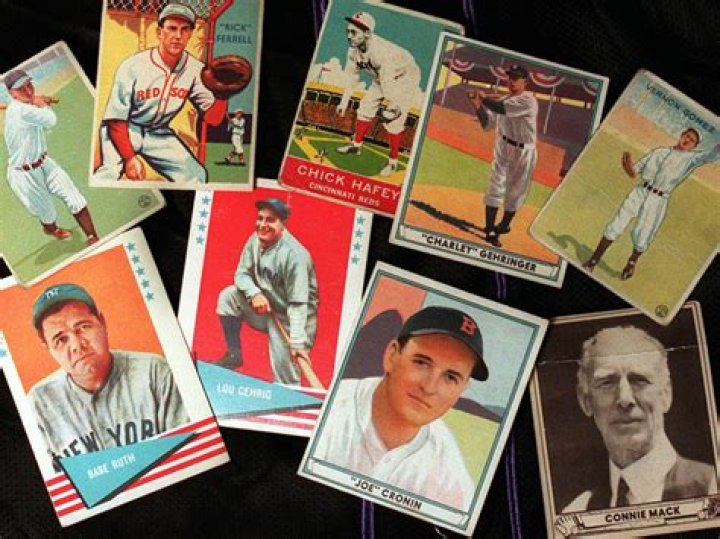
It’s a popular question. “Where can I sell my baseball cards?” Whether you need cash or are just tired of the space they take up, we hope to answer that for you through this page.
The first question anyone trying to sell baseball and other sports cards has to answer is “what do you have?” It’s the most important question of all and it may help decide the best way to liquidate your sports card collection—or if it’s even a possibility. There are a lot of cards that simply aren’t marketable (especially those printed from the late 1980s through the early 1990s) and you might be better off keeping those as a way to resurrect your youth when the mood strikes!
There is, however, a good market for older (generally pre-1980s) baseball cards and related memorabilia. What your cards may be worth (if anything) depends on several factors including supply/demand and condition.
So what are the options for finding a buyer for your cards? Hopefully this information will help you determine the best place to sell your baseball cards (and other sports cards and memorabilia).
Card shops are still out there, but there aren’t nearly as many as there once were. Local sports card dealers might be interested in buying your collection but only if they know they can turn it around for a profit quickly. Not every card or set is in demand and some aren’t in demand at all. Feel free to reach out to them or attend a card show (you may have to travel a bit but you can find card show listings here).
Sell Your Vintage Sports Cards for Cash
However, selling your vintage baseball, football, basketball or hockey cards through those who specialize in buying is one way to go and there are several options to do that online.
You can reach our partners at BaseballCardBuyer.com Inc., through the form directly below. Please fill out the form completely and describe what you have and someone will respond.
IMPORTANT: Generally, they are interested in purchasing only quality vintage cards (pre-1980s) although high value modern era cards will be considered. Please describe what you have as thoroughly as you can.
If you’re ambitious, you can try listing on eBay’s selling platform. Be sure to describe your cards in detail and show good quality photos.
If you have vintage cards that truly look like they just came out of the pack (NO corner wear, stains and well-centered), you may consider having your best cards graded. It’s also wise to grade iconic cards in slightly lesser grades such as Mickey Mantle, Willie Mays, Hank Aaron and other Hall of Famers from the 1960s on back.
 Compare Your Cards
Sports card buyers are a savvy bunch. They will use online price guide services and completed sales on eBay to see what cards have sold for and you should do the same. Compare the quality of your vintage cards to others that have sold in the past few months (look for the ‘sold’ search option on the left side of eBay. That way you’ll know generally where the market is. Expect dealers to offer a percentage of that as they will need to make a profit.
Auction House Option
If you are looking to sell complete or near complete sets or pre-1960s stars in quantity from the mid-1960s on back, you can also contact an auction company that specializes in sports memorabilia. Look around the top, bottom and sides of our pages and you’ll see their ads. All are reputable companies. The older, the better and high-grade material is of special interest, especially graded vintage. However, we can’t guarantee they’ll be interested in buying your sports card collection. It doesn’t hurt to ask and their catalogs are great fun to look at.
Your 1980s and 90s Cards Aren’t Likely Worth Much
Maybe you still love sports but collect autographs and other sports memorabilia instead of cards and were hoping to use the proceeds of your old cards on something else. Unfortunately, many baseball and other sports cards from the 1980s and 90s were printed in such high quantity to meet consumer demand that there aren’t very many buyers out there. If the bulk of your collection dates anywhere from the mid-1980s through the early 90s, you may have to simply sell them at a garage sale and take what you can get…even if it’s only a few dollars. Here are some other options that might work for those, too.
Higher end rookie cards of Ken Griffey Jr., Frank Thomas, Derek Jeter, Mike Trout, Michael Jordan and a few other marquee players may have some value—but unless you get them graded by a company like Professional Sports Authenticator (PSA) Beckett (BGS) or Sportscard Guaranty (SGC) and are fortunate enough to score a 9 or 10, it may not be worth it. Again, seeking out other cards that have sold is a good way to get some idea of what they go for.
Other Do-It-Yourself Selling Outlets
You can try COMC, a website that offers you the opportunity to simply put your cards inside penny sleeves, fill out a form and send them in. COMC then does the work of scanning the cards and placing them on their site. Once they tell you via email that your order has been processed, you go in and set prices. You can compare the cards listed by others and undercut or match them to give your selling probability a boost.
There is a fee per card of around 30 cents, so be sure that you have cards that are worth selling (pre-1980s or popular sets from the modern era in all sports).
Facebook sports card buy,sell, trade groups are filled with collectors looking to buy items or sell you theirs. Just search for them and find one to join and ask questions.
Rather keep them and create complete sets? You’d be surprised how cheaply you can find some cards you’re missing on eBay as well.
If you have any further questions, please feel free to contact us.
Our articles may contain affiliate links. When you click one and make a purchase, we receive a commission. The revenue is what helps keep SC Daily afloat!
When you sell baseball cards, it’s not as simple as putting an ad on Craigslist, especially if you want to get top dollar. The same is true when you want to sell football cards, basketball cards or hockey cards. Sports cards are collectables, so you need to find interested buyers.
Selling sports cards often means going to a reputable dealer who can assess the value of your cards. Unless you’re trying to dupe an unsuspecting buyer — something the people at Goldin Auctions never do or approve of — then you need to sell valuable cards to honest collectors. That’s often a dealer who has access to serious collectors.
Know the Value of Your Cards
To sell baseball cards or sell football cards, you need to have a rough idea of your cards’ value. To get an estimate, you should do at least a couple of the options below:
- Buy a magazine (such as Beckett Media Magazine) that lists the current values of most cards
- Submit a query to an online card shop
- Go to a sports cards shop to ask the owner for an estimate
- Never settle for one opinion
If you’re relying on print research, you should realize that the magazine is out-of-date the day after it’s released. Take the listings with a grain of salt. Also, you’ll rarely get the selling price that’s listed for the card. Most prices are for mint condition cards, and card stores — even those online — often pay a lot less than the going rate. If you really want to sell baseball cards, find the best offer and take it.
How to Value Your Cards
Sports cards have varying values, depending on many factors. Find the categories that fit your cards, and you’ll have a better idea of their value. When you sell baseball cards, develop an idea of its price by comparing:
- The player on the card
- The condition of the card
- The year or season of the card
- The card company that made the card
- How scarce the card is
- If there’s exceptional interest in the player
So, for example, a Pete Rose card may be worth more than a Willie Wilson card. A mint condition card may be worth more than a ripped card. A 1967 Carl Yastrzemski card may be worth more than a 1982 Carl Yastrzemski card. A 1951 Bowman card may be worth more than a 1951 Topps.
The Bad News
The newer the card you’re selling, the less likely it will bring a big return. If you sell football cards or baseball cards made after 1980, they likely have very little (if any) value. These cards were produced in such massive quantities that their value has plummeted. This mass production was good for the card companies in the short run, and it led directly to the introduction of the special inserts — rare cards placed in mass-produced packs to generate interest and value.
So unless you were lucky enough to open a pack that contained a hand-signed rookie insert card for a player who went on to accomplish great things, then your cards have value only to you. Of the 30 most valuable baseball cards in the world, 29 were produced in 1970 or earlier. Most of you probably started your card collection after that. Whether you sell baseball cards, sell football cards or sell other sports cards, the value is set by objective criteria, not nostalgia. Unfortunately.
A price guide for cards
I’ll show you how to look up your baseball card values using Mavin. Get real market prices… see what your cards ACTUALLY sell for.
We’re going to be using Mavin.io to look up baseball card values. It shows you what the card sold for. It can also show you what it’s currently selling for… but the true value is what someone paid for it. Grab your card and enter these details:
- Enter the year. Look at the back for the copyright date, or the last year of stats.
- Enter the brand. For example: Topps, Upper Deck, Bowman, etc.
- Enter the player’s name.
- Enter the card number. Found on the back of the card.
Looking up a Baseball Card’s Value
The search results will show cards that have recently sold (hopefully just like yours). The “worth” is the average of the results on the page, including shipping. I like using the “sold” results to get a true estimate of the baseball card’s value… but you can also check out the “selling” link to see what people are listing the card for.
If you didn’t get an accurate price estimate, try refining your search by entering more card details, or pick a few comparable items by using the checkboxes to pick your “comps”. This gives you a much more accurate estimate of what your baseball card’s value.
What to do Next
Once you’ve gone through and searched for the value of your baseball cards using our price guide, you have several different options:
If they’re valuable: You can either hold onto the cards, perhaps get them graded if not already, and see if they appreciate in value over time. Alternatively, you sell it to a local card shop without getting ripped off since you know it’s worth. Lastly, you can sell it yourself on eBay to get a competitive price. Read our guide to selling on eBay.
If not: A card doesn’t have to be worth money to be considered valuable. Card collecting has been a beloved hobby that has been passed through generations. Each card has sentimental value to someone: where they found it, how they traded for it, who gave it to them. If your cards aren’t worth money, they could be worth some memories to a relative or a stranger. Put them on Craigslist, take them to a card shop, donate them, or hold onto them to give to the next generation.
2 thoughts on “Baseball Card Values – Free Price Guide”
I am going to be getting rid of my baseball card collection. The cards that I have are:
1952 Topps
1953 Topps
1952 Bowman
1953 Bowman Color
1955 Bowman
1955 Topps (complete and mint)
1956 Topps
Is this collection, or part of it, of interest to you? Thanks.
Hey Stuart – I’m jealous of your vintage Topps and Bowman baseball cards… there are some awesome cards from those years. You can’t sell cards on Cardmavin… but you can on eBay! Here’s a good article that tells you how to sell your baseball cards. Good luck!
Leave a Reply Cancel reply
Made in
Ann Arbor
It’s one of the hardest things to judge if you’re trying to flip collectible cards. When’s the perfect time to buy or sell, and is there any way to increase the potential for profit.
Best Time to Buy and Sell Sports Cards: The Definitive Guide
‘Buying low and selling high’ is a simplistic way of seeing things, but it is the key to maximizing revenue.
It’s worth remembering that cards are a great investment for a number of different reasons. They’re uniquely portable, and prices can change rapidly depending on how the season is going.
Just make sure you’re not the first to sell a rare card in case you price it too cheaply. Your personal experiences may vary, but we’ve listed the best times to buy and sell various collectible cards, as well as why it’s ideal to do so.
NFL
NFL cards are always popular, but you’ll see an uptick in prices if you can wait until September to offload your collection. The five-month period between September and January is the best time to sell, matching the progression of the NFL season, and there’s an extra boost during the run-up to Christmas.
Opening day is also notable, with cards being snapped up in anticipation of a good year. It’s best to sell on hype, but you could miss out on future profits if a player exceeds expectations later on in the season.
The summer months of May, June, and July are optimal if you’re aiming to buy, with June the best if you’re looking for rock-bottom prices. Cards will still be cheap during the preseason in August, but they’re only going to go up afterward.
NFL best time to buy: May, June, July
NFL best time to sell: Sep, Oct, Nov, Dec, Jan
MLB
While it’s always a good idea to keep an eye out for expensive editions, all MLB cards will ebb and flow depending on the player/team throughout the season.
Summer is the ideal time to list your MLB cards, as interest peaks with the playoff race. We’d also recommend picking up rookie cards as early as possible, as a successful season will see them multiply in price due to hype.
Spring training will see prospects’ prices rising rapidly as the exhibition games are a good way to check out early form, so you’ll have to take advantage of the short window of opportunity for any cards you have an eye on. It’s best to buy anytime after the New Year, with prices starting to pick up again in April.
MLB best time to buy: Nov, Dec, Jan, Feb, March
MLB best time to sell: Apr, May, June, July, Aug, Sep, Oct
NBA
NBA cards are highly contested for the majority of the year, but there’s a three-month period during autumn when they should be more affordable (July to September).
The NBA season is a long one, and prices will fluctuate between October and June. Some cards will drop off during midseason, and it’s a good time to pick them up if you think a player still has the potential to turn a profit in the latter half.
If you have a mint copy of an incredibly rare card it’s a smart idea to list it up for a price you’d be willing to let it go for. Otherwise, keep an eye on fluctuations, and make sure to buy in during the slowest periods.
Prices begin to rise with the beginning of the preseason schedule in October.
NBA best time to buy: July, Aug, Sep
NBA best time to sell: Oct, Nov, Dec, Jan, Feb, March, April, May, June
NHL
As with the NBA, NHL cards are sought after for most of the year. They’re mainly wanted by other investors, as they’ve always been seen as a good commodity to flip.
Thankfully, there’s a lull during the same trio of months in Autumn (July to September), so it could be worth checking out player prices for both sports if you’re determined to make a good profit on multiple cards or players.
Hockey cards are always popular, and they tend to sell easily. As with the others, a playoff place will see prices skyrocket, and some positions tend to be worth more than others.
Upper Deck cards are some of the most unique collectibles, as the company has held exclusive NHL trading card rights for the majority of the last decade.
They’ve recently moved into e-Packs, which allow people to buy, open and store cards before they’re sent out physically by the company. It’s a nice touch, but it’s easier to make money by flipping cards instead of ripping packs.
NHL best time to buy: July, Aug, Sep
NHL best time to sell: Oct, Nov, Dec, Jan, Feb, March, April, May, June
Conclusion
Any part-time collector knows how to acquire new cards, but there are things you can do to add extra value before selling them on. Grading your best cards is a good way to bump up their price, and it’s worth listing them up if a website like eBay has an ongoing promotion.
Think of the time and day that your potential auction will end, and make sure to plan accordingly. Sunday night at 10 pm EST tends to be favored if you’re looking to snag a large number of American buyers on an auction site, or you could sell just after a major game if a player had a notable performance.
It’s also worth thinking about the timing of tax rebates or holidays, as cards make ideal gifts for any fan. Supply will outweigh the demand for the most desirable variations, but fewer alternatives on the market will make it easier to sell.
There’s always a good time to buy or sell any sports cards, and it usually depends on factors like player form and whether the season is still running. If you can, wait until interest is at its lowest before you commit, and sell on hype when possible.
Login
Baseball blog
03/25/2020 06:47AM
Are you a fan of baseball? If your answer is yes, then it means that you have some of the baseball cards that you would have collected. Have you ever known that the baseball cards that you have would earn you some cash? If no, then you need to know the right way that you can sell those baseball cards to make yourself some extra dollars. For you to understand how you can sell these cards, you need to have a guide that will be beneficial to you so that you can know the right way that you will sell the cards. The article below provides some of the steps.
To begin with, you need to identify the type of sports cards that you have in your collection. Different cards always have different price tags attached to them. this means that for you to know the value of your cards, you need to have the whole idea about the types of cards that you have in your collection. To know the type of card, you need to look at the features of the players that are stated in the card. With this, you will be able to know the type of cards that you have. Read more on All Things Baseball.
The second thing that you have to do is to check the era in which the card was viable. When considering the cards, not all cards will be valuable. This means that you have to be very keen on looking the year in which the card was not only viable, but valuable. This will help you know whether the card is valuable or not. The vintage cards are the oldest in the cards collection. In case you have some of these in your collection, then you are at a high chance of getting a good amount of money.
The number of stars in your cards also are some of the things that you have to consider when you are choosing the right cards that will be valuable. The value of the cards is always proportional to the number of stars that it has. In case you have a set of cards that has three superstars, they are more valuable than any bunch of cards that have one star. Therefore, when selecting the cards to sell, make sure you consider the number of stars that are in the cards that you have. This also reflects when you are collecting the cards. Be careful to collect these cards that have more stars.
Finally, the condition of your cards is another key thing that you have to consider. In case you are setting aside the cards for sale, always ensure that they are in the best condition. When you are collecting the cards, ensure that you have the cards that are in the best condition. This will help you in having a bunch that is valuable in case you get someone to sell to. In conclusion, in case you have a plan of selling your baseball cards, the above guide will help you in knowing the best cards to sell. Learn more on All Things Baseball.
Tired of grandpa’s baseball card collection rotting away in your attic? Well, unlike his pop bottle collection, baseball cards could yield a decent amount of income for you, if you know how to sell them. There are different outlets available for selling an individual baseball card or card collection. Know how to sell the fruits of your hobby and avoid getting ripped off.
Step 1: Learn collector jargon
Learn baseball card collector jargon. A “set” is a consecutively numbered series of cards. A “jersey card” includes a swatch from a players uniform.
While an “insert” is part of a card set, its appearance is different from the rest of the set.
Step 2: Learn card values jargon
Learn terms used for card values. “Book values” are set on baseball card price guide values. “Sell value” is the most recent sale price paid for a card or collection.
Step 3: Learn card condition terms
Learn the descriptors used in grading card conditions. Terms include “mint,” “near-mint,” “excellent,” “very good,” “fair,” and “poor.”
Step 4: Get your collection graded
Get your collection professionally graded. You can find grading services through sports card collector publications and online groups.
Step 5: Visit sports memorabilia shows
Go to card collector shows to get an overview of current baseball card prices. You can find information about schedules for shows in your area by searching online.
Step 6: Visit a major card company website
Visit a major card company website for a list of authorized baseball card dealers. Get a price quote at a dealer’s shop.
Step 7: Sell your collection at an online auction
Sell through an online auction like eBay, especially if you feel that you know your collection’s value. The internet can help you reach collectibles buyers from around the world. With some effort, your collection is sure to find a good home and bring you some cash.
As controversial Detroit Tigers manager Billy Martin posed for a 1972 baseball card, he discreetly “flipped the bird.”
Want to master Microsoft Excel and take your work-from-home job prospects to the next level? Jump-start your career with our Premium A-to-Z Microsoft Excel Training Bundle from the new Gadget Hacks Shop and get lifetime access to more than 40 hours of Basic to Advanced instruction on functions, formula, tools, and more.
Large Collections
Kruk Cards specializes in buying large accumulations and complete inventories. No collection is too big for us to process.
We Buy Everything
We will buy everything from singles to complete sets to cases to graded cards to commons. From the late 1800’s – 2008 product we can use it all!
Cases and Pallets
Please call with any other cases you have for sale. We will make you an offer on the entire lot and can provide a truck to pick up the product.
We Will Travel For Larger Purchases
We will travel out of state if necessary. Every buy is different and there’s nothing stopping us from giving you the right price.
If you are in the Oakland County area please call to set up an appointment to sell your items.
Words From The Owner
We would need to see a list of the highlights of your collection. Spend about 1-2 hours preparing a list. After reviewing the list I will have many questions but this will provide me with a good start. If we can come to an agreement on price, I can then advise on shipping methods or I could possibly come to you to pick up the collection if the dollar value warranted so. If you have a list already just forward what you have and that will help get the ball rolling. Thank You!
- Unopened wax boxes and cases
- Complete sets
- Key rookie cards (i.e. Mantle, Unitas, Jeter, Jordan, Gretzky, etc.)
- Key singles and inserts (anything that books above $30)
- Any key autographed and/or memorabilia pieces
- Ballpark number of commons per sport if applicable
You can email it, fax it, or even snail mail the list to us. Please give us up to two weeks to process your list as we do get a lot of requests.
Welcome to your new home on WordPress.com
Vermillion Enterprises is located in Spring Hill Fl buys hundreds of vintage baseball card, and other various sports card, collections each year. Every week we are contacted by d people who ask us, How do I sell my baseball cards? Brian will be glad to help you part the fog and better understand your options when addressing the daunting task of how to sell baseball cards.
A few Quick Facts on Where andHow to Sell Baseball Cards:
- We buy hundreds of vintage baseball card collections each year. Webuys and sells more baseball cards than anyone else in Spring hill Fl. The reason is very simple we pay more.
- Most people who are trying to sell their baseball cards are shocked to learn that most cards issued after 1980 have no real resale value.
You can count on Vermillion Enterprises to offer you our best price upfront when we bid on your sports card collection. We will do everything that we can to eliminate the hassles, confusion and stress of selling a baseball card collection. We make our top offer from the start, so that everyone knows they are getting our best price.
We are only buying vintage Baseball cards from 1975 and older.
We can NOT purchase loose cards made after 1975, unless they are in complete sets.
Baseball Cards that Deans Cards can buy:
- Pre-1976 Sports Cards & Non-Sport Cards
- Pre-1986 Complete Sets
- Pre-1976 Graded Cards (PSA, Beckett, SGC)
The reason that we ask people to fill out the form is to get an idea of what cards they have and try to verify that the collection has enough value to send. The last thing that we want to do is to waste your time and postage! Unfortunately most cards issued after 1980 do not have enough value to send.There were just way too many made.
We buy hundreds of collections from Spring Hill, Aripeka, Brooksville, Hudson, New Port Richey, Port Richey, Land OLakes, Elfers, Homosassa, Holiday, Zephyr hills, San Antonio Saint Leo, Istachatta, Floral City each year.
The Four Eras of Sport Cards:
Baseball cards have different values, depending on who is on the card, the cards condition and when the card was issued. Here is some useful information on.
Sports Cards and Memorabilia
If you have any of the following baseball cards hiding in the closet, or tucked away in the attic, you can sell them for top dollar for your cards. Here are a few examples what we are looking to buy:
- 1952 Topps Baseball Cd High Numbers (311-407)
- Pre-War Baseball Cards especiallyT-CardsorR-Cards
- AnyMickey Mantle, Babe Ruth, Lou Gehrig, Honus Wagner or Ty Cobb Baseball Cards.
- Complete Baseball Sets from 1909-1979.
We look forward to receiving your inquiry and greatly appreciate the opportunity to bid on your vintageSports Cards and Memorabilia!
One of the greatest hobbies found with many people is collecting sports cards such as baseball cards. Those who know more about baseball card collection can reap out large profits. When you buy and sell baseball cards, you can earn some cash. The sports cards that are also being sold today should be known by those who would like to earn such profits. E-commerce based websites like eBay should be used by those would like to make a profit after they have sold their baseball cards. These platforms will help you generate profit quickly. If the business of selling baseball cards become successful, you can decide to make it a full time business.
You will notice that a lot of people are selling their baseball cards on eBay if you research about the market of such cards. If you use eBay, you will earn high profits because even the investment there are less. List goods on eBay is not know by everyone and those who know it can start selling their baseball cards as soon as possible. You will have to follow some steps if you would like to sell your baseball cards. If you have baseball cards that you would like to sell, you should take high quality pictures of them because that’s the first step you should start with. Read more and understand further all about buying baseball card sin West Palm Beach.
After you have taken those pictures, you should scan them on your computer. Baseball cards for sale should be taken pictures so that they may look appealing to potential buyers. It is essential to take photos of baseball cards you would like to sell on eBay because customers may not buy them if they do not have pictures. Chances for selling the baseball cards that you would like to sell will be many if they look more appealing. You will go to the third step after you have taken pictures, scanned and listed the baseball cards you would like to sell.
Researching on the cards so that you may know whether they have sold in the past weeks or not is the third step. You will see the results on the eBay when you research about them. You should type the players name and the year the card belongs to on eBay search bar. You wait for a few seconds to see the results of the card after that. The tiny option icon should be typed by those who would like to know more about the card. If you do not know where the icon is placed, you should check it on the right corner of the eBay. That option icon help you see the demand of a specific card if it is clicked. You can keep the price of the card also according to the demand. C lick to learn more here!
Чему вы научитесь
Требования
Описание
Hi, my name is Matt Bernstein, successful Udemy instructor with over 175,000+ students across 198 countries.
From an eBay selling standpoint, during college, I was profiting $24,000 a year selling on eBay, drop shipping baseball cards..
Now, you’re thinking, “that’s great for you, how am I going to succeed?”
Learn from someone who is doing what they are teaching!
This is not theory, everything you will learn in this course I have done and continue to do so you can be assured it works.
See how I make money selling on eBay and then duplicate the same steps to create a successful eBay side business.
Based on my successes, I let you look over my shoulder as I explore my own eBay account, showing you precisely what I do.
Replicate my success and learn how to sell on eBay, gain access to retail products at wholesale prices and spend no money upfront.
It doesn’t cost anything to open wholesale accounts, to work with legitimate wholesalers. You don’t need to buy any inventory upfront.
You’ll learn how to gain access to any product at wholesale prices. You’ll be able to list wholesalers inventory, for free.
Only after you make a sale the wholesaler will ship your order to your customer. You never need to keep an inventory and you only buy the customers order after you make a sale.
You make a profit.
At the end of the course you’ll learn how to…
Product source baseball card cases and see exactly how to profit passive income every month.
Learn the basics of selling on eBay as well as leveraging it to increase profits by using specific selling practices.
Leverage an eCommerce store in order to increase sales (beginner lectures).
Avoid mistakes to save a few years of work and thousands of dollars (using case studies).
– prices from actual card sales
The PriceGuide.Cards trading card database has prices achieved from actual card sales, not estimates. The aim is to provide factual information from the marketplace to help collectors.
New feature: manage your own Portfolio. Read More!
Organise your card collection FREE with our online Portfolio tool!
Features:
1993 – Upper Deck – SP – Base – Standard – Derek Jeter
2011 – Topps – Update – Base – Standard – Mike Trout
1968 – Topps – Topps Baseball – Base – Standard – Nolan Ryan
1966 – Topps – Topps Baseball – Base – Standard – Mickey Mantle
2014 – Topps – Bowman Baseball – Prospects – Standard – Kris Bryant
Featured Cards
1993 – Upper Deck – SP – Base – Standard – Derek Jeter
2011 – Topps – Update – Base – Standard – Mike Trout
1968 – Topps – Topps Baseball – Base – Standard – Nolan Ryan
1966 – Topps – Topps Baseball – Base – Standard – Mickey Mantle
2014 – Topps – Bowman Baseball – Prospects – Standard – Kris Bryant
How to Look Up How Much a Basketball Card Is Worth
Collecting baseball cards is more than just a hobby for some people. For serious collectors, buying and selling baseball cards is similar to trading shares on the stock market. Before you attempt to sell any portion of a baseball card collection to a dealer or other collector, you should first learn the worth of the cards in your collection. The method you choose to find the worth of your cards can vary based upon the estimated worth of those cards.
Look up the prices of the baseball cards inside a Beckett pricing guide. Beckett guides list baseball card prices by the year the card is released, manufacturer of the card and card series (for example, “2007 rookie cards”) if applicable. The most up-to-date Beckett guides are available wherever magazines are sold, at a local sports collectibles store or a library.
Find the worth of baseball cards utilizing Tuff Stuff’s Sports Collectors Monthly magazine. Tuff Stuff is a magazine pricing guide similar to Beckett. Baseball card prices are organized inside a Tuff Stuff guide the same way as in a Beckett pricing guide. Utilizing both Beckett and Tuff Stuff allows you to double-check prices of baseball cards in your collection.
Sign up for a membership on the Card Pricer website. Memberships allow you to look for prices for baseball cards anytime you want using the Internet. Card Pricer members can also use their memberships to locate certified baseball card dealers in their areas–a very useful tool if you’re looking to sell your baseball card collection.
Locate local baseball card dealers. These individuals inspect the quality of baseball cards, looking for any imperfections that may impact the worth of your baseball cards. Many baseball card dealers perform this service at no fee. Find local card dealers utilizing the Card Shop Finder website. Use the Sports Card Fun website to locate and contact baseball card and sports memorabilia. Visit at least two different dealers when pricing baseball cards in order to obtain an accurate price for the cards in question.
Have your rare baseball cards priced using the Professional Sports Authenticator service (this type of service is for rare or potentially expensive cards because of the cost involved). This service grades baseball cards by determining the condition of the cards. PSA then prices the cards. Contact PSA by emailing [email protected] or calling 800-325-1121. Costs for shipping and appraisal vary based upon the amount of cards being appraised.
Things You’ll Need
- Pricing guide
- Baseball card dealer
- Baseball card authenticator
Remember that pricing guides only give you an estimate of the price of baseball cards. The exact worth is determined only after the card has been graded and priced by a certified authenticator.
Vermillion Enterprises is located in Spring Hill Fl buys hundreds of vintage baseball card, and other various sports card, collections each year. Every week we are contacted by d people who ask us, How do I sell my baseball cards? Brian will be glad to help you part the fog and better understand your options when addressing the daunting task of how to sell baseball cards.
A few Quick Facts on Where andHow to Sell Baseball Cards:
- We buy hundreds of vintage baseball card collections each year. Webuys and sells more baseball cards than anyone else in Spring hill Fl. The reason is very simple we pay more.
- Most people who are trying to sell their baseball cards are shocked to learn that most cards issued after 1980 have no real resale value.
You can count on Vermillion Enterprises to offer you our best price upfront when we bid on your sports card collection. We will do everything that we can to eliminate the hassles, confusion and stress of selling a baseball card collection. We make our top offer from the start, so that everyone knows they are getting our best price.
We are only buying vintage Baseball cards from 1975 and older.
We can NOT purchase loose cards made after 1975, unless they are in complete sets.
Baseball Cards that Deans Cards can buy:
- Pre-1976 Sports Cards & Non-Sport Cards
- Pre-1986 Complete Sets
- Pre-1976 Graded Cards (PSA, Beckett, SGC)
The reason that we ask people to fill out the form is to get an idea of what cards they have and try to verify that the collection has enough value to send. The last thing that we want to do is to waste your time and postage! Unfortunately most cards issued after 1980 do not have enough value to send.There were just way too many made.
We buy hundreds of collections from Spring Hill, Aripeka, Brooksville, Hudson, New Port Richey, Port Richey, Land OLakes, Elfers, Homosassa, Holiday, Zephyr hills, San Antonio Saint Leo, Istachatta, Floral City each year.
The Four Eras of Sport Cards:
Baseball cards have different values, depending on who is on the card, the cards condition and when the card was issued. Here is some useful information on.
Sports Cards and Memorabilia
If you have any of the following baseball cards hiding in the closet, or tucked away in the attic, you can sell them for top dollar for your cards. Here are a few examples what we are looking to buy:
- 1952 Topps Baseball Cd High Numbers (311-407)
- Pre-War Baseball Cards especiallyT-CardsorR-Cards
- AnyMickey Mantle, Babe Ruth, Lou Gehrig, Honus Wagner or Ty Cobb Baseball Cards.
- Complete Baseball Sets from 1909-1979.
We look forward to receiving your inquiry and greatly appreciate the opportunity to bid on your vintageSports Cards and Memorabilia!
I work for a non-profit and we had someone donate all of their husbands (who had passed away) baseball cards, we have 15 boxes of 5 rows a box (each row labeled tops 70, 71, 72, etc) and 6 books of cards with a few hundred cards each. I use to collect cards when i was a kid but i don’t anymore and have no clue where to go from here, and i don’t want to damage the cards by taking them out of the boxes until i get gloves and a safe place to store them.
So I guess what is the best way to sell this many cards?
7 Answers
Finally, somebody that has some cards to sell that actually have some value.
Cards from the late 80’s to mid 90’s don’t have much value so if you have any from those years then don’t expect much.
The 70’s cards may have value depending on condition and player. Up until 1973 Topps issued their cards in series and the high number series will bring a premium. Some high value cards in the high number series include 1970 Pete Rose, Nolan Ryan and Johnny Bench, 1971 Nolan Ryan (semi high) and Baylor/Baker rookie, 1972 Steve Garvey, and 1973 Mike Schmidt rookie. Also the 1975 set had rookies of Robin Yount and George Brett.
Unless your cards are mint and look like they came right out of a pack there’s no need to wear gloves to handle them. They best way to sell them is on ebay. You should purchase a price guide book and pull out the stars and high numbers and sell those separately. The rest maybe break down by year and by team and sell them that way.
Utter Chaos and Chipmaker have given you good and accurate information based on the limited information you have provided. I believe you are telling us that the provider of this collection did a good job in organizing these cards by card company and year of release. However, it is what you are not telling us that will determine the value of your cards. It sounds like you do not have complete sets but rather random cards that are organized by year. A complete 1970 Topps set (720 cards) in mint condition has a value of $1,000 to $2,000 and the 1971 Topps set (752 cards) is valued at $1,250 to $2,500 in mint condition. After 1971 only one set carries a value over $600, a few are around $250, and most are far less. If you do not have complete sets you are going to have to try to market these cards individually or in small lots which can be very time consuming and only the higher valued cards would be worth the effort.
The 1970 Topps set has a $100 Thurman Munson rookie card, a $200 Nolan Ryan card, and several others valued at more than $50. If I were you I would go and purchase a current price guide and focus only on those cards of value, say $25 or more, and auction them on Ebay. I would then try to sell all of the other cards in bulk to a collector or dealer and take the money and run. In today’s market even the 1970’s cards are not that easy to sell, other than Ebay. I hope you have all of the top cards from these sets and that you will be able to sell them and generate some income for your non-profit group. Good luck.
First you need to make sure you know what they are worth. The two main price guides are Beckett and Tuff Stuff. If it’s only baseball I suggest a Beckett price guide. It’s only a few bucks. If you sell to a shop be prepared to get half of what it’s worth (they have to make a profit when they sell it themselves, of course). You can always try eBay too. I have actually had a little luck on Amazon, but the demand for cards on there isnt’ great. If you can find an honest shop ower, he would let you look at a Beckett guide before selling. An updated guide comes out monthly.
Adding to Utter’s worthy response — the 1971 Topps set had black borders, which are notorious for chipping, leaving white specks along the card edges. This may seem a minor thing to a novice, but for the sake of assigning the cards are condition grade, it is quite important and will definitely impact the final selling prices you may realize. Handle those cards with care. All cards are condition sensitive; 1971 Topps are condition hypersensitive.
Sounds like you may have come up with quite a collection. You may want to let the donor know how sizable her contribution was, for tax purposes, when you can hang a dollar figure on it.
Search
Homeruncards!
How to Sell Your Baseball Cards
First, if you’re trying to find out the value of your cards, you may want to visit your local sports card shop to buy a price guide. Look in your yellow pages under “Sports Cards”, or “Sports Memorabilia”, or “Collectibles”, then visit the dealer in person. I recommend not asking them over the phone how much your cards are worth. Dealers receive tons of these calls already. If you show the dealer your collection in person they can give you an idea on the value of your cards and may even be willing to make an offer.
Second, once you have an idea of what your cards are worth, you may want to consider breaking your collection down. Selling the valuable cards individually will likely get you more money than selling your collection as a whole. Selling them individually takes more work, but usually means more money. It’s up to you to decide what’s more important, time or money.
Okay, you want to sell them. Two common options are:
1) Taking them to a local sports card dealer and see what the dealer is willing pay for them. If you get 50% of book value for your cards, consider yourself extremely lucky. Getting 5% to 25% of book value is more realistic. If your cards are old, and by old I mean from 1900 to 1960, you have a better chance of getting close to book value. Most cards from the late 1980’s and early 1990’s are extremely plentiful, and hardly any dealers need cards from that era. If they’re actually interested in buying cards from that era, expect to get anywhere from 5% to 25% book value for them.
2) Sell your cards on eBay. Again, if you sell the valuable cards individually, you’ll likely make more money than if you just sell your whole collection. Be sure to show photos of the cards, and describe the condition of the card(s) as best as you can. If you have a high feedback rating on eBay, that will help. If you don’t have a high feedback rating, or you’re not familiar with eBay, consider asking a friend who is familiar with selling on eBay to help you.
If you decide to sell your collection as a whole on eBay, give a good description of your collection, such as the year and brand of your cards, and the condition the cards are in. The more pictures, the better.
If you’d like to sell your cards on ebay but don’t know how or don’t want to do the work I may be willing to sell them for you. I typically split the final selling price. For example, if your cards sell for $500, you get $250 and I get $250. I am a very reputable seller on ebay with outstanding feedback, with 10+ years of experience having completed over 25,000 transactions. You can view my ebay feedback rating here. If you’re interested or have questions call me (Chuck) at 423-531-8909 or email me at [email protected] .
*** Please note, I’m currently not buying cards from the 80’s or 90’s. I can only help you sell cards that are worth $50 or more ***
If you’re trying to figure out the value of your baseball cards, visit this page:
Q. I have collected nearly 8,000 baseball cards and now want to sell them. How do I find buyers?
A. You have a few options for locating buyers for your collection of baseball cards. You can auction them yourself on eBay, sell them to a local card shop or dealer, or go to an auction house and have it sell the cards as one lot. But before you start selling, it’s best to take stock of what you own to see what the cards are worth. That may determine the best place to sell them.
Generally, cards fall into three categories based on when they were printed: Prewar (generally through the end of World War II), Vintage (through the early 1970s) and Modern (mid-1970s and later). Prewar cards tend to fetch a higher price than those printed in the 1980s or 1990s, when cards were often mass-produced.
The condition of the card is also a major factor in the price it can command. Frayed or damaged cards will fetch less than those in mint or good shape. There are three big players that grade the condition of baseball cards: Professional Sports Authenticator (PSA), SGC and Beckett Grading Services. Each service grades cards on a scale of 1 to 10, with 10 being pristine condition.
Not every card is worth grading, which can cost $10 to $15 for a card that might be worth only $25, says Michael Osacky, president of Baseball in the Attic, an educational website for sports memorabilia. So do some research first.
When it’s time to find a buyer, note that eBay takes a lot of work if you’ve never sold on the site before, Osacky says. You must photograph each card, write a description, set up a PayPal account to receive payment, and more. Plus eBay charges 10% of the total sale amount for listings.
You can, of course, shop your cards around to local card dealers to see what you can get. But if you do have a rare gem — say, a Mickey Mantle rookie card in flawless condition — you’re likely best off selling it through an auction house, which can attract more potential buyers with deep pockets to bid up the price. An auction house will take up to 15% commission from the seller.
(Rivan V. Stinson is a reporter at Kiplinger’s Personal Finance magazine. Send your questions and comments to [email protected] And for more on this and similar money topics, visit Kiplinger.com.)
(c) 2019 Kiplinger’s Personal Finance; Distributed by Tribune Content Agency, LLC.
- baseballcardadvisorBaseball Card Collectors, Buy Baseball Cards, How to sell baseball cards Oct, 13, 2015 Comments Off on Collecting the 1959 Topps Baseball Cards Set
The “Circle” Cards The 1959 Topps Baseball Cards Set is a favorite of many collectors as it has vibrant colors and is an affordable option for 1950s sets. The set has a challenge with the high number cards. Much like the 1961 and 1962 Topps sets; the final series came out late in the year […]
- baseballcardadvisorBaseball Card Collection, Baseball Card Collectors, Baseball Card Price Guide, How to sell baseball cards, Sell Baseball Cards, Selling Baseball Cards Online Sep, 10, 2015 Comments Off on Baseball Cards Graded? Should I consider grading my cards?
Should I Get My Baseball Cards Graded? This is a conversation I have everyday with clients, Should I get my Baseball Cards Graded? Grading of sports cards is very common in today’s marketplace, however, can be very expensive. The answer is…..yes and no. Look at it this way; if you have a card that is […]
- baseballcardadvisorBaseball Card Shop or Store, Baseball Cards for Sale, How to sell baseball cards, Sell Baseball Cards, Selling Baseball Cards Online Aug, 16, 2015 Comments Off on Where Can I Sell My Baseball Cards
Baseball Card Advisors helps many clients sell their baseball cards, sports memorabilia, sports cards and/or tobacco cards. Check out our testimonial section to hear directly from our clients. Here are some options to consider when looking to sell your baseball cards: Collector- Actual collectors are hard to track down. This is where Baseball Card Advisors can help. We […]
- baseballcardadvisorBaseball Card Shop or Store, Baseball Cards for Sale, How to sell baseball cards, Selling Baseball Cards Online, Top Selling Baseball Cards Aug, 16, 2015 Comments Off on Where Do I Sell Baseball Cards
Baseball Card Advisors receives at least a email once a week of where do I sell baseball cards, no one will buy them. If you have cards newer than 1972, for the most part, there is limited value. We have all heard the stories of mom throwing out baseball cards. Unfortunately cards from this era […]
The first step to selling baseball cards is finding out the value of what you own.
Question: I have collected nearly 8,000 baseball cards and now want to sell them. How do I find buyers?
Answer: You have a few options for locating buyers for your collection of baseball cards. You can auction them yourself on eBay, sell them to a local card shop or dealer, or go to an auction house and have it sell the cards as one big lot. But before you start selling, it’s best to take stock of what you have to see which cards are more valuable than others.
As a rule of thumb, cards are separated into three categories based on the date they were printed: Pre-war, Vintage and Modern era. Pre-war cards, typically printed before the 1950s, tend to fetch a higher premium than cards printed in the 1980s or 1990s. Cards printed in later years are less valuable because they’re more likely to be mass-produced.
The condition of the card is also a major factor in the price it can command. Frayed or damaged cards will fetch less than those in mint or good shape. There are three big players that grade the condition of baseball cards: Professional Sports Authenticator (PSA), SGC Card and Beckett Grading Services. Each service grades cards on a scale of 1 to 10, with 10 being pristine condition.
For example, a 1952 Topps Mickey Mantle rookie card graded as in mint condition by PSA sold last year for $2.88 million. And a 1955 Topps Roberto Clemente rookie card in mint condition fetched $264,000 last year.
Recently, vintage cards from any sport have garnered world-record prices, with high-grade rookie Hall of Famer cards leading the pack, according to Michael Osacky, president of Baseball in the Attic, an educational website for sports memorabilia. “Cards are now being seen as an asset class, and there’s new money coming to market,” he says.
Osacky adds that not every card is worth grading, so it’s best to do some digging or talk to an expert. For example, a grading could cost $10 to $15 for a card that may be worth only $25.
For a collection as large as yours, Osacky says that eBay takes a lot of work if you’ve never sold on the site before. You must photograph each card, write a description, set up a PayPal account to receive payment, and more. Plus eBay charges 10% of the total sale amount for listings. (An auction house will take a percentage of the sale, too, but using one may be less of a hassle.)
You can, of course, shop your cards around to local card dealers to see what you can get. But if you do have a rare gem—say, a Mickey Mantle rookie card in flawless condition—you’re likely best off selling it through an auction house, which can attract more potential buyers with deep pockets to bid up the price.
- Sell
- Sell
- Collectible Icons
- Auctions
- Upcoming Auctions
- 2020 Auction Calendar
- 2021 Auction Calendar
- About
- Blog
- Go to bidding site
SELL SPORTS MEMORABILIA, SELL SPORTS CARDS
Achieve Remarkable Results like these at an RR Sports auction:
Babe Ruth 1932 New York Yankees
Signed Player Contract
Sold Price: $295,531
1933 Goudey #106 Napoleon Lajoie
PSA NM-MT 8
Sold Price: $127,904
1955 Brooklyn Dodgers
World Championship Ring
Sold Price: $45,049
Why sell Sports memorabilia, sports cards, autographs and collectibles with us?
Because we have the passionate, elite sports collectors looking for your items! When you sell Sports memorabilia, sports cards, autographs and collectibles with RR Auction, you garner top results.
We are currently seeking consignments for our next Sports auction. Would you like to sell Sports cards – vintage cards, tobacco cards, cabinet cards, graded cards? Do you want to sell baseball memorabilia – autographs, photographs, equipment or uniforms? All Sports are welcome – football memorabilia, basketball memorabilia, boxing memorabilia… championship rings garner great interest . Show us what you have!
RR is especially interested in consigning lifetime and fresh-to-market collections of sports cards.
Seeking consignments of early legendary names like Honus Wagner, Ty Cobb, Walter Johnson and Babe Ruth, mid-century marvels like Mantle, DiMaggio, Williams, Clemente and Mays, and more. RR offers:
- Generous, immediate cash advances
- Expectation-shattering, record-setting sales
- Significant press coverage
- Cross-category experience for more than 40 years
Other Remarkable Results at Sports auctions have included:
Ready to sell Sports memorabilia, sports cards, autographs, collectibles? We’ve proven our Remarkable Results and sterling customer service in the hobby; now let us prove it to you. Sell sports memorabilia with RR Auction – contact us.
Collecting sports cards and memorabilia has evolved dramatically over the years. Most notable are the various new methods of buying and selling collectibles. Card shops and shows are still tried-and-true methods to add or thin your collection. But technology has opened so many avenues. And it’s not just selling through the mail. New tools exist to help you buy and sell sports cards and memorabilia locally.
Lately, there has been an emergence of apps and websites that connect you to people in your area that are trying to move unwanted items that may otherwise not see the light of day. Basically, it’s as if you’re attending a yard sale from the comfort of your own home.
Tools for Buying and Selling Sports Cards and Memorabilia Locally
Apps such as Letgo and OfferUp, along with Facebook’s Marketplace feature, have seen a steady rise in popularity, each with millions of active users.
The volume of traffic created within this new virtual market makes it important to understand its features and functions. Whether you’re buying or selling, it’s far easier to accomplish your goals when you know the best methods for using the apps.
Selling through each of these outlets is relatively simple: Just snap a photo, give it a title, and add a price! Descriptions and additional information are optional, but often help make a sale quicker. Using keywords in your title or description will encourage a quicker sale, thanks to the search feature. Once sold you can either meet in person to exchange your item or, on OfferUp and Facebook’s Marketplace, you can ship nationwide. Buyers are free to message you concerning your item, and make offers if you allow. With each of these options, it’s important to note that there are no selling fees involved. Everything is free to list, and there are no final-value fees to worry about. You are given the option to promote or “boost” your listing if you’d like, but that’s the only way to incur fees.
Ease of Use
One drawback to using Letgo to sell, however, is the over-simplicity of listing. When you go to sell an item, it lets you take or add one photo before prompting you for a listing price. If it recognizes your item, or attempts to, you can add a title and category. If not, it automatically posts with only the price and photo, leaving the listing subpar overall. You must then click the edit button to add more photographs, a title, and a description if you desire. Although this simplicity helps post items at a quicker rate, it takes longer overall to go back in and edit rather than completing it all at once. This also hurts buyers, because it clutters the “recently listed” area, along with rendering the search feature useless on certain listings.
Personally, I have had more success using Facebook Marketplace to sell compared to the other two. With the identical listings on both, I have sold three items thanks to Marketplace and only one via Letgo. Between those sales, I’ve netted a little over $100 within a two week span! I’ve used OfferUp almost exclusively as a deal finder, but plan to expand to that as a selling method as well. Both OfferUp and Facebook Marketplace let you create your listing in its entirety, leading to a more effective listing.
Keywords
When navigating OfferUp, Letgo, and Facebook Marketplace, it can be tough to find the best deals through all the overpriced listings. Unfortunately, there is not a specific category for sports collectibles. Thanks to the aforementioned search feature on each, however, it can be easier to sort through than you would think. Keywords such as “auto”, “autograph”, “signed”, “COA” can help you find plenty of collectables faster than hours of scrolling would. Don’t limit yourself when you search, try any possible word or combination of words that you can think of. Search for “cards” or “football”, “baseballs” or “memorabilia”, you never know what you might find.
Once you’re versed in navigating these outlets, it’s time to dive in on some deals. I’ve made a trade and two decent purchases so far, with a few others in the works as of this moment. I was able to pick up a 2000 Tom Brady Bowman Chrome rookie and a 2005 Aaron Rodgers Upper Deck Debut Ink rookie autograph at a steal of $275, talking the seller down from his listing of $500 between the two. Next, I managed to get a framed piece featuring a CD and cover both signed by The Fray for only $20. Most recently, I was successful in working a fantastic trade for a Mike Trout 2011 Topps Update rookie graded PSA 9, a deal which was heavily in my favor! Plenty of great deals to be found when you know what you’re looking at.
Safety Is Key
Be sure to take proper precautions while using these apps. Just like traditional sales avenues, fakes are out there. Always do your best to research the items you’re looking at and get as much information as possible. Online, there are countless guides and tips to spot fakes for certain items, such as key sports cards and various signatures. If something seems fishy, it might be better to pass on it rather than taking a hit.
Fakes are not the only area to exercise caution.
One of the few drawbacks to buying or selling through these outlets can be the meet-up. There are plenty of great people in the world, so you shouldn’t assume the worst. However, there are a few ways to increase your overall safety.
First off, check their profile to see the reviews others have left for them. All three of these outlets allow buyers and sellers to review each other. So just like you would on eBay, it’s wise to check the feedback others have left.
I suggest finding a public area to meet up, such as a store parking lot. It’s suggested to meet during the day as there is less risk of issues than at night. If you can’t think of a good spot to meet, look into police stations in the area. They encourage individuals to use their parking lots for meet-ups.
Following these steps will help avoid any surprises when you meet in person for items.
Craigslist is yet another option available for finding deals and selling. With the longevity of this app, there are fewer technical issues and a well-established community of users. This will help increase your item’s exposure, as well as opening up more opportunities to find items for your collection.
Finally, Yard Sale Treasure Map is a very useful app for those of you who journey to yard sales. This app creates a map using Craigslist and your current location. This gives you an idea of the sales nearby. It also accesses Google maps, offering easy navigation. This can help extend your bargain hunting throughout the weekend, hopefully leading to a big score.
The last time I was at a yard sale, I opened the app to see if others were close by. It led me to two town-wide yard sales I hadn’t known about. In the process, it helped me find all sorts of deals I would have otherwise missed. If I didn’t have plans later that day, I could have hit another ten local sales without a problem.
With these tools, it may be overwhelming to learn how to navigate the countless listings on each market. However, with a little practice and some luck, you can both make money and find fantastic deals!
Craigslist is a wonderful marketplace, but it must be used with caution. The anonymity, no cost listing, and little administration mean that this classified ad site is prone to scams and fraudulent listings. There are some key things to look out for when buying or selling baseball cards on Craigslist. Most of it is common sense, but bears repeating.
Buying baseball cards on Craigslist may be a real opportunity. Often people cleaning out estates will list cards for sale. There can be some real bargains. There are plenty of crooks, though, that list cards that are dubious. A popular scam involves reproduction or altered cards that have been placed into graded card holders. Many times the paper information “flip” has also been altered to reflect a higher grade. There was a rash of PSA graded Mickey Mantle cards being posted on Craigslist that ended up being clearly fraudulent. Often, a novice will accept a graded card slab as gospel, but these holders can be opened and resealed. Learning how to examine graded cards and holders for potential fraud is crucial. There are many online discussions in baseball card forums about tactics used by fraudsters. Experience in handling the real thing is vital. Again, if something appears too good to be true then it probably is. Avoid sellers that pressure you or give vague answers to your questions about authenticity or origins of the cards for sale. Never buy a card blindly on Craigslist. You are sure to be disappointed most of the time.
Craigslist can be a great place to sell cards, too, but you have to be careful here. Thieves target nice collections. Never meet a potential buyer at your home. Meet in a well lit public place to allow them to examine cards if necessary. Do not talk too much about other cards you may have at home. Be discrete. Crooked buyers have been known to use fake certified checks. Just be sensible and safe in your dealings and don’t divulge too much personal information.
Ebay has gotten to be a difficult place to buy and sell baseball cards so more and more people have turned to Craigslist. Use the site and good luck with your collecting. Just be careful!
One Comment
There is a scammer posting PSA graded cards that check out on the PSA website on Craigslist. He shows pictures of the cards and claims his father passed away and left him the cards. If you run into this scam, contact the authorities and catch this criminal.
Recent Posts
- 1989 Upper Deck Baseball Cards Behind the Scenes With the Bio Writer
- Top 10 Obscene Baseball Cards
- Non-Cardboard Baseball Cards – B18 Blankets, S74 Silks, and L1 Leathers
- How to Spot Counterfeit Baseball Cards – Part II Card Stock
- Sports Memorabilia Appraisal Services
- John Kennedy – Phillies Pioneer
- T210 Tobacco Cards – Minor League Stars are Major League Collectibles
- Is Now a Good Time to Sell Baseball Cards?
Archives
© Copyright Sell Baseball Cards 101 – Resources to Help You Buy and Sell Baseball Cards 2009. All rights reserved.
One thing many collectors struggle with is finding an avenue for selling their unwanted items. It can be hard to find people interested in your product and that will pay you a fair price for it. From personal experience, I can tell you there is little more frustrating than when someone tries to get something for the price of nothing. As collectors, we all know what our set is worth, and the last thing we want to deal with is someone trying to tell us how much they feel like paying for it. In light of this, I have come up with a list of my 3 favorite ways to sell baseball cards.
- Flea Market/ Antique Village- Growing up, I did the majority of my selling at a local flea market and antique village. I would go with my parents who would rent out a booth to sell some of their own items, and I would put the cards I wanted to sell out on the table. In the days leading up to my trip to the flea market, I would conduct diligent research determining the value of my cards and how much I wanted to sell them for. It is important to know what you want for each card and to make sure you don’t settle for a lesser price. For the most part, the customers at antique villages tend to provide a good selling experience. Sure, there will be some negotiation, but they typically respect you as a collector and don’t try to undervalue your collection.
- Auction- Local auctions provide a great avenue for baseball card collectors to sell their valuables. Many auction houses have weekly, bi-weekly, or monthly events. The clientele are typically knowledgeable collectors that are looking for pieces to supplement their assortment. Auctions that have good sized crowds can help you get good value for your items. The reason for this is that the larger the crowd is, the more bidders there are to drive the price up. Additionally, selling your baseball cards this way is beneficial because it’s a hands-off experience for you. The auctioneer does all of the work, and you get to sit back and collect the reward.
- Online- In a market that is shifting online, sellers can adapt by selling their baseball cards on the internet. In the past, some sellers, such as me, have been wary of selling their items this way. You had to deal with buyers that would back out of the deal, complain about the condition of the items, and make the whole experience a nightmare. However, WorthPoint makes it easy for baseball card specialists to sell their items online.
Selling your baseball cards is an important step in maintaining your collection. It helps you eliminate the cards you no longer need and raise some money for future card purchases.
Buy Sell Discuss Appraise
Sell Baseball Cards in NJ
We have the greatest wealth of experience with buying and selling baseball cards. Vintage or modern, singles or collections. We buy autographs and collections as well. When you decide it is time to sell baseball cards in NJ you will definitely want to be in touch with us as we are usually near the TOP in regards to offers.
We can also give accurate appraisals of baseball collections based on all available internet parameters. We can assess whether or not to sell your collection raw or send them away to PSA for grading. As a collectors we have combined years of experience with collections and are up to date on all the current trends. We evaluate factors such as mean sale price, media and population reports when determining how to handle a particular collection because no two are ever the same.
We can beat most offers and are VERY competitive with regards to consignment rates. Whether you want to consign, cash consign or sell baseball cards in NJ we will always be at the top of the pack. We have a genuine passion for the hobby and will not insult with low offers. We can tell you what its worth in retail resale or wholesale and will work with you continuously during the process to ensure every one in any deal made with us is a winner.
If you want to sell baseball cards in NJ make sure you contact us first!
Leave a Reply Cancel reply
CONTACT US!
(PHONE) (848) 260-0404 10am-7pm
Seller Protection. Deliver on time and as described. Get paid.
How to sell.
Ready to get started?
Here’s what you need to know.
Create a listing (or twelve) for free.
Sell (almost) anything. New or used. 150,000+ items added every day. See all brands
List in minutes. Take a few photos. Add a description. Set your price.
No meetups. Printable shipping label emailed to seller.
Listings are free. Flat 10% selling fee charged when sale completes.
First, create
your listing.
Take good photos
Describe the item fully
You can make changes to a listing up until the item sells.
Not using it?
Let’s sell it.
Your item sold.
Now what?
Package the item with care
Ship within 3 business days
Confirm your shipment
Experiencing a delay? Message the buyer. They can cancel if the item isn’t shipped on time.
Selling stuff that’s
bulky or fragile?
Try Pack & Ship at The UPS Store.
Discover Pack & Ship
Item delivered.
What’s next?
First, the buyer confirms
Then, you rate the buyer
You’ve been paid
Listings are free. A flat 10% selling fee is only charged when the sale completes.
Deliver on time and as described. Get paid.
Shipments using Mercari prepaid labels include insurance up to $200 for loss or damage in transit.
No meetups. No hassles.
At Mercari, all items ship. No meetups with strangers in strange places.
Recent reviews from sellers
I love this app. I’ve made over $5,000 on it over the last few years!
App Store Review
Made $500 in 2 weeks!
The app works great and it’s very simple to use.
App Store Review
Mercari is awesome
I love bargain shopping and on Mercari I find more bargains and buys than anywhere else!
App Store Review
“. just four months of posting items on the app, she had an extra $2,400 in her bank account.”
By Leighton Sheldon
Every collector believes their cards are worth more than they really are. We all do it, myself included. When sentimentality is involved we lose our ability to be objective. There has been plenty of psychological study behind this – we value things we own more highly than things we are thinking about owning.
So how can you evaluate your collection more accurately?
The eBay fallacy
Most collectors begin their evaluation by checking the prices on eBay of similar items. eBay can be a great starting point and referencing eBay isn’t wrong if you know what you are looking for and are comparing apples to apples. This means understanding sold prices verses asking prices.
eBay also causes problems when collectors allow excitement to cloud their judgement. Understanding condition and the way it impacts value is probably the most important factor in determining the overall value of a card or an entire collection. Just because a card sold for a high price in one condition on eBay does not mean it is worth anything close to that in a lesser condition. The card market is predicated not just on condition, but also on the scarcity of certain conditions.
Consider the example of a 1960 Topps Baseball Curt Simmons. If you don’t remember Simmons, you’re not alone – Simmons is a “common.” But his card was a common, which recently sold for more than $1,000 on eBay.
That card was professionally graded PSA 8, and is one of the toughest common cards in the 1960 Topps set to find in top condition; there are very few that have garnered the PSA 8 NM/MT grade. Now let’s say a collector has four Simmons cards in their collection. None of the four are PSA 8 worthy, but they’re still pretty nice, let’s say maybe in the range of PSA 6. If the four cards were PSA 8, they would be worth around $4,000. Does it follow that the four PSA 6s are worth half that, $2,000? How about $1,000 for the four? Unfortunately not. The four cards are probably not even worth $100 combined. In fact, a PSA 7, just a grade lower, sells for about $50.
The old days fallacy
It was so much easier before grading. There were just a few grades like Mint, EX, and VG. You simply went to a card show and bought or traded for the cards that you needed – if you found that you had to keep searching for a Simmons card in good condition, maybe you paid a small premium to add it to your collection. But you certainly were not paying hundreds or thousands of dollars for it. Back then you might not have paid a thousand dollars for the entire set.
Proper grading & valuation of your collection
So, how do you find out the real value of your collection and begin to set real and reasonable expectations about its value and the amount you will be able to sell it for?
First, it is worth taking a little bit of time to understand the grading process. You can find some simple and useful tutorials online, the internet can be a very valuable resource in helping determine the condition of your cards. Just Collect () is one resource that offers information to help you grade your cards, value your cards, and understand what you can expect to realize when offering to sell your cards.
Be mindful that the internet can also be an accomplice in helping you to set unreasonable expectations if you let it. Compensate for this temptation by remembering there is probably some sentimentality at play – avoid the temptation to overestimate the condition of your cards and apply the highest values that you find.
Put another way: Think about what condition and what value someone would assign to these cards if they were seeing them without interest in buying or selling them.
Once you have determined the condition of your cards, you will be able to do some research on the actual closed sales of those cards in those conditions. Keep in mind your cards are ungraded or raw, so they will usually sell at prices that are typically less than if they were graded in the same condition.
That does not mean you should or must get your cards graded. In fact, you may lose money if you do. Unless your cards are in really high-grade condition, grading commons will probably be a losing proposition.
Let’s revisit the Simmons example. If the four Simmons cards are average or EX to EX/MT, paying to have them graded will cost you around $10 per card. EX to EX/MT 1960 Topps Curt Simmons cards sell for about $2-$10 each ungraded and about $8-$15 graded. If you subtract the grading fee from the graded sales, you’ll see that you’re probably getting just as much, if not more, for the raw cards as the graded – and you may even be losing money by grading.
What is the best way to sell your collection?
Since most brick and mortar card shops have long since closed, the days of running into town and dropping a box of cards on the counter for a handful of cash are over. Though the truth is that, in most cases, most collectors were probably getting the lowest return from the local card store because they have far more overhead than the other options.
You can sell the cards yourself at a card show, but you will have to find the right show. Contact the promoter to purchase a display table, price out your collection and you will probably have to apply for a tax ID number to pay state and local sales taxes.
Or you could sell the cards yourself on eBay. But eBay will cost you a tremendous amount of time to scan, list, process and ship – far more than most first-timers expect.
And that’s not to mention the cost involved with eBay, PayPal, shipping and supplies.
Online dealers are perhaps the best way to sell your collection. Their businesses are set up to do all of the things listed above, and have streamlined the process so that they can offer you a competitive price. You may not make quite as much money, but you will rid yourself of the frustration and hassles that come with selling it yourself at a show or online.
Keep in mind not all online dealers are the same, so do your homework.
Where expectation meets reality
If you do your homework, properly research your collection, and have reasonable expectations, you will find there is a pretty good chance that your reasonable expectations will be met with the reality of a fair return for your collection.
Selling Glassware
Selling sports memorabilia can earn you anywhere from a few dollars to a few million. The memorabilia market include baseball cards, football helmets, signed and unsigned photos and autographs. The first step is to appraise what your items are worth. Then, you have to choose the right path for selling them.
Study the Market
The sports memorabilia market is huge. Even if you are not interested in selling on eBay, browsing the website’s offerings can show you the interests of sports memorabilia buyers.
It is not just baseball and football. Fans of horse racing, hockey, golf, wrestling, boxing, cycling and NASCAR are interested in collecting apparel, souvenirs and autographs. You can also make money selling sports memorabilia that is tied to major sports events such as the Olympics, either for their favorite sports or particular years.
Learn About Memorabilia Valuation
Sports memorabilia valuation is not simple. Not only is there a huge variety of collectibles out there, but many factors affect the price of an item:
- If it is a trading card, what is the brand?
If it is a photograph, how big is it? What is the quality of the paper? Is it framed?
If you are selling something autographed, is it rare? Some sports legends rarely sign autographs, while others autograph so many items that the value has dropped. A cheating or doping scandal attached to a famous player’s name can cause the price to drop, but a spectacular win can nudge it upward.
What was autographed? A basketball star’s autograph on a ball is worth more than just a signature in an autograph book.
Is it in good condition? A pristine baseball card will sell better than one that’s worn and torn.
Forgeries and Authentication
When selling sports memorabilia, you want to make sure every item is genuine, otherwise you will end up with a negative reputation among sports memorabilia buyers.
Frauds come in many varieties: knockoff NFL team jerseys, forged signatures and baseball cards that are actually reprints or copies of the originals. It is important that you separate the real from the false, particularly if you are buying items to resell. The baseball autographed by Babe Ruth that you bought for $100 may be a bargain if the signature is real — or worthless if it is not.
If the item has been authenticated by a reputable service, or you bought it from, for example, an authorized NFL store, you can have confidence that it is genuine. If not, you can pay for authentication yourself, as that will increase its worth to sports memorabilia buyers. Before paying for the service, you might want to check the basics for yourself, such as whether the Hank Aaron or Michael Jordan signature matches verified real signatures.
Methods of Memorabilia Valuation
Pricing is an art. You want to set a price that makes you a profit while not being unreasonable in the minds of sports memorabilia buyers. There are several methods of memorabilia valuation you can use:
- Research your item in books, such as an autographed sports memorabilia price guide. These give you a current market price based on factors that include the condition of the item. The guides do not guarantee you will get the price, as markets fluctuate, but they are a good start.
Pay to have a professional appraiser or authentication service figure the worth.
How to Sell
Once you have an idea of the price, you can begin selling sports memorabilia.
- Use eBay, an app such as LetGo or Facebook. This requires you write up the description, with keywords to make your item easy for sports memorabilia buyers to find. You will also need to take photos that show your items at their best.
If you sell on your own rather than through an auctioneer, be careful. Be sure you get paid before you part with the item. If the buyer is making the purchase face to face, do not do it in a place where you do not feel safe.