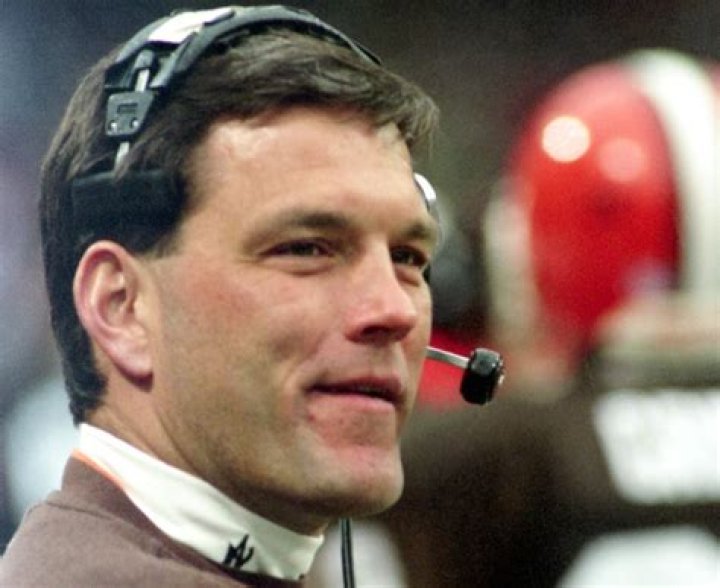
The year was 1993. Bill Belichick was entering his third season as head coach of the Cleveland Browns and was in the search for an offensive line coach. He decided to extend an invitation to the head coach of the Maine Black Bears, a football program in the Yankee conference, to interview for the vacancy.
That of course was Kirk Ferentz.
That is one legendary coaching staff.
— Jack Lido (@JackLido) January 11, 2024
A 38-year-old Ferentz joined a staff led by Belichick, and defensively coordinated by Nick Saban. While the three had no previous experience working together, they became friends and shared success. But it was after Cleveland where all three men made their coaching legacy.
Bill Belichick had two Super Bowl rings on his hand as the defensive coordinator of the New York Giants in the 1980s, but added six more, leading a two-decade-long dynasty in New England.
Saban took over LSU in 2000 and led the Tigers to a BCS national championship in 2003. After a brief stint with the Miami Dolphins, he turned Alabama into the premier team of college football, winning six championships in 12 seasons.
Ferentz doesn’t have the brass rings of either men, but is Iowa’s all-time winningest coach, owns the third most wins in Big Ten history, and is the longest tenured head coach in all of college football.
What brings these three coaches together is success and longevity. With Belichick parting ways with New England and Saban retiring, it marks the end of an era. It all makes me think about what the end might look like for Ferentz.
Coach Ferentz already proclaimed he “hopes to keep doing this for quite a while” in November, making it clear he doesn’t plan on calling it quits anytime soon.
But the success piece is an interesting one.
Belichick’s attention to detail, preparation and ability to adjust were unparalleled. Put Tom Brady at quarterback, and the Patriots won six Super Bowls in nine appearances.
But when Brady exited the equation, the Patriots suddenly looked slower, less athletic and outdated. New England’s skill players couldn’t separate, Belichick invested in interior offensive lineman and safeties, and the Patriots dynasty crumbled.
Belichick often talked about how many games he’d won, how long he’s been coaching and that he wasn’t going to change. Sound familiar?
The problem was the league had changed. Teams with star quarterbacks and dynamic offensive weapons are winning games. The Patriots won just four in 2023 and a divorce felt inevitable.
Meanwhile in Tuscaloosa, Saban retired following a loss in the College Football Playoff. He recruited at the highest level until the very end and never had to reboot.
That’s because Alabama pivoted over the course of the last 10 years. Saban evolved from a defensive czar to an offensive guru. Alabama became a quarterback and wide receiver factory.
He also made splashy-yet-controversial hires like Lane Kiffin and Steve Sarkisian, coaches who had a dark past but saw great success after Saban threw them a life preserver. Belichick kept re-hiring his old retreads.
Saban stayed current, and left on his own terms. So, what does any of this have to do with Ferentz?
Ferentz shares many qualities with both Belichick and Saban.
Like Belichick, he’s a historian. Ferentz can’t go one press conference without speaking about his time with the Hawkeyes in the ’80s, or that he’s been leading the program since 1999.
Philosophically, he’s been set in his ways. He told us that “wins per game” were the most important offensive related statistic. Whatever offensive coordinator he brings in to replace Brian Ferentz isn’t going to schematically do things a whole lot differently.
But as Bill and Kirk have always alluded back to their wins, with conference expansion in college football there’s no national laughing stock of a division to win in 2024. Iowa hasn’t scored a point against a ranked opponent in 14 quarters of football.
To compete for the Big Ten, Iowa will have to have records that match up with Michigan, Ohio State, Penn State, Washington, Oregon and everybody in between. The nation’s worst offense will no longer be able to win 10 games on an annual basis.
But, like Saban, Kirk Ferentz has changed with the times and engaged in the transfer portal. He added two quarterbacks, a tight end and a talented wide receiver last winter. Nick Jackson, a linebacker, was maybe his best acquisition.
To his credit, Ferentz understands the importance of adding win-now pieces.
The great Hayden Fry won nine games in 1996 before going 7-5 and 3-8 his final two seasons before retirement. Being the best coach in Iowa’s history at the time didn’t help him win games in 1998.
Kirk Ferentz has won bowl games, conference shares and owned rivals with his style and philosophy. He develops, and puts under-recruited talent into the NFL as good as anybody in America.
But, with a new athletic director in-house and a changing landscape in his conference, Ferentz needs to follow in Saban’s footsteps. Or, like when Brady left Belichick, his flaws will be exposed.
Coach Ferentz should step out of his comfort zone and hire a coach with a fresh perspective. One different than his — it’s not going to impede the greatness of Phil Parker’s defense.
Iowa’s offense can no longer afford to be a step behind the rest of the sport. It can’t be the best, but it can’t be the worst.
After all, the past only has so many answers for the future.
For more Hawkeyes football coverage, follow @BlakeHornTV and @HawkeyeHQ on Twitter and Facebook. You can find Hawkeye Headquarters at HawkeyeHQ.com all season.